
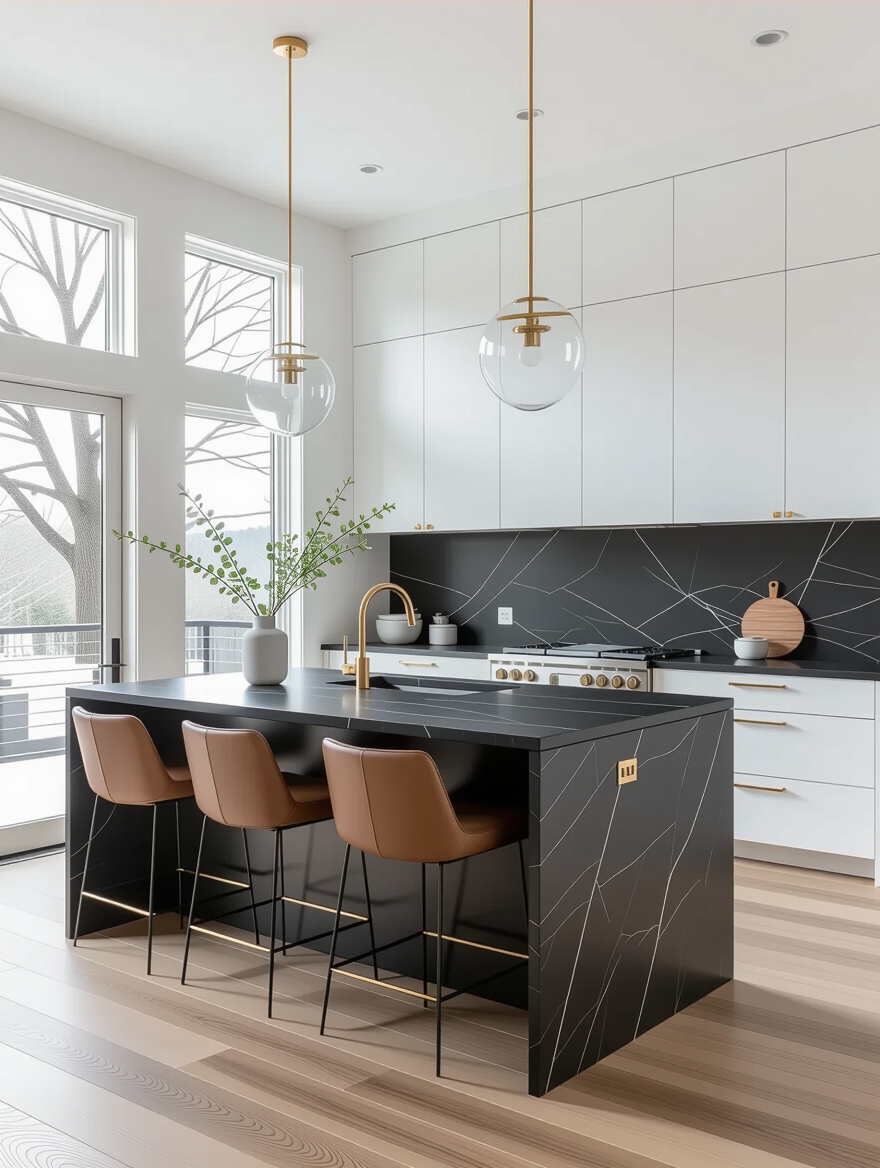
Here is a myth worth busting: the kitchen details people fall hardest for are rarely the big-ticket ones. It is almost never the six-burner range. It is the deep drawer that finally holds the mixing bowls, the single pendant that throws warm light over the sink, the open shelf styled just right. Small, smart moves earn the obsession.
I gathered the ideas that get the most love in the kitchens I have worked on and weighed each one honestly: what it costs, who it suits, and where it quietly goes wrong. Some you can do this weekend. A few are worth saving up for. None of them require a magazine budget to pull off.
The Ideas Worth Obsessing Over
- Storage you cannot see wins the most love: deep drawers, pull-outs, and vertical dividers clear the counters that make a kitchen feel calm.
- One bold move beats five timid ones, whether that is a color, a pendant, or a styled open shelf. Pick the hero and keep the rest quiet.
- Lighting is the cheap upgrade people underestimate: under-cabinet strips and a good pendant change a room more than new cabinet doors.
- Honest materials age into character, so spend on wood and stone where hands and eyes land daily.
A Functional, Stylish Kitchen Starts With a Plan

Before you obsess over finishes, obsess over flow. The kitchens that work and look good got the plan right first: where you drop the groceries, where you prep, where the trash lives. Pretty cabinets on a bad layout still annoy you every single day.
Map Your Routine, Then Design
Walk your own routine before you change a thing. Stand at the stove and reach for where a spoon rest should be; open the fridge and notice where you set things down. Those little frustrations are your real design brief, and fixing them is what earns the daily love.
Only once the function is settled do the style choices land, because a beautiful kitchen that fights your habits never feels finished. Plan the work first, then decorate the plan.
Stylish Open Shelving Done Right

Open shelving is the most-saved kitchen detail and the one most likely to disappoint, because the photos hide how much editing they take. Done right, a short open run becomes a styled focal point you actually keep up. Here is how to make it work instead of collecting dust.
- Keep it to a short daily-use run so the rotation itself stays the styling
- Stack in odd numbers and vary the height: a tall pitcher, a short bowl, one plant
- Mount into studs, since a loaded 36-inch shelf carries real weight
- Reserve it for things you love to look at, and hide the rest behind doors
An open shelf is a small stage with a strict cast: a few things you love, and air around them.
Maximize Vertical Kitchen Storage

Most kitchens waste their best real estate, which is the vertical space nobody plans for. The gap above the cabinets, the dead air to the ceiling, the awkward slot beside the fridge: each one can hold something useful. Reaching upward is the cheapest way to find storage without taking an inch of floor.
Tall pull-out pantries turn a narrow nine-inch gap into a spice and oil station, and a vertical tray divider beside the oven finally tames the baking sheets. I get more grateful comments about a well-planned vertical pull-out than almost any flashier feature, because it solves a daily annoyance for good.
Stylish Mixed Storage Solutions

The kitchens that feel both styled and livable mix their storage on purpose. All-open looks great empty and chaotic full; all-closed hides everything but feels flat. The sweet spot pairs a small open display with plenty of doors and drawers to swallow the mess.
Lean closed for the bulk of it, then open up one tasteful slice where you can keep it honest. The designer logic behind a good storage balance is mostly about ratio, and it keeps the room calm without giving up personality.
- Aim for roughly 70 percent closed storage to 30 percent open
- Put the open section near the coffee or sink zone you reset daily
- Use drawer dividers and bins so the closed majority stays just as tidy
Not sure how much open storage your kitchen can handle? Be honest:
1Do you reset your counters every night?
If yes, you can carry more open shelving. If not, lean closed and keep one small open run you can manage.
2Are your everyday dishes a matched set?
Matched sets look great on open shelves. A jumble of mismatched pieces is happier behind doors or reeded glass.
Balanced Bold Kitchen Colors

Color is where people get brave and then nervous, so the trick is to go bold in one place and stay calm everywhere else. A deep green island, a clay-red pantry door, or a moody blue lower run gives a kitchen the jolt people obsess over, while neutral walls and counters keep it from tipping into too much. Commit the color to one anchor and let the rest breathe.
- Choose one bold anchor: the island, the lowers, or a single accent wall
- Keep counters, uppers, and walls neutral so the color has somewhere to land
- Carry tiny echoes of the bold shade in textiles or a stool so it feels planned
Durable Materials for a Long-Lasting Kitchen

The features you will still love in ten years are made of materials that age into character. Real wood, natural stone, and solid metal earn a patina, while cheap composites just wear thin. This is the one place to protect your budget, even if it means waiting on the decor.
- Quartz ($50-100/sq ft) for a near-indestructible, no-seal counter
- Solid wood or butcher block where you want warmth you can sand back to new
- Real metal hardware over coated finishes that chip and date
- Save on paint and accessories, which are cheap to refresh later
The material belief that costs people money:
❌ Myth: Pricier always means more durable
✅ Reality: Not necessarily. Quartz costs less than high-end marble and resists stains and scratches far better in a busy kitchen.
❌ Myth: Wood counters are too fragile to use
✅ Reality: Sealed and oiled butcher block handles daily prep and sands back to new, which is more than a chipped stone edge can claim.
Warmth Through Natural Wood

A kitchen full of stone, glass, and painted cabinets can drift cold, and natural wood is the warm note that fixes it fast. A butcher block island, a run of open oak shelves, or wood-fronted cabinets bring grain and softness that no paint color can fake. The contrast is exactly what makes the room feel inviting.
You do not need a full wood kitchen to get there, which keeps it affordable. One walnut shelf or a wood counter section does most of the work, especially set against cooler surfaces. Let the wood be the thing your eye relaxes on in an otherwise crisp room.
Unique Flooring to Transform Your Kitchen

Flooring is the surface people forget to obsess over, yet it grounds the entire room. A patterned cement tile, a warm wide-plank wood, or a graphic black-and-white floor can carry a kitchen’s whole personality from the ground up. Because it covers so much area, the floor sets the tone before anything on the walls.
Match the ambition of the floor to the rest of the room. A bold patterned floor wants quiet cabinets above it, while a calm wood floor lets you go braver up top. Picking one to lead keeps the room from competing with itself.
On the practical side, the kitchen floor takes spills, dropped pans, and constant foot traffic, so choose for durability first. Porcelain tile, luxury vinyl plank, and sealed hardwood all hold up, and they range widely in price, so there is a version at almost any budget.
Bold Pendant Lights That Make a Statement

If one upgrade earns instant obsession, it is a great pair of pendants over the island. They sit at eye level, they glow, and they act like jewelry for the whole room. People notice good lighting the way they notice a good haircut, even when they cannot name what changed.
Scale and height are where most people stumble. Hang pendants so the bottom sits about 30 to 36 inches above the counter, and size them generously, since a too-small fixture looks lost over a big island. Two medium pendants or one long linear fixture usually beats three skimpy ones.
This is also a forgiving splurge, because a fixture is far cheaper than cabinetry and swaps out in an afternoon. Put real money into the one piece people will stare at, and let it carry the room, the way the most-pinned kitchens tend to do.
Under-Cabinet Lights to Illuminate Prep

The least glamorous idea here might be the one you obsess over most once it is in: under-cabinet lighting. A simple LED strip throws clean light right onto the counter, so you stop chopping in your own shadow. It is the upgrade people did not know they needed until they cannot live without it.
The Upgrade Nobody Expects to Love
The job is easy and cheap. Stick-on or plug-in LED strips run $20 to $60 a section, and a hardwired version with a hidden switch looks tidier if you can manage it. Aim for a warm-white tone around 2700 to 3000 Kelvin so the light feels inviting at night, not clinical.
Put it on a dimmer and you get two kitchens in one: bright task light while you cook, and a low glow you can leave on as a nightlight. That small flexibility is what turns a practical fix into a feature.
Styling Tips to Tie It Together
Once the design choices are in, the styling is what makes a kitchen feel finished instead of staged. The biggest move is restraint: clear the counters down to a few working objects, since a clear counter does more for the room than any decorative piece. Then add warmth back on purpose with a bowl of fruit, a wood board left out, and one trailing plant by the window.
Style in small groupings of odd numbers, vary the heights, and leave breathing room around each cluster so nothing reads as clutter. Keep a tight palette across your textiles and accessories so the eye glides instead of snagging.
These are the free, five-minute touches that pull every obsession-worthy idea above into one room that simply feels good to stand in. For more of the slow, structural choices that hold up, a never-dated design is the natural next read.
Obsess Over the Right Details
The ideas that earn real, lasting love are the smart, human ones: storage that clears your counters, lighting that flatters the room, one bold color or material with the confidence to lead. None of them need a giant budget, and most of them solve a daily annoyance while looking good doing it.
Pick the one that fixes whatever bugs you most, do that single thing well, and let it set the tone. Obsess over function and a couple of brave choices, and the kitchen will reward you every time you walk in.
More Looks We Love


