

Why has navy become the bold cabinet color people actually commit to? Because it is the rare statement that feels classic rather than risky. Deep, confident, and somehow timeless, navy cabinets anchor a kitchen the way black can without the heaviness, and they pair with almost anything you put beside them.
The trick is the pairing, the same as any strong color. Get the metals, the counters, and the balance right and navy looks rich and intentional; get them wrong and it can feel dark or cold. Here are seventeen striking navy cabinet ideas that land the statement, with honest notes on cost and what to pair with each.
Make Navy a Statement, Not a Risk
- Navy looks bold yet classic, which is why it is the safest statement color.
- Pair it with warm brass or gold and a light counter to keep it from going cold.
- Put navy on the island or lowers if you want the look with less commitment.
- A wood or white element stops navy from feeling dark or heavy.
A Timeless Statement With Depth
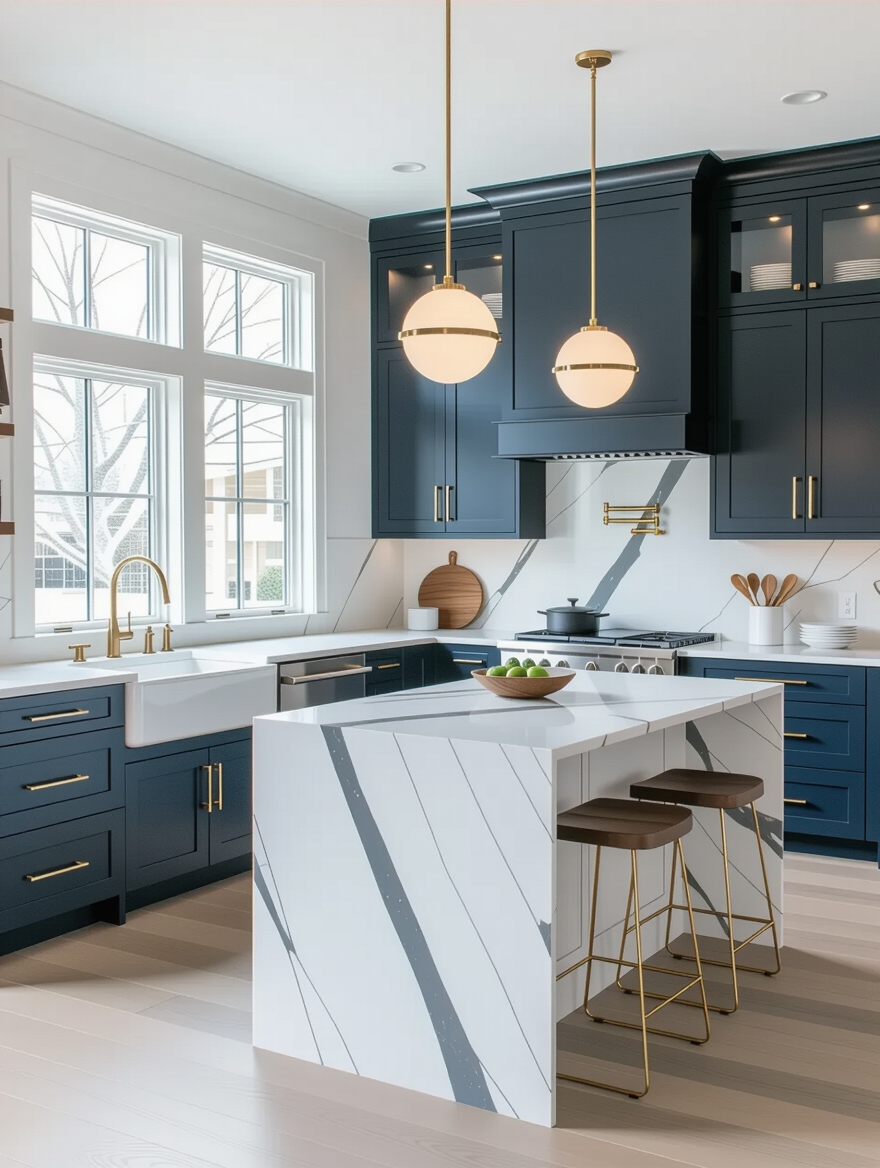
Navy works as a statement for a reason. It carries real depth without the weight of black or the risk of a trend color. It feels confident and grounded, yet it has stayed current for years, which makes it the rare bold choice that does not date. That combination of drama and longevity is why designers turn to it so often.
- Navy gives the drama of a dark cabinet without black’s heaviness.
- It has stayed in style for years, so it looks classic, not faddy.
- It pairs with almost any metal, counter, or accent you choose.
Navy Cabinets in Modern Kitchens

In a modern kitchen, navy on flat or handleless fronts looks sleek and architectural, the depth of the color doing the work that ornament would in a traditional room. Kept clean and paired with simple fittings, it looks confident and current rather than heavy. I tell clients navy is the easiest way to make a modern kitchen feel less cold without losing its edge.
- Use navy on flat slab or handleless fronts for the cleanest modern look.
- Keep counters and walls light so the navy stays a feature, not a cave.
- Add one warm metal so the cool navy has somewhere warm to land.
Two navy-cabinet myths worth dropping:
❌ Myth: Myth: navy is too dark for a kitchen.
✅ Reality: Confined to the lowers or island with light uppers and good lighting, navy adds depth while the room stays bright.
❌ Myth: Myth: a bold color is a big risk.
✅ Reality: Navy reads classic, not trendy, and it is paint. Put it where a repaint could undo it and the risk is low.
Navy Cabinets With White Counters

The most classic navy combination is also the most foolproof. Navy cabinets under a crisp white counter. The white keeps the room bright and stops the navy from closing it in, while the navy grounds the white so neither feels stark. It is the pairing that has kept navy looking fresh for years.
- A white quartz or marble keeps the room bright over navy.
- The high contrast is crisp and timeless, never trendy.
- Add warm hardware so the cool navy-and-white has a warm anchor.
Navy in a Coastal Kitchen

Navy is a natural in a coastal kitchen, echoing deep water against pale, sandy neutrals. Paired with white, weathered wood, and brass, it brings the sea-glass-and-ocean palette without a single literal beach motif, which keeps it sophisticated rather than themed.
Deep Water, Light Surroundings
Keep the navy to the lowers or the island and let light, airy surfaces surround it, so the room still feels breezy.
A few natural textures, rope, rattan, woven baskets, finish the coastal feel. The indoor coastal kitchen shows how to keep it light.
“What to ask yourself before going navy: what warm element will live beside it? Navy is cool and deep, so it needs a warm partner, brass, gold, or wood, to feel inviting rather than cold. Decide that pairing first, and the navy will read rich and intentional instead of heavy.”
Navy in Minimalist Kitchens

Navy gives a minimalist kitchen the one thing pure minimalism can lack: a confident point of view. A single run of navy flat-front cabinets against an otherwise calm, neutral room becomes the quiet statement, with no extra color or clutter needed.
The restraint is what makes it work, so let the navy be the only bold note and keep everything else simple.
- Use navy as the single bold element in a calm, neutral room.
- Keep the fronts flat and the hardware minimal or hidden.
- Let the depth of the color be the statement, not added detail.
Matte or Glossy Navy

Finish changes everything here. It shifts the whole personality of navy. Matte navy feels soft, modern, and calm, and it hides fingerprints, while glossy navy bounces light and adds a rich, dramatic depth that suits a darker or more formal kitchen.
I steer most clients to matte for an everyday kitchen; gloss is the move when you want the navy to feel luxe and reflective.
- Choose matte for a soft, modern, fingerprint-friendly look.
- Choose gloss for drama and to bounce light in a dim room.
- Whichever you pick, keep it consistent across the navy run.
Navy is the bold color for people who do not think of themselves as bold. It makes a real statement, yet it has never once looked like a mistake.
Navy With Gold Hardware

One pairing turns navy from nice into striking. Navy with gold. The warm metal against the deep cool blue is a classic, high-contrast combination that looks instantly luxe, and the gold supplies the warmth navy lacks on its own.
It is also one of the cheapest ways to lift navy, since swapping to gold or brass hardware transforms the look for the price of the pulls.
- Gold or brass pulls against navy read luxe for $5 to $20 each.
- Carry the warm metal to the faucet and lighting for cohesion.
- Unlacquered brass ages beautifully and warms the cool navy.
Navy With Warm Brass Fixtures

Beyond the hardware, carrying warm brass into the fixtures, the faucet, the lighting, the rail, threads warmth through the whole navy kitchen. A brass bridge faucet or a pair of brass pendants over a navy island gives the room a glow that keeps the deep color from feeling cold.
Keep all the warm metals to one tone, and the brass-and-navy combination comes across as cohesive and rich rather than busy. It is the detail that makes navy feel finished.
Navy Cabinets With Natural Wood

Wood is the other great warmer for navy. The pairing feels especially current. Navy cabinets with a warm wood island, open shelves, or a butcher block counter balance the cool depth with natural warmth, so the room feels inviting rather than dark. It is the combination I reach for when a client loves navy but worries it will feel heavy.
- Pair navy with a warm oak or walnut to balance the cool tone.
- A wood island against navy perimeter cabinets is a current look.
- Keep the wood warm, not gray-washed, so it actually warms the navy.
Navy Cabinets With Marble Counters

Navy under a veined marble counter is the pairing that reads most luxurious. The soft gray-and-white veining against the deep blue is a striking, high-end contrast that has anchored some of the most beautiful kitchens of the last decade.
The Luxe Pairing
Marble runs about $60 to $100 a square foot before fabrication and needs resealing once a year, a ten-minute job; a veined quartz copies the look with no upkeep.
Either way, the light, moving stone is what keeps the navy from reading flat or heavy underneath it.
Bold Backsplash and Gray Walls
Two more pairings push navy further. A bold backsplash, a patterned tile or a dramatic slab, gives navy a companion statement, though keep one of them quieter so they do not compete. And light gray walls are the soft, sophisticated backdrop that lets navy cabinets stand out without the high contrast of pure white.
Gray-and-navy is the more muted, modern cousin of navy-and-white, ideal if you want the statement to feel calm rather than crisp. The cabinet color ideas go deeper on building a scheme around a bold color.
Open Shelving and Two-Tone Navy
Navy is a natural fit for two-tone and open-shelf schemes. A navy island or navy lowers under white or wood uppers is the most popular two-tone look there is, giving you the color grounded low where it looks rich rather than heavy. And a run of open wood shelving breaks up the depth of navy with warmth and a spot for a few good pieces.
Both keep navy from overwhelming a room, which is the key to using a deep color well. Borrow the courage from these bold green cabinets if you want to see how deep color carries a kitchen.
Navy in Small and Dark Kitchens
People assume navy is too dark for a small or dim kitchen. Used well, it can actually help. Confining navy to the lowers or the island, keeping the uppers and walls light, and adding good lighting lets the navy add depth and richness while the room stays bright. A small kitchen with navy lowers and white above feels considered, not cramped.
The keys are restraint and light: navy below, bright above, and warm fixtures to lift it. Pair the approach with these blue cabinet ideas and the balance in the modern classic pairings worth borrowing.
Styling Tips
Once the navy is in, the styling keeps it from going heavy. Warm metals, a few wood or woven textures, and good lighting on a dimmer are what make navy feel rich and inviting rather than dark. Keep the counters mostly clear so the deep color feels intentional, not cluttered.
And if you love navy but fear the commitment, remember it is paint: put it on the island or the lowers, where a repaint of $200 to $600 could undo it later. That low risk is part of why navy is the bold color people actually commit to.
Navy Cabinet Questions, Answered
?Are navy blue kitchen cabinets a passing trend?
No. Navy reads classic rather than trendy and has stayed current for years, which is why it is the bold color people commit to. Paired with warm metals and a light counter, it looks timeless rather than of-the-moment.
?What colors go with navy blue cabinets?
Warm brass or gold, natural wood, white, and light gray. The key is adding at least one warm element so the cool navy feels inviting rather than cold, and keeping the counters or walls light so the depth does not close the room in.
?Are navy cabinets too dark for a small kitchen?
Not if you use them well. Confine navy to the lowers or the island, keep the uppers and walls light, and add good lighting. A small kitchen with navy below and white above reads considered and rich, not cramped.
Pair It Warm, Keep It Bright
Navy makes a statement that almost never backfires, because it is bold and classic at once. The whole skill is in the pairing: warm metals and wood to balance the cool depth, a light counter and walls to keep it bright, and restraint so the navy stays rich rather than heavy.
So decide where the navy will live and what warm element will sit beside it, then commit. Get that balance right and your navy cabinets will be the striking, grown-up statement that makes the whole kitchen, without ever feeling like a risk you regret.
More Hair Inspiration


