

Walk into a kitchen done in sage green and natural wood and your shoulders drop a little. Both are muted, both come straight from the landscape, and together they feel calm in a way few color pairings manage. That is the appeal. It is why this combination keeps showing up in kitchens you actually want to linger in.
The one thing that separates a sage-and-wood kitchen that sings from one that feels muddy is undertone. Cool, grayed sages want cool woods; warmer, olive-leaning sages want warm ones. Get that right and almost everything below works. Here are fourteen ways to bring the two together, from full cabinets to a single butcher-block counter, with the wood choice that suits each.
Sage and Wood, Quickly
Which wood actually goes with sage? Match the undertones. Cool, gray sages pair with ash, birch, and white oak; warm, olive sages pair with oak, walnut, and pine.
Is sage and wood timeless or just trendy? It looks classic, because both are muted naturals. It ages far better than a high-contrast color scheme that depends on the moment.
Where should the wood go? Put it on the floor, an island top, or open shelves, and let sage carry the cabinets. That keeps the room calm and uncluttered.
Where to Start With Sage and Wood
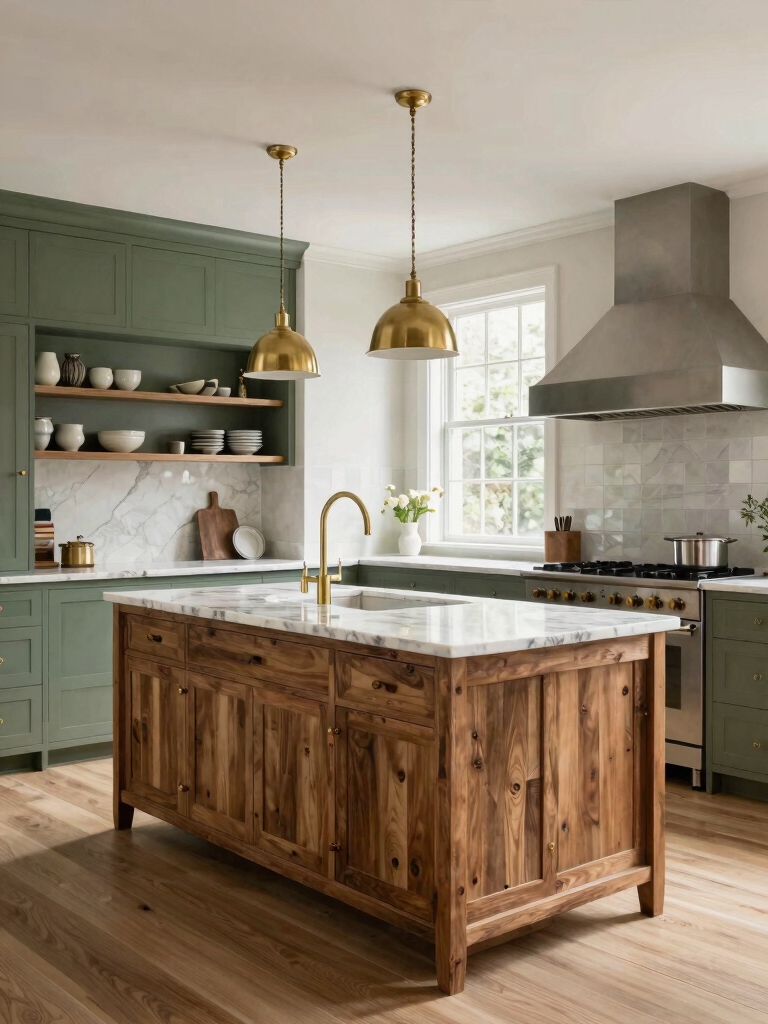
Start with samples, not a paint chip on a screen. I grab a few sage swatches and a handful of wood pieces, then spend ten minutes holding them together against the cabinets in real daylight and again under the evening bulbs. Sage shifts more than people expect. A swatch that looks gray-green at noon can turn olive by lamplight, which is the whole reason this step matters.
The rule I keep coming back to is undertone matching. A gray-leaning sage looks fresh next to ash or white oak, while an olive-leaning sage glows beside walnut or pine. Decide which sage you have before you fall for any particular wood, and the rest of these ideas fall into place.
Full Sage Cabinets Grounded by Light Oak Floors
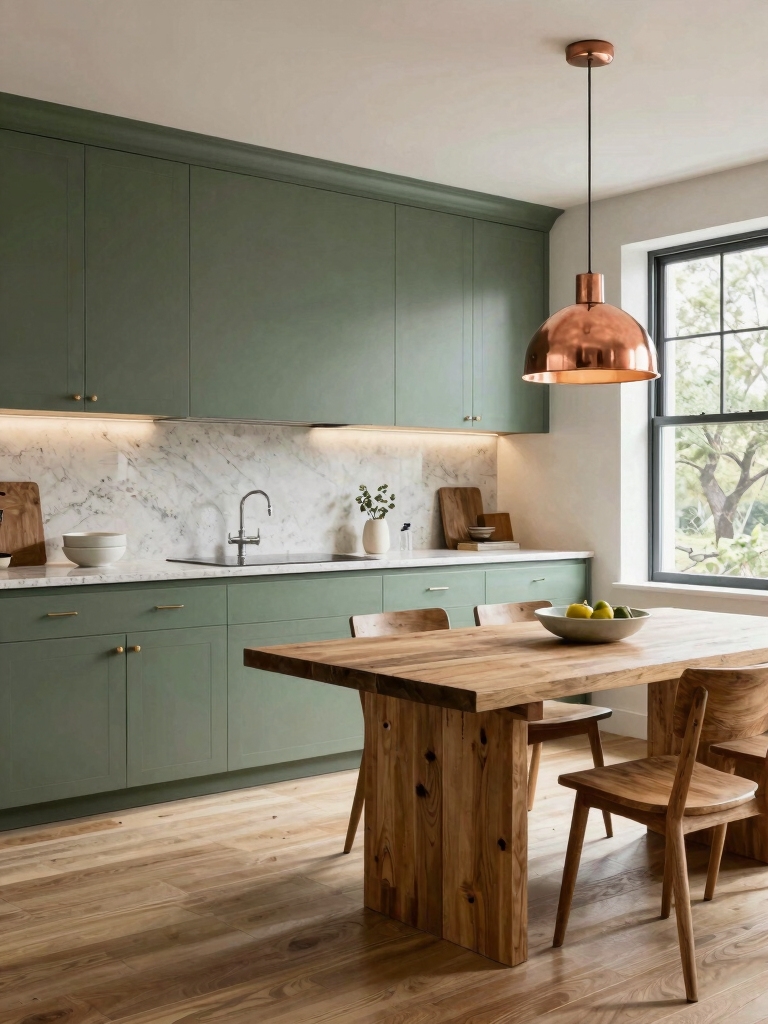
Wrapping every cabinet in sage only works when something grounds it, and light oak floors do exactly that. The wood spreads the color evenly so the green never feels heavy, and its grain adds quiet texture underfoot.
- Choose a light to medium oak so the floor stays warm and lets the cabinets lead.
- Keep counters pale, like white quartz or light stone, to let the two naturals breathe.
- Carry the oak into a few open shelves so the floor has an echo up high.
| Sage undertone | Best wood match | Overall feel |
|---|---|---|
| Cool / gray sage | Ash, birch, white oak | Crisp and airy |
| Warm / olive sage | Oak, walnut, pine | Cozy and rich |
A Sage Island Against a White Perimeter
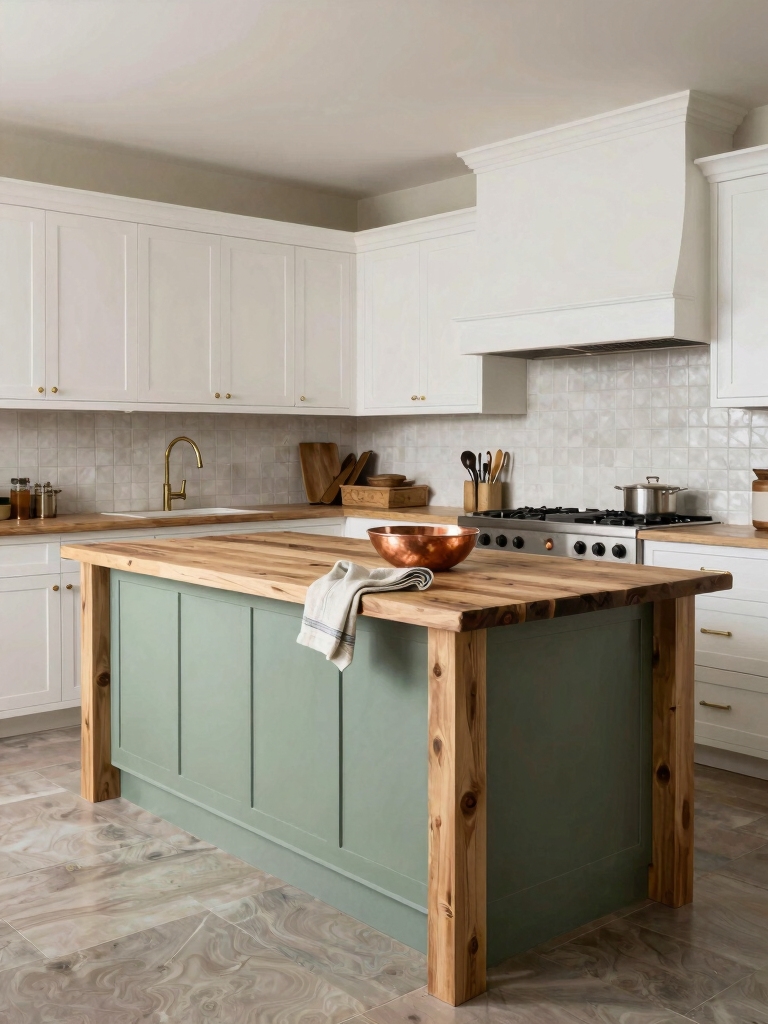
If full sage feels like a lot, let a single sage island carry the color while the perimeter stays white. The green grounds the center of the room and the white keeps the sightlines clean and bright.
Let the island carry the color
Top the island in raw or oiled wood, like an oak butcher block, so the warmth lands where you work and gather. The contrast feels deliberate. The white cabinets keep it from tipping into too much.
This is the lowest-commitment way to try sage, since an island repaints in a weekend. It is also a smart move for resale, because a white kitchen with one green anchor appeals far more widely than a fully green one. The same logic drives many two-tone cabinet schemes.
Open Shelving That Shows the Wood Grain
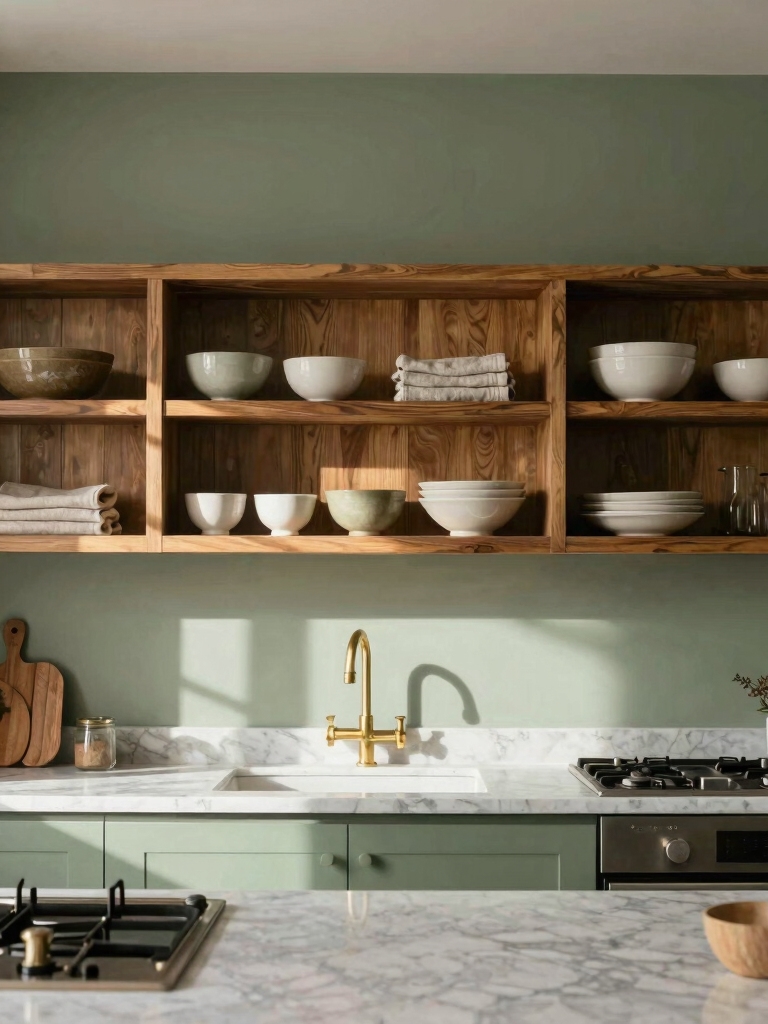
Open shelving lets sage walls recede into a quiet backdrop while the wood does the talking. You see every ripple of grain in the oak or pine, and the green paint stops competing for attention.
It is honest, breathable storage, best stocked with the everyday dishes you actually rotate. Keep it to one wall so the room still feels calm, and the wood becomes the warmest thing in the kitchen.
- Use solid wood shelves, around $40 to $80 a pair, and skip veneer, which shows its edges.
- Match the shelf wood to the floor or island so the warm tones feel collected.
- Style with items you use daily so the shelves stay clean. Constant use keeps the dust away on its own.
Open shelving is where sage and wood finally stop competing: the paint goes quiet, and the grain gets to be the most interesting thing in the room.
Walnut Floating Accents in Sage Kitchens
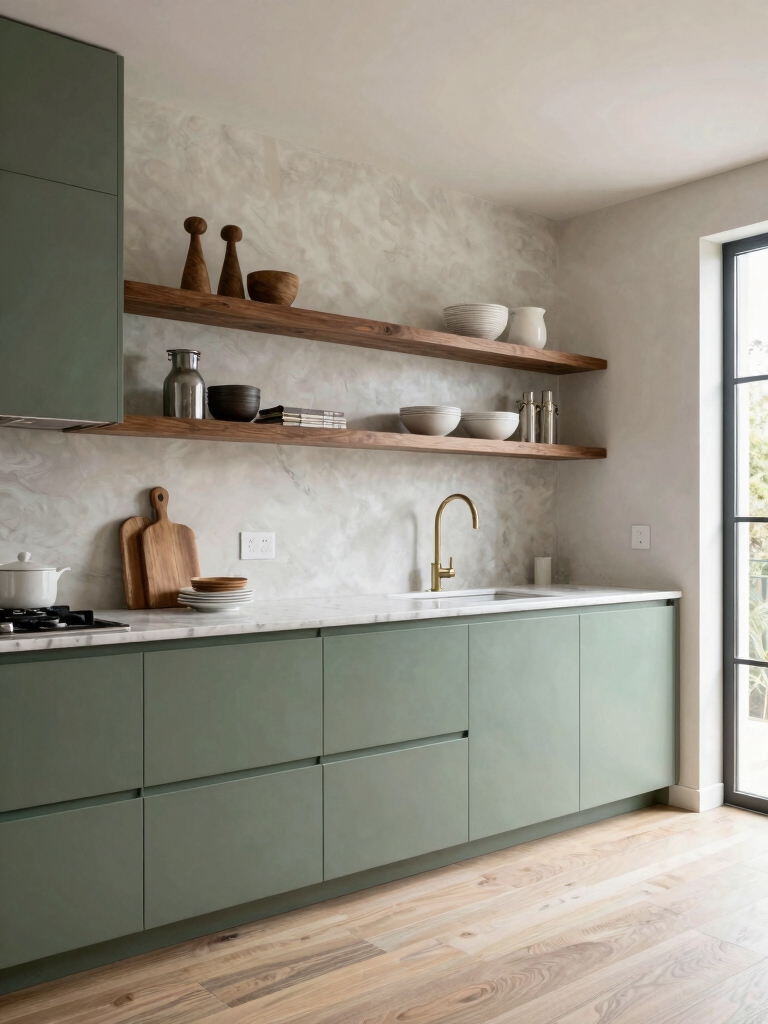
Floor-to-ceiling sage can feel like a lot of one note, and a few walnut floating shelves break it up without adding visual weight. The dark, vertical grain draws the eye upward and makes the whole room feel taller.
Walnut suits a warmer, olive-leaning sage best, where the red-brown tones echo the green and quietly deepen it. Two or three slabs are plenty; a whole wall of walnut would swing the balance the other way. If you love the wood, a closer look at walnut cabinets shows how far it can go.
Two-Tone: Sage Below, Natural Oak Above
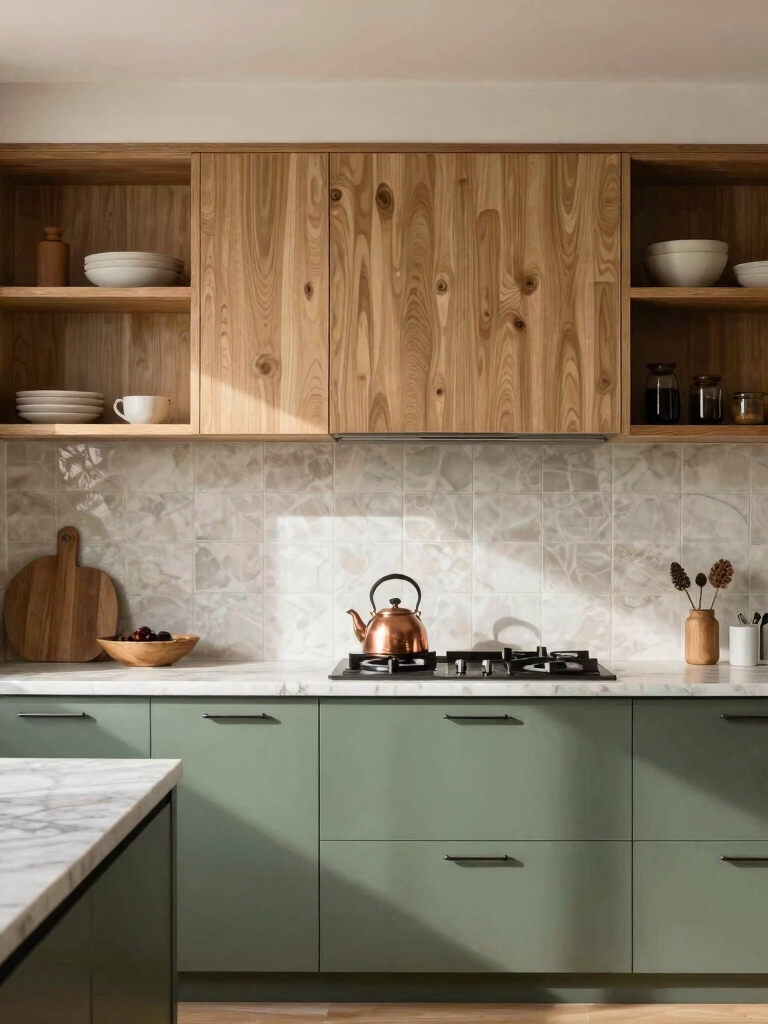
The sage-below, oak-above split keeps winning for one practical reason: it works the way kitchens are actually used. Sage base cabinets ground the room and hide scuffs at knee height, while natural oak uppers keep the top half light and open.
It is also forgiving on a budget, since you can paint the lowers and simply refinish or replace the uppers in wood. Painting base cabinets runs roughly $200 to $400 in materials if you do it yourself, far less than a full reface, and the wood uppers can often be the originals stripped back to grain. The eye travels from grounded green to warm wood without any jarring break.
Pick an oak that leans the same temperature as your sage. A cool white oak suits a grayed sage; a warmer oak flatters an olive one. For more on getting that warm-wood balance right, see how a white oak kitchen handles it.
“Bring your sage swatch and a sample of the wood you are considering, and check them together at the actual time of day you cook most. If the pair still looks right under both daylight and your evening bulbs, you have a match. If the sage turns muddy next to the wood at night, the undertones are fighting, and you want a different wood.”
Butcher Block for a Warm, Handmade Kitchen

Install butcher block against soft sage and the whole room warms up at once. The honey-toned wood softens the muted green and gives the kitchen that handmade feel, like a space someone actually cooks in. I tell clients it is the single fastest way to make sage feel warm and welcoming.
There is a trade-off worth naming. Butcher block needs oiling every month or two to stay sealed, and it shows water rings if you ignore it. Choose maple or oak for durability, pair it with brass hardware, and it pays you back with warmth no stone can match.
Pale Sage and Birch for Compact Kitchens

Small kitchens need their colors to stay quiet, and pale sage with birch does exactly that. Birch has a creamy, almost white tone that reflects light everywhere, so a cramped galley feels airier without losing warmth.
Pair it with a whisper-soft sage that barely registers as green, and the two recede together. The room feels bright and calm, never boxed in by color. In a galley where the walls are close enough to touch, that light-bouncing quality is worth more than any clever storage trick, because it changes how big the room feels the moment you walk in.
This is the pairing I reach for in tight spaces and rentals. It photographs well, costs little if you are only painting, and suits the same goals as most small galley kitchen fixes.
Deep Sage With Rich Mahogany Details
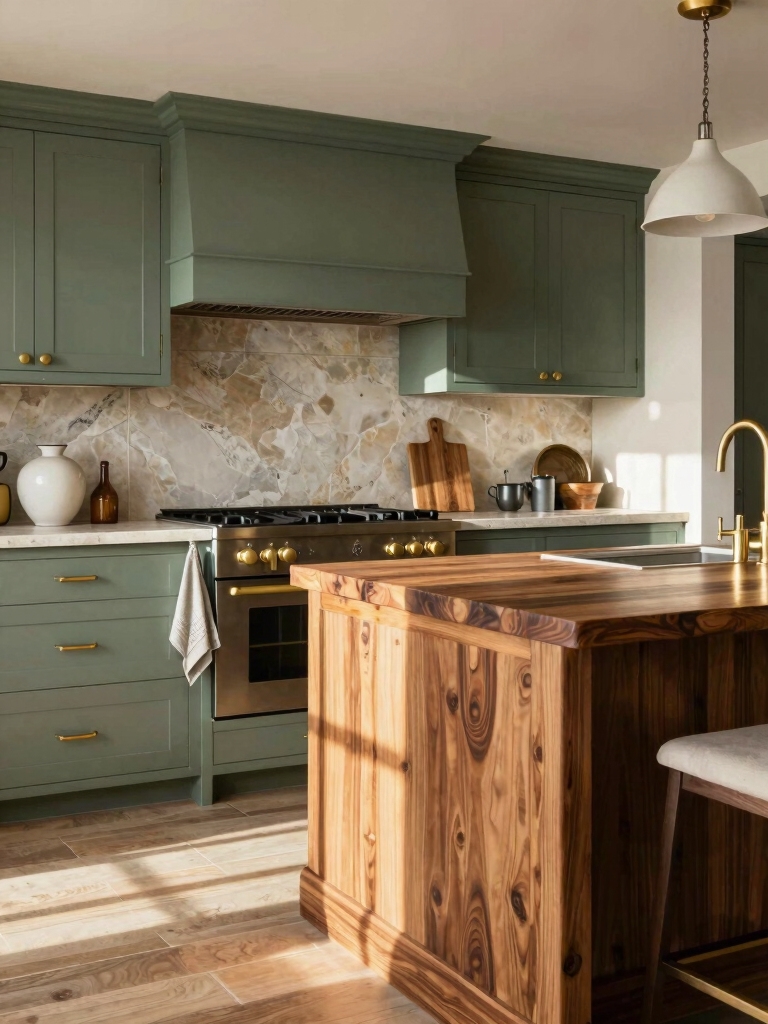
When you want drama, deep sage with mahogany delivers depth without feeling stuffy. The rich red-brown grain frames the green like trim around a painting. It suits a larger room with good light that can carry both dark tones, the kind of kitchen where a little weight comes across as confidence and the eye has room to move between the deep green and the warm wood.
- Use mahogany on architectural details, like crown molding, beams, or turned island legs.
- Keep counters and walls lighter so the two deep tones have room to breathe.
- Reserve this for a roomy kitchen; in a small one, the dark pairing closes in fast.
Flat-Panel Sage in a Matte Ash Finish

For a quieter, contemporary look, flat-panel sage cabinets in a matte ash finish skip the ornament and let the materials speak. The muted green plays against ash’s subtle, cool grain, and the matte surface hides fingerprints and glare.
Ash is the cool-undertone choice, so it suits a grayed sage. An olive sage fights it. It is also low-maintenance living, which makes it a good fit for a busy kitchen where you would rather wipe and move on. A few wood cabinet finishes pull off the same clean feel.
Common Mistakes With Sage and Wood
The mistake I see most is mixing undertones that fight. A cool, gray sage next to a warm, orange-toned oak makes both look slightly off, and people blame the green when the wood is the problem. Hold the two together in your own light before you buy a thing.
If the sage turns gray and lifeless beside the wood at night, swap the wood, not the paint. The second common slip is using too much wood. When the floor, the counters, the shelves, and the hood are all timber, the sage has nowhere to land and the room goes flat and brown.
Two smaller traps round it out. A high-gloss sage looks cheap against natural wood, so a matte or low-sheen finish almost always looks more expensive for the same paint cost of roughly $40 to $60 a gallon. And do not forget maintenance: butcher block wants oiling every month or two, and unsealed wood shelves mark easily, so plan a quick wipe-and-oil routine before you commit to a lot of bare timber.
Calm You Can Build Out of Two Naturals
Sage and wood works because it borrows from the landscape, and the landscape never goes out of style. Get the undertones talking to each other, decide where the wood lives, and let sage carry the rest, and you end up with a kitchen that feels settled rather than decorated.
You do not have to do all of it. A butcher-block counter, a sage island, or a single wall of open shelves is enough to start. Pick the one that fits your room and budget, test the pair in your own light, and build from there.
More Hair Inspiration


