

Run your hand across a white oak cabinet and you feel why it took over modern kitchens. The grain is straight and open, the color a soft pale honey, neither the orange of old oak nor the chill of gray-washed wood. It is the warm-but-light wood that makes a clean modern kitchen feel grounded instead of sterile, and it has quietly become the wood designers reach for most.
These fourteen white oak kitchen cabinet ideas show how to use it for a warm modern look: the grain and cut to ask for, the finishes that keep it pale, the counters and metals that flatter it, and how to care for it. If you want wood that feels current and calm at once, white oak is the answer. Here is how to get it right.
White Oak at a Glance
| Choice | What to ask for | Why |
|---|---|---|
| The cut | Rift-sawn for a straight, quiet grain | Reads modern; plain-sawn shows more cathedral figure |
| The finish | A matte, clear, or white-wash seal | Keeps the oak pale instead of turning it yellow |
| The pairing | Soft white, black, or warm stone | Lets the honey tone stay the star |
| The upkeep | Wipe spills fast, reseal as needed | Open grain can trap water if neglected |
Why White Oak Feels Timeless

Before the styling, it helps to know why white oak beat out every other wood for the modern kitchen. A few specific qualities set it apart from the honey oak of the past and the cold gray woods of a decade ago:
- A pale, neutral honey tone that never goes orange or yellow
- A straight, open grain that suits clean, modern cabinet lines
- Hard and durable enough to take daily kitchen abuse without denting
- Takes a natural, matte, or white-wash finish beautifully
Timeless Oak Meets Modern Lines

The reason white oak feels so current is the contrast between the warm, natural wood and the crisp, simple cabinet shapes around it. Put white oak on a flat-slab or a clean Shaker door, with handle-free fronts or slim pulls, and the grain warms what would otherwise feel cold and hard.
The wood does the softening. The lines stay sharp. That tension between the organic grain and the minimal forms is the whole warm-modern idea, and it is what keeps a clean kitchen from tipping into cold.
Scandi and Japandi Roots
White oak also has a specific advantage for the Scandinavian and Japandi kitchens everyone is chasing: its straight, even grain photographs calm rather than busy, so a wall of it reads as one serene surface instead of a patchwork. That visual quiet is exactly what those pared-back styles ask for.
Keep the rest of the kitchen quiet so the wood leads. For the broader style, my warm modern kitchen design combos that feel like home guide pairs well here.
Heads-Up
The biggest white oak regret is the wrong finish. A cheap oil-based seal can turn that pale, modern wood yellow or amber within a couple of years, landing you back at the honey-oak look you were trying to avoid. Ask your fabricator for a water-based matte or a white-wash, and request a sample on real white oak so you see the true cured color before you commit.
Matte vs Glossy Oak Finishes

The single biggest choice with white oak is the finish, because it controls both the color and the feel. A matte, clear seal keeps the wood pale and natural and shows off the grain texture, which is the most current look. A glossy finish looks richer and more formal but bounces light and can push the tone warmer. Matte is the calmer choice. Most modern kitchens want it.
Keep It From Going Yellow
Watch the undertone of whatever you choose. A cheap oil or poly can turn white oak yellow or amber over time, which is the opposite of the cool, pale look most people want. Ask for a water-based matte or a white-wash to hold the color true.
When in doubt, go matte and natural; it is the finish that keeps oak looking modern and true to its pale color. For more on finish contrast, my white kitchen ideas designers cannot stop recommending guide digs in.
Bold Countertops With Warm Oak

White oak is a generous backdrop, so the countertop is where you can be bold. The pale wood flatters everything from crisp white quartz to dramatic veined stone, and the counter you choose sets whether the kitchen leans calm or striking. The wood will flatter either way. Pick the mood you want:
- White or cream quartz for the cleanest, brightest warm-modern look
- A dramatic veined marble or quartzite for a high-end statement
- Honed black or soapstone for sharp, modern contrast against the honey
- A warm-toned stone with cream veining to echo the oak
Warm Open Oak Shelving

Swapping some upper cabinets for white oak open shelves is one of the prettiest moves in a warm-modern kitchen. A floating oak shelf shows off the grain, breaks up the cabinet runs, and adds that relaxed, airy feel without losing the wood warmth. It also lets the oak repeat at eye level, which threads the wood tone through the upper half of the room.
Style and build them so they look intentional:
- Thick, solid oak shelves look more custom than thin ones
- Match the shelf grain direction to the cabinets for a clean run
- Style with simple ceramics and a plant, not clutter
- Use hidden brackets so the shelf appears to float
👍Why designers love white oak
- +Pale, warm tone that suits modern and minimal looks
- +Hard and durable for everyday kitchen use
- +Takes natural, matte, and white-wash finishes well
👎What to plan around
- –Costs more than paint-grade or builder woods
- –Open grain needs prompt spill cleanup
- –Grain and color vary board to board, so order samples
Stylish Two-Tone Oak Cabinets

You do not have to commit to all wood. A two-tone scheme with white oak is among the most popular warm-modern looks, pairing the wood with a painted run to balance warmth and brightness. Here are the splits designers use most:
- Pale oak base cabinets beneath bright white uppers for an airy split
- An oak island against a soft white or greige perimeter
- Oak uppers and a deep green or black base for modern drama
- Oak on a single feature wall to introduce the wood gently
Layered Wood-Tone Harmony

White oak plays well with other woods, which is handy when your floor or furniture is already a different species. The key is the undertone: keep everything in the warm-neutral lane and the mix looks collected. A cool, gray-toned floor next to warm oak cabinets will fight, while a natural oak or warm walnut floor sits in harmony.
When you do mix, vary the grain scale so it does not look like a failed match. Pair the fine, straight oak grain with a chunkier wood elsewhere, a butcher block, a beam, a stool, so each wood looks like its own deliberate choice. For a richer companion wood, my walnut kitchen cabinets that ooze luxury guide helps.
Warmth in Small Kitchens

Wood can feel heavy in a small kitchen, but pale white oak is the exception that actually works. Its light, reflective tone warms a tight space without darkening it the way a deep walnut or cherry would, so a small kitchen feels cozy and open at once. It is the wood I suggest when a client wants warmth but fears closing in a galley, since the pale tone keeps a tight space feeling open where a deep walnut would shut it down.
A few moves keep oak feeling airy in a small room:
- Run the oak to the ceiling to draw the eye up
- Pair it with a light counter and backsplash to bounce light
- Choose a matte, pale finish over a dark or glossy one
- Add open oak shelves to keep the upper walls from feeling boxed in
🅰️Rift-Sawn Oak
A straight, uniform grain with almost no cathedral figure. Reads the most modern and calm, and costs more because it wastes more of the log.
🅱️Plain-Sawn Oak
Shows the wavy cathedral grain and more character. More affordable and a little more traditional, with a livelier, busier look.
Sleek Minimalist Hardware
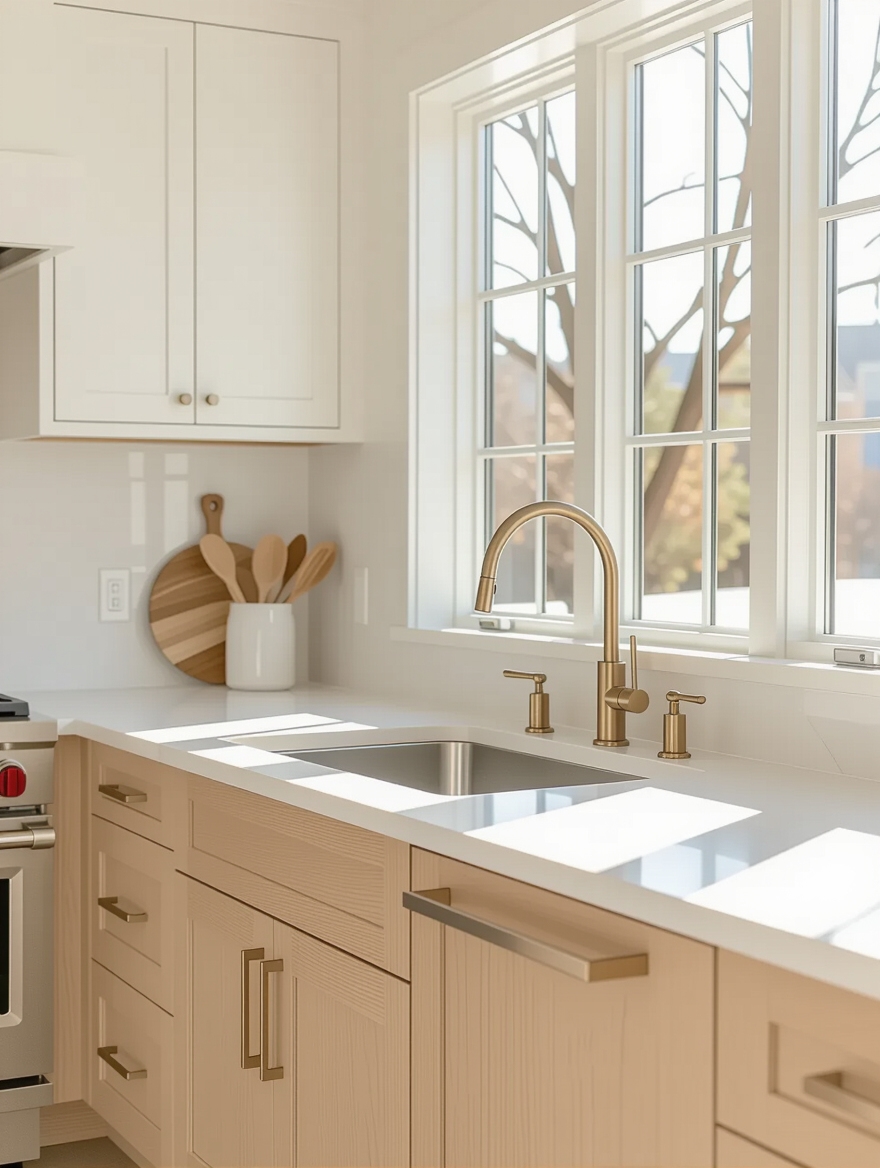
Hardware makes or breaks the warm-modern oak look, and the trend leans quiet. Slim matte-black or brushed-brass pulls, edge pulls, or no hardware at all keep the focus on the grain and let the cabinets read clean. Heavy, ornate hardware fights the simplicity that makes oak feel modern.
If you want warmth, brushed brass echoes the honey in the oak; for contrast, matte black grounds it and sharpens the lines. Either way, go slim and simple. Then carry the same metal to the faucet and the lighting so the kitchen feels pulled together. Edge pulls or finger channels give you the cleanest, most current handle-free face.
Warm Lighting on Oak

Lighting is the quiet detail that makes white oak glow, and the wrong bulbs flatten it fast. Warm-white light, around 2700K to 3000K, brings out the honey and the grain; cool, blue-toned bulbs gray it out and kill the warmth that drew you to oak in the first place. Get the color temperature right and the grain looks alive at night.
Layer the light so the oak glows everywhere:
- Warm-white bulbs, 2700K to 3000K, on a dimmer
- Under-cabinet strips to wash the grain and light the counter
- A warm pendant or two over the island to highlight the wood
- Avoid cool daylight bulbs, which turn warm oak flat and gray
Maintenance and Care for White Oak
White oak is hard and forgiving, but its open grain means a little care keeps it looking its best. Wipe up spills quickly, especially water and anything acidic, since standing liquid can seep into the grain and leave a mark. A soft cloth and a mild cleaner are all the daily upkeep it needs; skip harsh chemicals and anything abrasive that could dull the finish.
Every few years, depending on the finish and how hard you cook, plan to refresh the seal on the hardest-working fronts and the area around the sink. A clear matte oil or water-based topcoat renews the protection and evens the color in minutes, and a small can runs only $20 to $40.
It is the cheapest insurance there is for a wood you plan to keep for decades. Done now and then, that small effort keeps white oak warm, pale, and modern for decades, and it costs almost nothing compared to the cabinets themselves.
White Oak Cabinet Questions, Answered
?Why is white oak so popular for modern kitchens?
White oak hits a sweet spot no other wood quite matches: a soft honey tone that sits between yellow and gray without committing to either, plus a straight, open grain that suits clean modern lines. It warms minimal, Scandinavian, and Japandi kitchens without making them feel heavy or dated, which is why designers reach for it again and again.
?Does white oak turn yellow over time?
It can, if you use the wrong finish. Oil-based sealers oxidize and amber as they age and react to light, which is what pushes white oak toward yellow within a few years. To keep it pale and modern, ask for a water-based matte topcoat or a white-wash finish, and always check a cured sample on real white oak first, since the color shifts as the finish dries.
?What countertop goes best with white oak cabinets?
White oak flatters almost any counter, so choose by the mood you want. Crisp white or cream quartz gives the brightest, cleanest warm-modern look; a veined marble or quartzite makes a high-end statement; and honed black or soapstone creates sharp, modern contrast against the honey wood. A warm cream-veined stone echoes the oak for a softer, tonal feel.
?Are white oak cabinets good for a small kitchen?
Yes. Unlike dark walnut or cherry, pale white oak warms a small kitchen without darkening it, so the space feels cozy and open at once. Run the oak to the ceiling, pair it with a light counter and backsplash, and choose a matte pale finish to keep everything bright. Open oak shelves also help a tight kitchen feel airy rather than boxed in.
The Wood That Warms Modern
White oak earned its spot at the top of the modern kitchen for good reason: it is the rare wood that feels warm and light at the same time, grounding clean lines without dragging them down. Get the cut and the finish right, pair it with a flattering counter and a quiet metal, and light it warm, and white oak gives you a kitchen that reads current today and will still feel calm and timeless years from now.
So if you have been craving wood but worried it would feel heavy or dated, this is the one to try. Choose a matte, pale finish, keep the shapes simple, and let that honey grain do the talking. Would your kitchen lean all-oak for full warmth, or oak paired with a crisp painted run for balance?
More Ideas Here


