

The first time a client showed me a black kitchen she loved, she was already bracing for me to talk her out of it. Black cabinets do that to people. They photograph like a design magazine, then make you worry the room will feel like a cave.
Clients ask me whether black is too risky for a real, everyday kitchen, and my answer is always the same: it is the boldest, most rewarding cabinet color there is, but only if you go in knowing its quirks. Get the light, the finish, and one warm accent right, and black pays off like nothing else.
Black Cabinets at a Glance
Black cabinets feel like a deliberate choice and pair with almost any style, from modern to rustic, depending on the metal and wood you put beside them. They hide grease and splatter better than white, but they show dust, lint, and water spots, so they suit a household that wipes surfaces down most days.
The biggest risk is light. In a small or north-facing kitchen, all-black cabinets can feel heavy, so many people keep black to the lowers or the island and lighten the uppers. Matte hides fingerprints, gloss bounces light, and a warm metal or wood keeps the whole thing from feeling cold.
Why Black Cabinets Feel Sophisticated and Versatile

Black is the color that makes a plain kitchen look designed. It looks intentional, and that quiet confidence is most of the appeal.
More Versatile Than It Sounds
People assume black only works in one style, but it slips into almost any. Against white trim it goes crisp and modern, with warm wood it turns rustic, and under brass it leans glamorous. The cabinet color stays put while the supporting cast sets the mood.
It is also forgiving of grease and fingerprints in a way white never is. The white cabinets people love worth comparing show the flip side: brighter, but they catch every splash.
The Honest Trade-Off: Elegant but High-Maintenance

Here is what the dramatic photos leave out. Black hides grease and food splatter well, but it shows dust, water spots, and lint like nothing else, especially in matte. A black kitchen looks its best right after a wipe-down. It asks for that wipe-down often.
It also drinks up light. In a small or north-facing kitchen, all-black cabinets can close the room in, which is the regret I hear most.
- Black hides grease but shows dust and water spots, so plan on frequent quick wipes.
- In low-light kitchens, keep black to the lower cabinets or the island only.
- Matte shows dust, gloss shows fingerprints; neither finish is truly low-effort.
ℹ️Good to Know
Black cabinets do not actually hide everyday mess; they swap one kind for another. Grease and crumbs disappear, but dust, lint, and dried water spots stand out, so black rewards a household that wipes the surfaces down most days.
Matte Black for a Sleek, Low-Maintenance Look

Matte black is the finish most people picture when they imagine a modern black kitchen. It is soft, deep, and glare-free. It hides fingerprints far better than gloss does. The trade is that matte shows dust and can be hard to clean if the finish is cheap, so I tell people to invest in a quality matte that wipes clean in a couple of minutes.
- Choose a quality matte or textured finish; cheap flat paint marks and resists cleaning.
- Pair with brushed or matte-black hardware for a tonal, modern look.
- Add warm lighting so the flat finish looks rich under the glow.
High-Gloss Black for Sleek Luxury

High-gloss black is the opposite bet: shiny, reflective, and dramatic. Because it bounces light around, it can actually help a darker kitchen feel less heavy, and it looks expensive in the right room.
The catch is fingerprints. Gloss shows every touch, so it is happiest on uppers, a hood, or a low-traffic run; leave the doors your kids fling open all day in matte.
- Use gloss where hands rarely land: uppers, hoods, or an accent run.
- Lean on its reflective surface to bounce light in a darker kitchen.
- Keep a microfiber cloth nearby; gloss needs frequent buffing to stay clean.
💡Designer Tip
Love gloss but dread fingerprints? Split the difference. Put high-gloss on the island or uppers where hands rarely land, and a tougher matte on the base cabinets that take the daily abuse.
Rustic Black With Warm Wood for Elegance
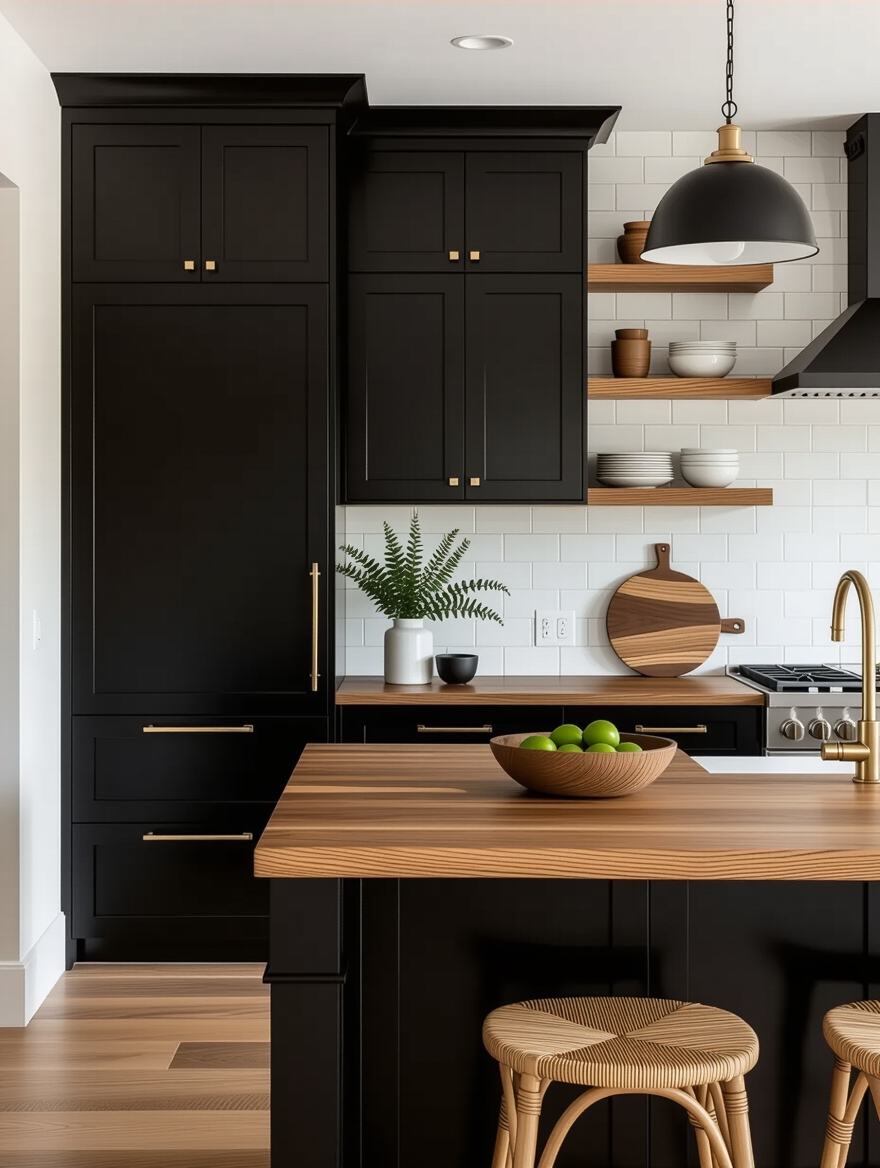
Black and warm wood is the pairing that keeps a bold kitchen from feeling cold. The grain softens the black’s intensity and adds texture, so the room turns cozy and warm. I love matte black base cabinets under a butcher-block or oak counter, with open wood shelves to lift the eye. For a softer middle ground, the gray cabinets worth pinning worth a look get similar depth with less weight.
- Pair matte black with a warm oak or walnut counter or open shelf.
- Add woven baskets and linen to layer in texture and warmth.
- Keep walls light and warm so the black stays a feature, not the whole room.
Black and White: Modern Contrast

Black cabinets with white counters is the sharpest, most classic contrast in the kitchen. The crisp white lifts the dark cabinetry and keeps the room from going too heavy, which is why it never dates.
For balance, decide which color leads. Black lowers with a white counter and white uppers feels open; all-black with only a white counter feels bolder and more enclosed.
- White quartz or marble counters keep the look bright and timeless.
- Carry a little white up the walls or uppers to open the room.
- Add one metal, brass or black, and stop there to keep it clean.
Pairing Black Cabinets With Bold Color Walls

If you want drama on drama, a saturated wall color behind black cabinets is the move. Deep emerald, navy, or oxblood looks rich against black without the jarring clash a bright hue would bring.
Keep the wall color in the same depth family as the black so they feel intentional together. A pale wall behind black cabinets can look unfinished. A deep one looks designed.
- Choose deep, muted wall colors like emerald, navy, forest, or oxblood.
- Match the wall’s depth to the cabinets so neither one fights the other.
- Balance the dark palette with warm wood or brass so it stays inviting.
Bold Backsplashes for Black Cabinets

A backsplash is where black cabinets get their personality. Because the cabinets stay quiet, you can take a real swing here without overwhelming the room.
Pick One Hero
Veined marble, a glossy zellige, or a geometric tile all pop against black. Pick one as the hero and keep the counters calm so the backsplash carries the eye.
Budget $15 to $50 a square foot for a statement tile. For more directions, the cabinet color combinations worth weighing show how a backsplash can tie a dark kitchen together.
Elegant Brass and Gold on Black

Nothing lifts black cabinets like warm metal. Brass and gold against black is the combination that looks expensive in almost any kitchen, because the warmth cuts the severity. I recommend choosing one finish and repeating it on the pulls, faucet, and lighting so it looks collected. A hardware swap is also the cheapest way to test the look, often under an hour and a few dollars per pull.
- Unlacquered brass patinas over time for a warmer, aged look.
- Polished gold stays bright and reads more glam and modern.
- Repeat the same metal on pulls, faucet, and lights for a pulled-together feel.
Black Cabinets With Open, Airy Shelves

Open shelving is the release valve for an all-black kitchen. A run of wood or light shelves breaks up the dark mass and keeps the room from feeling like a box.
Break Up the Mass
Swap a few upper cabinets for open shelves and style them simply, with a few ceramics or a plant. The negative space does as much work as the objects on it.
If you want even more lift, mix black base cabinets with lighter uppers. The two-tone cabinets worth trying worth copying use exactly this trick to get the drama of black without the weight.
Black Cabinets in Small and Industrial Kitchens
Small kitchens and black cabinets can get along, despite the warnings, as long as black plays an accent role. Put it on the island or the lowers, keep the uppers light or open, and let reflective hardware bounce around what light you have. A tight galley in all-black feels like a closet. A black island in a bright room looks grounded and intentional.
Industrial kitchens are where black feels most at home. Set against exposed brick, concrete, and steel, black cabinetry sharpens the whole room and pulls the hard materials into one story.
- In a small kitchen, limit black to the lowers or island and keep the uppers light.
- Use glossy or metallic hardware to bounce light around a tight space.
- In an industrial room, pair black with raw brick, steel, and concrete.
Keeping Black Cabinets Clean
The honest cost of black is upkeep, so a simple routine keeps it sharp. A quick pass with a damp microfiber cloth lifts dust and prints in a minute or two, and that small habit is most of the battle. Stay away from harsh or abrasive cleaners, which dull the finish and leave streaks that the light then catches. Done regularly, the cleaning takes almost no time; skipped for a week, a black kitchen starts to look tired fast.
- Wipe high-touch doors with a damp microfiber cloth every few days.
- Clean spills right away with mild soap and water, not abrasive sprays.
- Buff gloss finishes dry so streaks do not show up in the light.
Where Black Cabinets Go Wrong
Black is the cabinet color people most often regret, and the reasons are predictable. Too much of it in a small or low-light kitchen makes the room feel like a closet. A cheap flat finish marks easily and looks chalky. And because dark cabinets read so strongly, a sloppy install or an uneven door shows far more than it would on white.
None of this means skip black; it means go in with your eyes open. Test a large painted sample on your doors and live with it for a few days in your own light before you commit. If you tire of it later, a repaint that beats new cabinets worth the weekend can bring the room back to light.
📋Before You Commit to Black
- ✓Check your natural light; black needs windows or strong fixtures to avoid a cave.
- ✓Decide on matte or gloss based on who uses the kitchen and how hard.
- ✓Plan for frequent quick wipes to keep dust and water spots in check.
- ✓Test a large sample on the actual doors for a few days before buying.
Black Rewards a Confident Kitchen
Black cabinets are not a safe pick. That is the whole point. Given enough light, a quality finish, and a warm metal or wood to soften them, they hand a kitchen a confidence no neutral can match.
So before you fall for the photos, ask yourself the honest question: does your kitchen have the light and the upkeep habits to carry black? If the answer is yes, few choices pay off so dramatically.
More to Explore


