

There is a moment in a green-tiled kitchen, usually late afternoon, when the light hits the glaze and the whole backsplash seems to shift and deepen. That is the thing tile does that paint cannot. A green wall is flat and even; green tile catches light at a hundred tiny angles, so it changes through the day and never goes dull.
These seventeen setups are sorted by tile shape and shade, because in tile the shape matters as much as the color. I have noted the grout to use, roughly what each runs per square foot, and how hard it is to keep clean, so you can pick a green tile that looks as good in year three as it did on day one.
What Makes Green Tile Work
Tile beats paint for one reason: light. A glazed green tile catches and throws light across its surface, so a backsplash shifts through the day in a way a painted wall never will. That liveliness is the whole appeal, and the shape, hexagon, vertical stack, penny, decides how busy or calm it reads.
The choices that protect the look are grout color, finish, and where you put it. A backsplash is a doable weekend job at roughly $10 to $25 per square foot in handmade tile; a full wall or floor is a bigger commitment. Get the grout and the sealing right and green tile stays eye candy for years.
Soft Green Ceramic Tiles for Everyday Charm

Soft green ceramic is the friendliest tile to start with, the one that adds color without asking you to be brave. A muted sage or celadon glaze in a simple square or subway shape suits almost any kitchen and forgives a beginner installer. Here is how to keep it from looking plain.
- Choose a handmade or lightly uneven glaze so the tiles catch light and avoid the flat, builder-grade look.
- Pick a grout one shade off the tile, soft gray with sage, so the pattern shows without shouting.
- Run it as a full backsplash, counter to upper cabinets, so the color has room to register.
Vertical Stack Pistachio Tiles

The same tile looks completely different depending on how you lay it, and a vertical stack is the layout that makes a kitchen feel taller. Pistachio, that soft yellow-green, in a vertical stacked pattern looks fresh and a little modern, and the upward lines draw the eye toward the ceiling. Here is how to pull it off.
- Use a rectangular tile and stack it straight, lining up the grout lines vertically for a clean, current look.
- Keep the grout tight and close in color so the vertical lines stay crisp.
- Lean pistachio against white cabinets and warm wood so the soft green stays the focus.
Heads-Up
The most common green-tile regret is not the color; it is the grout. A bright white grout against a deep green looks crisp on day one and turns into a grid of grease-stained lines within a year over a working stove. In high-splatter zones, choose a grout a shade or two darker than bright white, seal it well, and you will save yourself a lot of scrubbing and a premature re-grout.
Sage Hexagon Tiles to Enhance a Space

Hexagon tile in a soft sage is the setup for anyone who wants pattern without commitment to a loud color. The six-sided shape adds quiet geometry and a handmade, slightly artisanal feel, while the muted green keeps the whole thing calm. It is the tile equivalent of a neutral with a little personality.
Big Hexagons or Small
Hexagons work as a backsplash or as a feature behind the range. Smaller hexagons read busier and more textural; larger ones feel more architectural and modern, so size the tile to how much pattern you actually want in the room.
Grout is the make-or-break detail with hexagons, because there is a lot of it. A grout close to the tile color keeps the surface soft and quiet; a contrasting grout turns the hexagon shape into the main event. Decide which one you want before you buy.
A Light Green Kitchen Tile Transformation
A pale green tile can carry an entire kitchen makeover on its own. Swap a dated beige backsplash for a light green glaze and the whole room lifts, even if the cabinets and counters stay exactly the same. It is one of the highest-impact changes you can make in a single weekend.
Let the Tile Lead
The reason it works so well is contrast and freshness. Pale green looks crisp against white or wood cabinets, and the glaze brings a glow that flat paint cannot, so a tired kitchen suddenly looks considered. This is the project I point people to when they want a big visual change on a small budget.
Keep the rest of the update minimal so the tile gets the credit. New grout, a fresh bead of caulk, and maybe a swapped faucet are plenty to make the green tile look like the centerpiece of a much bigger renovation.
“What to ask before you buy green tile: Is this glaze handmade or uniform, and do I want the variation? What grout color and width is the installer planning, and have I seen it against the tile? Is the tile rated for a backsplash or for a floor, since they differ? How many extra tiles should I keep for future repairs? Settle those four and the install goes smoothly.”
Reflective Green Tiles for Small Spaces

In a small kitchen, a glossy green tile earns its place by doing double duty: adding color and bouncing light. The reflective glaze throws daylight and lamplight back into the room, which makes a tight space feel larger and brighter than a matte surface would. It is the tile trick for galleys and apartments.
Why Gloss in a Small Kitchen
Glossy tile shows water spots and fingerprints more than matte, but in a backsplash that is rarely a problem, and a quick wipe keeps it sharp. The payoff in light and depth is worth the occasional swipe with a cloth, especially where square footage is scarce.
Pair a glossy green with light grout and pale cabinets to maximize the brightening effect. A small mirror-like backsplash can make a windowless kitchen feel like it found a new source of light. For more small-space color, see green that opens a small kitchen.
Emerald Tiles That Brighten a Kitchen

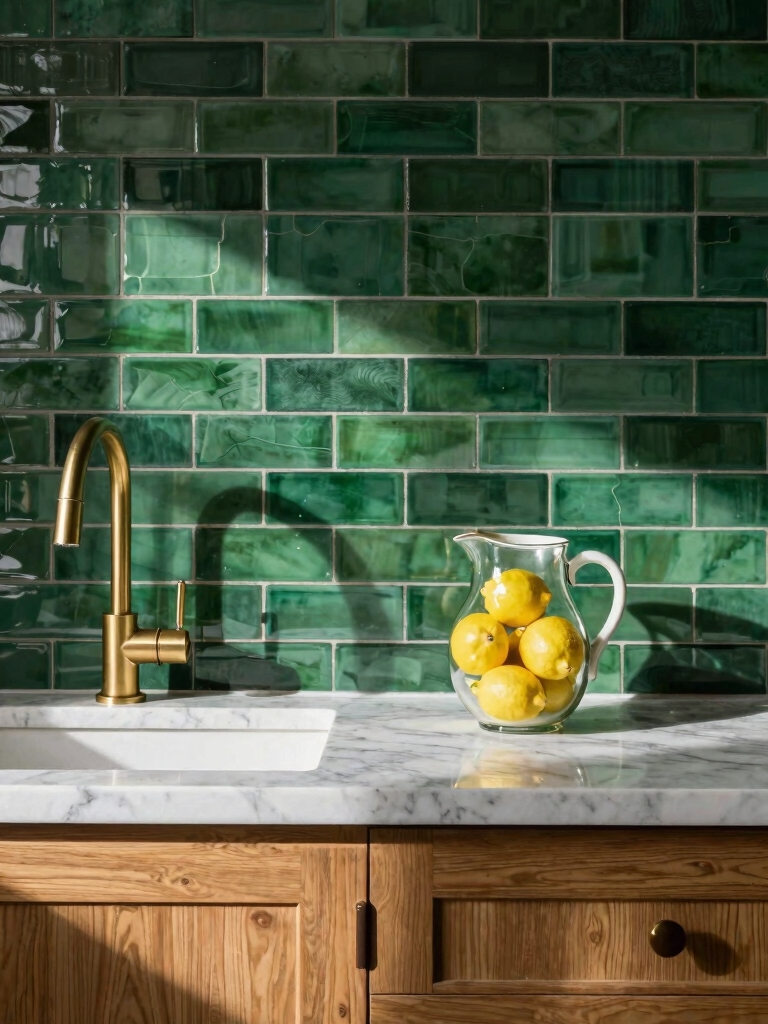
Emerald tile is the showstopper of the bunch, the deep jewel-tone that turns a backsplash into the reason people stop and look. In a glossy glaze it reads almost liquid, catching light and shifting from rich green to near-black as you move past it. It is high drama in a contained, affordable dose.
A few choices keep emerald from overwhelming the room.
- Keep the cabinets and counter quiet so the emerald can be the star of that wall.
- Choose a glossy or zellige-style glaze so the depth catches light and stays rich.
- Warm it with brass hardware or fixtures, which look custom against the deep green. See the greens that look expensive.
A few tile terms worth knowing before you shop.
📖Zellige
Handmade Moroccan-style clay tile with an uneven, glossy glaze. Catches light beautifully and reads high-end, but expect size and color variation.
📖Subway
A classic rectangular tile, usually 3 by 6 inches. The cheapest, most familiar shape; a green glaze updates it without the cost of a fancy format.
📖Penny round
Small circular tiles on a mesh sheet. Textural and a little retro, with lots of grout, so it reads busy and needs careful grout color.
Green Tiles That Unify a Kitchen

Instead of stopping at a standard backsplash strip, you can run green tile as one bold expanse to unify a whole wall. Taking the tile floor-to-ceiling behind the range, or wrapping it around a full wall, turns the green from an accent into the room’s defining surface, and the unbroken field of color reads richer and more deliberate than a narrow band ever could.
Scale is the decision here. A full-height tiled wall is a bigger material and labor commitment than a backsplash strip, so price it accordingly, but the payoff is a kitchen with one confident, architectural surface doing all the work. Keep the cabinets and counters quiet and let that green wall be the whole statement.
Seafoam Tiles for Coastal Charm

Seafoam tile, that pale wash between blue and green, brings an easy coastal charm to a kitchen without tipping into theme-park beach house. The watery color feels breezy and calm, and in a handmade glaze with subtle variation it looks like sea glass catching the light. It suits a bright kitchen that wants to feel relaxed.
Coastal, Not Kitschy
Keep the coastal feeling grown-up with natural materials. Pair seafoam tile with whitewashed or natural wood, simple hardware, and plenty of light, and it feels fresh and current. Skip the rope and anchor accessories; the tile is doing the coastal work already.
Seafoam is happiest with light grout and a glossy or satin glaze that plays up its watery quality. In a darker kitchen the color can go gray, so this is one to see in person or sample on the wall before committing to a full backsplash.
Green Tile That Connects Living Spaces

In an open-plan home, where the kitchen flows into the living space, green tile can be the element that stitches the two zones together. A green backsplash or a tiled island face picks up greens in the adjoining room, a plant, a sofa cushion, a piece of art, so the kitchen feels like part of the whole home.
A couple of moves keep the connection looking intentional.
- Echo the tile’s green in one or two soft furnishings in the living area so the eye links the spaces.
- Keep the tile shade muted if it will be visible from the sofa all day, since loud color tires faster across an open plan.
- Use the same warm metals in both zones so the kitchen and living area feel like one palette.
An Affordable Green Tile Makeover

A green tile backsplash is one of the rare kitchen upgrades that looks like a renovation but costs like a project. Because a backsplash uses relatively few square feet, you can choose a beautiful tile and still keep the whole job affordable, which is why it is such a smart place to spend.
DIY or Hire It Out
The math is friendly. A backsplash often needs only 15 to 30 square feet, so even handmade tile at $10 to $25 per square foot keeps materials in the low hundreds. A confident DIYer can set a simple backsplash over a weekend, with grouting the next day, which saves the installation cost entirely.
If even that feels like a stretch, peel-and-stick tile in a green glaze look has come a long way and works for renters. It will not fool anyone up close, but from across the room it delivers the color for a fraction of the price and lifts off cleanly when you move. For more budget color, see the green backsplash that steals the show.
Maintenance & Care
Green tile stays eye candy with very little effort, and most of the upkeep is really about the grout. Wipe the tile itself with mild soap and a soft cloth as part of normal cleaning, and skip abrasive pads or harsh scrubs that can scratch a glaze over time. Glossy tile shows spots more, so a quick wipe after cooking keeps it sharp. That wipe takes under a minute. Matte tile is more forgiving day to day.
The grout is where green tile lives or dies over the years. Seal new grout after installation and reseal it roughly once a year in a busy kitchen, which keeps it from soaking up grease and going dark.
For the inevitable dingy lines, a soft brush and a baking-soda paste lift most staining without harsh chemicals. Keep a few spare tiles from your original box, too, since a cracked tile is a quick swap when you have a match on hand and a near-impossible one when you do not.
Green Tile Questions, Answered
?What grout color works best with green tile?
For most green tile, a soft gray or greige grout one shade off the tile keeps the surface calm and shows the pattern without harsh lines. White grout looks crisp at first but stains fast over a stove, while a dark grout turns the tile shape into the main feature. In a busy kitchen, lean slightly darker for easier upkeep.
?Is green tile hard to keep clean?
Not really. The tile itself wipes clean with mild soap and a soft cloth; glossy glazes show spots a bit more than matte, so they appreciate a quick wipe after cooking. The grout is the part that needs attention: seal it after install and once a year after, and it stays clean far longer.
?How much does a green tile backsplash cost?
A backsplash usually needs only 15 to 30 square feet, so even handmade tile at $10 to $25 per square foot keeps materials in the low hundreds. Plain subway or ceramic runs less; zellige and specialty shapes run more. Setting it yourself over a weekend saves the labor, which is often the largest line on a quote.
The Backsplash That Earns a Double Take
What sets green tile apart from a green wall is that it never stops moving. The glaze catches light, the shape adds rhythm, and the whole surface shifts from morning to evening, which is exactly why a tiled kitchen earns the double take a painted one rarely does. Pick the shape and shade that fit your room, get the grout right, and a small backsplash will outshine projects that cost ten times as much.
Save this for when you are standing in the tile aisle, and remember that the shape matters as much as the color. Which green tile would you put behind your stove?
More to Explore


