

Which island would you actually build if the kitchen were yours? That is the real test, because an island is the most expensive piece of furniture in the room and the hardest to change once it is in. The trends below are the ones I keep seeing pinned, but I am going to be honest about which are worth the money and which are just pretty in a photo.
After years of helping plan kitchens, I have learned that the island makes or breaks the room. So for each trending pick, I will give you the rough cost, who it suits, and the catch nobody mentions, so you can chase the look that fits your life instead of the one that just photographs well.
Before You Pin an Island
The islands trending hardest right now lean two ways at once: bold materials like marble waterfalls and raw-edge stone for drama, and warm, honest wood for soul. Both photograph beautifully, but they live very differently, so the smart move is matching the trend to how hard you actually cook and how much upkeep you will tolerate.
Function still wins underneath the style. The most-pinned islands earn their footprint with storage, seating, and smart features, not just a pretty top. Get the size and clearance right first, then choose the trend that fits, and spend the money where your hands and eyes meet it every day.
The Island as the Heart of the Home

The island has quietly become the most important piece in the kitchen, and every trend below is really about that one truth. It is where the family lands, where guests gather with a drink, and where half the cooking happens, so its design carries more weight than any cabinet. Pin with that in mind, because a beautiful island that does not work is the one mistake you cannot easily undo.
- Treat the island as furniture first: it has to work before it has to wow
- Allow 36 to 42 inches of clearance on every side so it never blocks the flow
- Build in storage and seating so it earns the footprint it takes
- Spend on the top and the function, since those are what you live with daily
An Elegant Marble Waterfall Focal Point

The waterfall island, where the stone pours down the sides to the floor, is the look that owns every luxury mood board right now. Running the same slab over the edge shows off the material’s movement and gives the island a sculptural, built-in presence that a standard overhang cannot. It is the trend that says high-end the instant you walk in.
Quartz Over Marble on the Sides
The catch is cost, since you are buying far more stone and paying for precise mitered seams. I steer clients toward a quartz or quartzite waterfall over delicate marble here, because the sides take knocks from stools and feet, and quartz shrugs that off. Budget well above a standard top once the extra material and labor are in.
If the full waterfall is out of reach, a single waterfall end on one side gives most of the drama for less stone. It is the kind of restrained splurge that anchors a curated island design without blowing the whole budget.
💡Waterfall on a budget
A full waterfall island uses a lot of expensive stone. If the look matters but the budget is tight, run the waterfall down just one end of the island and a standard edge on the rest. You get most of the sculptural drama for a fraction of the extra slab and labor.
Bold Painted Wood for Personality

Painting the island a bold color while the perimeter cabinets stay neutral is the cheapest trending pick that delivers the most personality. A deep green, navy, or clay-toned island grounds the room and becomes an instant focal point, and because it is just paint, you can change your mind down the road. It is the trend I recommend most to people who want impact without a renovation.
Keep the counters and the rest of the kitchen calm so the colored island has room to land, and tie in the color with a stool or a pendant so it looks planned. A respray runs a few hundred dollars and a weekend, which makes this the highest-impact-to-cost pick on the whole list.
- Paint the island bold, keep perimeter cabinets neutral so it pops
- Echo the color in a stool or pendant so it looks intentional
- Budget a few hundred dollars for a respray, fully reversible later
The Warm Reclaimed Wood Island

Reclaimed wood is the trend for people who want their island to have a soul and a story. Salvaged timber brings nail holes, saw marks, and a worn patina that no new material can fake, and it instantly warms up a kitchen full of hard, cool surfaces. It suits farmhouse, rustic, and even modern kitchens craving a single warm note.
The honest catch is that real reclaimed wood needs a good sealer to survive a working kitchen and a supplier who has milled and prepped it properly. Done right, it ages beautifully and only gets better, which is exactly the opposite of a trend that wears out. Pair it with a stone perimeter so you get warmth and durability both.
👍Why a reclaimed-wood island works
- +Brings instant warmth, character, and a real story
- +Ages beautifully and only improves with use
- +Pairs with stone for warmth and durability at once
👎What to watch
- –Needs a good sealer to survive a working kitchen
- –Quality depends on a supplier who preps it properly
- –Real reclaimed timber can cost more than new wood
Organic Raw-Edged Stone Islands

Raw-edged, live-edge stone is the organic trend pulling the mood boards that have tired of perfect, polished lines. A slab left with its natural rough edge, or a boulder-like stone form, brings a sculptural, one-of-a-kind quality that feels closer to nature than to a showroom. No two are alike, which is the whole appeal.
This is a high-end, statement choice, so go in clear-eyed about cost and weight, since these slabs are heavy and demand serious support below. The rough edge also needs sealing and a little care so it does not stain or chip. It is a splurge that suits a modern or organic-modern kitchen with the budget to match.
I tell anyone drawn to this look to see the actual slab in person first, because the whole point is the unique character of that one piece. A photo cannot tell you whether a given stone has the movement you are paying for.
The Functional Utility Workbench Island

The workbench island is the trend for cooks who want their island to actually work rather than just look pretty. Inspired by furniture and old kitchen worktables, it leans into a butcher-block top, open shelving, hooks, and a sturdy, honest frame built for chopping, kneading, and real prep. Function is the entire aesthetic here.
Function as the Whole Aesthetic
What I love about this pick is how forgiving and affordable it can be, since a freestanding butcher-block island or a repurposed worktable costs a fraction of a custom built-in. The wood top sands back to new, the open shelves keep tools at hand, and the whole thing reads honest and unpretentious.
It suits a farmhouse, cottage, or eclectic kitchen, and it is the rare trend a confident DIYer can build or assemble. Add casters and it becomes a rolling work surface you can move where you need it, which is the kind of real-world function that never goes out of style.
🅰️Workbench island
Best for serious cooks and tight budgets; a butcher-block worktable is hard-working, forgiving, and often freestanding or DIY-friendly.
🅱️Built-in island
Best for a built-in, integrated look; custom cabinetry matches the kitchen exactly but costs far more and is fixed in place.
Contrasting Colors to Define Zones

Giving the island a different color or material from the perimeter is the trend that does double duty: it looks designed and it quietly defines the kitchen’s zones. A contrasting island reads as its own piece of furniture, marking where the cooking ends and the gathering begins, which matters most in an open-plan space. It is a designer move that costs little when it is just paint.
- Contrast the island color or material with the perimeter cabinets
- Use the contrast to anchor the gathering zone in an open-plan room
- Tie the two together with one shared metal or hardware finish
- Keep one side clearly dominant so the contrast looks planned, not random
Deep, Moody Island Statements

Deep, moody islands in forest green, charcoal, near-black, or dark wood are surging as people move past the all-white kitchen. A dark island grounds the room, hides fingerprints and scuffs better than you would expect, and brings a rich, sophisticated weight that a pale island cannot. It is the dramatic pick that still behaves like a neutral.
The way to keep a moody island from feeling heavy is light and contrast around it, so pair it with paler perimeter cabinets, warm metal, and good lighting overhead. In a small or dim kitchen, test a large sample first, since a dark island can shrink a tight room if the light is not there to balance it.
- Choose a deep green, charcoal, or near-black for grounded drama
- Balance with lighter perimeter cabinets and warm metal accents
- Add strong overhead lighting so the dark mass does not weigh the room down
Floating and Cantilevered Designs

Floating and cantilevered islands are the architectural trend pinned by people who want their kitchen to feel modern and light. A counter that extends past its base, seeming to float, creates a sleek overhang for seating and a sense of openness underneath. It reads contemporary and gives stools a clean place to tuck without bulky legs in the way.
The structure is the serious part, since a cantilevered top needs proper support, often a steel bracket hidden inside, to carry the weight safely. This is not a DIY overhang, so plan it with a pro during a renovation when the structure can be built in correctly. The clean, floating look is worth the engineering when it is done right.
It suits modern and minimalist kitchens best, where the spare, architectural line fits the rest of the room. Pair it with simple stools so the floating effect stays the star.
Unexpected Island Shapes
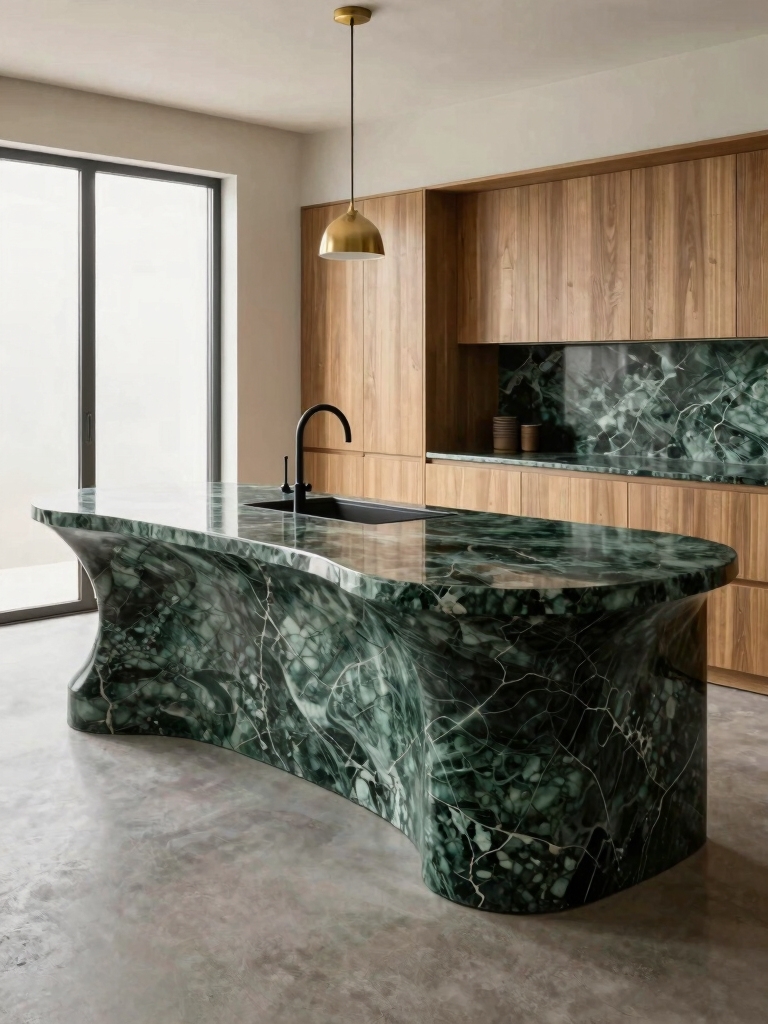
The rectangle is no longer the only option, and unexpected island shapes, curved, rounded, or angled, are trending for both looks and flow. A curved island softens a kitchen, removes the sharp corners you bump in a tight space, and guides foot traffic around the room more gracefully. It is the shape trend that is as practical as it is striking.
A rounded or curved end makes a great seating spot and feels more sociable than a hard corner, while an angled island can fit an awkward layout a rectangle cannot. The trade-off is cost and fabrication, since curved counters and cabinetry are custom work, so weigh the budget against the benefit before you commit to a shape, and confirm the flow still works with your overall island plan.
- A curved or rounded end softens corners and makes a sociable seat
- An angled island can fit an awkward layout a rectangle cannot
- Expect custom-fabrication cost, since curves are not off-the-shelf
Common Mistakes to Avoid
The biggest island mistake is chasing the look before the function, then living with a beautiful island that chokes the walkway or has nowhere to sit. Get the size and the clearance right first, at least 36 to 42 inches on every side, and make sure the island earns its footprint with storage and seating before you fall for a finish. A trend that fails the basics fails every day.
A few more to dodge: putting a delicate marble where stools and feet will batter the sides, building a dark or oversized island into a small, dim kitchen, and forgetting the outlets and lighting that make an island usable.
Spend on the top and the function, keep the bold, trendy choices on paint where they are reversible, and budget a cushion for the structural surprises a big island can hide. Do that, and you will land on the island other people pin, the kind the most-pinned kitchens are built around.
Kitchen Island Design Questions
?What is the most popular kitchen island trend right now?
Two looks dominate: bold statement materials like marble or quartzite waterfalls and raw-edge stone, and warm, characterful wood like reclaimed or painted islands. Both photograph beautifully; the right one for you depends on your budget and how hard your kitchen actually works.
?How much clearance do I need around a kitchen island?
At least 36 to 42 inches of clear floor on every side, and closer to 48 inches where a dishwasher or oven door swings open. Without that room, even the most beautiful island turns a smooth kitchen into an obstacle course, so the clearance comes before the finish.
?Is a waterfall island worth the cost?
It depends on your budget and taste. A waterfall uses far more stone and skilled labor, so it costs well above a standard top. If you love the sculptural look but not the price, run the waterfall down just one end, or choose durable quartz over delicate marble for the sides.
?What is the cheapest way to make an island look high-end?
Paint it a bold, confident color while keeping the perimeter cabinets neutral, and add a great pair of pendants overhead. For a few hundred dollars and a weekend, a painted island plus statement lighting reads designed and intentional without touching the structure or the counters.
?Should the island match the rest of the kitchen?
It does not have to, and contrasting it is on trend for good reason. A different color or material makes the island read as its own piece of furniture and helps define zones in an open-plan kitchen. Just tie the two together with one shared hardware or metal finish so the contrast looks planned.
Choose the Island You Will Actually Use
The island trends worth pinning are the ones that fit how you really live, not just how a photo looks. A marble waterfall or raw-edge stone wows in a kitchen with the budget and the careful hands to keep it; a painted or reclaimed-wood island brings warmth and personality for far less. Underneath every trend, the island still has to work, with the right size, storage, and seating.
Pick the look that matches your cooking, your space, and your budget, and put the money into the top and the function you touch daily. Keep the boldest moves on paint where they are reversible, get the clearance right, and your island will earn its place at the heart of the kitchen for years, long after the mood boards move on.
More to Explore


