
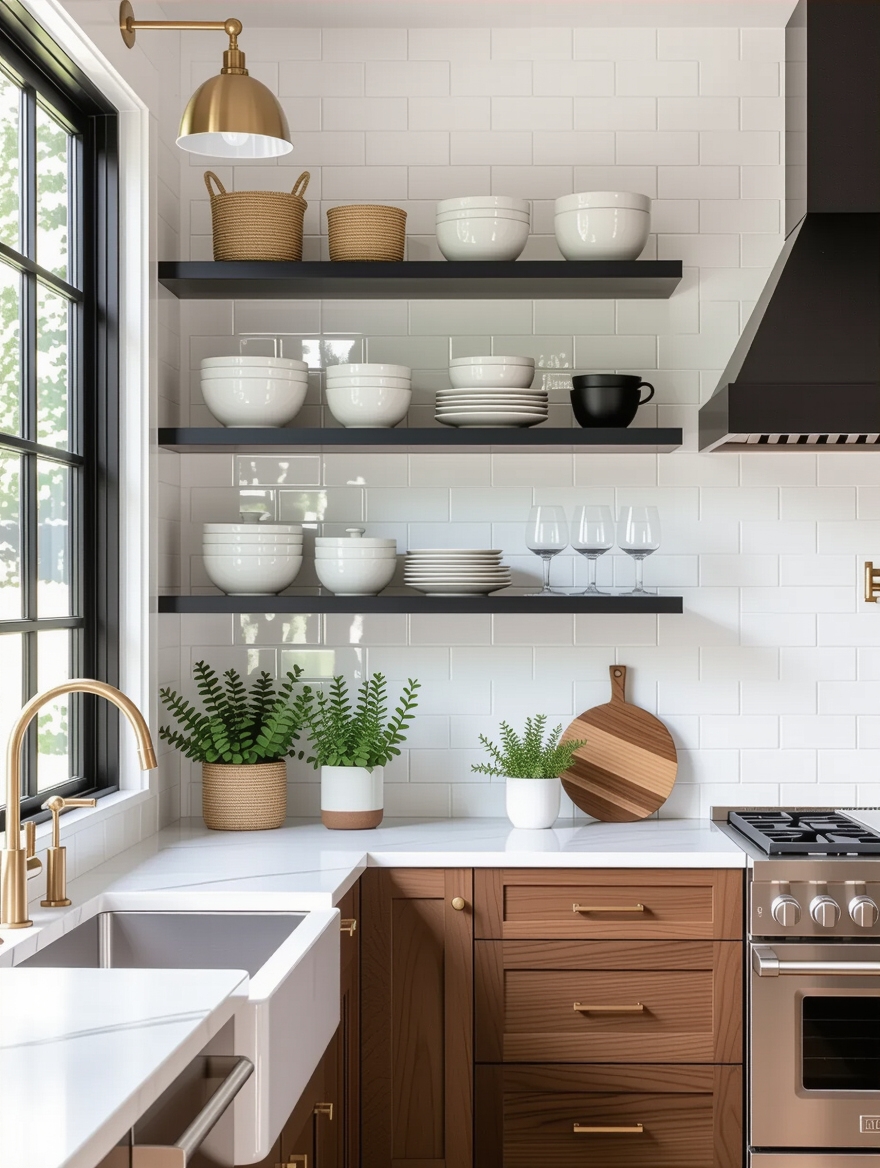
Open shelving is one of those kitchen ideas that looks incredible in photos and divides people in real life. Done right, it opens up a wall, shows off beautiful pieces, and gives a kitchen that custom, designed feeling that makes guests stop and look. Done without a plan, it just puts your clutter on display. So before the wow, an honest question: is it right for you?
If you will edit your shelves and wipe them down now and then, open shelving can absolutely wow. The trick is choosing the right shelf style for your kitchen and your habits, then styling it with restraint. Below are the open shelving ideas that truly impress, from picking floating or bracketed shelves to mixing wood and metal, with the honest trade-offs along the way.
The Short Version
- Open shelving is not for everyone; it suits people who will edit and dust, and rewards them with a custom, airy look.
- Choose the shelf style for your kitchen: floating for sleek modern, bracketed for rustic or industrial character.
- Wood looks warm, metal looks modern, and a wood-and-metal mix gives the most designer result.
- The wow comes from substantial shelves, a tight edit, and a few standout pieces, not from filling every inch.
Is Open Shelving Right for Your Kitchen?

Before you fall for the look, be honest about how you live. Open shelving rewards people who own pretty, cohesive dishes and do not mind a little dusting and styling. It punishes those who cram, stack, and never tidy, because every bit of that is on display. There is no door to hide behind.
The kitchens where open shelving wows are the ones where the owner treats the shelves as a small display. I tell clients to think of open shelving as a feature wall, not bonus storage. If that sounds like you, the payoff is huge: an airy, custom look for a fraction of the cost of cabinets.
If it does not, a mix of mostly closed cabinets with one or two open shelves gives you the look with far less upkeep, the same balance behind any clutter-free open shelf.
- Open shelving suits people who edit, style, and dust a little.
- It works best with cohesive, pretty dishware you do not mind showing.
- Unsure? Start with one or two shelves among closed cabinets.
How to Choose Your Open Shelving Style

The style of the shelf should match your kitchen and work with it. A sleek, handleless modern kitchen wants minimal floating shelves. A farmhouse or industrial space calls for chunky wood on visible brackets. Picking the wrong style is the quickest way to make open shelving look out of place.
Let the shelf style follow the kitchen’s style
Think about material and mounting together. The material, wood, metal, stone, sets the mood, and the mounting, floating or bracketed, sets the level of polish. A thick walnut shelf on leather straps feels rustic-luxe, while a slim white shelf hidden on a cleat feels crisp and modern.
Match the shelf finish to your existing wood and metal tones too. Repeat the cabinet wood or the hardware metal in the shelves and brackets, and the open shelving looks built-in rather than added on. That single move separates a planned look from an afterthought.
Heads-Up
Open shelves near the stove collect grease, and everything on them gathers dust, so plan to wipe pieces and shelves every week or two. If that sounds like too much, keep open shelving away from the cooktop and limit it to a styled accent in a cooler corner.
Floating vs Bracketed Open Shelves

The biggest shelf decision is floating versus bracketed, and each has a clear personality. Floating shelves hide their hardware for a clean, minimal, modern look, and they suit contemporary kitchens beautifully, but the concealed brackets limit how much weight they hold.
Bracketed shelves show their supports, which becomes a design feature in rustic, industrial, or traditional kitchens, and they carry far more weight, so they handle heavy dish stacks with ease.
Choose floating for sleek and minimal, bracketed for character and strength. If you love the floating look but need to hold real weight, use a heavy-duty concealed bracket rated for the load. Mount into studs either way. The mounting you pick shapes both the style and the practicality of the whole arrangement.
- Floating shelves look minimal and modern but hold less weight.
- Bracketed shelves show character and carry heavy dish stacks.
- Mount either type into studs, and match the bracket to your style.
Rustic Wood Shelves for Warmth and Character

Chunky wood shelves are the warmest, most characterful open-shelving idea, and they wow in farmhouse, cottage, and transitional kitchens. A thick slab of oak, walnut, or reclaimed timber on iron or brass brackets brings instant warmth and texture that painted cabinets cannot. The grain, the thickness, the little imperfections all signal character.
Reclaimed and live-edge wood take the look further. A piece of salvaged barn wood or a live-edge plank becomes a small feature in itself, and its age hides wear beautifully, which makes it forgiving in a working kitchen. The more honest and substantial the wood, the more it wows.
Pair rustic wood with the right hardware and styling to keep it from sliding into kitsch. Black iron or aged brass brackets, a few pieces of pottery and a plant, and the shelves look collected and warm. I love a thick reclaimed shelf as the one element that gives a plain kitchen real soul.
Two open-shelving myths.
❌ Myth: Floating shelves cannot hold real weight.
✅ Reality: Quality concealed brackets rated for the load can hold a full stack; the cheap ones are the problem, not the floating look.
❌ Myth: Open shelving is always cheaper than cabinets.
✅ Reality: The shelves are cheaper, but doing them well, good wood, quality brackets, the styling pieces, adds up; it is still usually less than cabinetry.
Sleek Metal Shelving for a Modern Look

At the other end, sleek metal shelving brings a crisp, modern, almost professional edge. Stainless, blackened steel, or brass shelving suits contemporary and industrial kitchens, and it nods to the restaurant-kitchen look that feels current right now. Metal is also tough, wipes clean, and handles heat and moisture better than wood near a stove or sink.
Thin metal shelves or metal-framed glass shelves keep things light and airy, while a metal rail system adds a pro, utilitarian feel. The look is cooler and more minimal than wood, so warm it up with a few wood or ceramic pieces in the styling. Metal shelving wows in a sleek kitchen the way wood does in a rustic one, the same range you see across open shelving displays that pop.
Wood and Metal Shelf Combinations

The combination that wows most reliably is wood and metal together, because it borrows warmth from one and polish from the other. A wood shelf with metal brackets is the classic move: walnut on brass for warm and elegant, oak on black iron for modern farmhouse, light wood on stainless for Scandinavian-industrial. The mix gives you texture and contrast in a single piece, which is exactly what makes high-end shelving look designed.
A wood shelf with quality brackets is often a weekend project around $50 to $150 per shelf, far less than cabinetry. Pick one wood tone and one metal, then echo each elsewhere in the kitchen, the hardware, a light fixture, a stool, so the shelving ties into the whole room. This pairing suits almost any style, which is why it is the safest and most impressive choice for most kitchens, much like a shelf decor formula that works.
- Pair a wood shelf with metal brackets for warmth and polish at once.
- Match the metal to your hardware and the wood to your cabinets or floor.
- Echo both finishes elsewhere so the shelving ties into the room.
Which shelf material fits your kitchen?
1Farmhouse, cottage, or transitional
Go chunky wood on iron or brass brackets for warmth and character.
2Modern, contemporary, or industrial
Choose sleek metal or thin floating shelves for a crisp, current look.
3Somewhere in between
Mix a wood shelf with metal brackets for the most flexible, designer result.
Shelves That Are Practical and Beautiful

The open shelving that truly wows is both beautiful and useful, since a shelf that only holds decor wastes prime kitchen real estate.
I recommend choosing pieces that look good and earn their keep: matching plates and bowls you actually use, pretty canisters holding flour and sugar, a wood board that is also a tool, glasses ready to grab. When the beautiful things are the useful things, the shelf stays styled because you put items back in their spots naturally.
Place practical shelves where you reach for things. Everyday dishes and glasses belong on the lowest, easiest shelf, right by the dishwasher or the prep zone, while the prettier, occasional pieces go higher. A shelf that is pretty but impractical becomes a dust collector, so design for how you actually cook, not just how it photographs.
- Style with pieces that are both pretty and used daily.
- Keep everyday items on the lowest, easiest-to-reach shelf.
- Store dry goods in nice jars so storage doubles as styling.
Chic Organization on Open Shelves

Organization is what separates open shelving that wows from open shelving that looks messy, and the chic version is all about visible order. Group like with like, stack matching dishes in tidy columns, line glasses up by height, corral small items in matching baskets or jars, so the arrangement looks deliberate. Repetition and alignment are what the eye loves.
Hide the unphotogenic and show the rest. Decant cereal and dry goods into matching glass jars, swap mismatched packaging for uniform containers, and tuck the truly ugly stuff into closed storage. A few matching canisters and baskets do more for the chic, organized look than any single pretty object, and they keep the shelf functional, the same discipline behind open shelf styling rules worth stealing.
- Group like with like and stack matching pieces in tidy columns.
- Decant dry goods into matching jars for instant order.
- Corral small items in coordinated baskets or canisters.
Greenery to Bring Shelves to Life

A little greenery is the finishing touch that makes open shelving feel alive and intentional. One trailing plant softening a shelf edge, a few potted herbs you actually cook with, or a single stem in a pretty bottle brings organic softness to all the ceramic, wood, and metal. Plants add the movement and life that a styled-but-static shelf can lack.
Choose forgiving plants for a tough kitchen environment, pothos, philodendron, a snake plant, or sturdy herbs, and keep them out of the hot, greasy zone right above the stove. Pot them in something that suits your palette, since a plastic nursery pot undercuts the whole look. One healthy trailing plant does more than a row of struggling ones, so keep it simple and keep it alive.
Maximize Space With Smart Shelves

Open shelving is a small-kitchen secret, because it claims storage from walls that cabinets would make feel heavy and closed-in. A few shelves on an empty wall, above a window, or in an awkward corner add real storage while keeping the room feeling open and airy. Going vertical with shelves frees up counter and floor space you cannot spare.
Use the often-wasted spots. The wall above the sink, the gap beside a window, the run below existing cabinets, and even a narrow strip by the range can all hold a smart shelf. In a tight kitchen, taking shelving up toward the ceiling for rarely-used pieces keeps the everyday items reachable and the counters clear.
The wow in a small kitchen is making storage look like styling. When the things you need to store are also the things worth displaying, open shelves give you function and a designed look at once, turning a storage problem into the prettiest wall in the room, much like the cleverest open shelf arrangements that look expensive.
Styling Tips to Keep Them Wowing
Once the shelves are up, a few styling habits keep them wowing day to day. Edit ruthlessly and leave breathing room, since a shelf about two-thirds full always looks more designed than a crammed one. Keep the palette tight, group in odd numbers, vary the height with a stack of books or a riser, and lean a board or a piece of art behind a few objects for depth. These small moves are the difference between a styled shelf and a storage shelf.
Then keep it alive. Wipe the shelves and pieces every week or two so dust and grease never build up, and restyle every season, swapping a few pieces and editing out anything that crept in. It takes about twenty minutes and resets the whole look. Treat your open shelving as a small, changing display, and it keeps impressing long after the first photo.
Open Shelving Questions, Answered
?Is open shelving a good idea in a kitchen?
It depends on your habits. Open shelving looks airy and custom and costs less than cabinets, but everything sits on display and collects dust, so it suits people who own cohesive dishware and will edit and wipe their shelves. If you tend to cram and rarely tidy, a few open shelves among mostly closed cabinets gives the look with far less upkeep.
?Are floating or bracketed shelves better?
It comes down to style and weight. Floating shelves hide their hardware for a sleek, modern look but hold less weight, while bracketed shelves show their supports as a rustic or industrial feature and carry heavy dish stacks. Choose floating for minimal kitchens and bracketed for character or for holding a lot, and mount either into studs.
?What material is best for open kitchen shelves?
Thick wood is the warmest and most popular, ideal for farmhouse and transitional kitchens, while metal or metal-and-glass suits sleek modern and industrial spaces. A wood-and-metal combination is the most flexible and designer-looking, working in almost any style. Whatever you choose, go substantial, since thin, flimsy shelves cheapen the look.
?How do I keep open shelves from looking cluttered?
Edit hard and leave space. Display only cohesive, pretty pieces, keep the palette to two or three tones, fill each shelf about two-thirds, and group items in tidy, repeated arrangements. Hide everyday clutter and mismatched gear behind closed doors, and do a quick weekly tidy. Restraint is what keeps open shelving looking designed.
Open Shelving Worth Showing Off
Open shelving wows when you choose the right shelf for your kitchen and style it with restraint. Match the material and mounting to your space, sleek floating metal for modern, chunky bracketed wood for rustic, or a wood-and-metal mix for almost anything, then edit hard, keep the palette tight, and let a few standout pieces and a plant do the talking. The wow is never about how much you fit on the shelves; it is about how intentional they look.
If you are thinking about open shelving, bookmark this list and start by being honest about your habits and your kitchen’s style. Pick the shelf type that fits both, put up one or two to test the look and the upkeep, and style them with your prettiest, most cohesive pieces. Done thoughtfully, a wall of open shelves can become the feature everyone notices, and the easiest high-impact change in the whole kitchen.
More Looks We Love


