
When a client tells me their kitchen feels dated, my first look is almost never the counters or the floor. It is the cabinets. They cover more square footage than anything else in the room, so the door style, finish, and color set the entire mood before you notice a single other thing.
Change the cabinets and you change the whole kitchen. I have watched a single repaint take a room from tired to current in a weekend. That is also why it is the choice worth getting right. Here are sixteen modern cabinet design picks, from clean flat-panel to glass-front and mixed-material, with honest notes on cost and which space each one suits best.
Choosing the Right Cabinets
Cabinets are the biggest visual surface in a kitchen, so the door style and finish do most of the work of making a room feel modern. Flat-panel and handleless fronts read the cleanest; matte hides smudges while gloss brightens a dark room.
Match the pick to your space and habits, not just the trend. A bold color suits a confident cook; warm wood softens a sleek room; glass-front rewards the tidy. Get the cabinets right and everything else falls into place.
Sleek Flat-Panel Cabinets

Flat-panel, or slab, cabinets are the backbone of modern design. With no frame, no raised panel, and nothing fussy to date, they keep a kitchen calm and current, and they are the door style I recommend to almost anyone starting fresh. The simplicity is the whole point. Slab doors also tend to cost less to build than detailed framed ones, with semi-custom running around $150 to $650 a linear foot.
- Choose a wood veneer or matte painted finish for the cleanest look.
- Run them to the ceiling to avoid a dust-collecting gap above.
- Pair with slim or hidden hardware so the fronts stay uninterrupted.
Two-Tone Cabinets for Depth

Two-tone cabinetry adds depth without a single extra material. A darker color on the lowers or the island with a lighter shade above gives the eye contrast and a clear focal point, which keeps an all-one-color kitchen from falling flat.
Let one tone clearly carry the room and use the second as the accent. A deep island against soft white perimeter cabinets is the most forgiving version, and the one clients ask me for most, and it pairs well with the modern classic pairings worth borrowing.
ℹ️Good to Know
Flat-panel cabinets cost less to build than detailed framed doors because there is less labor and material in the door itself. That makes slab fronts both the most modern and often the most budget-friendly choice, before you account for finish and hardware upgrades.
Matte Cabinets for Subtle Elegance

Matte fronts are having a long moment for good reason. The low-sheen finish feels soft and contemporary, photographs without glare, and, the part people love most, it hides fingerprints far better than gloss. For a busy family kitchen, that alone makes it worth choosing.
Keep matte paired with simple slab doors so the finish does the talking.
- Matte hides smudges, ideal for high-touch kitchens.
- It suits calm, modern palettes especially well.
- Add one warm metal so matte does not feel flat.
Glossy Cabinets to Reflect Light

Gloss does the opposite job. It does it beautifully in the right room. The reflective fronts bounce light around, which makes a small or dim kitchen feel brighter and larger, and they bring a sleek, light-filled drama matte cannot.
Best for Dark or Small Kitchens
The trade-off is honest: gloss shows every fingerprint, so it rewards a tidy household and good light.
If you love the brightness but dread the wiping, use gloss on just the uppers and keep the lowers matte. A wipe-down each evening takes a couple of minutes and keeps it looking sharp.
🅰️Matte Finish
Pick this for a busy kitchen; it hides fingerprints, photographs softly, and suits calm modern palettes.
🅱️Glossy Finish
Pick this for a dark or small room that needs brightening, if you do not mind a quick wipe-down to keep it sharp.
Bold Colored Cabinets That Make a Statement

For the brave, a bold cabinet color is the fastest way to give a kitchen personality. Deep green, navy, or even a moody black turns plain cabinetry into the star of the room. The catch is commitment, since repainting cabinets is a real job, so this is the pick for someone sure of their taste. A repaint runs roughly $200 to $600 if you do it yourself, or $1,000 to $3,000 for a pro.
- Put bold color on the island or lowers, where it is easier to live with.
- Keep counters and walls neutral so the color stays the statement.
- Test a large sample on the actual doors before you commit.
Warm Natural Wood Cabinets

Wood is the antidote to a kitchen that feels cold, and it has roared back as the warm choice in modern design. White oak reads light and current, walnut brings a deep richness for a bit more, and both show off straight grain that flat doors display beautifully.
You do not need a whole kitchen of it. A wood island or a run of wood lowers against painted uppers gives the warmth without the dated all-brown look.
Keep the finish matte and natural rather than orange or glossy. The contrast of warm grain and a cool counter is what makes the room feel considered.
Not sure which door style fits? Match it to how you live.
🎯You want zero fuss and a clean look
Flat-panel or handleless fronts in matte; nothing to date, nothing to catch.
🎯You love to display your dishes
A few glass-front uppers, ideally in reeded glass that forgives an imperfect shelf.
Stylish Storage: Open Shelving and Cabinets
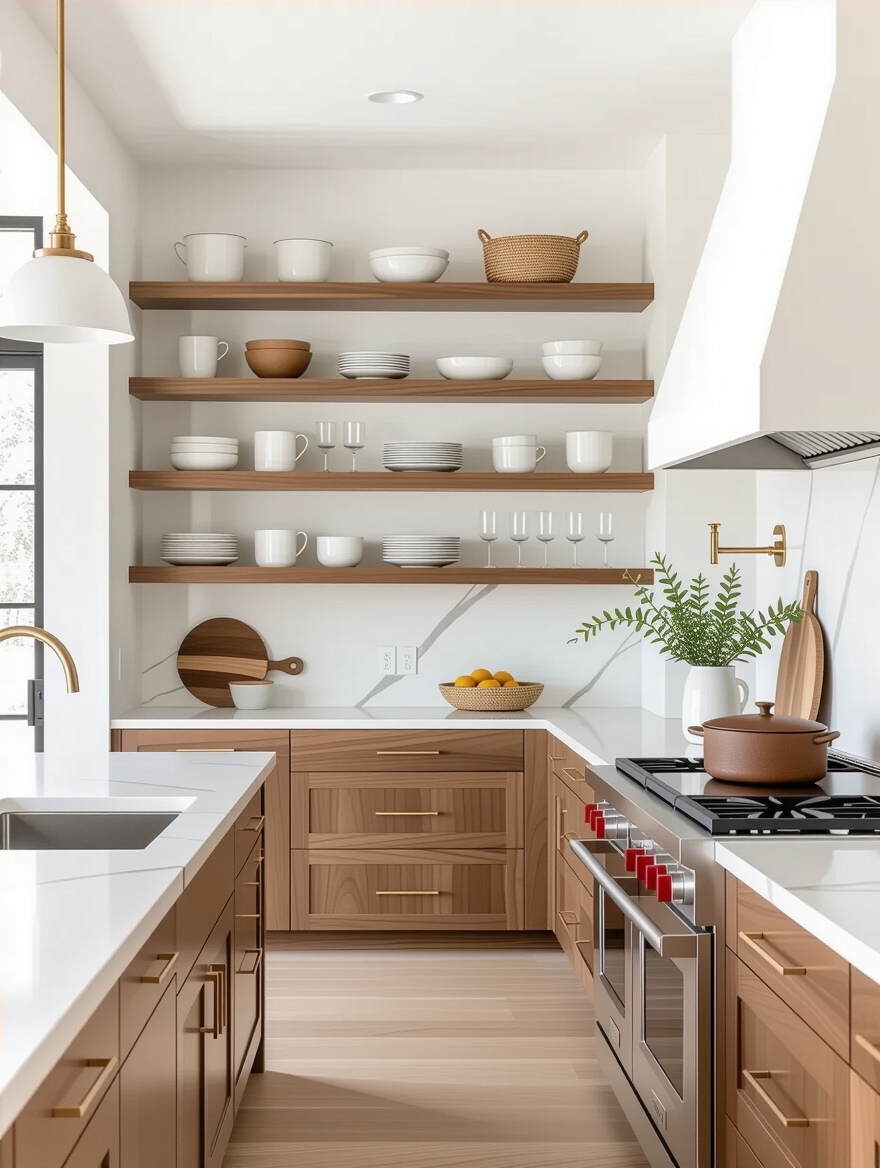
Mixing a short run of open shelving into your cabinetry breaks up a heavy wall of doors and gives a few good pieces room to breathe. The trick is balance: mostly closed cabinets to hide the clutter, with one open zone for display. All shelves and no doors becomes a dusting chore fast. I see it happen constantly.
- Keep most storage closed and add one open run for display.
- Style the shelf with a few matched pieces, not a crowd.
- Use solid wood shelves rather than thin floating brackets.
Sleek Handleless Cabinet Surfaces

Handleless cabinets are the cleanest modern look there is. With push-to-open mechanisms or a slim recessed channel instead of pulls, the fronts run unbroken, which makes the whole kitchen feel calm and architectural. It is the door I get asked about most by clients chasing a minimalist room.
The trade-off is that push-to-open hardware costs a little more, around $5 to $15 a door, and can wear over many years. For most kitchens, a recessed finger channel gives the same look with simpler mechanics.
Glass-Front Cabinets for Display

Glass-front cabinets are the happy middle between closed storage and open shelving. They protect dishes from dust while still showing them off, and a few glass doors break up a solid run with light and depth.
Reeded Glass Forgives the Mess
Reeded or fluted glass is the current favorite, since it hints at what is inside without demanding the contents be perfectly styled.
Use glass on one or two upper cabinets, not the whole wall, and reserve them for pieces worth seeing. Frosted or reeded glass forgives a less-than-perfect shelf, which is exactly why I reach for it over clear glass in a real, used kitchen rather than a staged one.
Mixed-Material Cabinets: Metal and Wood

For a confident, designed look, mixing materials within the cabinetry adds richness a single material cannot. Warm wood fronts with a blackened steel or brass detail, or a metal-framed glass door, give a kitchen depth and a custom, high-end feel.
One Wood, One Metal
The key is restraint: one wood, one metal, and a clear job for each. Too many materials and the cabinetry turns busy.
This is where a kitchen starts to look truly bespoke. The same layering drives the warmth in these mid-century cabinetry elements.
Floating Cabinets for an Airy Feel
Wall-mounted, floating cabinets lift the storage off the floor and let you see the wall beneath, which makes a kitchen feel lighter and larger. The look is sleek and modern, and the gap underneath, often lit, adds a soft glow and a sense of space.
It works best for base cabinets and vanities where the load is moderate, since floating units need solid blocking in the wall to carry weight. A calm minimal base leans on exactly this kind of lightness, and the lit gap underneath doubles as a soft night-light in an open-plan home.
Cabinets With Integrated Lighting
Building light into the cabinetry is the upgrade that makes a kitchen feel custom. Under-cabinet strips wipe out the shadows you cook in, in-cabinet lighting shows off glass-front contents, and a lit toe-kick adds a soft evening glow. All of it runs on a dimmer for instant mood.
It is a modest add during a build and a bigger job to retrofit, so plan it before the cabinets go in. Warm strips around 2700K keep the glow inviting rather than clinical.
Eco-Friendly Sustainable Materials
Cabinetry is a big purchase, so choosing sustainable materials lets it look good and do a little good. Bamboo, reclaimed wood, and FSC-certified plywood with low-VOC finishes bring real texture and a clear conscience, and they often age with more character than budget particleboard.
Ask about the core and the finish, not just the door, since low-VOC adhesives and finishes matter most for the air in a room you cook in every day.
Textured Fronts for Depth
Texture is the quiet way to give modern cabinets interest. No color or shine needed. Fluted or reeded fronts, a wire-brushed wood grain, or a subtle ribbed panel catch the light and add depth, so even an all-neutral kitchen never feels flat.
Keep textured fronts to one zone, an island or a tall pantry, so they stay a feature rather than overwhelming the room. Against simple flat cabinets, one textured run looks intentional and rich. For more on layering warmth, see the warm modern feel and these small-space cabinet tricks.
Modern Cabinet Questions, Answered
?What cabinet style is most modern?
Flat-panel, or slab, doors are the most modern, especially handleless versions with push-to-open or a recessed channel. With no frame or raised panel, they keep the kitchen clean and current and rarely date.
?Are matte or glossy cabinets better?
Matte hides fingerprints, photographs softly, and suits most modern kitchens, which makes it the safer everyday choice. Gloss brightens a dark or small room by bouncing light but shows every smudge, so it rewards a tidy household.
?Is wood cabinetry still in style?
Very much so. Warm woods like white oak and walnut have returned as the way to keep a sleek kitchen from feeling cold. Used on an island or lowers against painted uppers, wood reads current rather than dated.
?Are glass-front cabinets practical?
Yes, in moderation. They protect dishes from dust while showing them off, and reeded or frosted glass hides a less-than-perfect shelf. Use them on one or two uppers for pieces worth seeing, not the whole wall.
?Do handleless cabinets cost more?
Usually a little. Push-to-open mechanisms add cost and can wear over years, while a recessed finger channel gives the same hardware-free look with simpler, more durable mechanics for less.
Let the Cabinets Set the Tone
Because cabinetry covers more of a kitchen than anything else, the right door style and finish do the heavy lifting of making a room feel modern. Whether you go clean flat-panel, warm wood, or a confident color, the pick that suits your space and your habits is the one that will keep looking right.
Start with the door style and finish, match them to your light and how tidy you keep things, and the rest of the kitchen has a strong foundation to build on. Get the cabinets right and the whole room follows.
More Looks We Love


