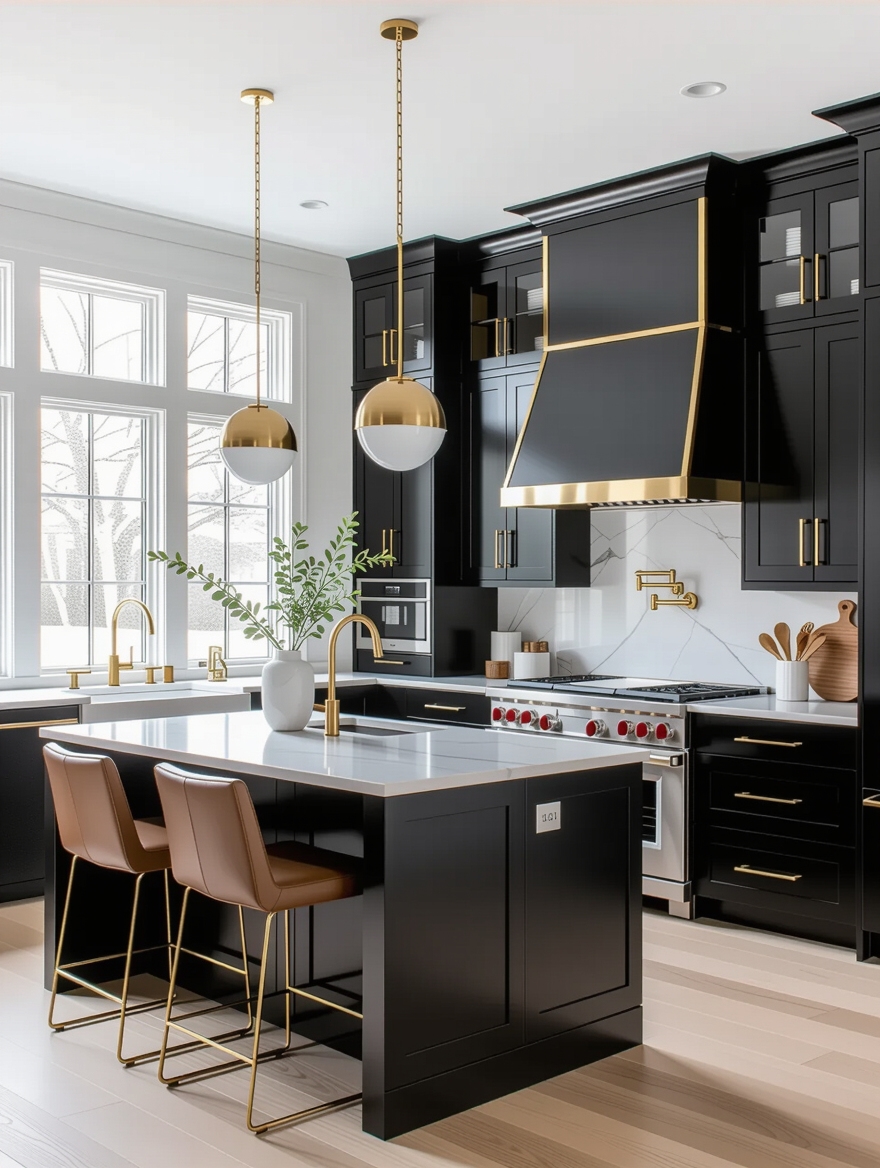

What makes a galley kitchen feel cramped is almost never the length; it is the corridor down the middle and the bare runs on either side. Get the walkway right and use both walls fully, and a narrow galley can out-cook kitchens twice its size. That corridor is the whole game.
These eleven ideas are built around the galley’s two strengths and one weakness: two long walls of potential storage, and a tight central path you cannot crowd. I have worked in plenty of skinny galley kitchens, and these are the moves that buy back the most function per inch. Start with the walkway, then climb the walls.
Galley Kitchen, in Short
Protect the walkway first. A galley needs roughly 42 to 48 inches between runs so doors open and two people pass, and nothing should ever narrow that path.
Then go up, not out. With a narrow floor, the walls and vertical space hold your storage, so take cabinets tall and put the rest on rails and shelves.
Light Colors to Open Up a Galley
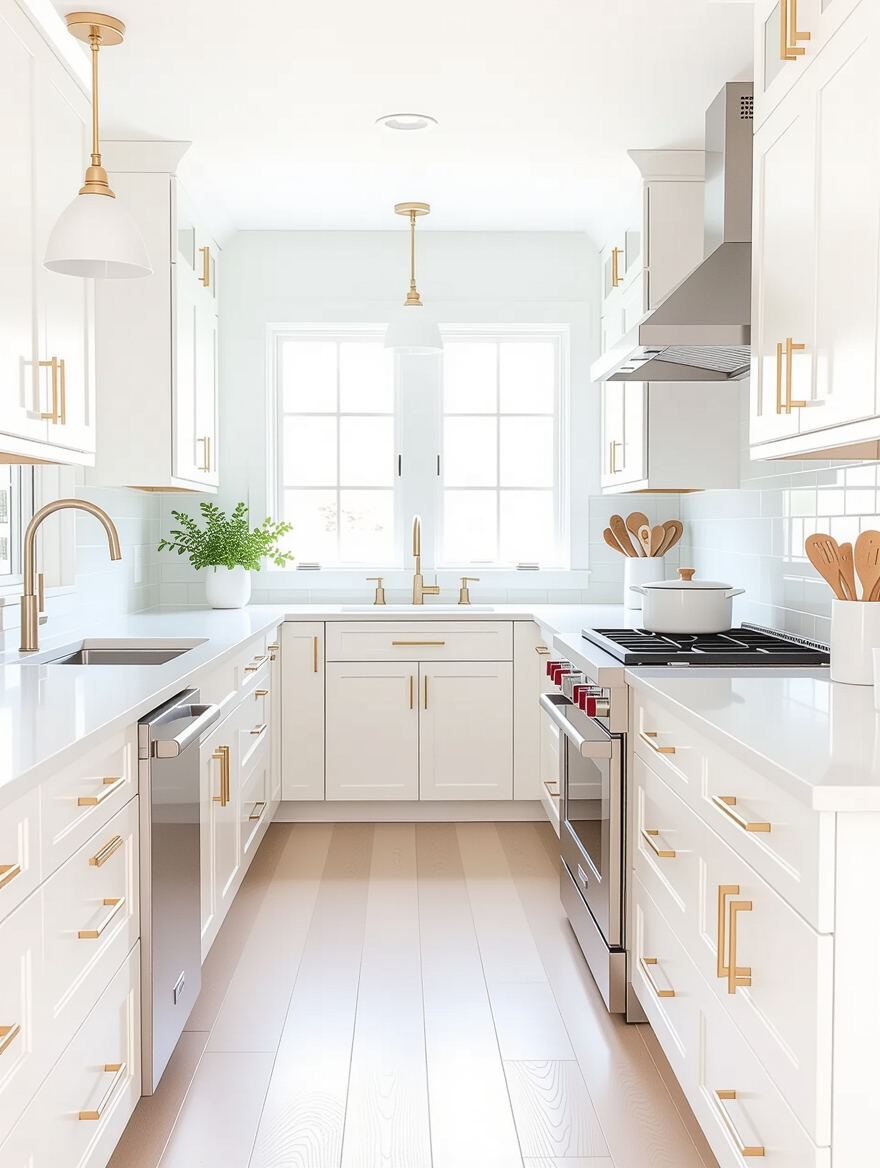
In a narrow galley, color does the work of square footage. Pale cabinets and walls bounce light down the corridor and blur the line where the two runs face off, so the space feels wider than the tape measure says. A dark galley, by contrast, reads like a tunnel.
Keep the two facing runs in the same light tone so the corridor does not feel like two competing walls. A continuous pale floor running the length of the galley stretches it further still.
- Run light, low-contrast colors on both walls to widen the corridor.
- Carry one floor color end to end so the galley reads as one long space.
- Save any deep color for a single short accent, not a whole facing run.
Open Shelving on One Galley Wall

A galley has two walls of uppers staring at each other, which can feel heavy and close. It boxes you in. Swapping one run for open shelves opens that wall up and keeps the corridor from feeling closed on both sides.
Put the shelves on the run you face while working, so the view is intentional, and load them with the plates and glasses you pull down constantly. The other wall keeps its closed cabinets for the things you would rather not see.
This one-open, one-closed balance is the galley sweet spot. You get the airy, lightened feel without giving up the storage a small kitchen cannot spare.
Slim, Tall Cabinets to Maximize Storage

When the floor is narrow, the only direction left is up. So go up. Taking cabinets to the ceiling adds a whole tier of storage without stealing an inch from the walkway, which is the trade a galley always has to make.
Climb the wall, keep it shallow
Slim is the other half. A shallower upper or a 12-inch-deep pantry cabinet holds plenty while keeping the corridor wide enough to move. In a tight galley, every inch you do not project into the path is an inch of comfort.
Use the top tier for the things you reach for rarely, and keep daily items at eye level. Borrow the usual ways to hide clutter, just stacked taller and kept shallower than in a roomier kitchen.
Pull-Out Pantry Solutions
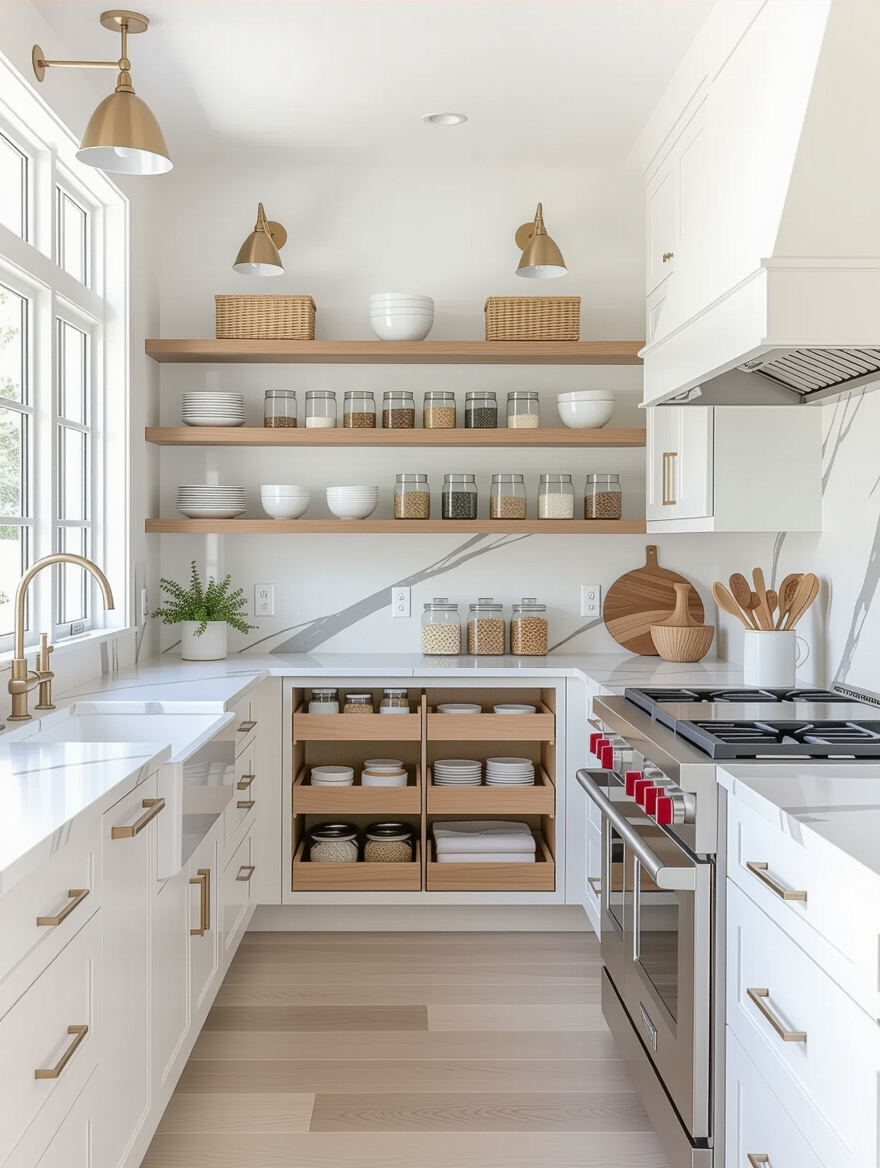
A galley rarely has room for a walk-in pantry, so a tall pull-out pantry does the same job in the width of a cabinet. Everything comes to you. The whole unit slides out so you see it all at once, which beats digging into a deep, dark base cabinet in a kitchen where you cannot step back.
Even a slim 6 to 12-inch pull-out, tucked beside the fridge or at the end of a run, swallows cans, bottles, and spices. Expect to pay roughly $80 to $200 for a pull-out pantry insert, far less than reworking the layout, and it makes a galley feel far better stocked than its footprint suggests.
📋Pull-out storage worth adding
- ✓A tall pull-out pantry beside the fridge.
- ✓A slim pull-out spice or oil rack in a narrow gap.
- ✓A pull-out cutting board for instant prep surface.
- ✓Pull-out base shelves so no pot hides in the dark.
Compact Appliances for a Narrow Galley

Standard appliances crowd a galley fast, especially when a door swings into the narrow corridor. Size them down. Compact, galley-friendly versions keep the path clear and free up counter you cannot afford to lose.
- Choose an 18 to 24-inch dishwasher so its open door does not block the run.
- Consider a slim or counter-depth fridge that sits flush rather than bulging into the walk.
- Pick a combo microwave-oven to free the counter and skip a separate appliance.
Fold-Down Counters to Expand the Galley

Counter space is the galley’s other shortage, and a fold-down or pull-out counter prints more without permanently narrowing the path. A hinged shelf at the end of a run gives you a real prep or eating surface, then folds flat so the corridor stays open.
Surface when cooking, path when not
A pull-out cutting board built into a cabinet does the same trick in even less space, sliding out only when you need it. Both add usable surface exactly when you are cooking and disappear the rest of the time.
I’d build the fold-down at the open end of the galley, away from the main traffic, so it never blocks the through-path when it is down. A simple hinged version costs about $20 to $60 in parts and an afternoon to fit.
What is your galley’s worst shortage?
🎯Storage
Take cabinets to the ceiling, add a pull-out pantry, and hang tools on wall rails.
🎯Counter space
Add a fold-down counter at the open end and a pull-out board, plus a workstation sink.
🎯It feels dark and tight
Go pale on both runs, open one wall to shelves, and layer in under-cabinet light.
Use the Vertical Wall Space, Not Just Cabinets
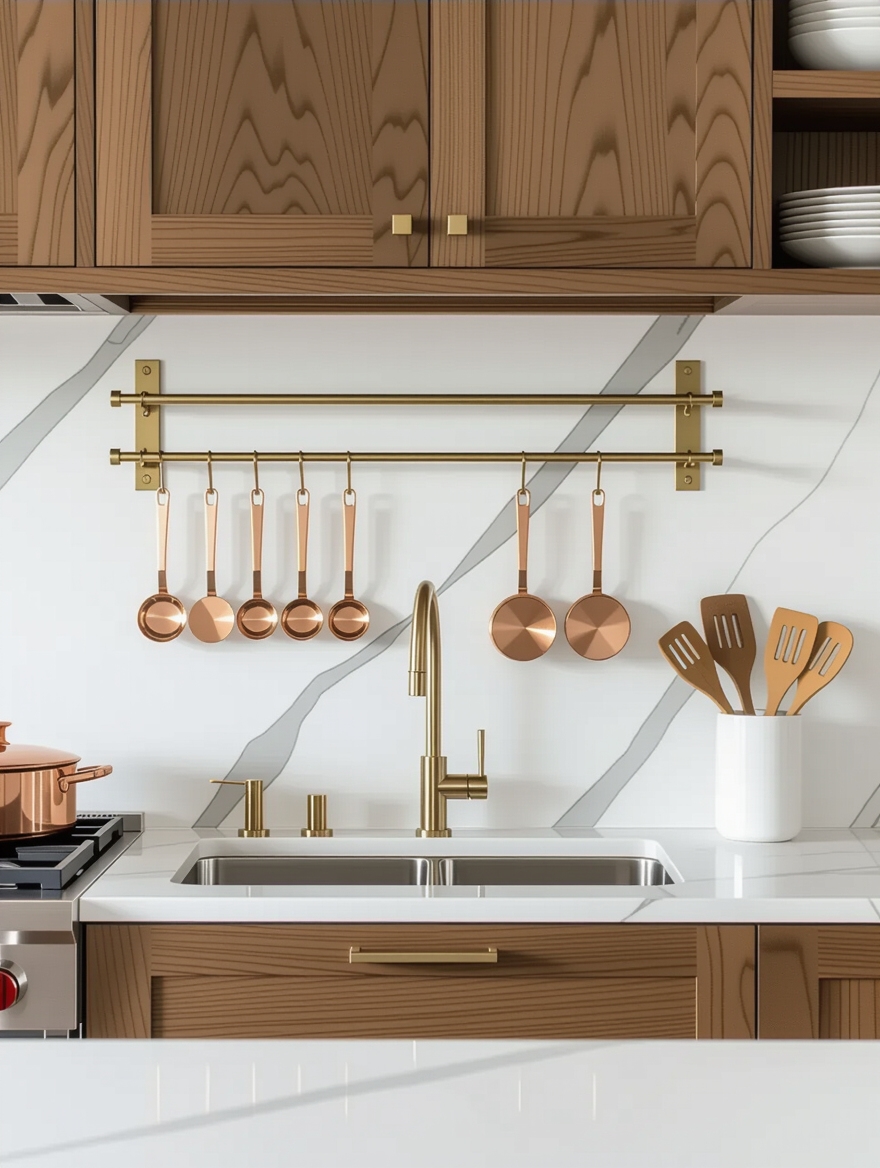
Cabinets are not the only vertical storage in a galley. The strip of wall between the counter and the uppers is prime real estate, and a rail with hooks there keeps tools, mugs, and utensils off the precious counter.
Magnetic strips for knives, a pegboard for pans, and a slim spice rail all turn bare wall into working storage. In a galley, where counter is scarce and floor is scarcer, the walls are where you win back room.
Spread these across both runs so neither counter carries everything. A few dollars of rails and hooks can clear a whole working surface, which in a galley feels like adding a counter you did not have.
Brighten a Dim Galley With Layered Light
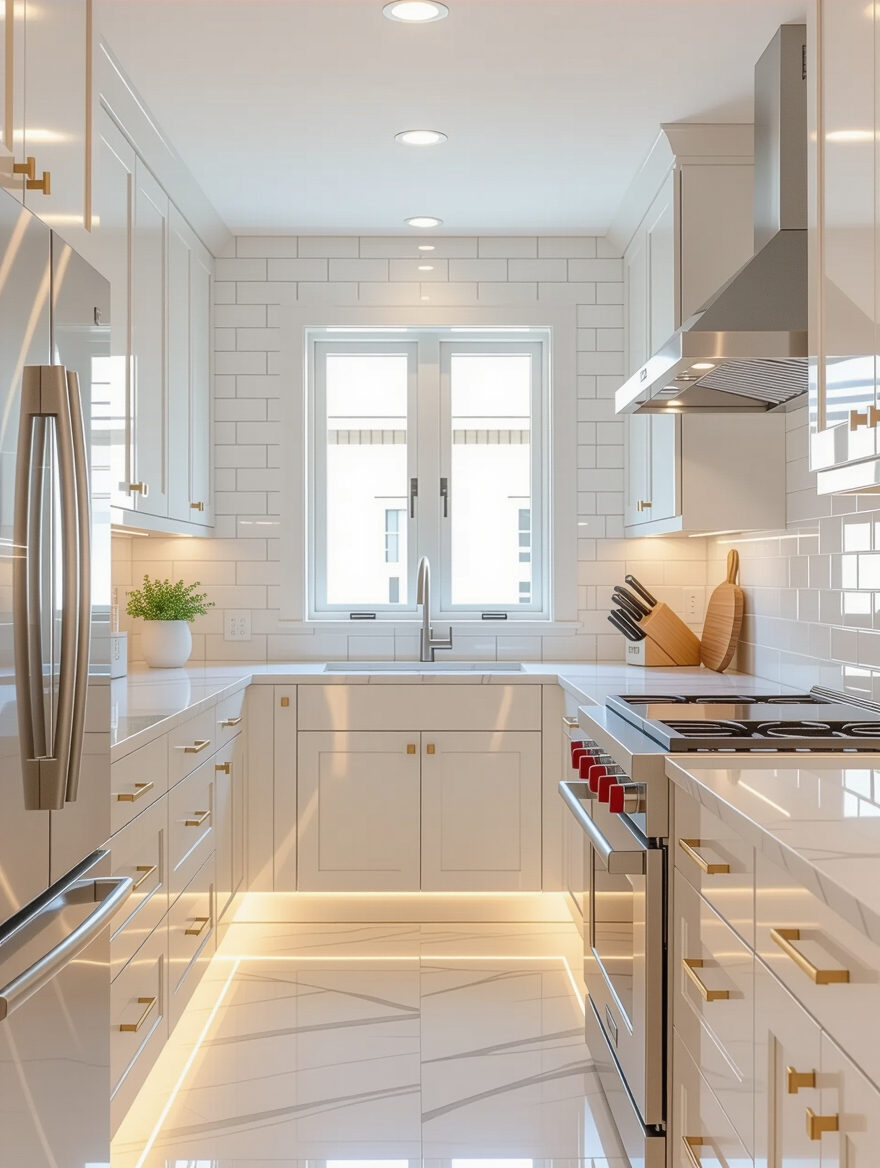
Galleys are often dim, with one overhead fixture leaving the counters in shadow as you stand over them. You work in your own shade. Layering light fixes the gloom and makes the whole corridor feel wider and more usable after dark.
Under-cabinet strips are the single best upgrade, erasing the shadow on both runs for very little. Add a bright, even ceiling light and, if you have a window at the end, keep its treatment minimal so daylight pours down the whole length of the galley.
- Run under-cabinet LED strips on both runs, about $15 to $40 each and an hour to fit.
- Use warm 2700K bulbs so the narrow space feels inviting, not clinical.
- Keep any end-window treatment light so daylight reaches the full corridor.
A few galley terms worth knowing:
📖Galley kitchen
A kitchen with two parallel runs of cabinets facing each other across a central walkway, named for a ship’s narrow kitchen.
📖Single galley
A version with cabinets on only one wall and a walkway beside it, common in apartments.
📖Walkway clearance
The width of the corridor between the runs; 42 to 48 inches keeps a galley comfortable for two.
Keep the Galley Walkway Clear

Everything in a galley serves one rule: protect the walkway. The corridor between the runs needs roughly 42 to 48 inches so two opposite doors can open and two people can pass without a shuffle. Narrow it and the whole kitchen turns frustrating, no matter how clever the storage.
That means nothing bulky lives on the floor, and no door or drawer should clash with the one across from it. Plan your appliance and cabinet doors so opposing ones never open into each other, and keep the path itself completely clear. The walkway is the feature, so guard it above all.
- Hold the walkway at 42 to 48 inches between the two runs.
- Check that opposing doors and drawers never collide when open.
- Keep the floor clear, since anything underfoot shrinks the only path you have.
Space-Saving, Multi-Functional Pieces

In a galley, every item should earn its keep more than once, since there is no room for single-use clutter. Multi-functional pieces fold a whole drawer of gadgets into one tool and keep the runs clear for cooking. When floor space is this scarce, a tool that does three jobs is worth three that do one, a principle any small kitchen plan leans on.
- Use nesting bowls and collapsible colanders that stack down to nothing.
- Add a slim rolling cart that tucks at the open end and rolls in for prep.
- Choose a workstation sink with a fitted board so the sink doubles as prep space.
Common Galley Mistakes to Avoid
The mistake I see most in a galley is squeezing the walkway to add storage. People bolt a deep cabinet or a cart into the corridor and lose the very thing that made the galley work, which is a clear path two people can share. I tell every client the same rule: storage goes up the walls, never into the walk. If a piece narrows the corridor below about 42 inches, it does not belong in a galley, no matter how useful it looks on paper.
The second trap is treating both runs the same. A galley feels balanced when each wall has a job, so I steer people toward one cooking run and one prep-and-sink run rather than scattering tasks down the whole length.
And do not forget the ends: an open end can hold a fold-down counter or a slim shelf, while a closed end is the spot for the tall pantry. Plan the two runs and the two ends on purpose, and the corridor between them stays free to do what a galley does best.
Galley Kitchen Questions, Answered
?How wide should a galley kitchen walkway be?
Aim for 42 to 48 inches between the two runs. That lets two opposite doors open at once and two people pass. Below 42 it feels cramped; a single-cook galley can go a little tighter, but never narrow the path with anything bulky.
?How do I make a narrow galley kitchen look bigger?
Keep both runs pale and low-contrast, run one continuous floor color end to end, open one wall to shelves, and layer in light. Pale color and good light widen the corridor far more than the actual measurements suggest.
?What is the biggest mistake in a small galley kitchen?
Crowding the walkway. A bulky island, a door that swings into the corridor, or clutter on the floor all break the one thing a galley needs most. Guard the path first, then add storage up the walls.
Guard the Corridor, Climb the Walls
A small galley rewards two simple instincts: protect the walkway and use every vertical inch of the two runs. Keep the corridor clear and wide, take storage up the walls, and add light and a fold-down surface, and a skinny galley starts cooking like a much bigger kitchen.
Start with a tape measure on the walkway, then pick the storage and light moves that fit. A galley’s narrowness is also its efficiency, so once every inch is working, that tight little corridor becomes one of the easiest kitchens to cook in.
Favorites to Revisit