

Why does the same green keep showing up in every kitchen people call calming? Sage is a low-saturation green pulled straight from the outdoors, and the eye takes it as restful before you can explain why. That quiet quality is most of its appeal, and it is why so many of these kitchens feel like a deep breath the moment you walk in.
The part people get wrong is the pairing. Sage behaves like a neutral, so it plays well with wood, brass, marble, navy, and black, but lean on too many partners at once and the calm evaporates. Below are the combinations people love most, what makes each one work, and how to choose the one partner your kitchen actually wants.
Sage Pairings, Quickly
What do people pair sage with most? Natural wood and warm brass lead, with white marble, navy blue, and matte black close behind.
Why does sage feel so calming? It is a soft, nature-derived green, so the eye settles on it, like a bit of the outdoors brought inside.
Is sage hard to pair? No, it acts like a neutral. The real risk is over-pairing, so pick one or two partners and let them lead.
Why People Keep Falling for Sage Cabinets
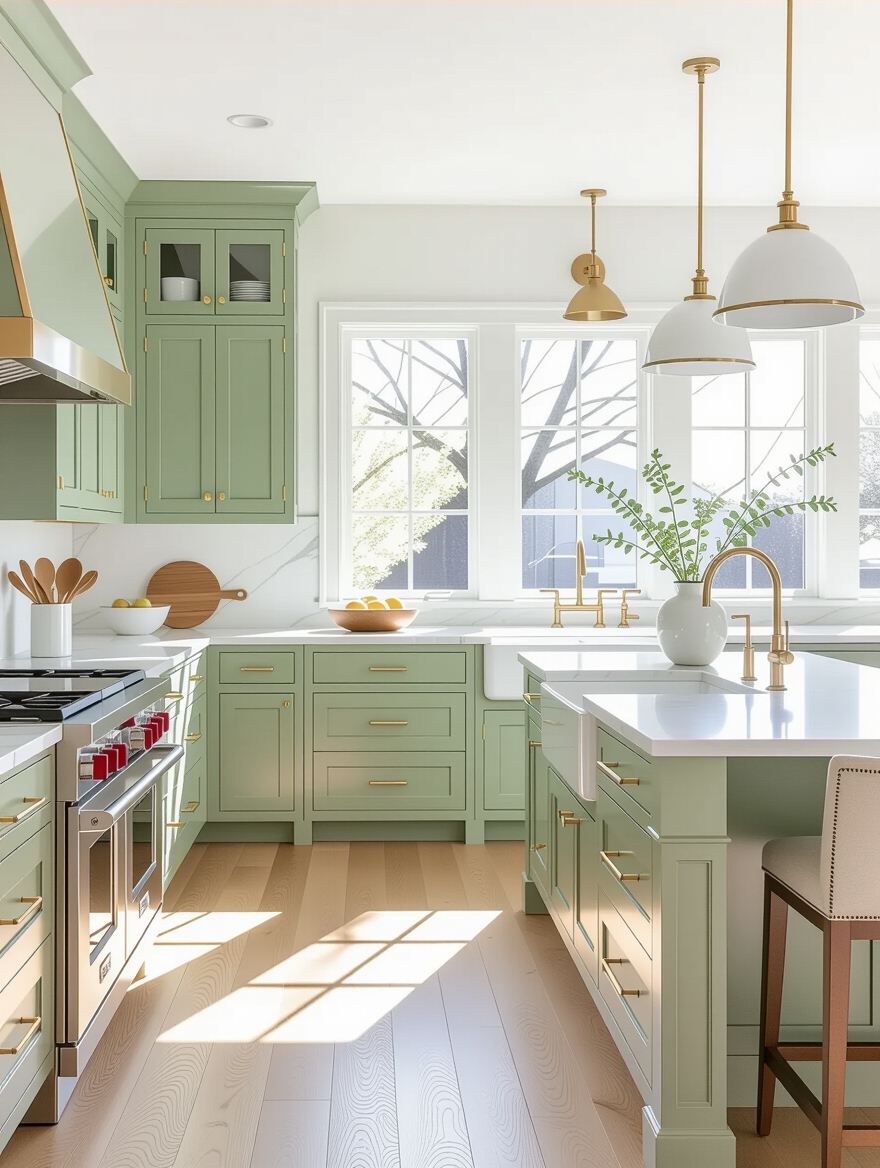
What people love about sage is not really the color; it is how the room feels with it. Because the green is soft and grayed, it lowers the visual noise of a kitchen and lets everything else settle. Clients almost always describe a finished sage kitchen as calm before they mention anything else.
- It works like a warm neutral, so it pairs with nearly any metal, stone, or wood.
- It hides daily smudges far better than a bright white.
- It flatters both modern and cottage kitchens without changing a thing but the hardware.
Farmhouse Charm With Sage Cabinets
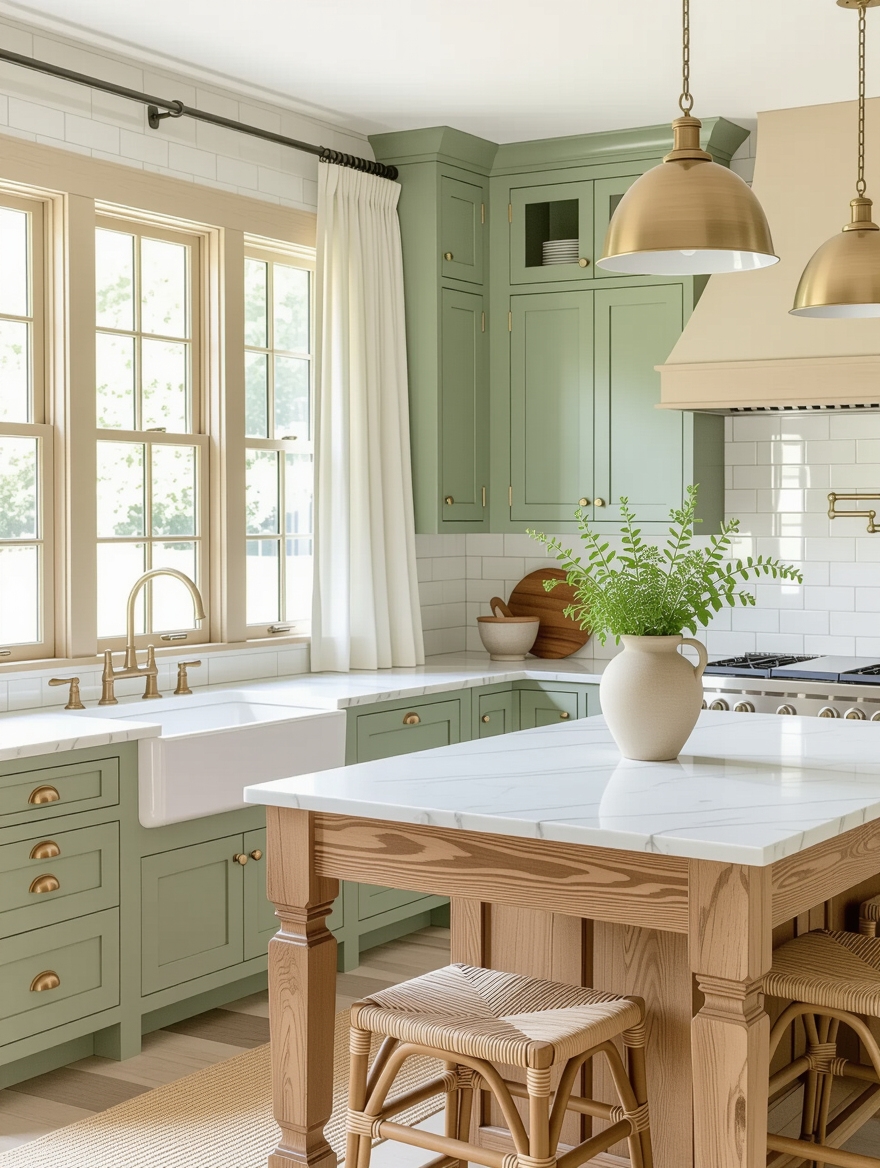
Sage and farmhouse style were practically made for each other. The muted green echoes the painted cupboards of old country kitchens, so it lands as familiar and unfussy rather than trendy.
Plain materials, big charm
Lean into the look with an apron-front sink, open wood shelving, and simple cup-pull hardware. None of it has to be expensive; the charm comes from plain, honest materials, not high-end ones.
If the relaxed-country feel is what draws you, it pairs naturally with the rest of a farmhouse kitchen, where sage acts as the quiet backbone of the whole room.
A few terms that come up when people talk sage pairings:
📖Undertone
The warm or cool bias hiding in a color. Matching sage’s undertone to its wood or metal partner is what makes a pairing click.
📖Patina
The soft, darkened finish unlacquered brass develops over time, which suits sage’s relaxed, collected feel.
📖Quiet luxury
The pared-back, expensive-looking style sage and marble are often grouped under, built on restraint rather than shine.
Matte Sage for a Soft, Inviting Kitchen
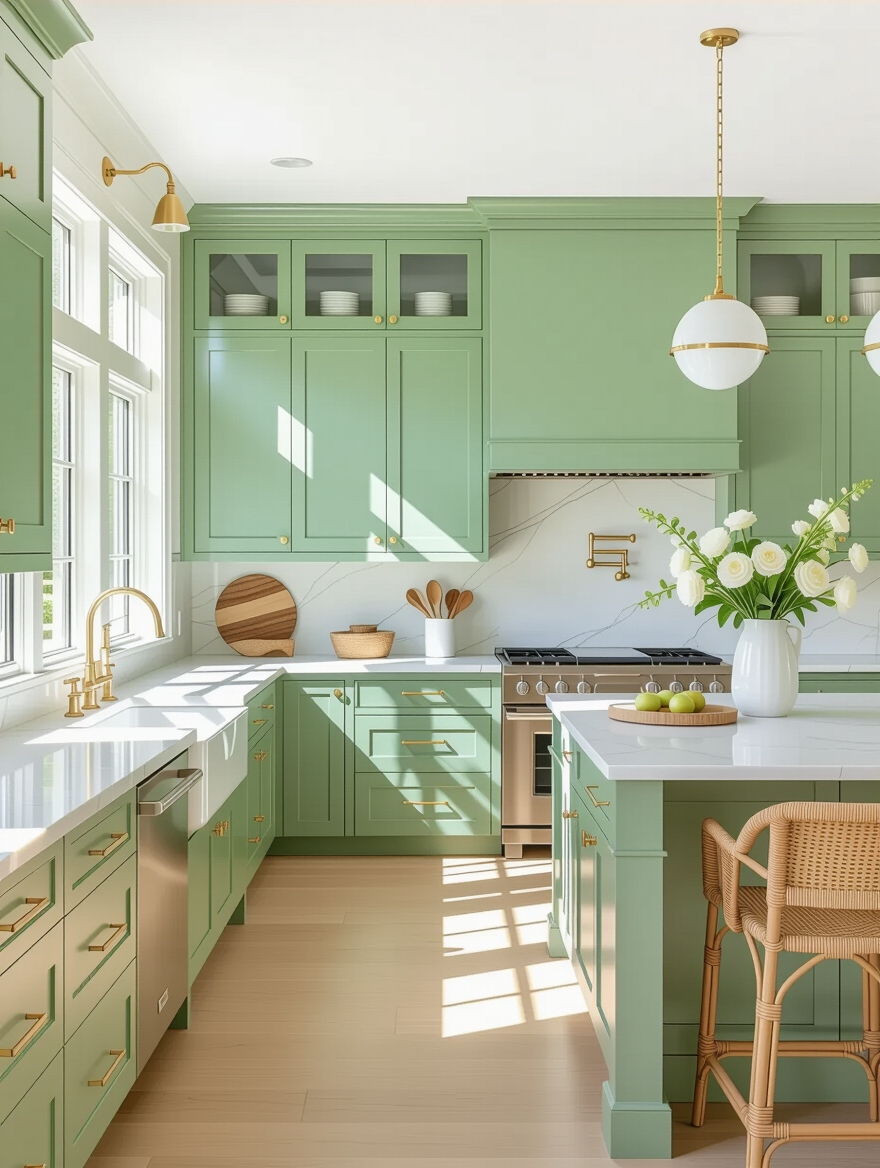
Finish changes everything with sage. A matte or low-sheen paint softens the way light hits the cabinets, which deepens that calm, inviting feeling people are after. Glossy sage, by contrast, bounces light and can look a little hard.
- Choose a matte or eggshell finish for the softest, most expensive-looking result.
- Keep a satin option for high-touch lowers, since it wipes clean more easily.
- Test the sheen on a door at night; matte can flatten too far under dim bulbs.
Pairing Sage With Natural Wood
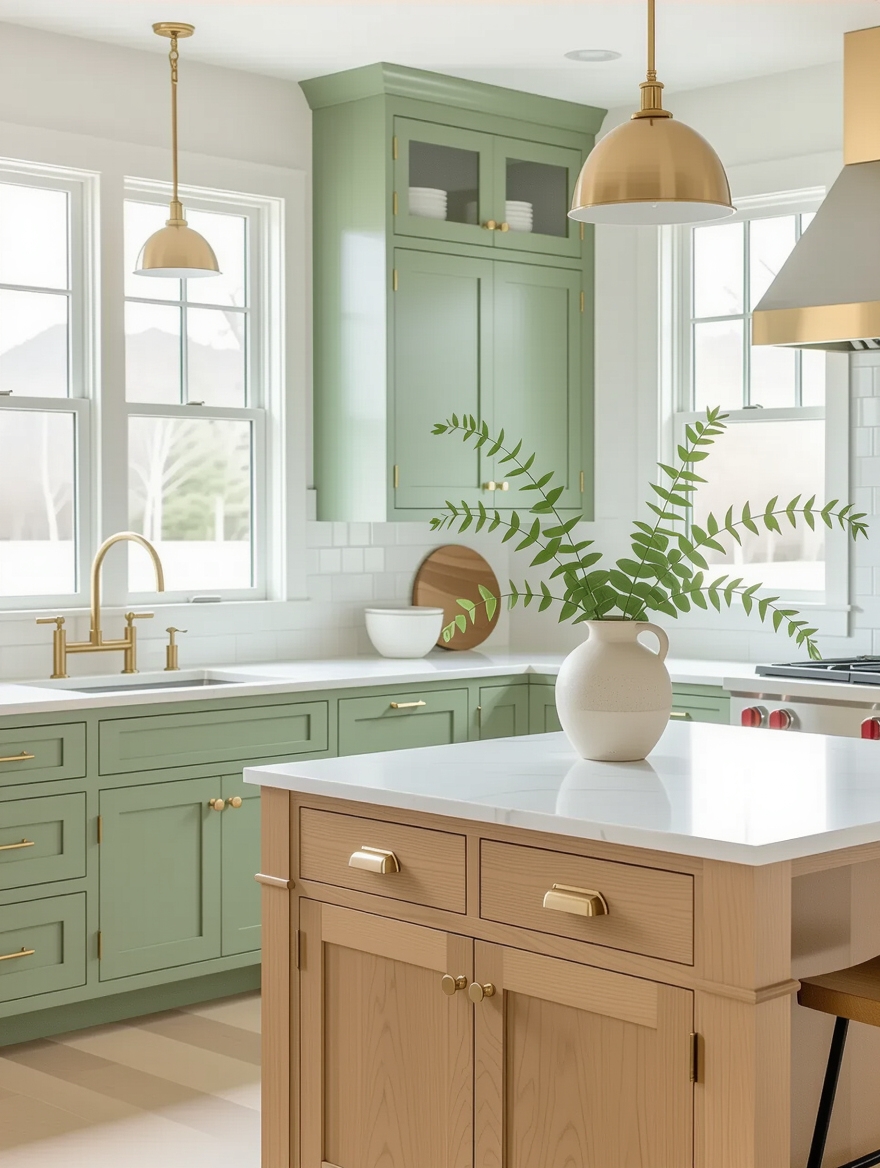
Wood is the partner people reach for most, and for good reason: it adds the warmth sage needs to feel cozy. A wood island top, floating shelves, or a hood surround brings life to a green that can otherwise go a touch flat.
The only rule is to match temperatures, since a clashing wood undertone is the fastest way to make sage look off. Warm sages love oak; cooler ones suit white oak. A warm modern kitchen shows the balance done well.
- Add wood on one or two surfaces, not every one, so the warmth stays special.
- Echo the same wood tone across island and shelves for a collected look.
- Oil a butcher-block top every month or two so it keeps its color.
Watch Out
The fastest way to ruin a sage-and-wood kitchen is a clashing wood undertone. A cool, gray sage next to a warm, orange-toned oak makes both look slightly off. Hold a wood sample against the cabinet in your own light before you buy a counter or shelf, and swap the wood, not the paint, if they fight.
Brass Hardware on Sage Cabinets
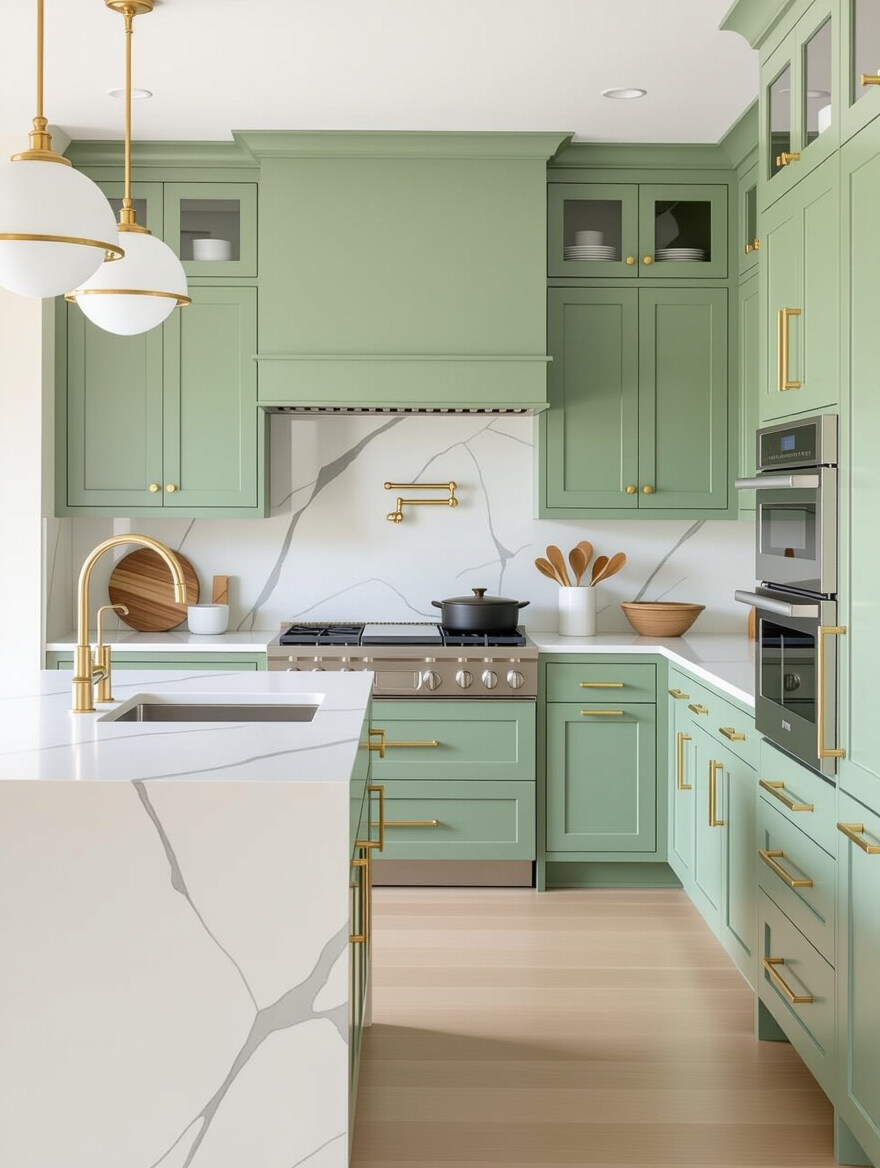
If you change one thing, make it the hardware. Warm brass against sage is the pairing people screenshot, because the metal picks up the green’s warm undertones and makes the whole kitchen glow. It is also the cheapest upgrade here, at $3 to $8 a pull.
Unlacquered brass softens to a patina over the years, which suits sage’s relaxed calm; lacquered stays bright if you prefer. Either way, dry-fit the placement before you drill, and take the extra ten minutes to mark with a template, since a pull set crooked is forever. I learned that one the hard way on my own cabinets.
- Budget about fifty dollars to re-pull a full small kitchen in brass.
- Mix brass with one other metal at most, so the look stays intentional.
- Match the finish across pulls and faucet for a pulled-together feel.
Sage Cabinets With White Marble
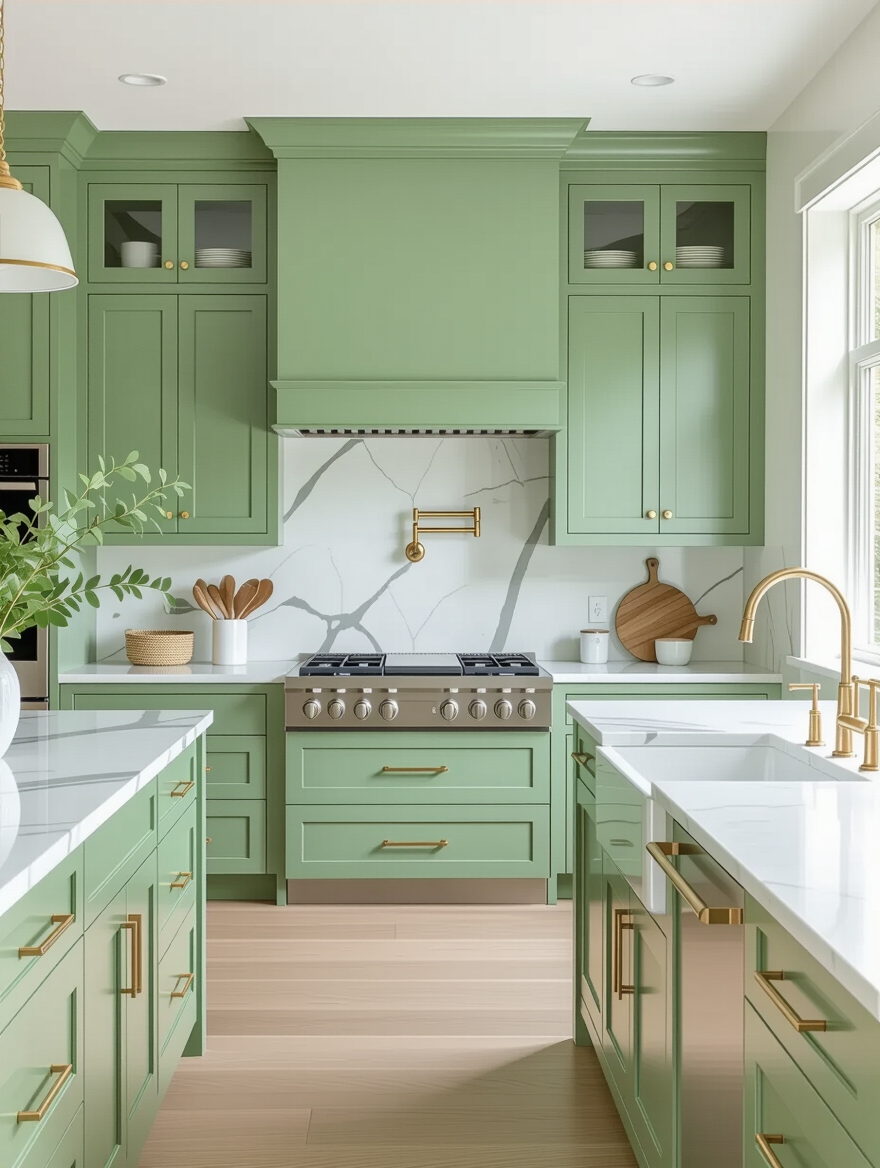
Pair sage with white marble and you get the look people call quiet luxury. The cool, veined stone keeps the green crisp and stops the room from going too warm or too sweet.
Real marble stains and etches, so weigh how you cook. A busy family kitchen is often happier with a marble-look quartz, which gives the same airy contrast and shrugs off lemon juice and red wine.
Whichever you choose, keep the veining soft. A loud, high-contrast marble fights sage for attention, while a gentle gray vein lets the cabinets stay the star and the stone play support. I tell clients to bring a cabinet door sample to the stone yard and lay it right on the slab. A marble that looked perfect online can turn the whole pairing cold or busy once you see the two together under real light, and a five-minute check saves a very expensive mistake.
ℹ️Good to Know
Real marble and marble-look quartz cost about the same up front, but they behave differently with sage in a working kitchen. Marble etches from anything acidic, while quartz shrugs it off, so for a busy family the quartz keeps that crisp sage-and-white look intact for years.
Brightening a Small Kitchen With Sage
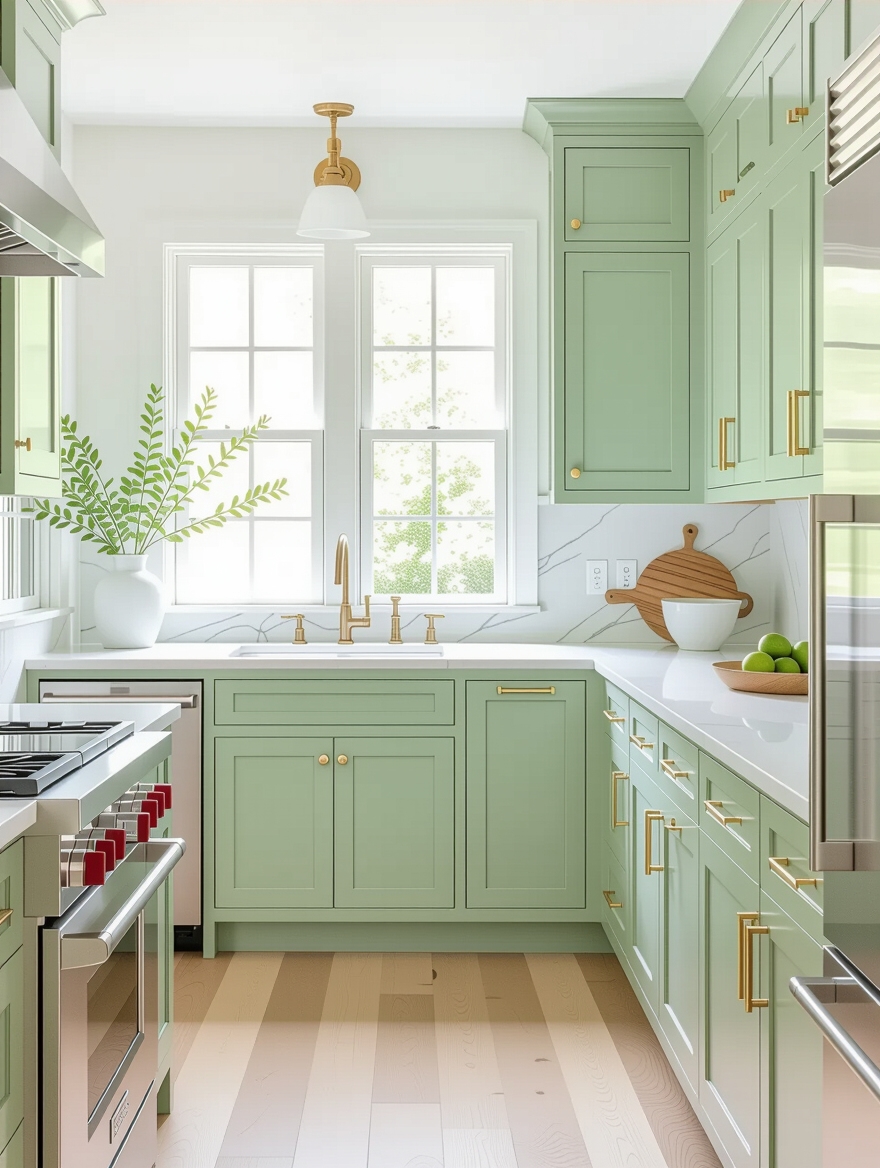
People worry a color will shrink a small kitchen, but a soft sage does the opposite when you handle it right. Kept light and paired with white above, it adds character without closing the room in.
I tell clients to put the sage on the lowers and keep everything overhead pale and reflective. The eye travels up to the light and the room breathes, while the green grounds the bottom half.
- Use a pale, light-leaning sage in a small room, since deep tones eat the light.
- Keep uppers, walls, and backsplash white to bounce light around.
- Add warm under-cabinet lighting so the green stays alive after dark.
Sage in Open-Concept Kitchens
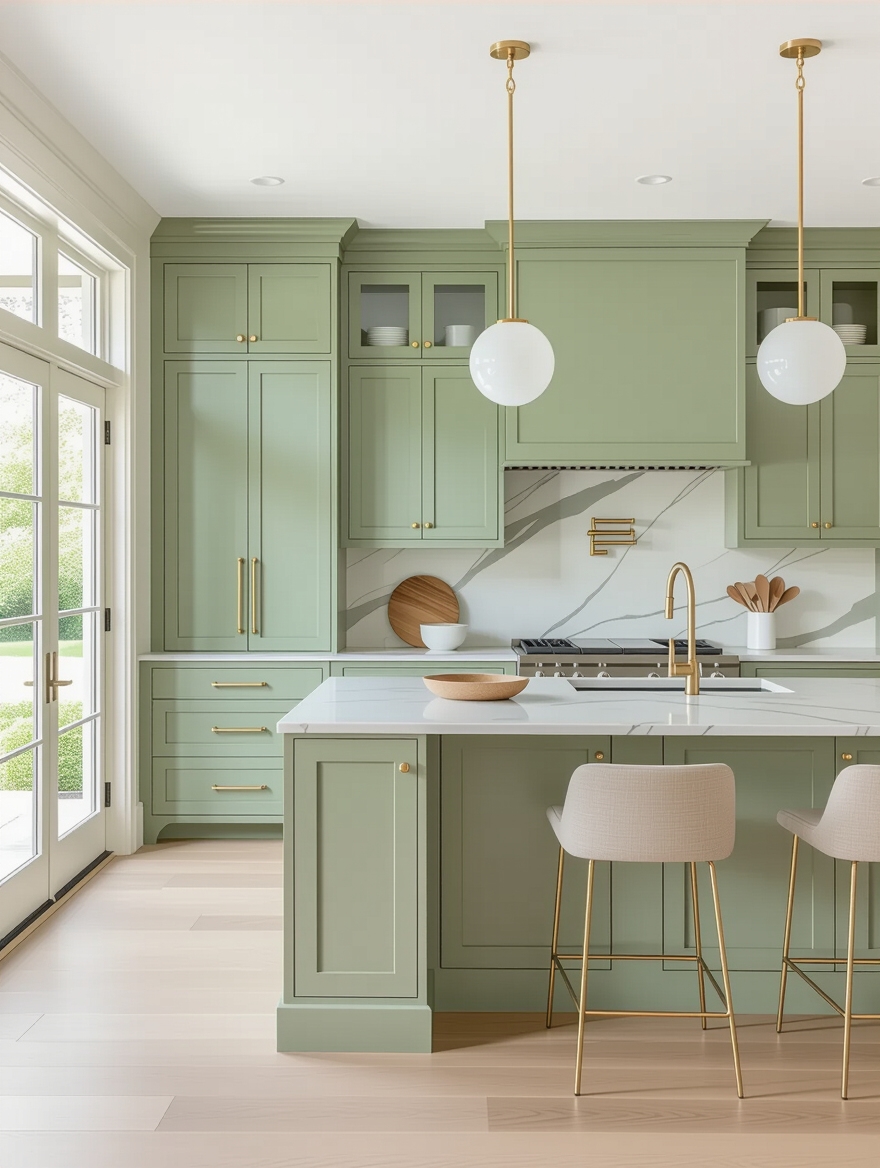
In an open-concept home, the kitchen color is on display from the couch, so it has to play nicely with the next room. Sage is unusually good at this. It behaves like a soft neutral and bridges into living-room tones without a hard line, which is a big part of why it has taken over so many open floor plans where one wrong color would jar against everything around it.
- Pull a hint of the sage into the adjoining room, like a cushion or a plant, to tie the spaces.
- Keep counters and flooring continuous so the eye flows across the open plan.
- Let sage be the calm anchor while the living area carries any bolder accents.
Sage and Navy Blue for Bold Contrast
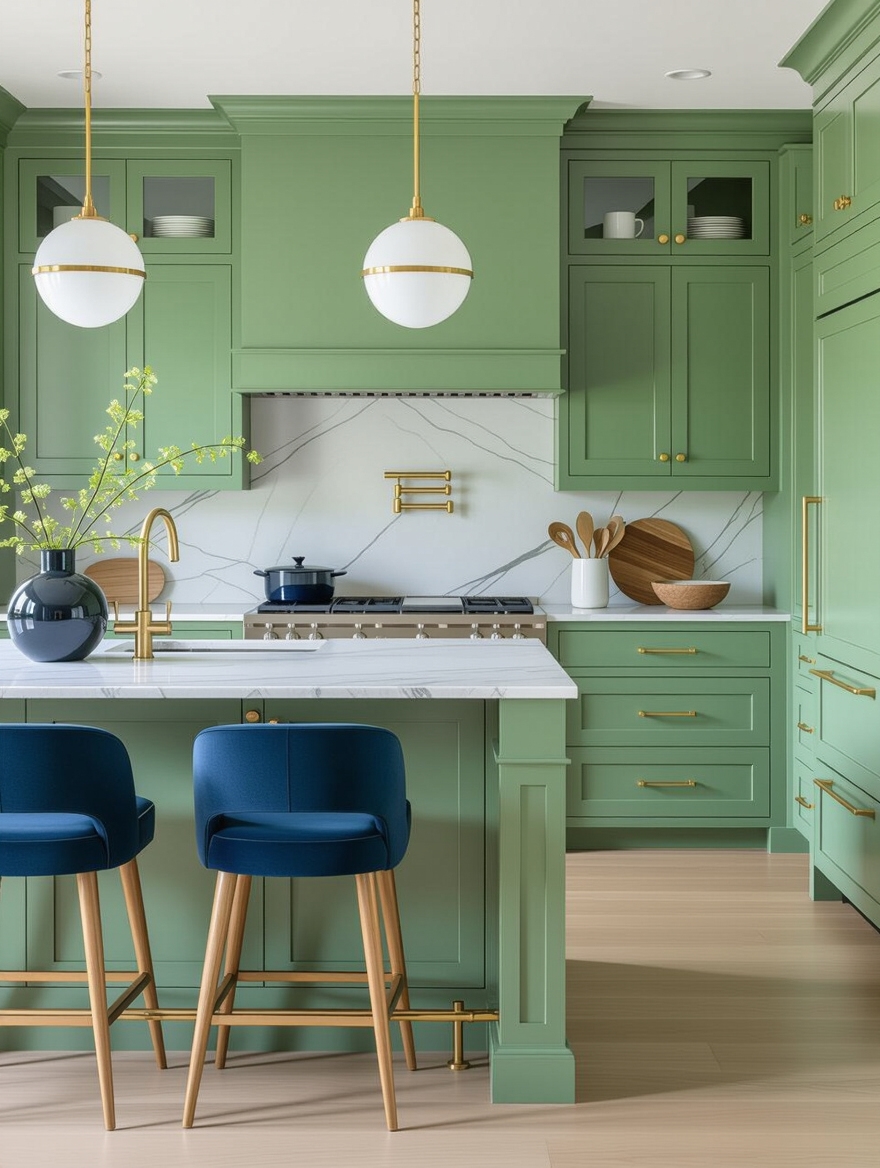
For people who want more than calm, sage and navy is the pairing with real backbone. The two deep, nature-based colors share enough DNA to harmonize, while the contrast gives the room a confident edge. It is the look I steer bolder clients toward when plain sage feels too quiet for them.
- Split them by zone, like sage perimeter and a navy island, so neither overwhelms.
- Keep counters and walls light so the two saturated colors have breathing room.
- If navy feels like a lot, matte black on the fixtures gives a similar edge more cheaply; a full navy cabinet scheme commits harder.
Two-Tone With Sage Lower Cabinets
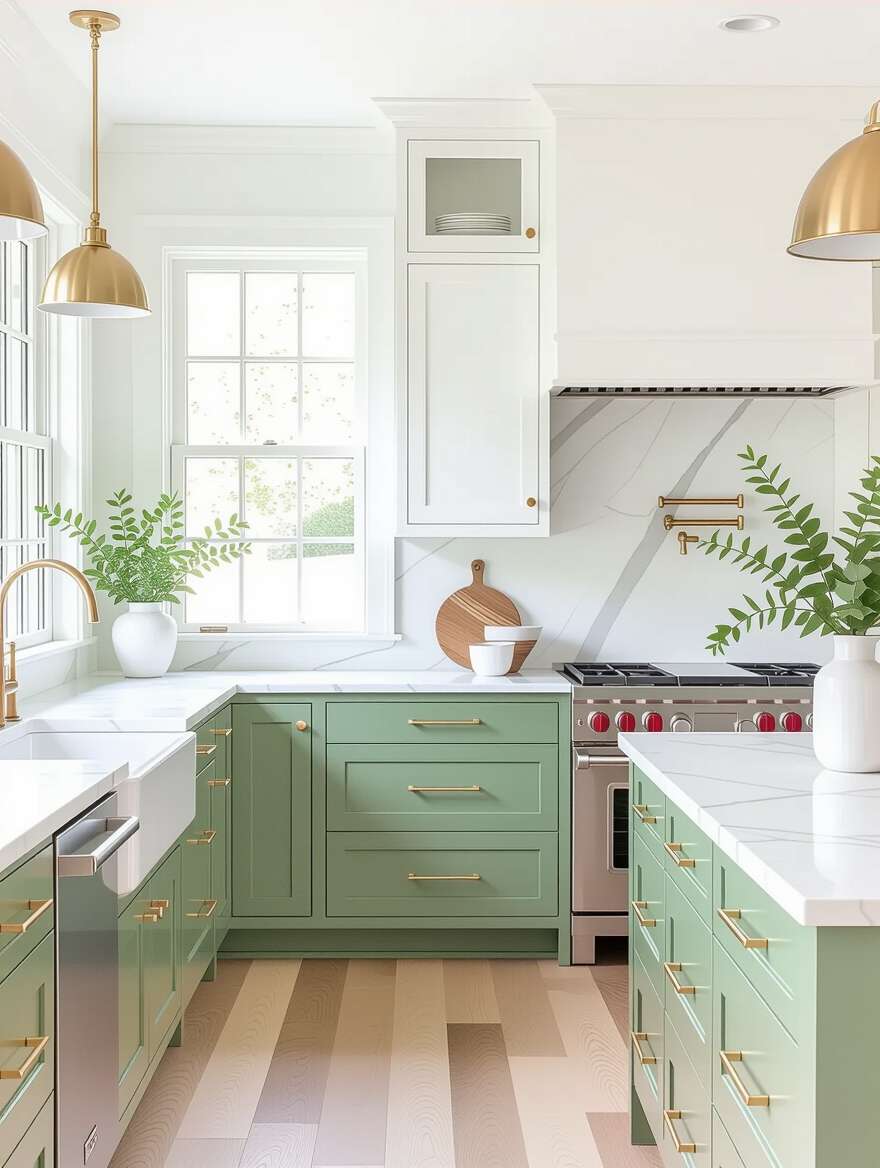
The most-loved budget version puts sage only on the lower cabinets and keeps the uppers light. It grounds the room, hides the scuffs that lowers always collect, and costs half the paint of a full repaint.
It also looks like a deliberate design choice, as long as you carry a thread of the green elsewhere, maybe the island or a window frame. This is the move I point nervous clients to first, since it commits to sage without committing the whole room. Half the paint, half the risk, and most of the payoff.
How to Choose Your Sage Pairing
Start by naming the feeling you want, because the partner follows from it. Want cozy? Reach for wood and warm brass. Want crisp and bright? Go marble or marble-look quartz with white. Want edge and drama? Navy or matte black does it.
Vintage decor and a little patina lean the whole thing toward a collected, well-worn look, while clean white and brushed metal pull it modern. Pick the one feeling that fits your home, choose the one or two partners that serve it, and stop there.
The mistake people make is trying to do all of it at once: wood and marble and navy and brass and black in a single room. Sage is calming precisely because it is restrained, so an over-paired sage kitchen loses the very quality that drew you to it. When in doubt, choose fewer partners and let the green breathe. For the upscale version of restraint, the same logic runs through most expensive-looking green cabinets.
Sage Pairing Questions, Answered
?What colors go best with sage green cabinets?
Warm wood, brass, white or cream, soft marble, navy blue, and matte black are the favorites. Wood and brass are the easiest wins; navy and black add drama. Pick one or two so the calm sage feeling survives.
?What countertop looks best with sage cabinets?
Pale stone keeps sage fresh. White or cream quartz is the low-maintenance pick, marble or marble-look gives quiet luxury, and a warm butcher block leans cozy and farmhouse. Keep the veining soft so the cabinets stay the focus.
?Does sage green make a kitchen look smaller?
Not if you keep it light and pair it with white above. A pale sage on the lowers with reflective white uppers actually adds character without shrinking the room. Save deep, saturated sage for kitchens with strong natural light.
?Is sage green still in style?
Yes, and it has staying power because it behaves like a warm neutral rather than a fad color. Muted greens have appeared in kitchens for generations, so a well-paired sage tends to read timeless rather than trendy.
Pick One Pairing and Let It Lead
The reason these sage kitchens feel so good is restraint. The color calms a room on its own, and the best versions add just one or two partners, whether that is warm wood, glowing brass, cool marble, or moody navy. Choose the feeling first, then the partner that serves it.
Try the smallest version that excites you, like a set of brass pulls or a sage island against your existing cabinets, and live with it for a season. Sage is forgiving, so there is no wrong place to start, only a partner or two to add as the room tells you what it wants.
More Hair Ideas


