

A closed small kitchen can hide its mess behind a wall. An open one cannot. When the kitchen flows into the living and dining space, every cluttered counter and bulky appliance is on display from the couch, which is exactly why an open-plan small kitchen demands smarter solutions than a closed one.
The payoff is worth it. Borrowing the light and sightlines of the next room makes a tiny kitchen feel far bigger than walling it off ever could. These thirteen small open kitchen solutions show how to maximize every inch while keeping the whole open space looking like one calm, connected room.
What an Open Small Kitchen Needs
- It is always on display, so hidden storage and clear sightlines matter most
- Zoning defines the kitchen within the open room without walls
- Light, unified color ties the kitchen to the living space
- Compact, integrated appliances keep the run clean from across the room
- Good lighting marks the kitchen zone and makes it feel bigger
The Open-Kitchen Challenge

Opening a small kitchen to the living space is one of the best ways to make it feel bigger, but it comes with a catch. Nothing hides. The kitchen is now part of the room you relax in, so it has to look good and stay tidy from every angle, all the time. That changes which solutions matter most, and it is worth knowing the trade-offs before you start:
- Everything is visible, so hidden storage outranks open display
- Cooking smells and noise travel, so ventilation matters more
- The kitchen has to match the living space it shares
- Clear sightlines and pathways keep the whole room feeling open
Zone the Open Layout for Flow
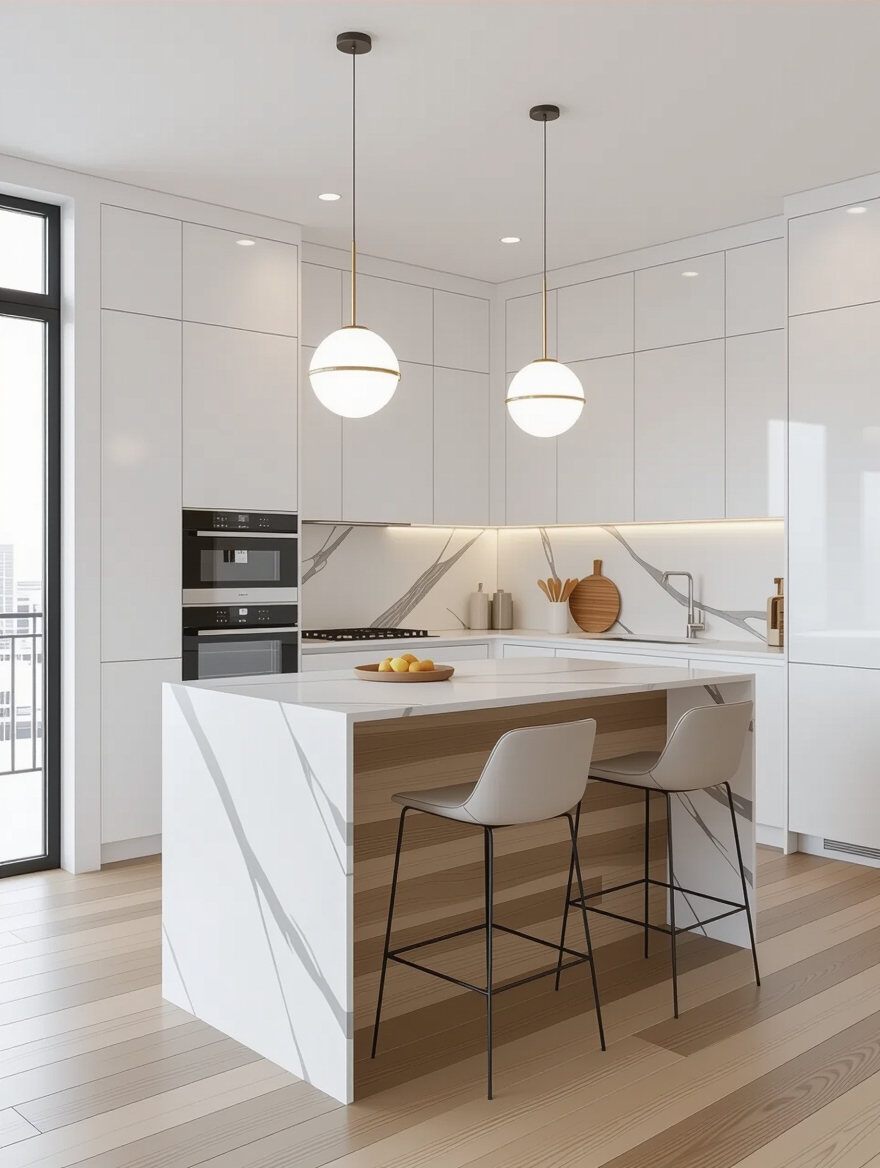
Without walls to define it, an open kitchen needs zoning to keep it from bleeding messily into the living space. Marking distinct areas for cooking, prep, and dining, with a peninsula, a change in flooring, or a run of cabinets, gives the kitchen a clear edge while the room stays open. The eye finds order even though nothing is walled off.
Keep the pathways wide, at least 36 to 42 inches, so people move through without crossing your work zone. A peninsula is the classic divider. It works as prep space on the kitchen side and a seat on the living side.
Plan the flow before anything else, because in an open plan the kitchen’s layout shapes the whole room. I always start here. The first open kitchen I planned failed because we picked the cabinets before the path. For more on merging the two, my genius ways to merge an open kitchen and living room guide goes further.
ℹ️Good to Know
An open kitchen is on display from the living room all day, so it has to stay tidy the way a closed one never does. That constant visibility is exactly why open-plan kitchens lean so hard on hidden storage, integrated appliances, and clear sightlines: in an open plan, every cluttered counter is part of the living room too.
Go Vertical to Keep Sightlines Clear

In an open kitchen, a cluttered counter is part of the living room, so the goal is to pull storage up and off the surfaces. Vertical storage uses the wall height to hold what the counters cannot, keeping the work surfaces clear and the sightlines clean from across the room. The less that sits out, the calmer the whole space looks. Clear counters win:
- Tall cabinets to the ceiling for the bulk you rarely reach
- A rail or a few shelves for daily tools, kept tidy since they show
- A magnetic strip to clear the knife block off the counter, a trick my small kitchen organization ideas to declutter guide expands on
- Cabinets over a peninsula to store dishes near where you eat
Compact Appliances for a Clean Look

Bulky appliances stand out twice as much when the kitchen is open to the living room, so compact and integrated models do double duty here. A slim fridge, a narrow dishwasher, and a counter-depth design keep the run clean and unbroken, so the kitchen does not shout across the open space. The fewer machines that jut out, the more the kitchen blends in.
Panel-ready fronts take it further, letting the fridge and dishwasher wear cabinet faces so they vanish entirely. From the couch, the eye sees cabinetry where a wall of stainless steel used to be.
Most households cook fine on narrower gear, and the calm it brings to an open room is worth the slightly smaller capacity. The kitchen feels like part of the home, a living space in its own right.
Two myths about small open kitchens:
❌ Myth: A small kitchen is too small to open up
✅ Reality: Often the opposite. Borrowing the light and sightlines of the next room makes a tiny kitchen feel far bigger than walling it off does.
❌ Myth: An open kitchen can never look tidy
✅ Reality: It can, with the right storage. Tall units and hidden bins keep the mess off the sightline, which is why open kitchens reward good storage planning.
Maximize Space Without Losing Style

Because an open kitchen is always on show, the storage has to work hard and look good doing it. Maximizing space with style means choosing solutions that hide the clutter while adding to the room’s overall design. Every fix should pull its weight twice, once for function and once for looks:
- A waterfall peninsula that stores below and divides the space above
- Handle-free cabinet fronts for a clean line that looks like furniture
- Matching the kitchen palette to the living room for one calm scheme
- A bench with hidden storage that doubles as dining seating
Open Shelving That Suits an Open Plan

Open shelving feels right at home in an open-plan kitchen, because it softens the line between the cooking and living zones. A run of open shelves styled like the rest of the room makes the kitchen feel like an extension of the living space rather than a separate utility area. The trick is treating it as decor, not storage.
Style It Like the Living Room
Keep it edited and matched, a few nice pieces with space around them, since whatever sits here is visible from the sofa. Crammed shelves add the visual noise an open plan is trying to avoid.
Use open shelving for the pretty things and keep the daily chaos behind closed doors. My small kitchen storage ideas to hide clutter guide covers where to hide the rest.
Clever Corner Storage
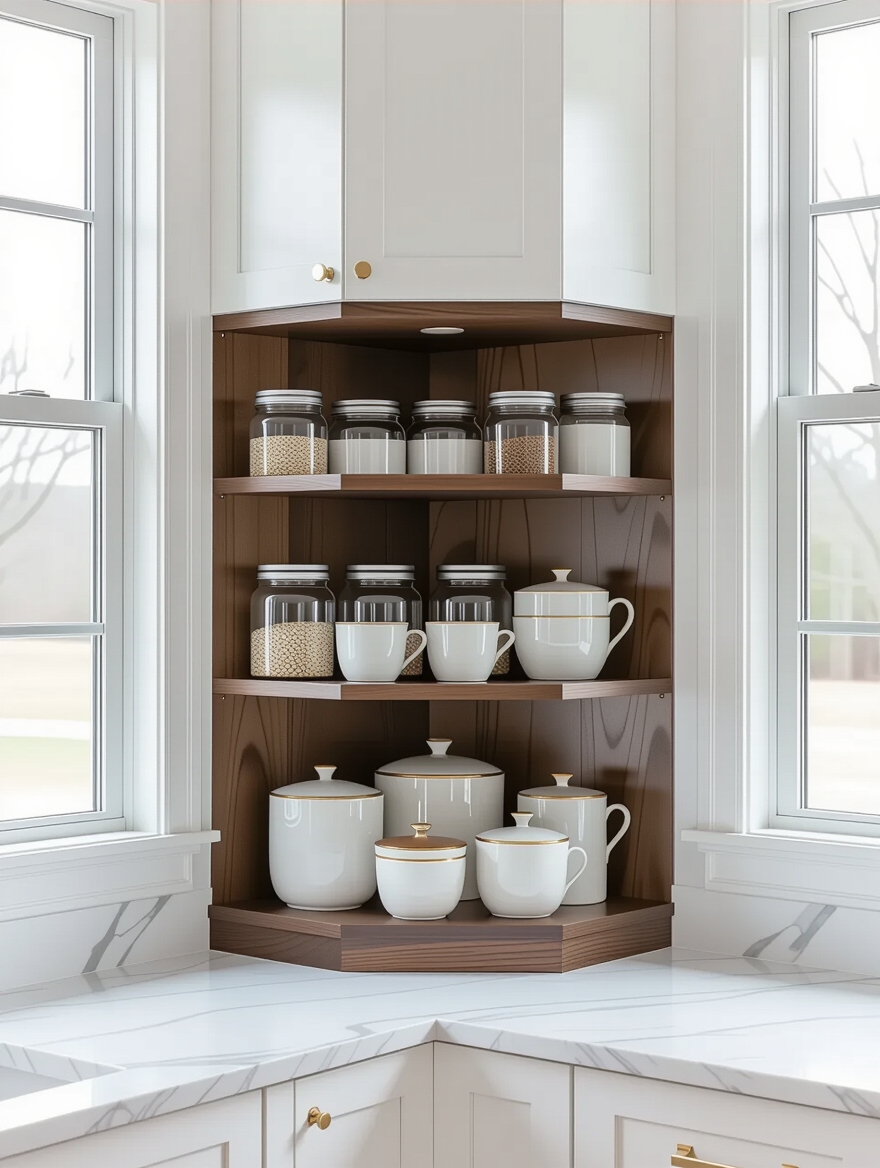
An open kitchen often wraps a corner, and that corner is usually wasted space. Putting clever corner storage to work recovers a couple of cubic feet that would otherwise sit dead, which matters even more when every inch is on display. Wake the corner up and the rest of the kitchen can stay clutter-free. Corners are gold here:
- A rotating carousel that spins the back of the corner into reach
- An L-shaped swing-out that pulls the whole cavity out to you
- A corner drawer set angled to face the room, not the wall
- A diagonal corner cabinet that opens wide for easy access
Open shelves or closed cabinets in an open-plan kitchen?
1You keep things tidy and styled
Open shelves connect the kitchen to the living space and show off matched pieces. They suit a curated, edited look you do not mind keeping up.
2Your kitchen runs busy
Closed cabinets hide the daily chaos from the living room. The smarter pick when the kitchen is always in use and always in view.
Light Colors to Unify the Room

Color is what ties an open kitchen to the living space, and light, low-contrast tones do it best. Carrying a pale palette across the cabinets, walls, and into the living area makes the whole open room feel like one continuous, larger space. Light surfaces recede. So the kitchen never dominates the room it shares:
- Match the cabinet color to the living room walls for one scheme
- Keep contrast low so the eye flows from one zone to the next
- Save bold color for a single accent shared across both areas
- Pale floors that run continuously stretch the whole space
Brighten With Simple, Clean Lines

In an open plan, busy detailing in the kitchen clutters the whole room, so simple, clean lines keep it airy. Flat cabinet fronts, minimal hardware, and a pared-back palette let the kitchen sit quietly within the larger space instead of competing with the living room. Restraint is what makes a small open kitchen feel calm and current.
Less Detail, More Calm
Choose one or two materials and repeat them, rather than mixing five finishes that chop the room into pieces. A handle-free run and a single counter material look like one quiet surface.
The simpler the kitchen, the more it disappears into the home. For a design-forward take on the same idea, my small kitchen ideas modern homes are loving piece covers the look.
Transform the Zone With Lighting

Lighting does two jobs in an open kitchen: it brightens the work zone and it marks the kitchen as its own area within the larger room. A pair of pendants over a peninsula draws a line of light that says kitchen, while under-cabinet strips keep the counters usable after dark. Good light defines the zone without a single wall.
Layer it so each part of the open room has its own light, and the kitchen feels intentional rather than like a leftover corner. Put it all on dimmers so the cooking zone can fade into the evening with the rest of the room:
- Pendants over the peninsula or island to anchor the kitchen zone
- Warm-white under-cabinet LED strips, around $20 to $40, for the counter
- Recessed cans for general light that blends with the living room
- Everything on dimmers so the kitchen fades back in the evening
How to Get the Look
You can pull most of this together without a renovation. Start by clearing the counters and pulling storage vertical, then unify the color between the kitchen and the living space so they read as one room. Add a peninsula or a simple change of flooring to mark the kitchen zone, and hang a couple of pendants to anchor it. Those four moves carry most of the open-plan look.
From there, swap a bulky appliance for a slim one, edit the open shelves down to a few nice pieces, and put the lighting on dimmers. The goal throughout is the same: a kitchen that maximizes every inch while looking like a calm, intentional part of the home. For the full open-plan blueprint, my open-plan kitchen blueprints for airy homes guide lays it out.
Small Open Kitchen Questions, Answered
?How do you maximize space in a small open kitchen?
Pull storage up and off the counters, hide the clutter behind closed cabinets, and zone the kitchen with a peninsula so it stays defined without walls. Slim, integrated appliances and a light, unified palette keep the open room reading as one calm space. The goal is clear sightlines and clear counters.
?Should a small kitchen be open or closed?
Opening a small kitchen usually makes it feel bigger, because it borrows the light and sightlines of the next room. The trade-off is that it is always on display, so you need strong hidden storage and good ventilation. If you can keep it tidy and plan the storage well, open almost always wins for a small kitchen.
?How do I define the kitchen in an open-plan space?
Use a peninsula, a change in flooring, a run of pendants, or a shift in cabinet color to mark the kitchen zone. These cues give the kitchen a clear edge while the room stays open. A peninsula is the most useful, since it divides the space and adds prep surface and seating at once.
?What appliances are best for a small open kitchen?
Slim and integrated ones. An 18-inch dishwasher, a counter-depth or panel-ready fridge, and a combination microwave-oven keep the run clean and unbroken from across the room. Hiding appliances behind cabinet fronts makes the kitchen blend into the living space instead of standing out as a separate utility area.
One Room, Working Twice as Hard
An open small kitchen asks more of you, since it is always part of the room you live in, but it gives back more too. Pull the storage vertical, hide the clutter, keep the appliances slim and the palette light, and zone it with a peninsula and good lighting, and a tiny kitchen feels like it doubled by joining the room next door.
So look at your kitchen and the space beside it as one room, not two. Which wall, real or imagined, is keeping them apart? Soften that line with the solutions here, and you get a kitchen that maximizes every inch while feeling like the heart of an open, airy home.
Favorites to Revisit


