

Open-plan living solved one problem and created another. The walls came down, the light flowed, and then people realized they could see every dish in the sink from the sofa. A half-open divider is the fix nobody talks about: it keeps the airy, connected feeling while quietly drawing a line between cooking and lounging.
These fifteen dividers range from a simple breakfast bar to a steel-and-glass partition, and the right one depends on how much separation you actually want and what your budget allows. I have noted the materials, rough costs, and where a project crosses into contractor territory, so you can find the divider that fits your space without closing it back in.
Half-Open Dividers, Answered Fast
What does a half-open divider actually do? It separates the kitchen from the living area without a full wall, so you keep the light and sightlines while hiding the mess and noise of cooking.
How much does one cost? A wide range. A breakfast bar or open shelf can be a few hundred dollars; a framed half-wall runs roughly $800 to $2,000; a steel-and-glass partition climbs well past that.
When do I need a professional? Any time the divider is structural, touches plumbing or electrical, or anchors heavy glass. Cosmetic screens and shelving are DIY; built-in walls are not.
Balanced Space With Style
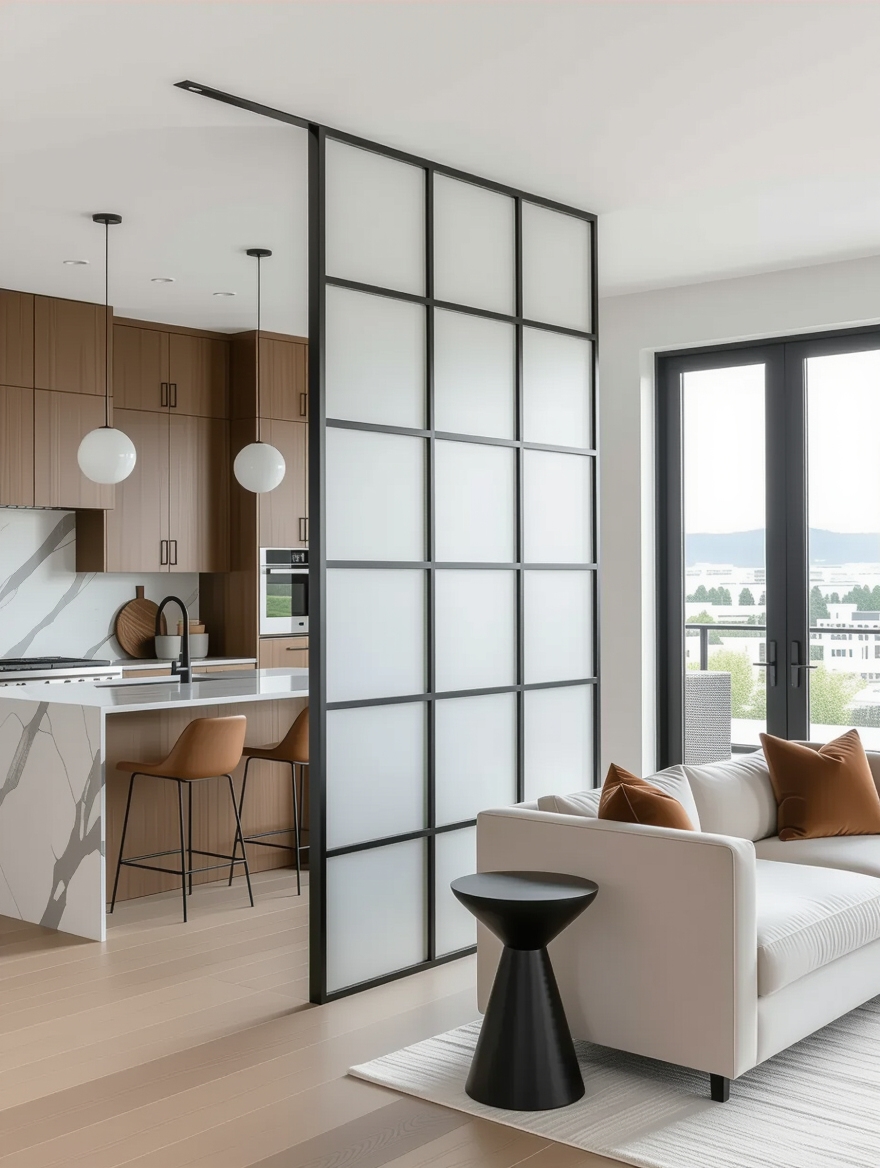
The whole art of a half-open divider is balance: enough separation to feel like two rooms, enough openness to stay one connected space. Before you pick a material, get clear on which way you want to lean. Here are the three jobs a good divider juggles.
- Sightline control: how much of the kitchen you want visible from the sofa, from fully open to mostly screened.
- Light flow: keeping daylight moving between zones, which favors glass, slats, and open shelving over solid walls.
- Function: whether the divider also works as seating, storage, or a serving surface, which a breakfast bar or shelf unit can.
Choosing Your Divider Material Wisely
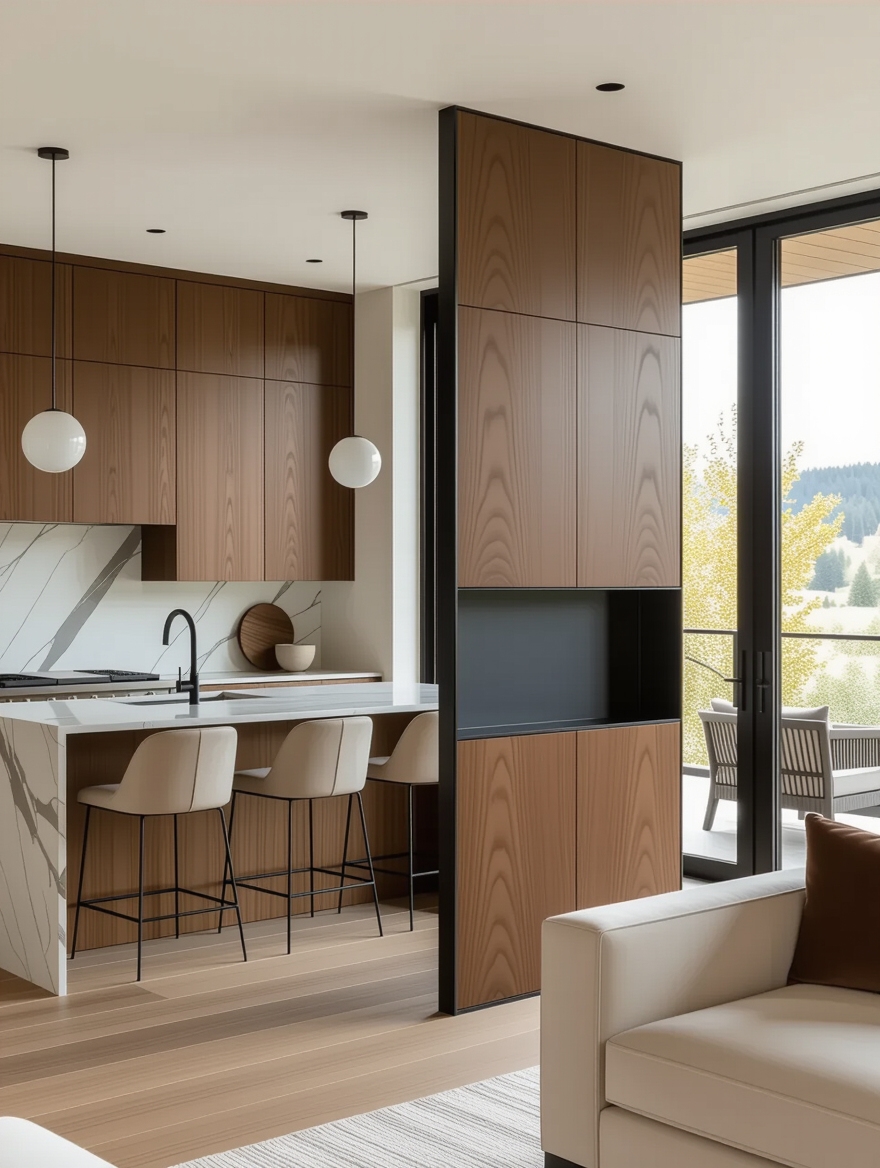
The material you choose decides almost everything about how a divider feels, from how much light it lets through to how warm or industrial the room reads. Wood feels warm and cozy; glass and steel feel sleek and modern; open shelving feels casual and practical. Start from the mood you want and the material narrows itself.
Mood, Light, Budget
Light is the practical filter on top of mood. If your kitchen depends on borrowed light from the living room windows, a solid divider will darken it, so glass, slatted wood, or an open frame keeps the brightness moving. In a bright kitchen you have more freedom to go solid and cozy.
Budget is the third filter, and it spans a huge range. Repurposing a bookshelf costs almost nothing; a custom steel-and-glass partition is a four-figure job. Knowing your number early stops you from falling for a divider you cannot finish.
ℹ️Good to Know
A half-open divider does double duty for sound, not just sightlines. Even a partial wall or a slatted screen noticeably softens the clatter of cooking, dishwashing, and the range hood from the living area, without sealing the rooms off from each other. It is one of the quiet reasons open-plan homeowners add a divider years after taking the walls down: the noise, more than the view, is what sends people looking for a little separation.
Light, Privacy, Warmth, and Connectivity

Every divider trades off four things, and the best one for you depends on which you value most. Privacy and connectivity pull in opposite directions; so do warmth and light, sometimes. Naming your priority makes the choice obvious.
Pick Your Priority
If you want maximum privacy, a taller solid or frosted-glass divider screens the kitchen best. If connectivity matters most, a low breakfast bar or a single open shelf keeps the conversation flowing across the room. Warmth points you toward wood; an airy, modern feel points you toward glass and steel.
Most kitchens want a blend, which is why half-open designs are so popular. The divider I most often point open-plan owners toward is a slatted wood screen, since it gives you partial privacy, warm material, and filtered light all at once, which is the kind of compromise that suits real family life.
Sleek Industrial Space Dividers

The black steel-and-glass partition is the divider of the moment, and it earns the attention. The thin metal grid defines the kitchen clearly while the glass keeps light and sightlines fully open, so you get separation that you can see straight through. It is the look that makes a room feel like a converted loft. A few notes before you commit.
- Expect a real budget. A custom steel-and-glass partition often runs $2,000 and up installed, depending on size.
- This is a job for a pro, since the heavy glass and metal frame need proper anchoring to be safe.
- Keep the framing slim and black for the modern look; chunky frames read heavier and more dated.
A few divider terms worth knowing before you plan.
📖Pony wall
A short half-height wall, also called a knee wall, that divides without blocking sightlines. Often topped with wood or stone as a ledge.
📖Peninsula
A counter attached at one end and open at the other, jutting into the room. Divides the kitchen and adds seating or prep space.
📖Crittall-style
The black steel-framed glass partition with a grid of panes, named for the classic window maker. The signature industrial divider look.
Glass Space Dividers for Light

If keeping the kitchen bright is your top priority, glass is the divider that separates without taking a single ray of light. A glass panel, whether clear, fluted, or frosted, marks the boundary between zones while letting daylight pass straight through, which is why it suits darker, light-starved kitchens so well.
Clear, Fluted, or Frosted
The type of glass tunes the privacy. Clear glass keeps everything visible and is the most open; fluted or reeded glass blurs the view while still passing light, which hides a messy counter without going solid; frosted glass gives the most privacy of the three. Choose based on how much you want the sofa to see.
Glass does ask for upkeep and care. It shows fingerprints and needs regular wiping in a busy kitchen, and any large pane should be tempered and professionally installed for safety. Factored in, it is still the brightest way to divide a space.
Flexible Space Divider Solutions

Not every divider has to be permanent, and a movable one is the smart choice for renters or anyone who likes to rearrange. A rolling shelf unit, a folding screen, or a sliding panel lets you open the space wide for a party and close it down for a quiet dinner. A folding screen takes minutes to set up and none to fold away, which is a flexibility a built-in wall can never offer.
Move It When You Need To
Movable dividers are also the budget and commitment-friendly option. A freestanding open shelf or a handsome folding screen costs a fraction of construction, requires no permits, and comes with you when you move. It is the lowest-risk way to test whether you even want a divider before you build one.
The trade-off is stability and sound. A movable divider will not block noise the way a solid wall does, and it can feel less substantial, so it suits homes that want flexible zoning more than true separation. For more on keeping an open kitchen tidy, see open cabinets that look clutter-free.
Match the divider to what matters most to you.
🎯I want to keep the kitchen as bright as possible
Glass, clear or fluted. It separates the zones without blocking a single ray of borrowed light.
🎯I want warmth and partial privacy
A slatted wood screen. Filtered light, real warmth, and a soft boundary in one piece.
🎯I want separation plus extra function
A peninsula or open shelving unit. You gain seating or storage along with the divide.
🎯I rent or might rearrange
A movable folding screen or rolling shelf. No construction, no permits, and it moves with you.
Customizable Open Space Dividers

An open shelving unit is the hardest-working divider on this list, because it splits the room and stores your things at the same time. A double-sided or open-back shelf marks the boundary while staying visually light, and you get display space for plants, books, and dishware that both rooms can enjoy. For a working home, that dual duty is hard to beat.
Style It With Restraint
The key to keeping it from looking cluttered is restraint and styling. Leave plenty of empty space on the shelves, group items loosely, and keep the back open so light still passes through. A packed, solid-backed unit becomes a wall and defeats the half-open purpose.
Open shelving is also among the most affordable and DIY-friendly dividers, since a sturdy freestanding bookcase or a wall-mounted system does the job for a few hundred dollars. Just anchor anything tall properly so it cannot tip, especially in a home with kids.
Sleek, Functional Minimalist Dividers

Sometimes the best divider is the one you barely notice. A low half-wall, a single floating shelf, or a slim peninsula gives the eye just enough of a cue to read two zones while keeping the space almost entirely open. This minimalist approach suits small homes where a heavier divider would feel like a wall closing in.
The trick is to let one quiet element do the work. A waterfall-edge half-wall or a single horizontal shelf at counter height signals the boundary without bulk, and keeping it in the same material as the cabinets makes it feel built-in rather than added on. Less really is more here, and it costs less too.
Cozy Rustic Wood Dividers

For homes that lean warm and rustic, a wood divider brings the coziness that glass and steel cannot. A slatted wood screen, a reclaimed-timber post-and-beam frame, or a wood-topped half-wall adds texture and warmth while still letting the rooms breathe. It is the divider that makes an open plan feel like a gathering place.
Why Slats Work
Slats are the rustic-warm sweet spot. Vertical wood slats with gaps between them give partial privacy and filtered light, so you get separation and brightness together, and the repeated lines add a quiet architectural rhythm. Stain them to match your floors or cabinets so the divider feels intentional.
Wood also pairs beautifully with a green or warm-neutral kitchen, tying the cooking zone to the living space through shared material. A weekend and some pre-cut slats can produce a screen that looks custom. For the warm-material logic applied to cabinets, see wood cabinets that feel fresh.
Functional, Stylish Room Dividers

The dividers that shine longest are the ones that earn their footprint by doing a second job. A breakfast bar, a peninsula with seating, or a divider with built-in storage gives you separation plus daily function, which is what justifies the space it takes in a smaller home. Style and use do not have to compete.
These double-duty designs are worth prioritizing.
- A peninsula or breakfast bar divides the zones and adds seating and counter space in one move.
- A divider with cabinets or drawers on the kitchen side adds storage where most kitchens need it.
- A counter-height unit doubles as a serving and buffet surface for entertaining. See layouts that save space.
How to Ask Your Contractor or Designer
If your divider involves building, the conversation with a contractor or designer makes or breaks the result, so go in prepared. Ask first whether the divider touches anything structural, electrical, or plumbing, because a half-wall in the wrong spot can hide a load-bearing element or a duct run. A good professional will check before quoting, and any structural or utility work should always be left to a licensed pro rather than attempted yourself.
Then get specific about the things that drive cost and outcome. Ask how the divider will be anchored and whether it meets local code, especially for heavy glass or anything over counter height; ask whether borrowed light will be affected; and ask for the finished height and depth in inches so you can tape it out at home before they build.
Request a written quote that separates materials from labor, and confirm the timeline, since even a simple framed half-wall can take several days once you account for drying and finishing. Those questions keep a divider from becoming the regret of the renovation.
Kitchen Divider Questions, Answered
?Do half-open dividers make a space feel smaller?
Done right, no; that is the whole point of going half-open rather than building a full wall. Glass, slatted, and open-shelf dividers keep light and sightlines moving, so the space still reads as one connected area. A solid, floor-to-ceiling divider can shrink a room, which is why these designs stop short of that.
?What is the cheapest way to divide a kitchen and living room?
A freestanding open shelf or a folding screen, which can cost a few hundred dollars and need no construction. Repurposing a sturdy bookcase is cheaper still. These movable options also let you test whether you want a divider at all before committing to a built-in half-wall or partition.
?Can I build a half-wall divider myself?
A non-structural, cosmetic half-wall is within reach of a confident DIYer, but you must first confirm it is not load-bearing and does not contain wiring or plumbing. If there is any doubt, or if the divider anchors heavy glass, have a licensed contractor assess it. Safety and local code are not worth guessing on.
?How tall should a kitchen divider be?
It depends on your goal. A counter-height divider, around 36 to 42 inches, gives a subtle separation and works as a surface; a taller screen toward 60 inches or more gives real privacy from the kitchen mess. Tape the height on the wall and live with it for a day before you build, since it is hard to picture from a number alone.
?Will a divider block too much light?
Only if you choose a solid one. The half-open designs here, glass, slats, and open shelving, are specifically meant to pass light between zones. If your kitchen borrows daylight from the living room windows, stick to those see-through or open materials and skip the solid half-wall in a dark spot.
Draw the Line Without Building a Wall
The reason half-open dividers keep gaining fans is that they solve the one real flaw of open-plan living without undoing its best feature. You get to keep the light, the flow, and the connection, while finally drawing a line between the chaos of cooking and the calm of the living room. The right divider is the one that matches how much of that line you actually want.
Start by naming your priority, light, privacy, warmth, or function, then pick the material that delivers it and tape out the footprint before you build. Which of these would shine in your space?
More to Explore


