

Open-plan kitchen-dining-living spaces have a quiet paradox: the layout itself rarely goes out of style, but the choices people make inside it date fast. A trendy cabinet color, a novelty backsplash, a too-of-the-moment light fixture, and a five-year-old open plan can look every bit its age. The good news is that building one to last is mostly about restraint and a few durable, timeless decisions.
A kitchen, dining, and living layout that lasts gets the bones right, good flow, clear zones, lasting materials, and leaves the trends for the easily-swapped layer of accessories. Below are the choices that keep an open plan looking current and working hard for fifteen years and more, from durable surfaces to a palette that never dates, with what to spend on and what to keep flexible.
Bones vs Trimmings
| Choice | Trendy version (dates) | Built-to-last version |
|---|---|---|
| Cabinets | A bold trend color all over | Timeless white, wood, or muted green |
| Counters | Patterned novelty stone | Quartz or natural stone in calm tones |
| Layout | Over-themed feature zones | Clear, flexible zones that adapt |
| Flooring | Trend-of-the-year tile | One durable material throughout |
Natural Light Design Strategies That Last

No design choice ages better than good natural light, so an open plan built to last starts by protecting it. Keep the layout from blocking your windows, run lower cabinets along the brightest wall, and choose a configuration that lets daylight cross the whole floor. I tell clients light is the one feature that stays current in any decade.
Build in light at the layout stage, since it is the hardest thing to add later. Position the main run so the cook works in daylight, keep tall elements away from the windows, and where you can, enlarge a window or add a glass door, an investment that pays back for decades.
Pale, reflective finishes stretch whatever light you have and stay timeless doing it. White, cream, and natural wood have looked right for a century. They will keep looking right. That is exactly why they belong in a layout meant to last.
Flow Between the Three Spaces

The flow between the kitchen, dining, and living zones is the part of an open plan you feel every day. Good flow never dates. Plan clear paths so people move from cooking to eating to relaxing without weaving through furniture or crossing the cook’s work triangle. A layout that moves well at move-in still moves well a decade later.
Keep the main walkways generous, at least 36 inches, and route through-traffic around the seating rather than across it. The three zones should sit in a logical sequence, often kitchen to dining to living, so daily life flows in one easy line. This is structural, so it is worth getting right before anything decorative.
Good flow also future-proofs the home for how your life changes. A layout that works for a young family entertaining, for kids doing homework at the island, and later for quiet empty-nest dinners is one that really lasts, the same durability behind any open-plan layout planned around its bones.
Match a light strategy to your home.
🎯South-facing room
You have light to spare; lean into pale finishes and big windows.
🎯North-facing room
Maximize it: clear the window wall, add mirrors, choose warm whites.
🎯Interior or dark room
Borrow light with glass doors, interior windows, and reflective surfaces.
Defined Zones Through Furniture

Zoning an open plan with furniture rather than built features keeps it flexible, which is itself a kind of longevity. A rug, a sofa back, an island, and a dining light mark the three zones clearly. None of them are permanent. You can rearrange or refresh them as styles and needs shift, no renovation required.
Avoid over-building the zones into fixed, themed rooms, since that is what dates an open plan and locks you in. Light, movable cues, furniture, rugs, lighting, define the spaces today and adapt tomorrow. A layout you can restyle in a weekend lets you change before you outgrow a look.
Space-Saving Layouts That Adapt

A layout built to last has to flex as life changes, so the space-saving moves that earn their place are the adaptable ones. Multi-use furniture, an extendable table, a storage ottoman, a slim island on casters, lets one floor plan serve a quiet weeknight and a full holiday without permanent bulk you will fight later.
This matters most in smaller open plans, where every piece has to work hard for years. Choose furniture that adapts, build in vertical and hidden storage that grows with your stuff, and keep the floor flexible. A plan that can shift from a couple’s home to a busy family’s and back is one that truly lasts, much like the smartest space-saving layout tricks.
- Choose adaptable, multi-use furniture over fixed, single-purpose pieces.
- Build in vertical and hidden storage that grows with your needs.
- Keep the floor flexible so the layout can change as life does.
Two myths about lasting open plans.
❌ Myth: Open plans are a fad that will date.
✅ Reality: The layout has proven durable for decades; only the finishes inside it date, and those are easy to update.
❌ Myth: Building to last means playing it boring.
✅ Reality: Timeless and boring are not the same. Classic bones leave room for personality in the easily-changed layer.
Kitchen Islands That Anchor the Flow

The island is the most permanent piece in an open plan, so building it to last means getting the size, function, and finish right the first time. Leave 36 to 42 inches of clearance on every side, build in storage and seating, and decide early about a sink or cooktop, since the plumbing is hard to move later.
Build the island to last
For longevity, choose a timeless island finish: white, wood, or a muted color on the base, topped with quartz or natural stone in a calm tone. Save the bold, trendy color for the easily-repainted perimeter or accessories. The centerpiece is the one thing you will live with for fifteen years.
A well-built island also anchors the whole open plan, giving the kitchen an edge, the living room a stopping point, and the family a gathering spot. Get it right and it becomes the durable heart of the home.
Clutter-Free Open Plan Living

No open plan stays looking good if it is buried in clutter, so the storage and habits that keep it clear are part of building to last. Generous closed storage, full-height cabinets, deep drawers, an appliance garage, gives everything a home so the shared surfaces stay clear, which keeps the layout looking as good in year ten as on day one.
Clutter is the fastest way to make any open plan look tired, no matter how nice the materials. I have watched clutter sink beautiful kitchens. Plan more closed storage than you think you need, since open-plan life generates visible mess across the whole floor, and lean on a five-minute daily reset to keep it in check, the same discipline that keeps a kitchen clutter-free.
The payoff is a space that always looks intentional. A clear, well-stored open plan looks calm and considered for years, while a cluttered one looks dated within months regardless of the budget behind it.
Will your island choice still look right in fifteen years?
1Bold painted base in a trend color
Risky long-term; paint is cheap to change, so keep bold color here only if you accept repainting.
2White, wood, or muted base with a stone top
Safe and timeless; this is the build-to-last choice that ages slowly.
3Novelty waterfall in a busy stone
Striking now, but busy patterns date fastest; choose a calm stone instead.
Durable Materials That Go the Distance

Building to last is most literal in the materials, and an open plan is hard on them, since kitchen, dining, and living traffic all share the space. Spend on durable, low-maintenance surfaces where it counts. Quartz counters resist scratches and stains. Solid or quality plywood cabinet boxes and a tough, scrubbable finish survive daily life.
Quartz is the workhorse I recommend most, durable and nearly maintenance-free, usually $60 to $100 per square foot installed. Natural stone like quartzite and granite lasts a lifetime with a reseal every year or two, while solid hardwood and porcelain tile take decades of traffic. Be wary of materials that look great but wear poorly, like soft marble on a busy island or cheap laminate that chips.
The rule is to invest in the things that are expensive and disruptive to replace, counters, cabinet boxes, flooring, and economize on the things you can swap cheaply, like hardware, paint, and lighting. That split is the heart of a budget that lasts.
Timeless Color Palettes

The palette is where lasting open plans show their discipline, because color trends date faster than anything. A timeless scheme leans on neutrals, white, cream, greige, warm wood, soft black, with at most one or two restrained colors that have staying power, like a muted sage or a navy. These have looked right for decades and will keep looking right, so they belong on the permanent surfaces.
Put the trendy, of-the-moment colors only where they are cheap to change: a wall of paint, the throw pillows, the bar stools, the art. When the bones stay neutral and the accessories carry the trends, you get a space that feels current every year without a renovation, the same logic behind a timeless green-and-white kitchen.
- Keep permanent surfaces neutral: white, wood, greige, soft black.
- Limit lasting color to one or two restrained, proven tones.
- Put trendy colors only where they are cheap to swap later.
Versatile Furniture for Every Zone

Furniture you choose for the long haul should be versatile and well-made, since it has to work across the kitchen, dining, and living zones for years. Pieces that flex, an extendable table, modular seating, a bench that moves between zones, adapt as your needs change without needing replacement.
Buy the best quality you can in the pieces that get daily use, a sofa, dining chairs, the island stools, since cheap versions wear out and date quickly. Keep the big upholstered pieces in neutral, durable fabrics and let color come from easily-swapped cushions and throws. Well-made, adaptable, neutral furniture is the kind you keep through several rounds of decor, which is exactly what building to last means.
- Choose versatile, flexible pieces that work across all three zones.
- Invest in quality for daily-use furniture; it lasts and stays current.
- Keep big pieces neutral and let cushions carry the changing color.
Durable Flooring for Lasting Unity
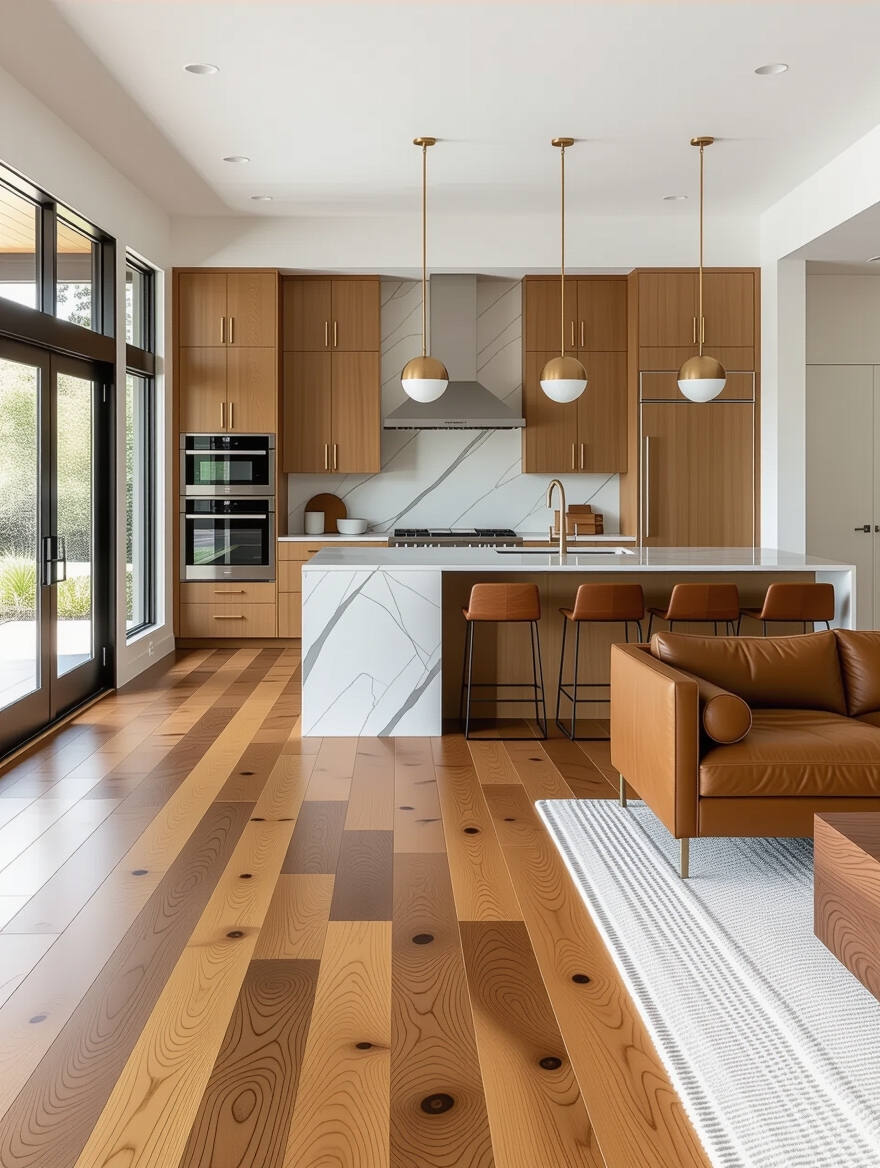
Flooring is the most-walked-on surface in an open plan and the one that ties the three zones into one room, so it earns real investment. One continuous, durable material unifies the space and stands up for decades. Engineered or solid hardwood, porcelain tile, and quality luxury vinyl all handle kitchen spills and living-room traffic alike.
Choose the floor for longevity, not just looks. A mid-tone wood or a neutral large-format tile hides wear and dates slowly, while trend-of-the-year patterns and very light or very dark floors show every scuff and tie you to a moment. Run it in one direction across the whole floor, and a durable, neutral floor will outlast several rounds of everything else, the same staying power behind any layout planned for the long term.
- Run one durable material through all three zones for unity and wear.
- Choose a mid-tone, neutral floor that hides scuffs and dates slowly.
- Lay planks in one direction so the whole floor reads as one space.
Styling Tips to Keep It Current
Once the lasting bones are in place, styling is where you keep an open plan feeling current without touching the structure. Lean on the easily-swapped layer for any trend you love: paint, textiles, art, lighting, and accessories are cheap and quick to change, so refresh those every few years and leave the counters, cabinets, and floor alone. This is the whole strategy: timeless bones, trendy trimmings.
Keep the styling restrained so the durable choices can shine. A few quality pieces, a little greenery, and a clear, well-edited surface look considered, while a crowd of trendy accessories just dates the room. Rotate seasonal touches, swap a pillow or a vase, and the same lasting layout feels fresh year after year for the price of a few small changes.
Built-to-Last Open Plan Questions, Answered
?What makes an open plan layout stand the test of time?
Good bones and restraint. A layout with clear flow, flexible zones, durable materials, a neutral palette, and one continuous floor stays current and functional for decades. The things that date, bold colors and novelty finishes, should live only in the easily-swapped layer of paint, textiles, and accessories.
?What materials last longest in an open plan kitchen?
Quartz counters resist scratches and stains with almost no upkeep, while quartzite and granite last a lifetime with periodic sealing. For floors, solid or engineered hardwood and porcelain tile take decades of traffic. Pair those with solid or quality plywood cabinet boxes and a tough, scrubbable finish, and the hardworking surfaces will outlast the trends.
?How do I keep an open plan from looking dated?
Keep the permanent surfaces neutral and timeless, then put any trend you love into things you can change cheaply: paint, art, lighting, cushions, and stools. Refresh that layer every few years and leave the counters, cabinets, and floor alone. Staying ruthless about clutter also keeps the whole space looking intentional rather than tired.
?Is an open plan still a good long-term choice?
Yes. The open kitchen-dining-living layout has stayed popular for decades because it suits how families actually live, social, light-filled, and flexible. The current trend toward clearer zoning and partial dividers is a refinement, not a reversal, so a well-zoned open plan stays a safe long-term bet for most homes.
Timeless Bones, Trendy Trimmings
An open-plan kitchen-dining-living space built to last comes down to one simple split: invest in timeless, durable bones, good flow, clear flexible zones, lasting materials, a neutral palette, a continuous floor, and let the trends live only in the layer you can change cheaply. Get that division right and the layout looks current every year and works for whatever life throws at it, for fifteen years and well beyond.
If you are planning or updating an open plan, bookmark this list and sort every decision into bones or trimmings before you spend. Put the money and the restraint into the bones, have fun with the trimmings, and you will end up with a space that ages slowly, adapts easily, and never needs a gut renovation to feel fresh again.
More Hair Inspiration


