

A waterfall edge is the single move that turns a plain island into the centerpiece of the room. Instead of stopping at the counter, the slab folds over the side and runs all the way to the floor, so the material becomes a piece of sculpture. It is dramatic, it is modern, and it photographs like a magazine spread.
These twenty waterfall island ideas cover every material and color, from marble and wood grain to inky black and crisp white, with the real costs and the small details that make the drop land. If you want one feature that makes a kitchen feel designed, this is it. Here are the edges worth the splurge.
The Short Version
A waterfall edge runs the countertop material down the sides of the island to the floor, turning it into a sculptural focal point. The drama comes from the material: bold marble veining, rich wood grain, or deep black stone all read very differently.
Expect to pay for the extra slab and the labor. A waterfall island typically adds $1,200 to $3,500 over a standard counter, since you are buying more material and a precise mitered join. Pick the material first, then let the edge show it off.
Where the Sculptural Confidence Starts
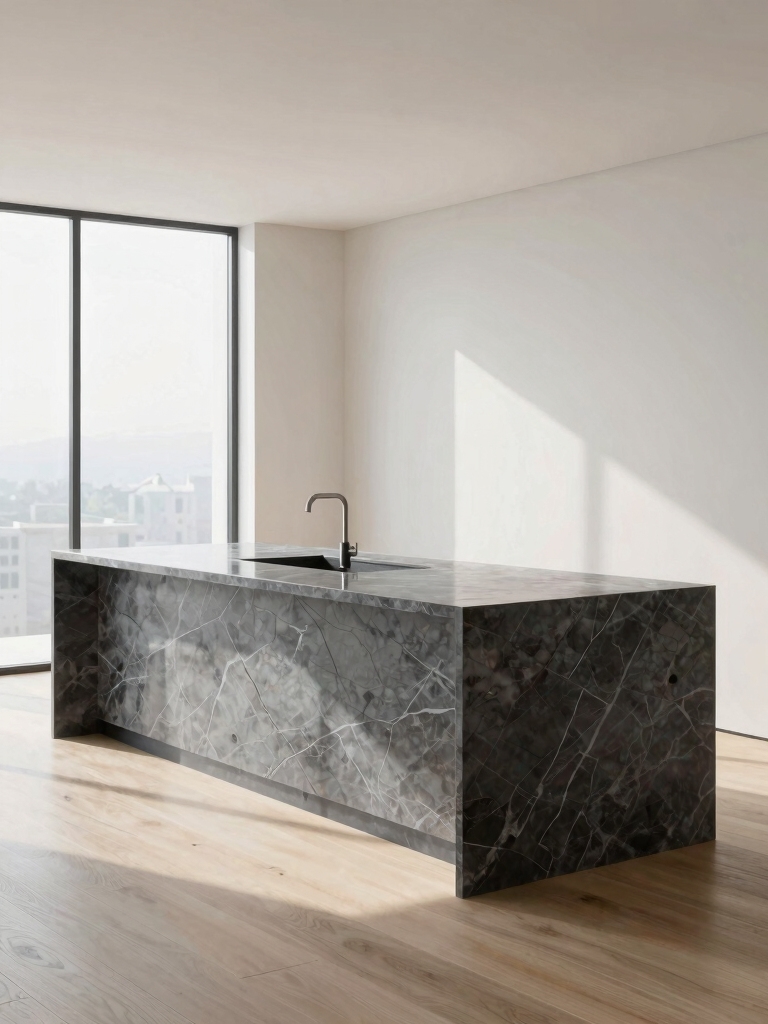
A waterfall edge is simple in idea and exacting in execution. The counter material wraps over one or both ends of the island and drops vertically to the floor, hiding the cabinet box behind a clean panel of stone or wood. That continuous run is what gives the island its sculptural weight.
The magic is in the join. Where the horizontal top meets the vertical side, a skilled fabricator cuts both edges at a precise 45-degree miter so the grain or vein appears to bend and keep flowing. Done well, the corner looks like one folded slab.
Done badly, you see a dark seam. This is not the place to hire cheap. The first waterfall I ever specced came back with a hairline-visible seam because the shop rushed the miter, and we ate the cost of redoing it. I have checked that corner in person on every job since.
Most waterfalls run down one or both short ends, leaving the seating side open for stools. For the bigger picture on island shapes, my island kitchen design concepts worth a bookmark guide lays out the options.
A Functional Kitchen Centerpiece
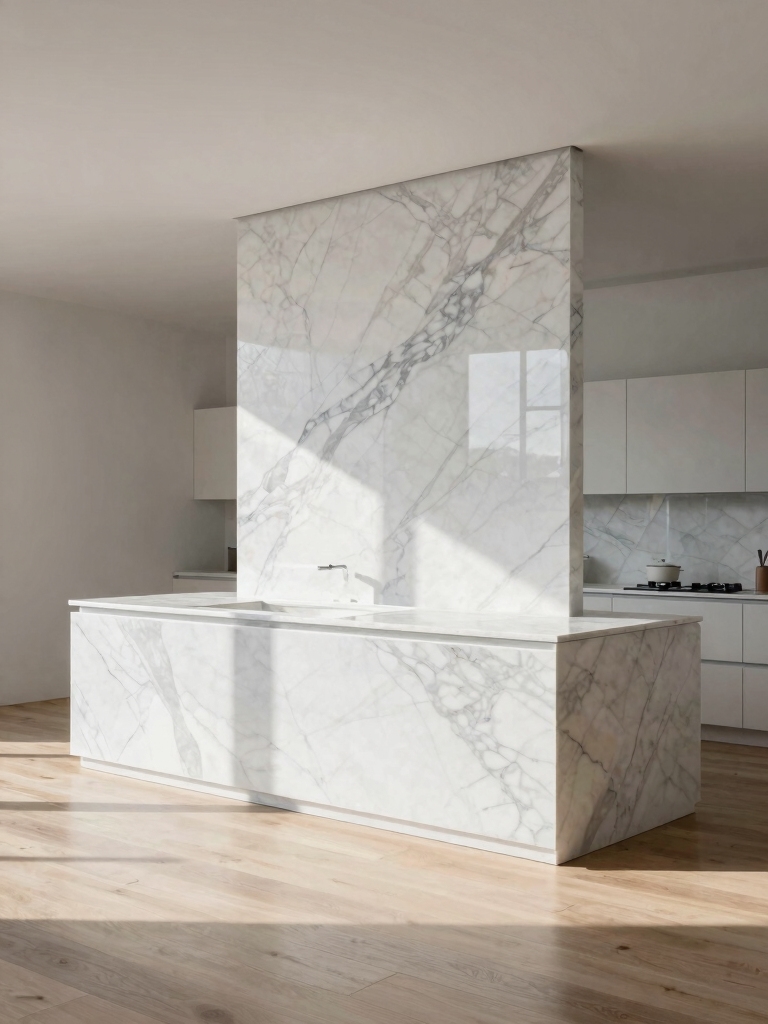
The best part about a waterfall island is that it earns its drama. This is no display piece. You still prep on it, eat at it, and pile homework across it, yet it anchors the whole room like a sculpture. That double duty is exactly why the look has staying power.
One Hero, Not Five
I steer clients toward a waterfall when their kitchen feels flat and they want one hero moment without redoing the cabinets. The edge does the heavy lifting. Everything around it can stay simple.
Keep the rest of the island restrained so the edge reads as the star. Plain cabinet fronts, quiet hardware, a single pendant cluster overhead.
Heads-Up
A waterfall edge lives or dies by the fabricator. The mitered corner and the vein match take real skill, so ask to see finished waterfall islands a shop has actually built, not just slab samples. A cheap install shows a dark seam and mismatched grain at the very corner everyone looks at first.
Marble Waterfall Island Drama
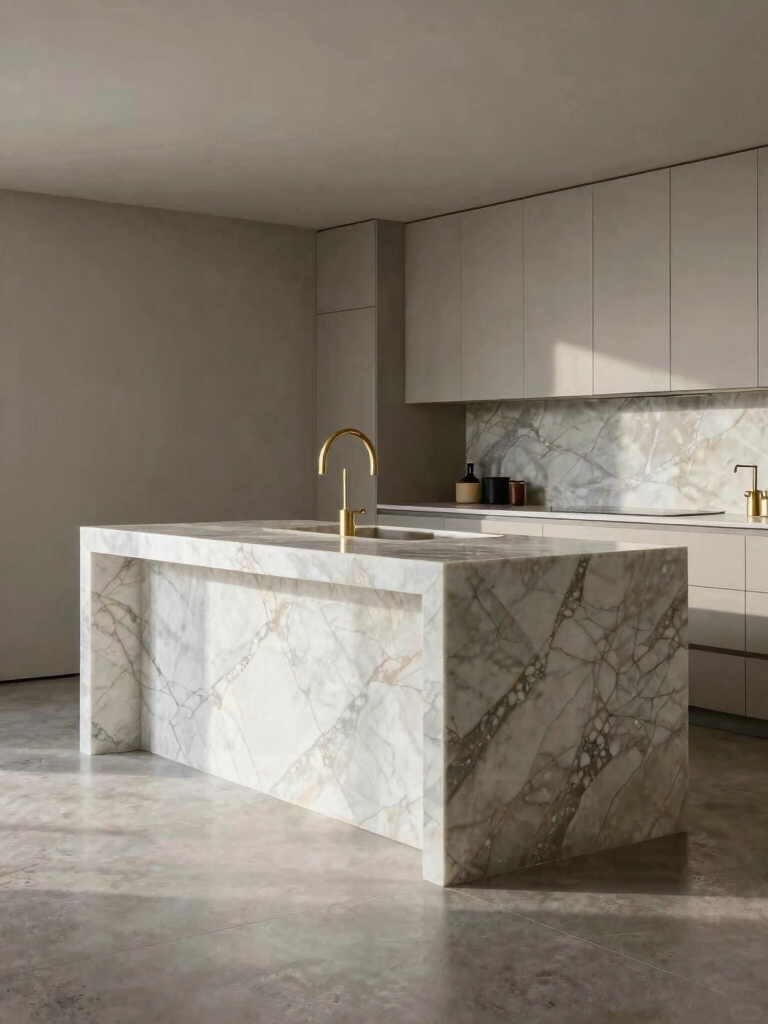
Marble is the material that made waterfall edges famous, and for good reason. When the fabricator books the slab so the veining runs off the top and continues down the side, the stone looks like flowing water frozen mid-fall. No two are alike. Every island becomes a one-off.
Real marble is soft and stains, so a honed finish hides etching better than a polish. If you cook hard and worry about wine rings, a marble-look quartz gives you the drift of the veins with none of the upkeep. Many of my clients land there once I show them a wine ring on a real marble sample.
Budget honestly here. A natural marble waterfall island often runs $3,000 to $6,000 installed, depending on the slab. Quartz that mimics it sits closer to $2,000 to $4,000.
Durable Quartz Island Edges
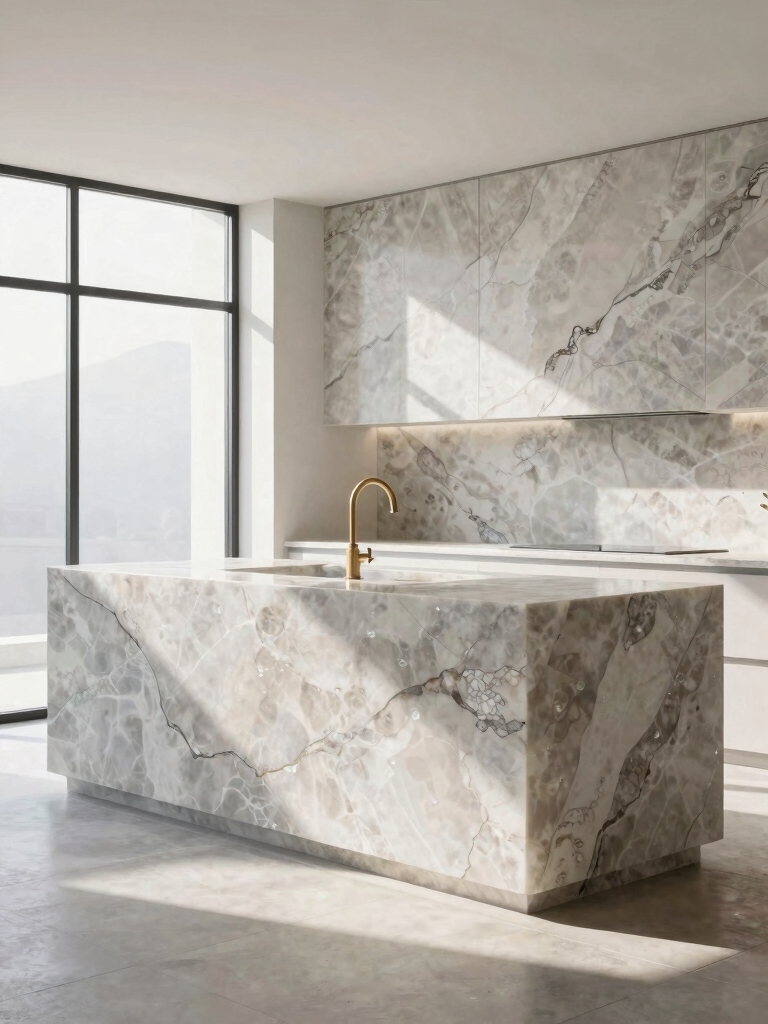
If you want the drama without the babysitting, engineered quartz is the smart pick. It comes in marble looks, solid colors, and concrete looks, and it shrugs off stains, acid, and daily abuse. For a busy family island, it is the material I recommend most:
- Non-porous, so no sealing and no wine or lemon stains
- Consistent veining, which makes the mitered corner match cleanly
- Holds a sharp edge for that crisp, modern drop
- Runs about $60 to $100 a square foot installed before the waterfall add-on
A few things people assume about waterfall islands that are not quite true:
❌ Myth: A waterfall island is purely decorative.
✅ Reality: It is fully functional. You prep, eat, and work on it exactly like any island; the edge just adds the sculpture.
❌ Myth: You need fragile marble to get the drama.
✅ Reality: Quartz, wood, concrete, and black granite all deliver a waterfall look. Marble is one option, not the only one.
Dramatic Wood Grain Warmth
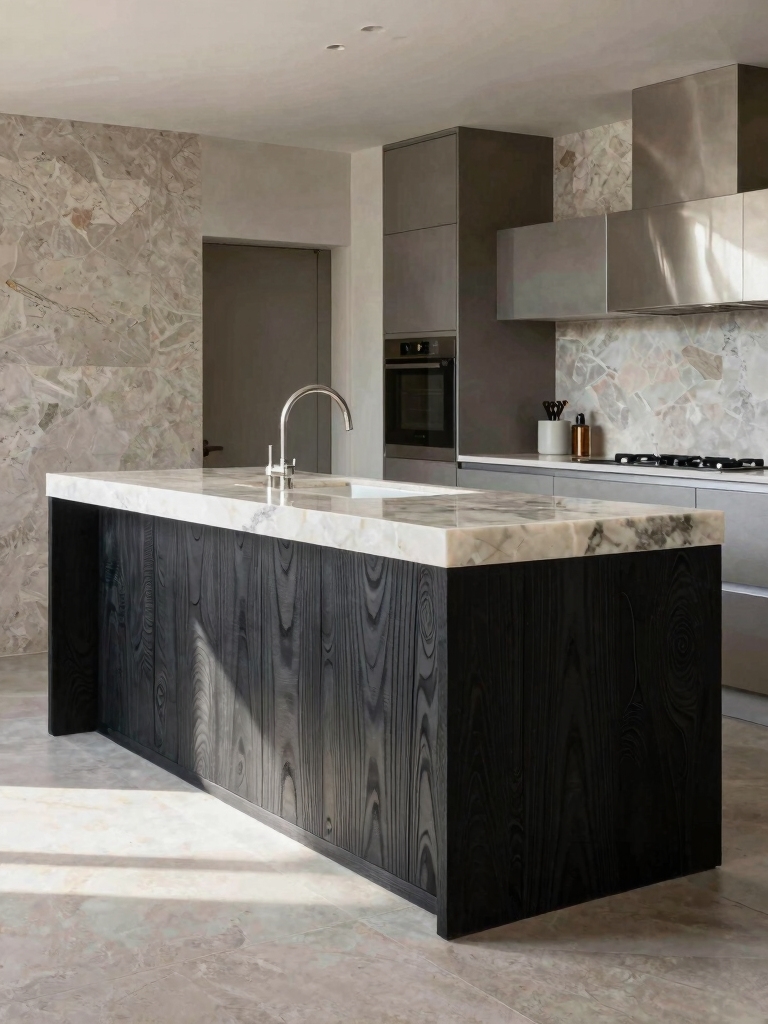
A wood waterfall is the warm alternative to stone, and it softens an otherwise sleek kitchen fast. A thick slab of walnut or white oak, with the grain running over the edge and down, brings raw, organic energy to a modern room. The contrast of clean shape and natural texture is the whole charm.
Caring for a Wood Edge
Wood does ask for more care near water. Seal it well, wipe spills quickly, and keep the sink off the waterfall end if you can. Treated right, it ages beautifully and gains character. I reseal a wood island top about twice a year, which takes ten minutes with a rag and a tin of oil.
Pair a wood waterfall with simple painted cabinets so the grain stays the focus. For more on warm wood tones, my walnut kitchen cabinets that ooze luxury guide pairs well here.
Industrial Concrete Warmth
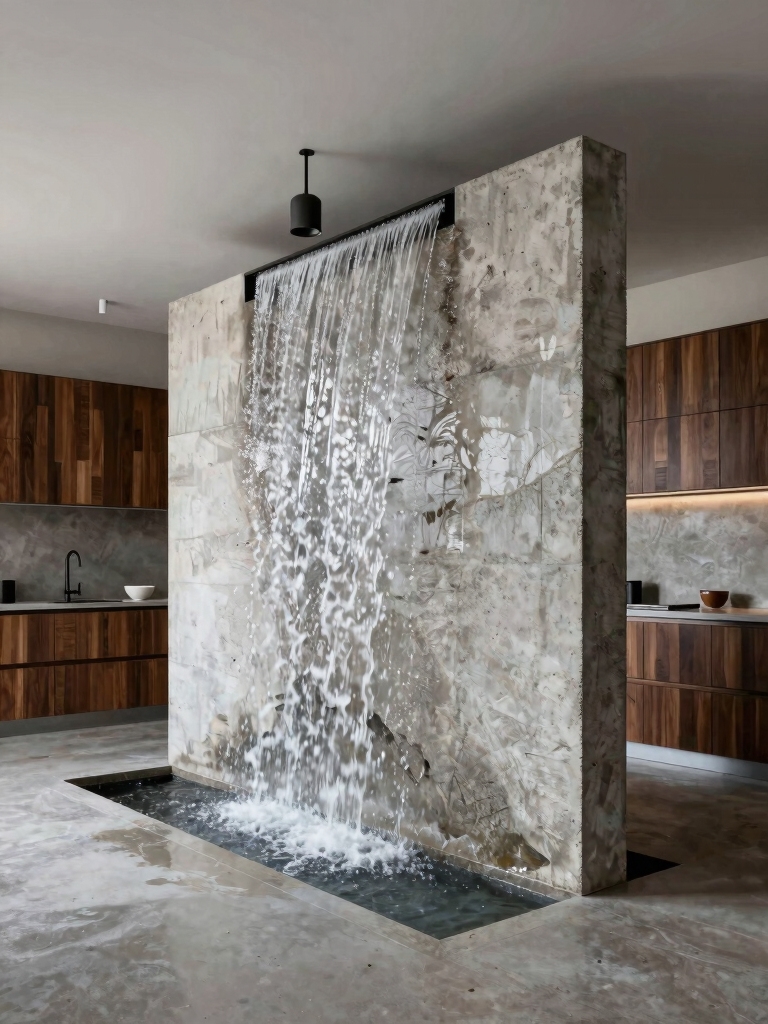
Concrete brings a raw, industrial mood that feels surprisingly warm in person. Its matte, slightly mottled surface reads soft, not cold, and it suits lofts, modern farmhouses, and anyone who likes a little grit. A concrete waterfall lands somewhere between rugged and refined.
Grit Meets Polish
It is heavy and it can hairline-crack over time, which many owners actually like as part of the character. Have a pro pour and seal it. This is not a weekend project.
Warm it up with wood stools and brass pulls so the gray does not take over. A concrete edge loves a little metal nearby. Brass pulls run about $6 to $12 each and warm the whole gray story.
Bold Modern Light
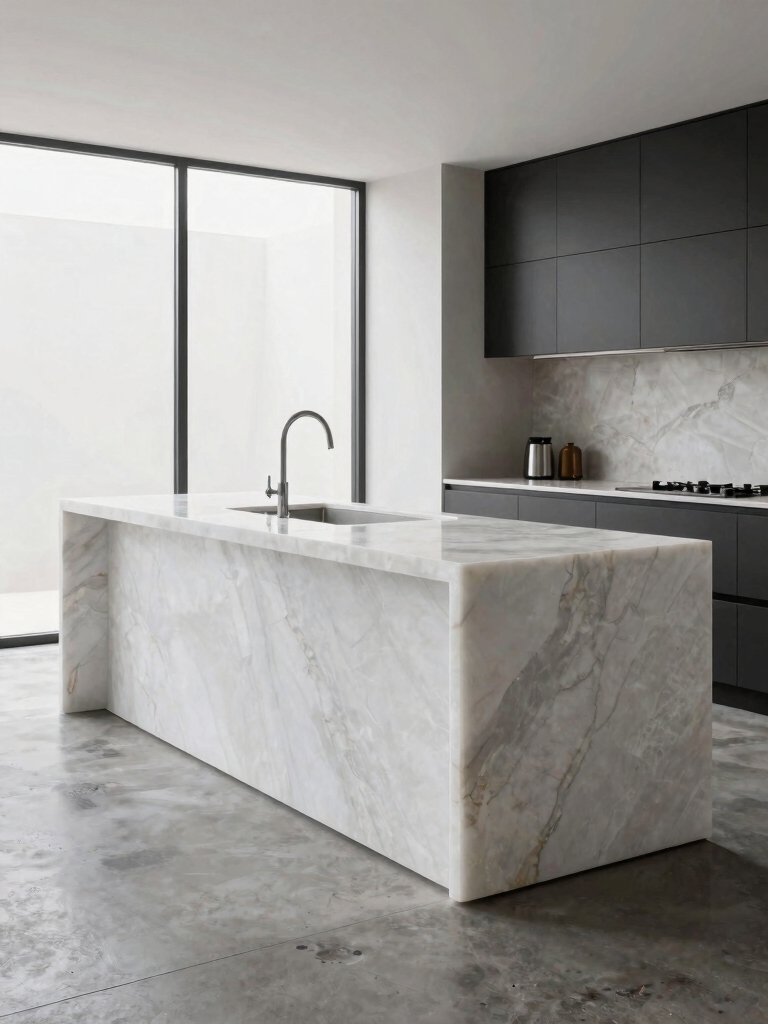
A pale waterfall island works like a light bank in the middle of the kitchen. A bright white or soft cream slab bounces daylight around and makes a smaller room feel open and airy. Against dark floors or moody cabinets, the effect is graphic and clean.
This is the move for a kitchen that runs a little dim. Put the waterfall where the window light hits it, keep the surrounding palette quiet, and let the island glow as the bright spot. For more layout help, my island kitchen ideas designers recommend guide is a good next read.
Bold Black Islands
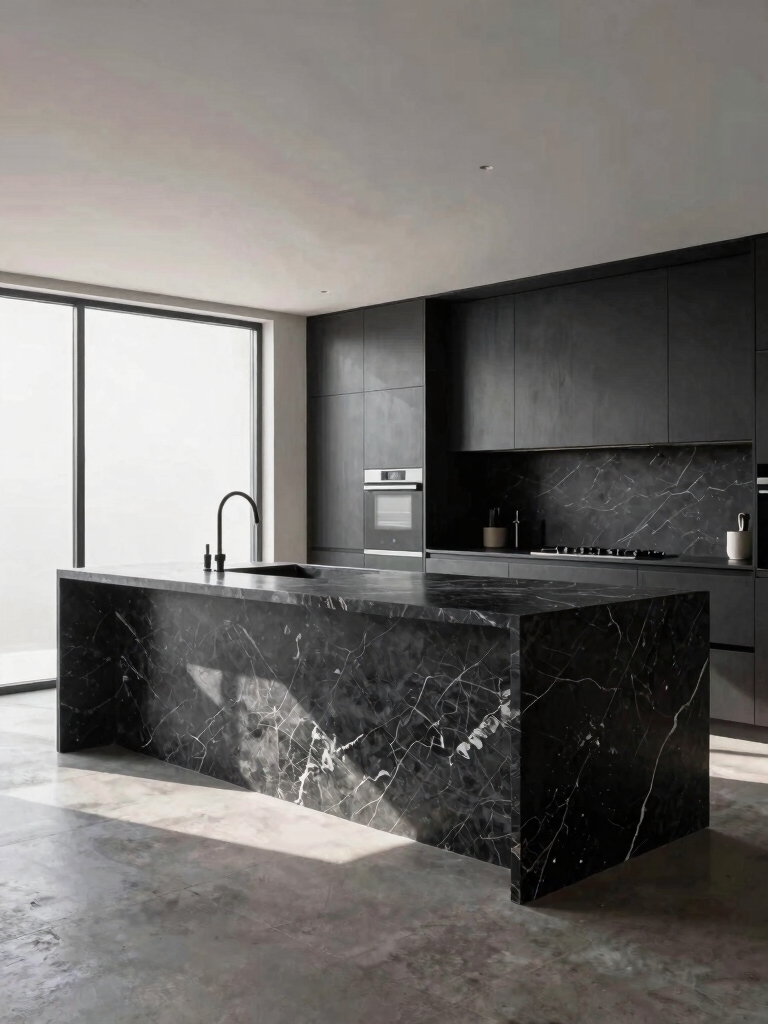
On the darker end, a black or charcoal waterfall makes an unforgettable entrance. It commands attention, grounds an open-plan space, and reads as pure modern confidence. A deep, polished surface catches the light in a way that feels almost theatrical:
- Honed black absorbs light for a soft, matte mood
- Polished black reflects it for high-drama shine, best in a room with plenty of natural light
- Pair it with pale cabinets for sharp, graphic contrast
- Watch for fingerprints and water spots; matte hides them best
A couple of terms your fabricator will use:
📖Mitered edge
A 45-degree cut on both pieces so the top and side meet in a clean, near-seamless folded corner.
📖Book-matching
Laying two slabs as mirror images so the veining flows symmetrically across the join, like an open book.
Artful Stone Vein Matching
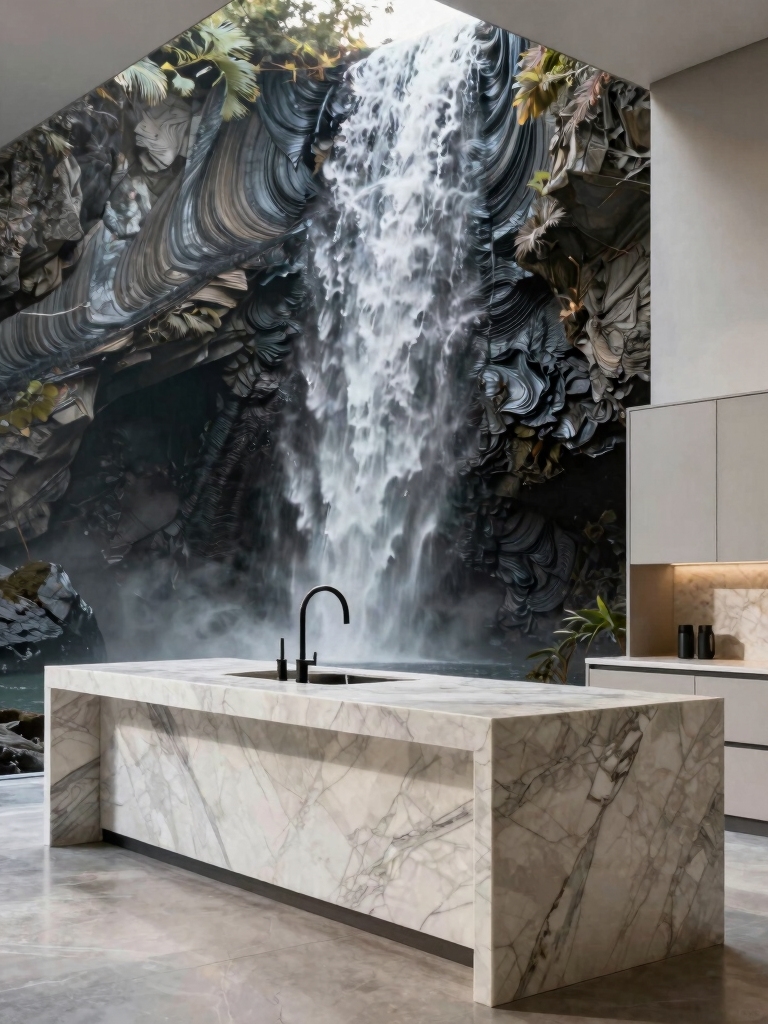
The detail that separates a great waterfall from a flat one is vein matching. When the fabricator lays out the slabs so the veining flows unbroken over the corner, the island becomes a single piece of art. Here is how a good shop pulls it off:
- They dry-lay the slabs and photograph the layout before cutting
- They book-match or sequence the pieces so veins meet at the miter
- They cut the 45-degree edge and glue it for a near-invisible seam
- Ask to approve the layout in person; this is where the drama is won
Warm Tactile Stone
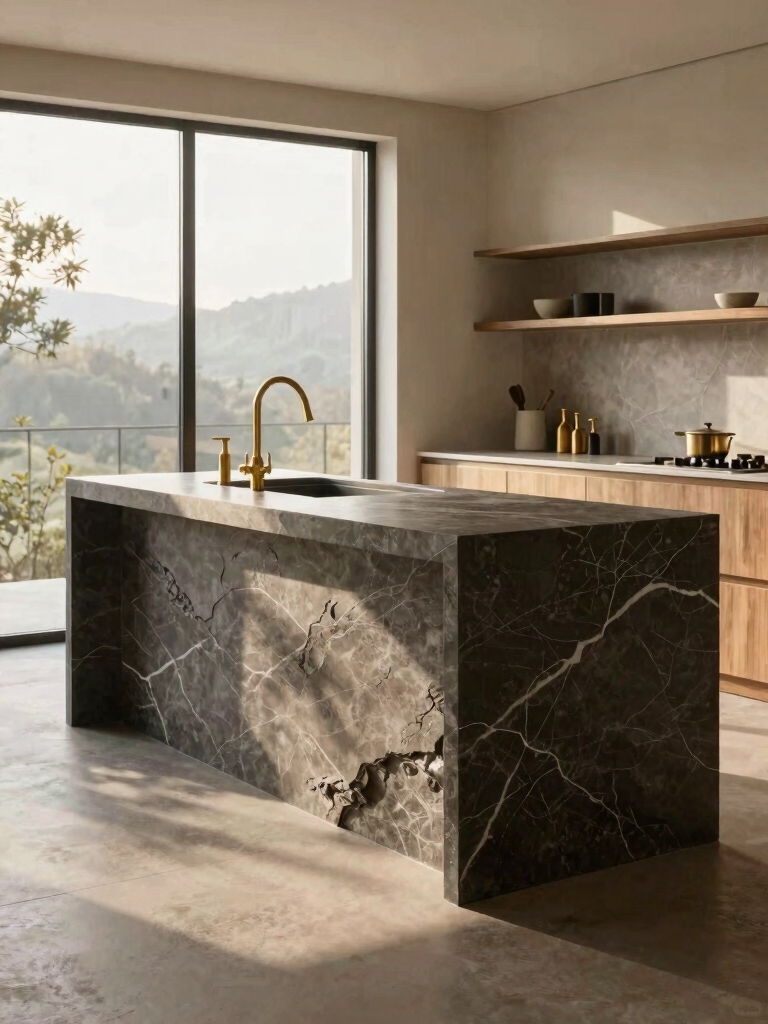
Finish changes a waterfall as much as color does. A honed or leathered surface trades shine for a soft, tactile feel that warms the whole island and hides smudges far better than a high polish. Run your hand across a leathered granite once and you will understand the appeal.
Match the finish to how you live and what you want to feel:
- Honed for a matte, low-glare calm that suits busy kitchens
- Leathered for subtle texture and great fingerprint resistance
- Polished for maximum drama and reflected light
- Sample all three on your actual slab before you commit, since finish reads differently on every stone
Styling Tips for the Finished Island
Once the edge is in, style around it lightly so the stone keeps the spotlight. Hang one pendant cluster or a long linear light dead center, leave most of the top clear, and add just a board, a bowl, or a small plant near the non-waterfall end. The drop wants room to breathe, not a crowd of clutter.
Mind the overhang on the seating side too. You want 12 to 15 inches of clearance for stools, which keeps the waterfall end as the clean showpiece and the open side as the gathering spot. For pulling the whole island together, my kitchen island styling secrets revealed guide goes deeper, and my bar stools for a kitchen island in chic combos piece helps with seating.
Waterfall Island Questions, Answered
?How much does a waterfall island cost?
A waterfall edge typically adds $1,200 to $3,500 over a standard island counter, because you are buying extra slab material and paying for a precise mitered join. The total depends on the material: quartz waterfalls run roughly $2,000 to $4,000 installed, while natural marble can reach $3,000 to $6,000 or more.
?What is the best material for a waterfall island?
Quartz is the most practical for a busy family, since it is non-porous, stain-proof, and holds a crisp edge. Marble gives the most dramatic veining but needs care. Wood and concrete add warmth and texture. Pick based on how hard you cook and how much upkeep you want, then let the edge show it off.
?Does a waterfall island go out of style?
It has been popular for over a decade and still reads as current, largely because it is a clean, architectural detail rather than a trendy color or finish. To keep it timeless, choose a classic material and a simple shape. The drama comes from the form, which ages far better than a fad.
?Can you put a waterfall edge on only one side?
Yes, and many islands do exactly that. A single waterfall on one short end gives you the sculptural drop while leaving the other sides open for seating and storage. It also costs less than wrapping both ends, so a one-sided waterfall is a smart way to get the look on a budget.
?Is a waterfall island hard to keep clean?
The top cleans like any counter. The vertical panels actually stay cleaner than open cabinet fronts, since there are no handles to grab. Choose a honed or matte finish if fingerprints bother you, especially on dark stone, and wipe the floor-level edge now and then where shoes and mop water reach it.
Worth Every Inch of Slab
A waterfall island is one of the few single moves that changes how a whole kitchen feels. Pick the material that speaks to you, marble for flowing drama, wood for warmth, black for moody confidence, or quartz for easy daily life, and then let the edge carry it down to the floor like a piece of sculpture.
Spend where it counts: a good fabricator, a slab you love, and a clean mitered corner. Get those three right and your island stops being furniture and starts being the reason people walk in and say wow. Which material would you run over the edge in your kitchen?
More Ideas Here


