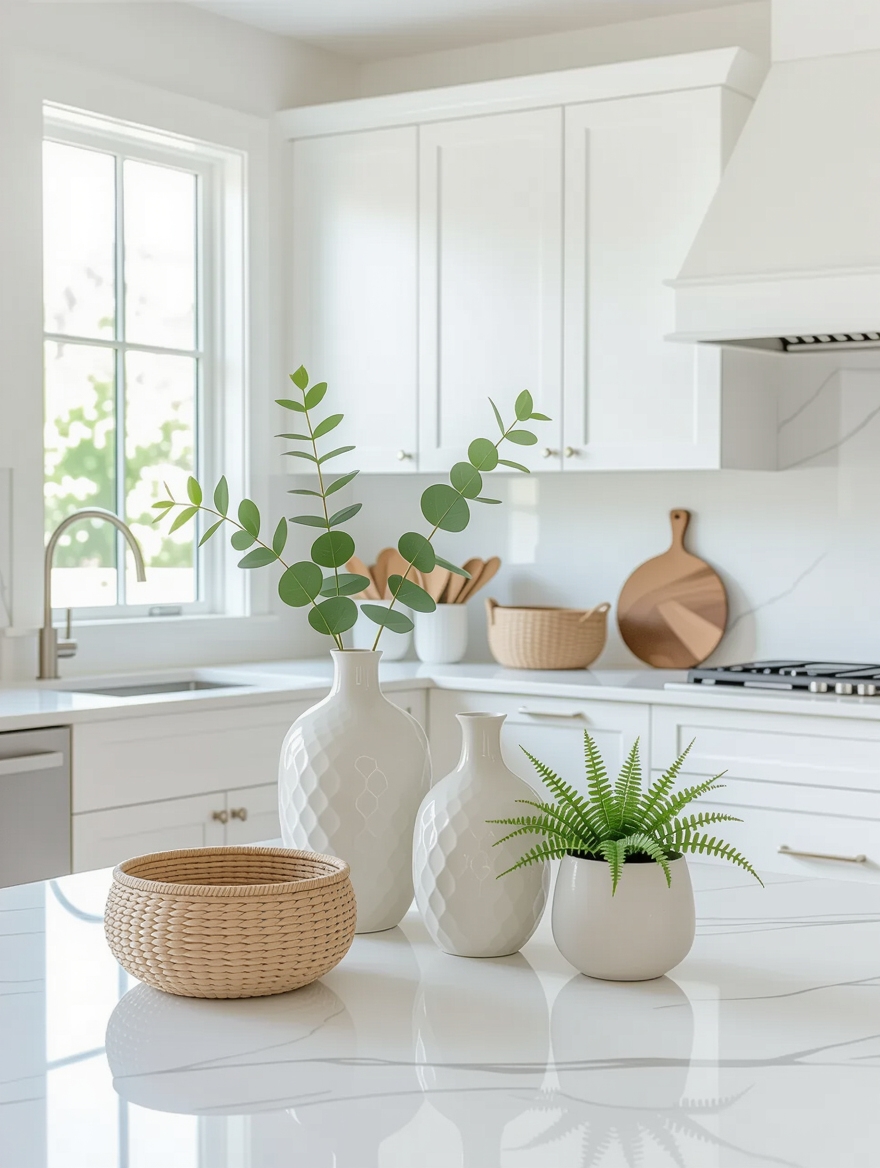

A cold kitchen is almost never a paint problem. It is a missing-layers problem. The rooms that feel chilly are usually the ones with hard surfaces and nothing soft, warm, or living to break them up, all stone and stainless and overhead light. The fix costs far less than a renovation.
These seventeen staples are the small, mostly inexpensive things that warm a kitchen up fast, the textiles, the lighting, the wood and herbs and worn metal that make a room feel cared for. Most cost under a hundred dollars and go in over an afternoon. I have flagged the ones that punch hardest so you can start with the biggest payoff.
Where Kitchen Warmth Comes From
- Warmth is layers, not one big change. Soft textiles, warm light, wood, and living things stacked together do the work.
- Light is the fastest lever. A warm bulb around 2700K changes the whole mood for a few dollars.
- Texture matters as much as color. A handwoven rug or a wood board adds the softness hard kitchens lack.
- Most of these are cheap and reversible, which makes them perfect for renters and quick refreshes.
Warm, Earthy Kitchen Colors
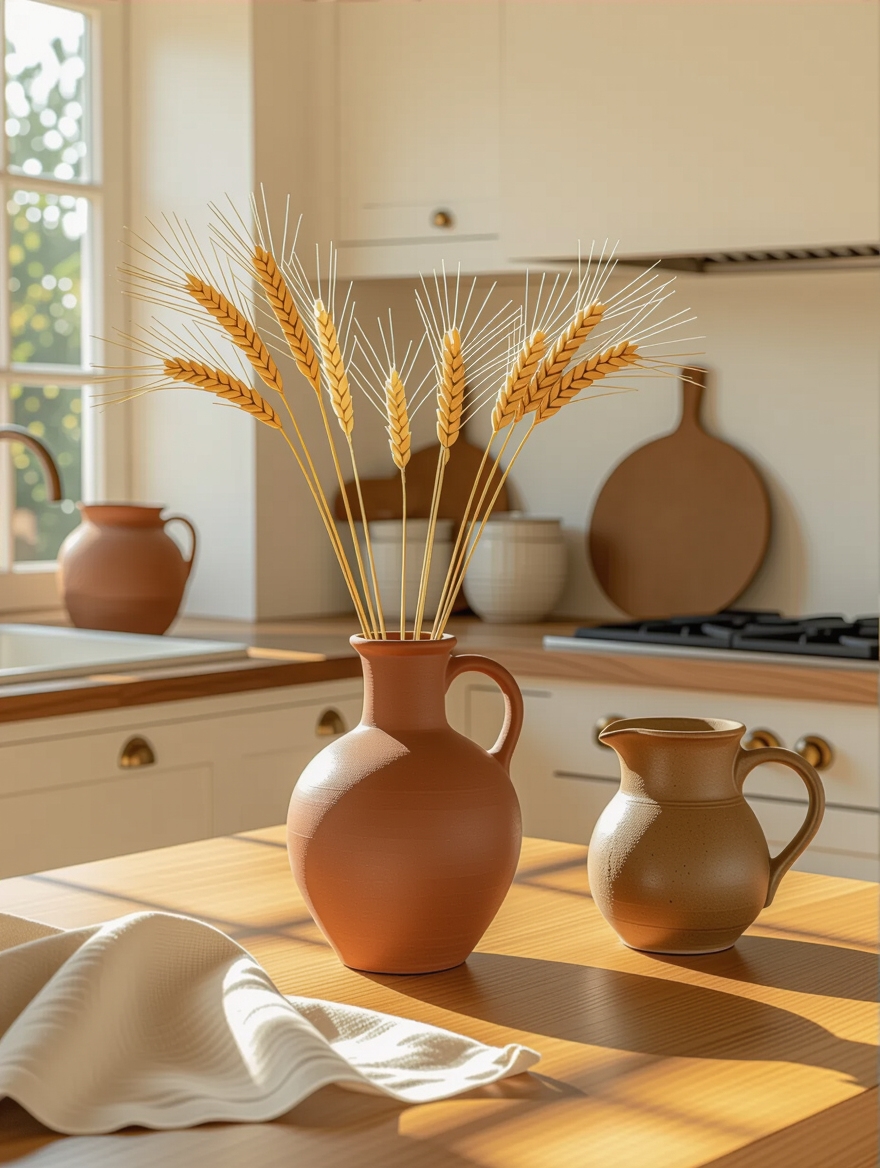
Warmth starts with the colors your eye lands on most, and earthy tones are the quickest way to set a cozy base. Terracotta, ochre, warm clay, and soft olive carry heat in their very pigment, so even a small dose, in a bowl of fruit, a runner, a piece of pottery, nudges a cold kitchen toward inviting.
Warm Color Without Painting
You do not have to repaint to get there. Bringing earthy color in through accessories, a stack of warm-toned plates on open shelving, a clay pitcher, a few books with worn spines, layers heat onto whatever your cabinets already are. It is the cheapest possible warmth.
If you do reach for paint, keep it to a small surface like an alcove or the inside of a glass cabinet. A little earthy color goes a long way, and against cool stone or stainless it does the most work. For the case that color can act as a calm neutral, see green as the new neutral.
Warmth and Texture Enhancement
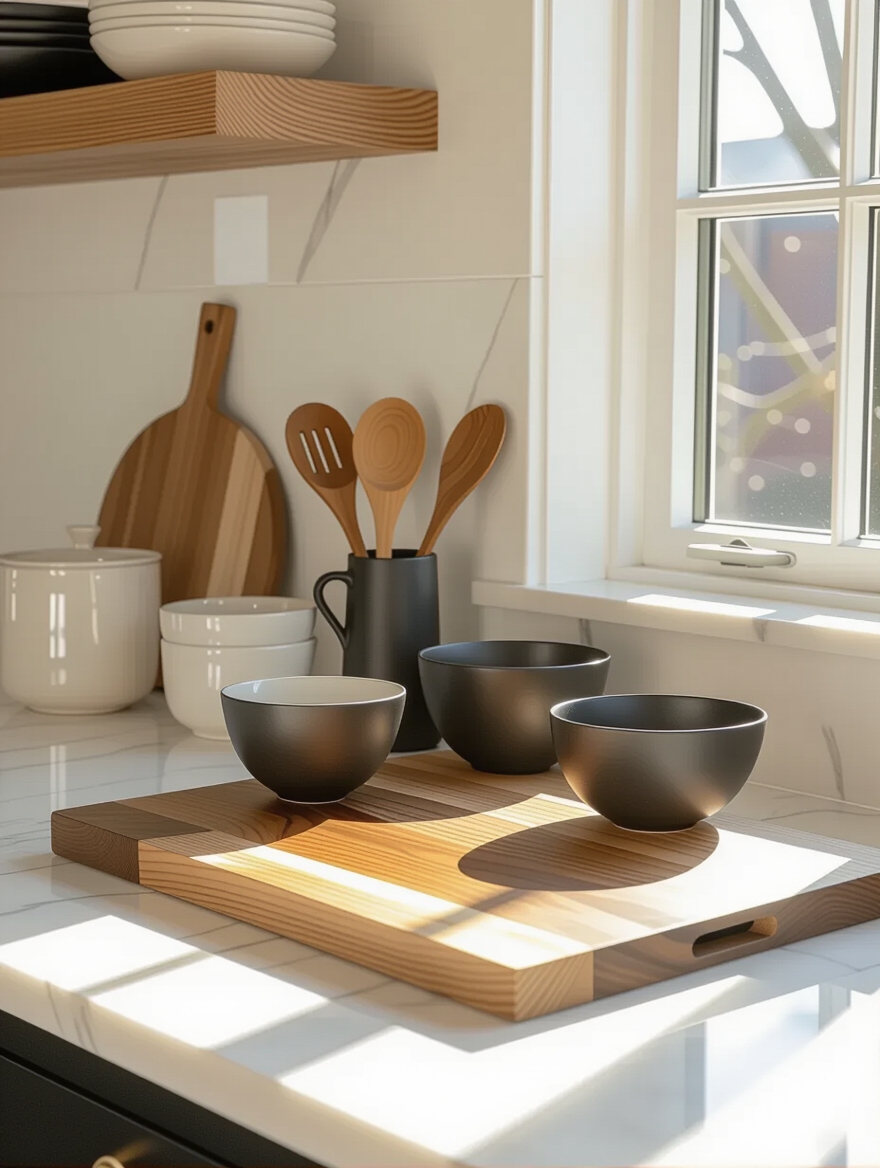
Texture is the half of warmth people forget, and it matters as much as color. A kitchen of smooth, hard surfaces, polished stone, glass, stainless, reads cold no matter how nice the palette, because there is nothing for the eye or hand to soften against. The fix is to add things that are woven, rough, or worn.
Layer texture wherever you can without crowding the work zones. A linen runner, a chunky knit over a stool, a wooden board left out, a basket of produce, all introduce the tactile softness a hard kitchen lacks. Each one is small, but together they change how the whole room feels.
The beauty of texture is that it costs almost nothing and breaks no rules. You can pull most of it from other rooms or a thrift shop in an afternoon, which makes it the lowest-risk warmth upgrade on the list.
- ✓Is your main light a single cold overhead bulb? Swap it to warm white first.
- ✓Is there anything soft or woven in the room, or is it all hard surfaces?
- ✓Is there a single living thing, an herb, a plant, a bowl of fruit?
- ✓Do you have any warm metal, or is every finish cool stainless and chrome?
- ✓Are the walls completely bare, with no art or personality at all?
Warm, Layered Kitchen Lighting
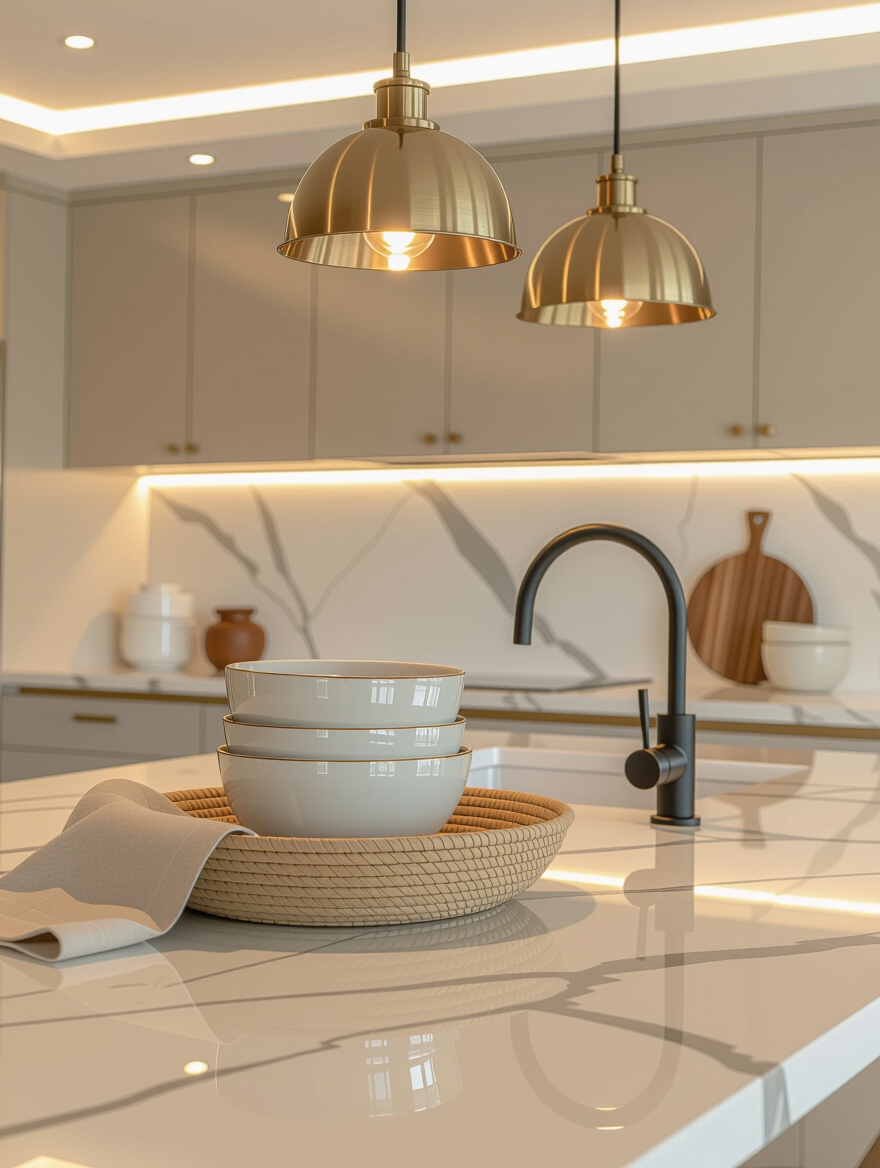
If you change one thing, change the light, because nothing chills a kitchen faster than a single cold overhead fixture. Swapping to warm-white bulbs around 2700K and adding a second, lower light source instantly softens the whole room, and it costs only a few dollars in bulbs. It is the first warmth fix I make in any cold kitchen, and the cheapest.
Layering is what makes it feel finished. An overhead light for tasks, under-cabinet strips for the counter, and a small lamp or warm pendant for glow give you light at different heights and moods, the same way a living room is lit. Put the whole thing on dimmers and you can drop it to a warm, candlelit level for dinner in seconds.
Rustic Charm and Open Storage
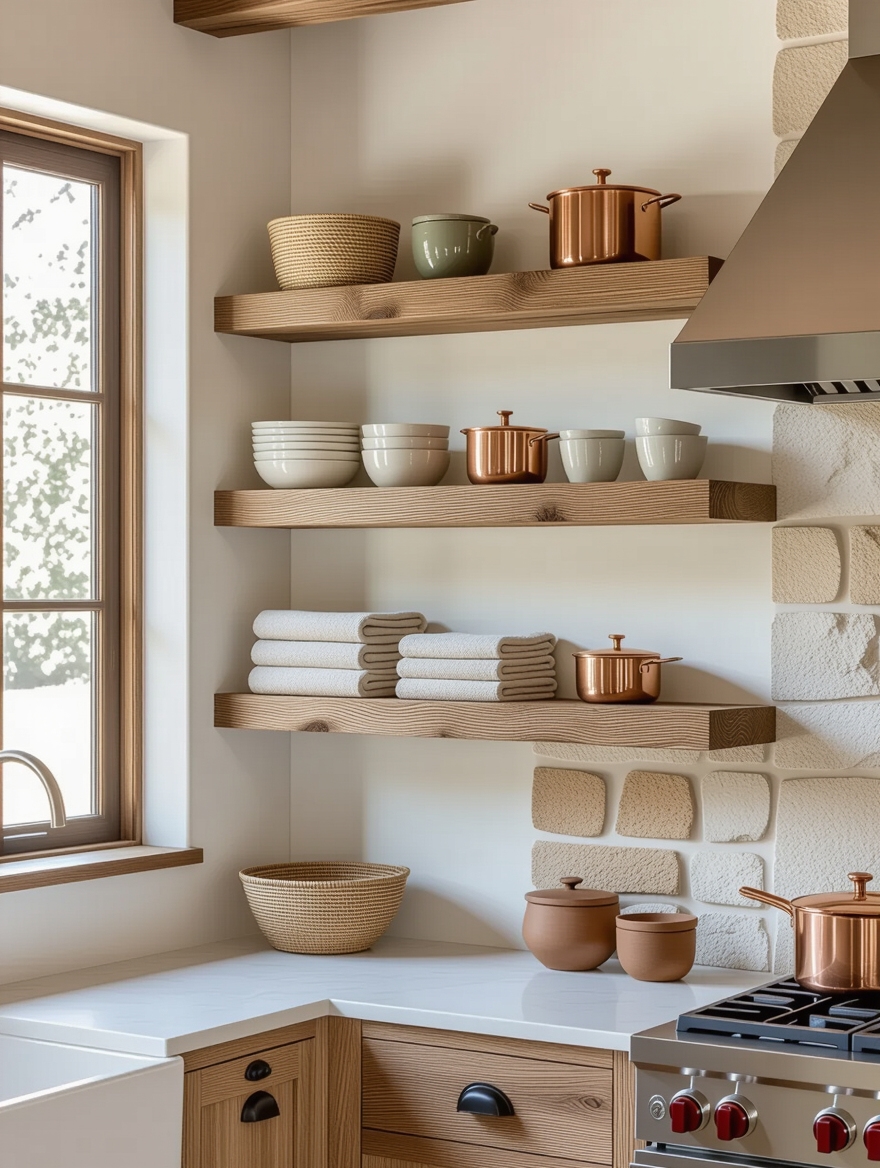
Some of the warmest kitchen decor is simply useful things left in view. Open storage, a rail of hanging copper pots, a crock of wooden spoons, a stack of well-used cutting boards, turns the tools of cooking into warm, lived-with decor. A kitchen that shows it is used feels warmer than one that hides everything behind closed doors.
The trick is curating with a light hand. Display the pieces that have some character, the wood, the copper, the ceramic, and keep the plastic and the clutter tucked away. A few beautiful, functional objects on a shelf or rail read as charm; a crowded counter reads as mess.
Rustic storage also tends to be cheap and forgiving. A simple wall rail, a wooden crate, or a thrifted crock costs very little and can be rearranged endlessly until it feels right. For keeping open displays tidy, see open cabinets that stay clutter-free.
ℹ️Good to Know
Color temperature, measured in kelvin, is the quiet villain behind most cold kitchens. The bright, bluish bulbs builders install often run 4000K or higher, which reads clinical and flat. Dropping to a warm 2700K to 3000K bulb shifts the same room toward candlelight without changing a single other thing, and it is the cheapest warmth upgrade in the house at a few dollars a bulb.
Fresh Herbs to Enliven a Kitchen

Nothing warms a kitchen quite like something alive in it. A row of potted herbs on the windowsill or a shelf brings living green, a little fragrance, and the sense that the kitchen is in use, all for a few dollars a pot. It is the warmest staple per dollar on this whole list.
Keep the herbs you actually cook with within reach of the stove, so the display earns its place instead of wilting unused. Basil, thyme, rosemary, and mint are forgiving on a bright sill, and matching the pots, simple terracotta or ceramic, makes a windowsill look styled and intentional.
If you lack the light or the patience for live herbs, a single trailing pothos or a bowl of lemons delivers some of the same life. The point is one living, growing thing to offset all the hard surfaces around it.
Comfortable Handwoven Kitchen Rugs
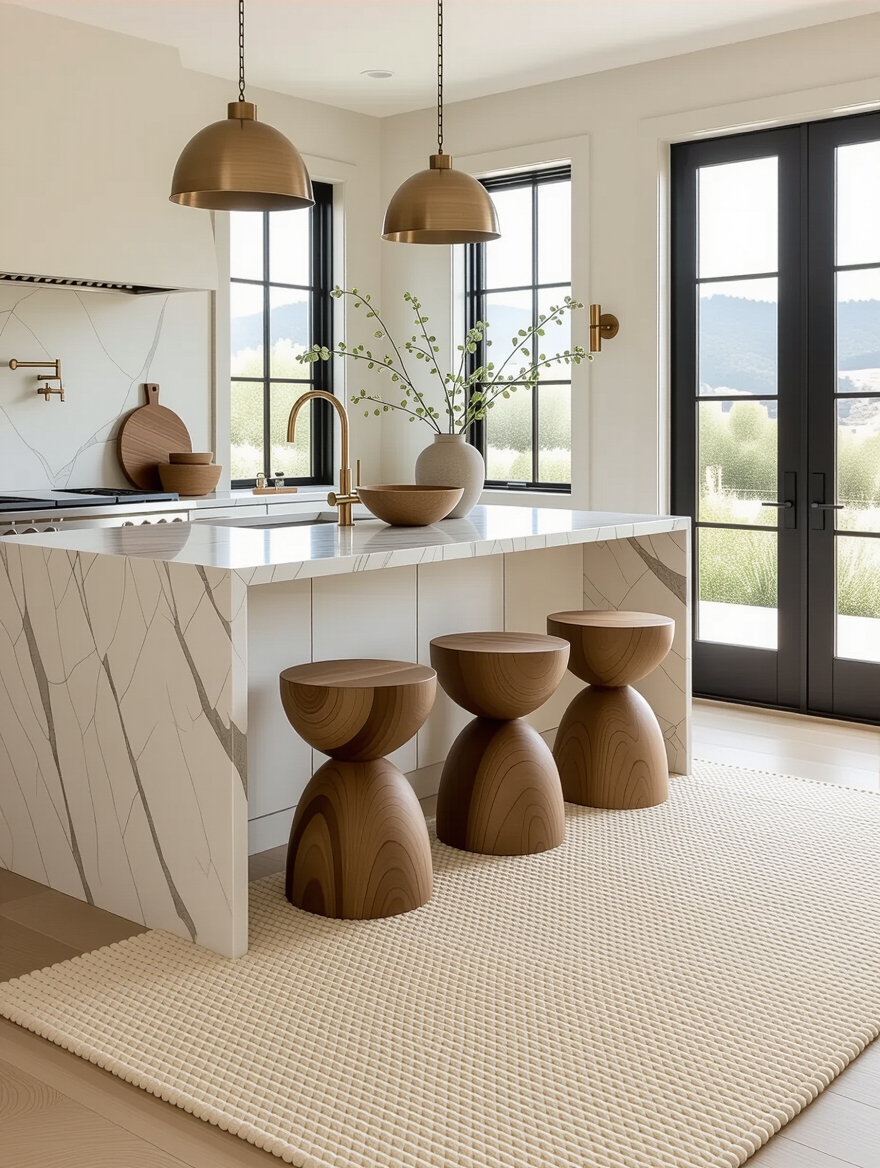
A rug is the single biggest texture you can add to a kitchen, and it warms the room two ways at once: softer underfoot at the sink, and visually softer against all that hard flooring and cabinetry. A handwoven runner or a flatweave in warm tones anchors the space and takes the chill off a tile or concrete floor instantly.
Choose for the realities of a kitchen. A flatweave or indoor-outdoor rug in a $80 to $250 range stands up to spills and vacuums easily, and a pattern hides the inevitable crumbs better than a solid. Lay it where you stand most, in front of the sink or the range, and skip the deep pile that traps grease. Even a thrifted runner, washed and trimmed to fit, does the job.
🅰️Warm up with textiles
A rug, towels, and a runner add softness and color fast, for very little money, and change with the seasons. Best if your kitchen feels hard and bare.
🅱️Warm up with light
Swapping to warm bulbs and adding a lamp shifts the whole mood in minutes. Best if your kitchen feels clinical and cold despite having decent stuff in it.
Vintage Wall Art for Charm
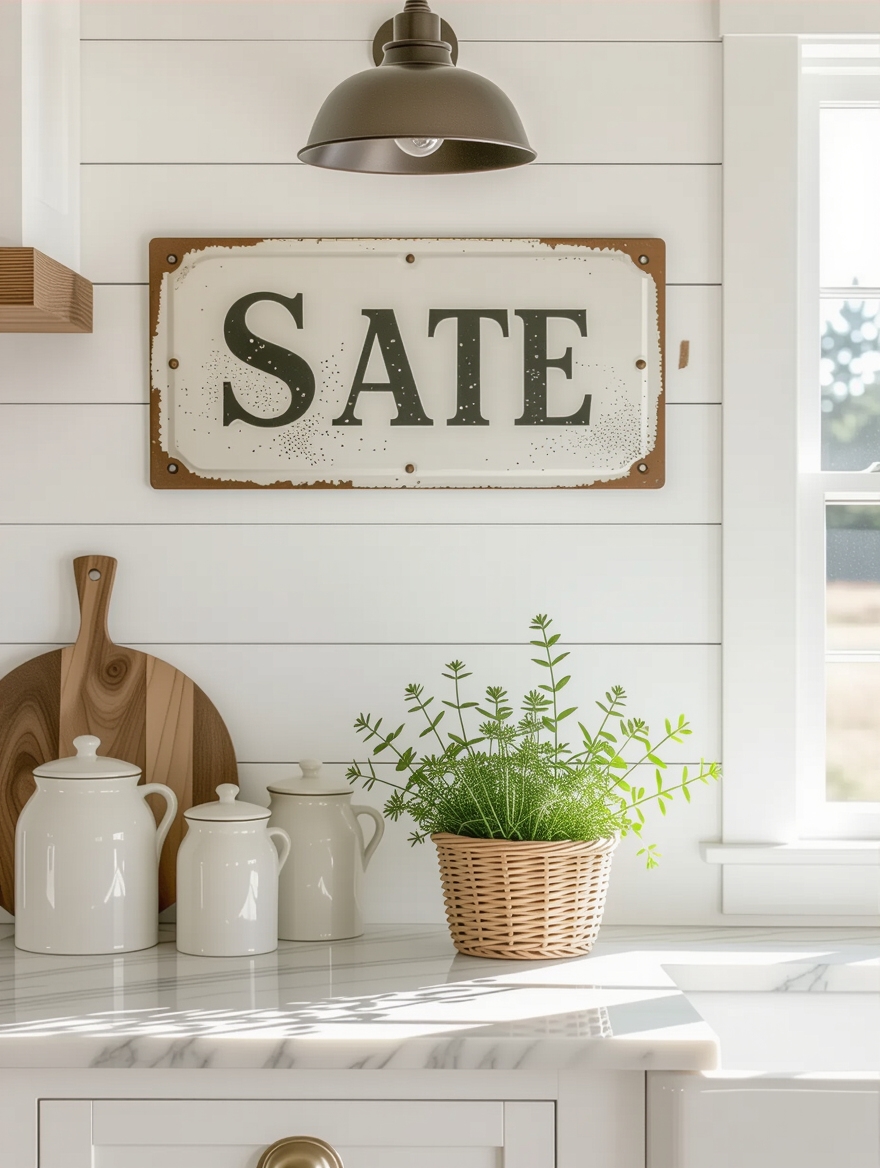
Kitchens are the most under-decorated room in most homes, and a little wall art is what tells the eye this is a room people live in, not just a workspace. A vintage botanical print, an old market poster, or a small gallery of flea-market frames adds personality and warmth to the blank walls above counters and tables.
A few pointers keep kitchen art practical and charming.
- Hang art away from the splatter zone, on a far wall, a breakfast nook, or above a coffee station, so it stays clean.
- Lean toward warm subjects and worn frames, since vintage pieces add age and warmth a new print cannot.
- Seal or frame anything near cooking under glass so grease and steam do not ruin it over time.
Natural Stone Accents

Stone might sound cold, but the right natural stone adds an earthy, grounding warmth that polished surfaces miss. A honed marble board, a soapstone trivet, a travertine tray, or a rough stone mortar brings the warmth of an honest, tactile material without the chill of a high-gloss countertop. The matte, worn quality is what makes it feel warm.
Use stone in small, movable accents to keep it affordable. A single beautiful stone board or a stone-based lamp adds the material’s quiet weight for a fraction of a stone counter, and it can move with you. Keep the finish honed or natural, since the matte surface reads far warmer than a shiny polish.
Warm Metals to Enrich the Mood
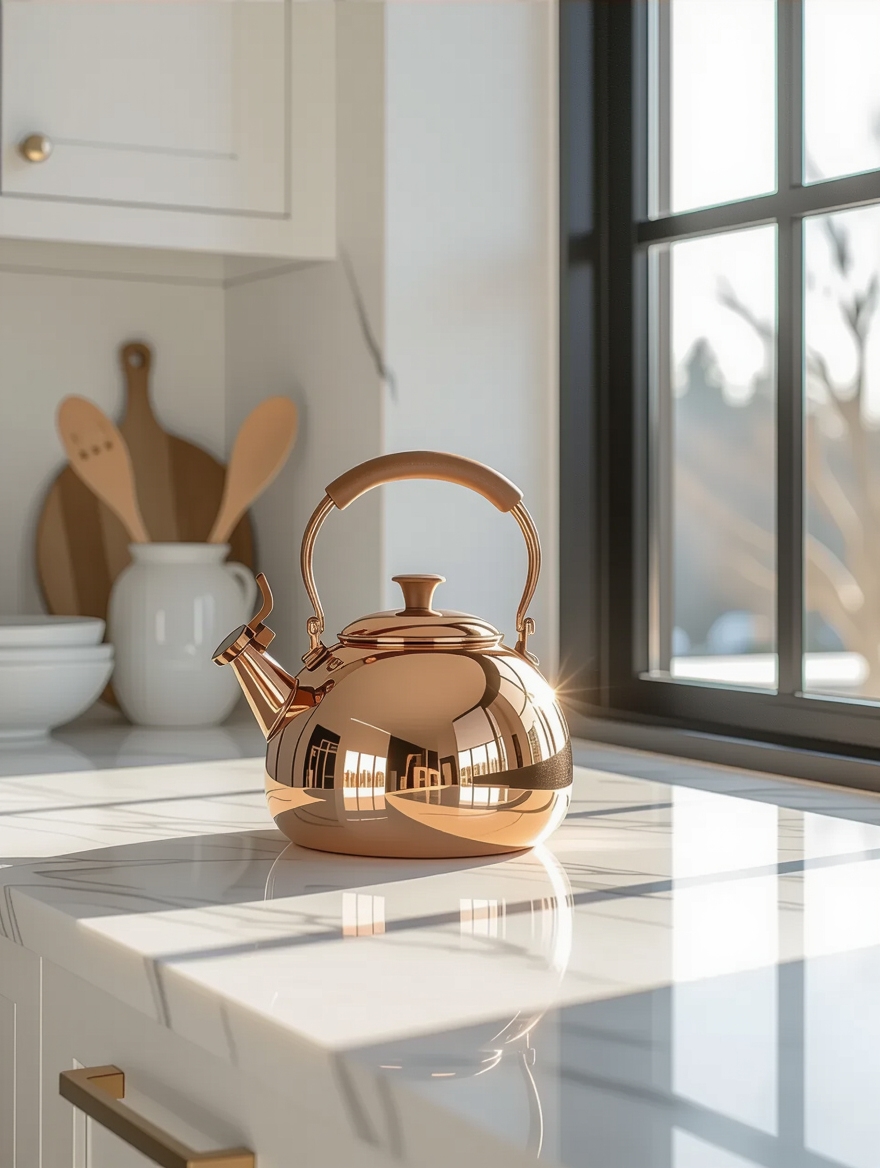
Most kitchens are full of cool metal, stainless appliances, chrome faucets, nickel pulls, and adding a warm metal is what brings a glow back. Brass, copper, and aged bronze catch warm light and play against all that steel, which is why even a small dose shifts the whole mood. These are the easiest places to add it.
- A few copper pots or a brass utensil holder on display, warm metal you also use.
- Swapping cabinet hardware to brass, a one-hour job that resets the room for under $100.
- A warm-metal pendant or lamp, which doubles the effect by warming both the finish and the light.
Stylish Kitchen Towel Accents
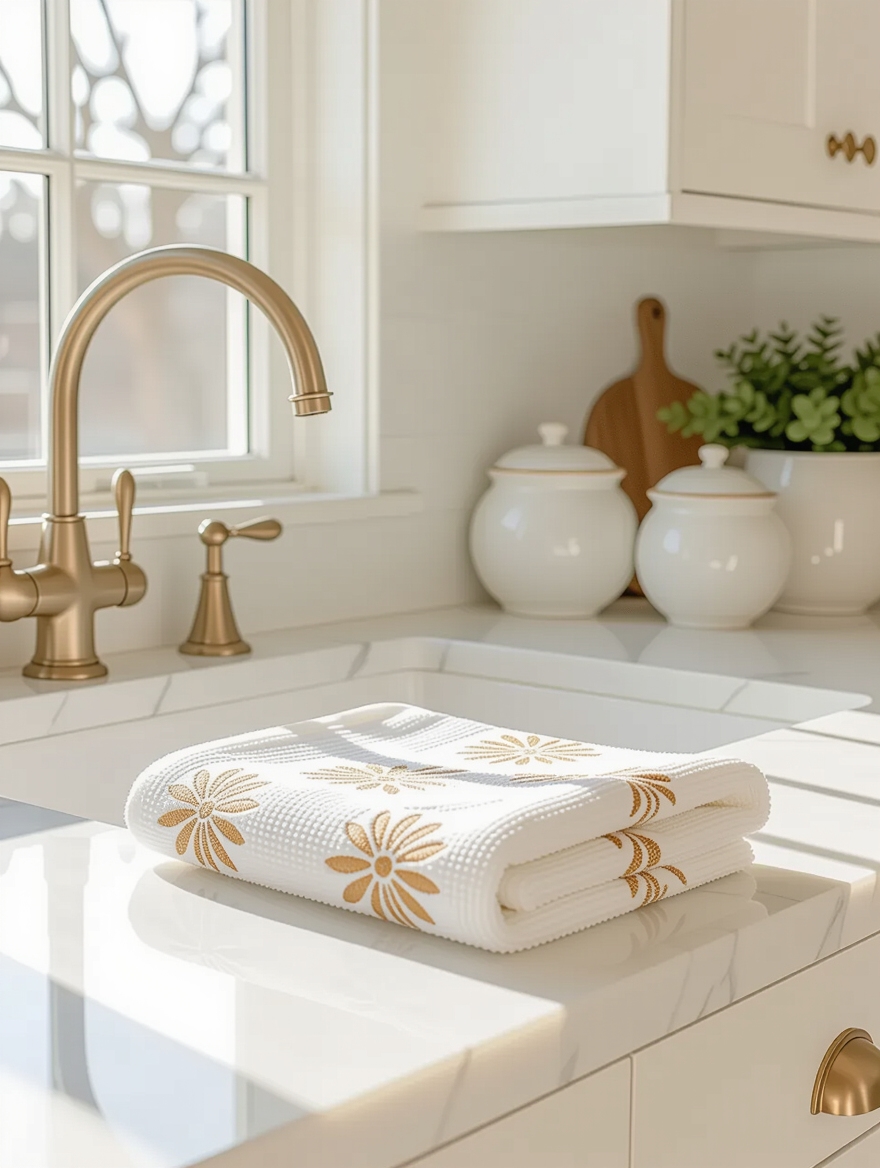
The humblest staple on this list might be the most underrated. A good set of kitchen towels in warm colors or soft texture is the cheapest, fastest warmth upgrade there is, and one you can change with the seasons. Here is how to make a few dollars of linen actually count.
- Choose linen or waffle-weave cotton in warm or earthy tones, which add both color and texture for $10 to $20 each.
- Keep a couple on display, over the oven handle or a rail, and the working ones in a drawer.
- Swap them seasonally, deeper tones for winter, lighter for summer, for an instant five-minute refresh.
What to Expect
The best thing about warming a kitchen with staples is how fast and forgiving it is. Almost everything here goes in over a single afternoon and costs well under a hundred dollars per item, with the bulb swap and the towels coming in at a few dollars. You can do one a weekend and watch the room thaw gradually, or layer several at once for a bigger shift.
Set your expectations around layering, since no single staple transforms a cold kitchen on its own. Warmth is cumulative: the warm bulb plus the rug plus the herbs plus the copper add up to a room that feels cared for, where any one of them alone would barely register.
Start with the highest-impact moves, the lighting and a rug, then keep adding texture and life until the kitchen feels the way you want. For tying it into the next room, see decor that makes the living room and kitchen flow.
Warmth Is Built in Layers
A warm kitchen is not the result of one expensive decision; it is the sum of small, soft, living things layered onto the hard bones of the room. Warm light, a woven rug, a few herbs, some honest wood and worn metal, none of them costs much or takes long, but together they turn a cold workspace into the room everyone gathers in. That is the quiet magic of staples over renovations.
Start with the lighting and one soft texture this weekend, then add a living thing and a warm metal the next. Which corner of your kitchen feels coldest right now, and what would you warm it with first?
More Looks We Love