

Open shelving and glass-front cabinets get blamed for looking messy, but that is a styling problem, not a flaw in the idea. Open kitchen cabinets can stay clean and calm indefinitely; the trick is treating them like a small, edited display, the way a styled bookshelf works. The kitchens that pull it off are not tidier by nature, they are just following a few rules.
Those rules are simple and forgiving. Group like with like, leave breathing room, hide the ugly stuff in baskets, and keep only what earns its spot at eye level. Below are seventeen ways to get the open look without the visual noise, from styling dishware to balancing open shelves with closed storage, so the display stays fresh long after the first photo.
The Short Version
The secret to clutter-free open cabinets is restraint, not more organizing gadgets. Show a curated fraction of what you own, group it by type and color, and leave real space around each grouping so the eye can rest.
Keep daily essentials within easy reach, tuck small or mismatched items into baskets and boxes, and balance open shelving with enough closed storage to hide the rest. Style it once with intention, and a quick weekly tidy keeps it looking deliberate.
Start With Open Cabinets That Suit Your Kitchen
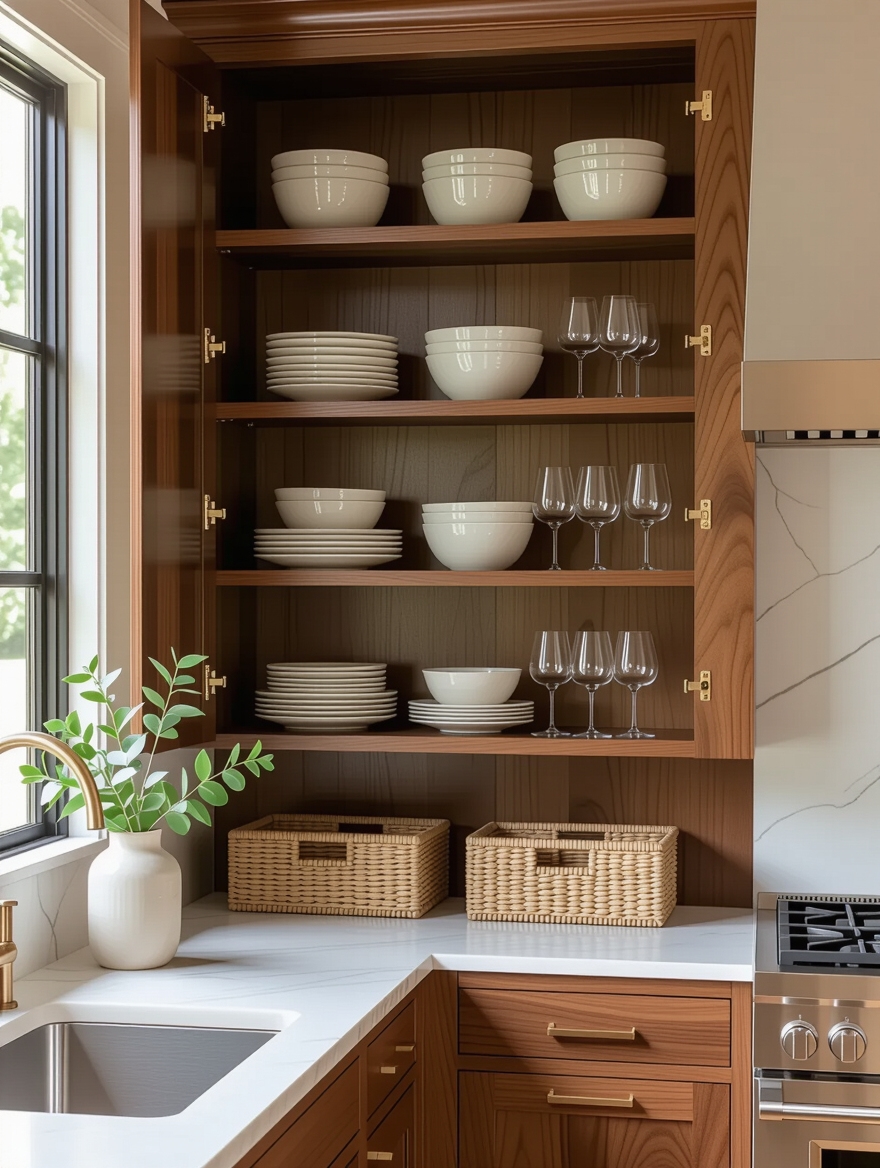
Before styling anything, decide how open you actually want to go. Full open shelving shows everything and demands discipline; glass-front cabinets give the airy look while keeping a layer of protection and forgiveness. A single open shelf or a glass-door upper is the low-commitment way in.
Choose the level of open that fits your habits
Match the choice to your real habits. If you cook constantly and hate dusting, glass fronts or one styled shelf will stay clutter-free far more easily than a whole wall of open storage. If you love rearranging and own pretty dishes, full open shelving rewards you, much like choosing the right finish does on painted cabinets.
I tell clients to start with one shelf or a glass-front upper and live with it for a month before committing the whole kitchen. It is the cheapest way to learn whether the open look fits how you really cook.
Use Uniform Dishware for a Cohesive Look
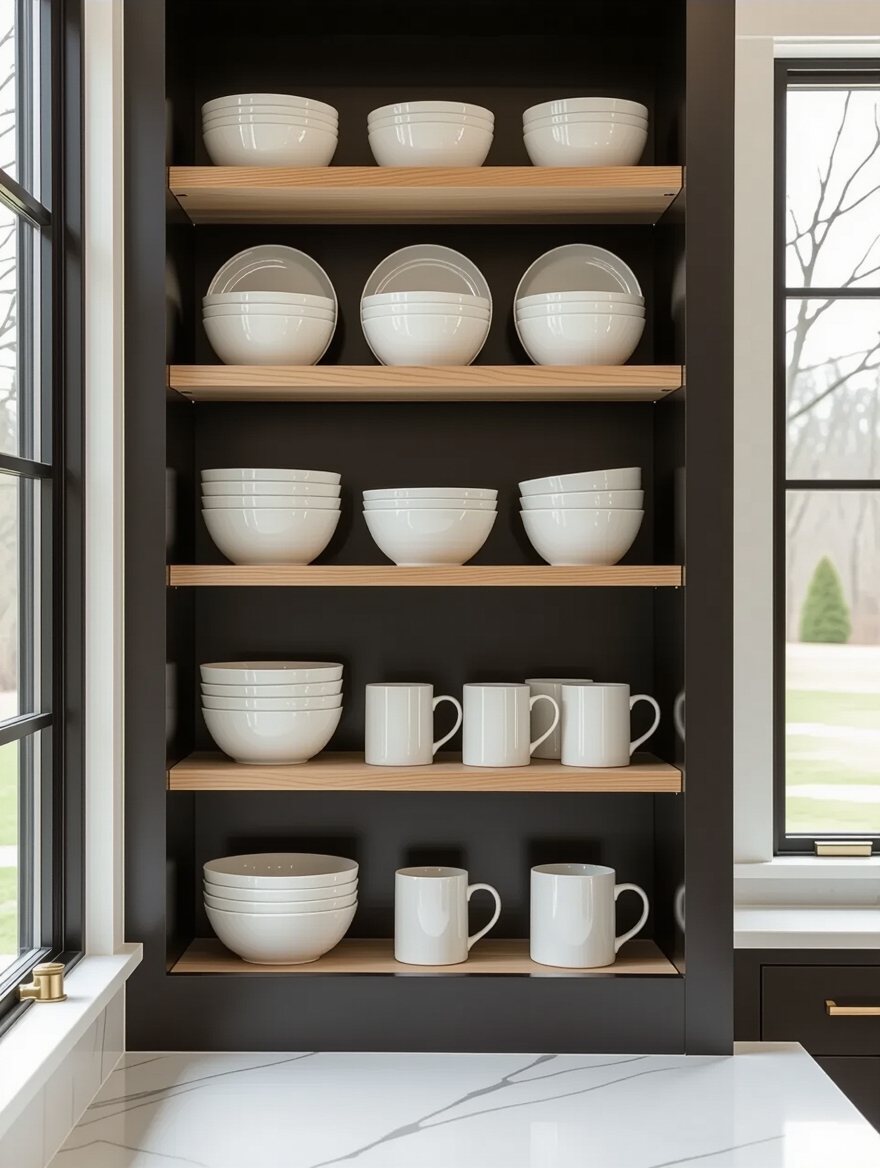
The fastest way to make open cabinets look intentional is uniform dishware. A stack of matching white plates or a row of same-color bowls looks calm and deliberate, while a jumble of patterns and colors looks like clutter even when it is perfectly tidy. The dishes do not have to be expensive, just consistent.
If a matched set is not in the budget, edit what you have: pull the cohesive pieces to the front and the open shelves, and relegate the oddballs to a closed cabinet. A basic white stoneware set runs $40 to $100 and instantly upgrades the whole look.
- Stack matching plates and bowls in tidy columns by type.
- Stick to one or two colors per shelf for a calm effect.
- Send mismatched or novelty pieces to a closed cabinet.
Not sure open shelving is for you? Answer honestly.
1Do you dust and tidy weekly without resenting it?
If yes, full open shelving will stay sharp. If not, lean toward glass fronts.
2Do you own dishware you actually like the look of?
If yes, show it off. If it is a mismatched jumble, keep it behind doors.
3Do you cook heavy, greasy meals often?
Grease films open shelves near the stove fast, so keep those zones closed.
Arrange Glassware by Color or Shape
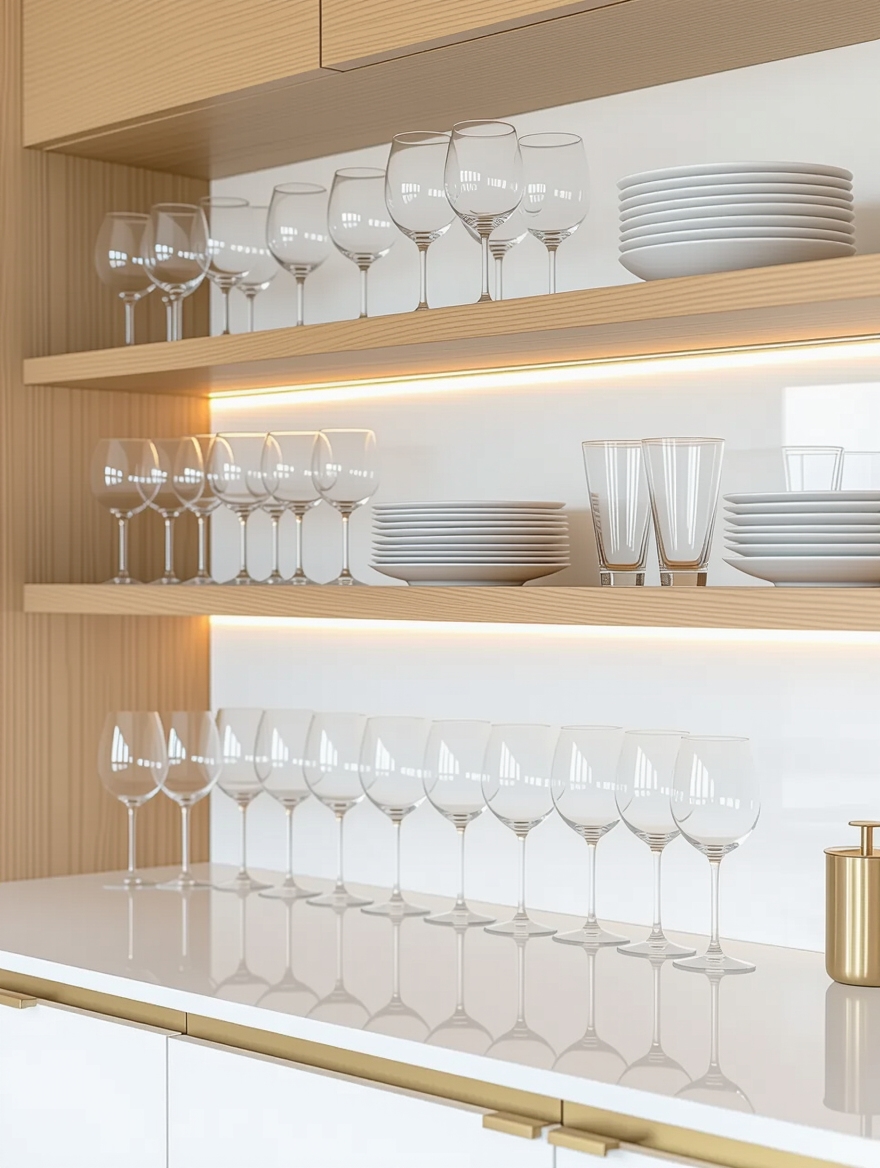
Glassware is where a little arranging pays off the most, because clear and colored glass catches light and draws the eye. Group it by color, clear with clear and amber with amber, or by shape and height so the rows look composed. Lining glasses up by size creates a gentle rhythm the eye takes as order. Keep the everyday glasses front and lowest for easy grabbing, and save the pretty colored or stemmed pieces for a higher styled shelf.
- Group glassware by color so each cluster reads as one block.
- Line pieces up by height for a clean, composed row.
- Keep daily glasses low and reachable, showpieces up high.
Hide Small Items in Chic Storage
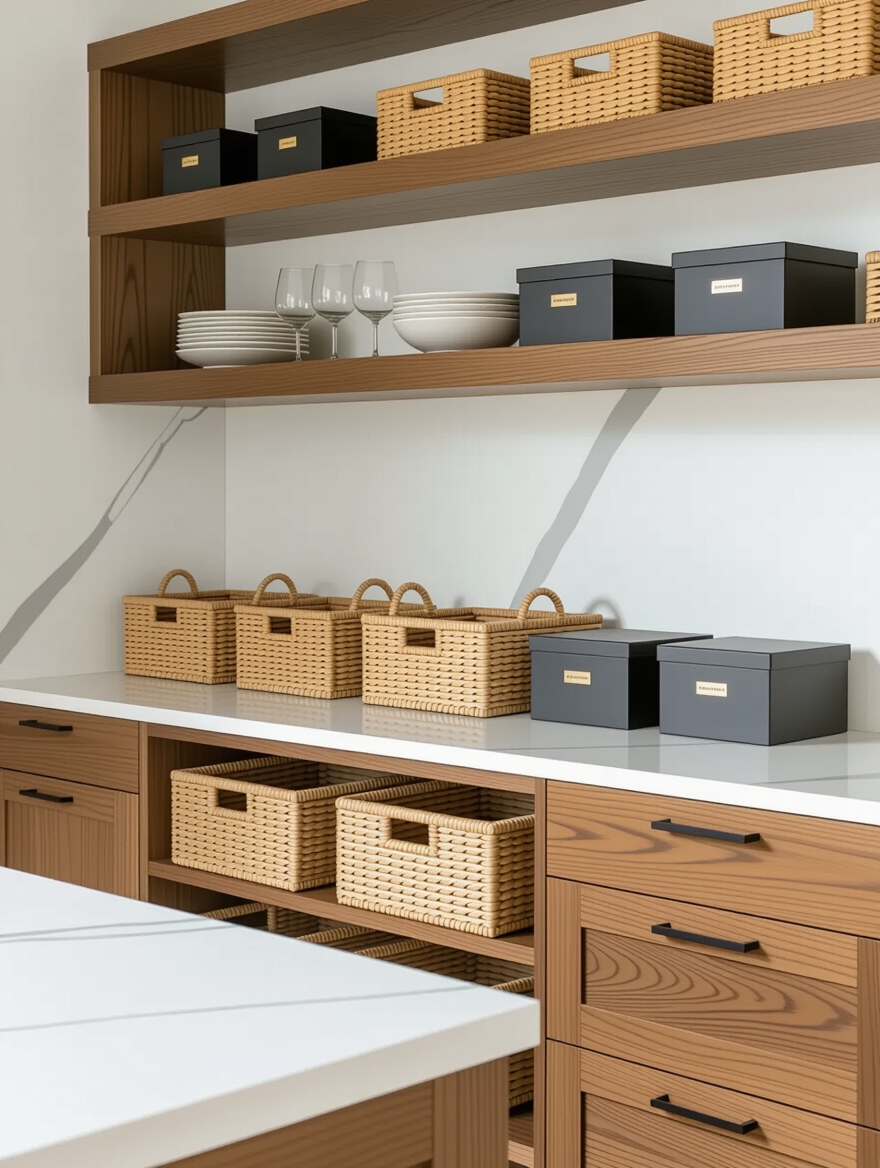
Small loose items are what make open cabinets look messy, so the rule is to corral them. Baskets, lidded boxes, and matching canisters hide the clutter of tea bags, spices, and odds and ends while adding texture. Pick two or three repeating container styles in natural materials, woven baskets, glass jars, ceramic crocks, so the storage itself becomes part of the display.
A tidy basket looks like decor; a pile of loose packets looks like mess, the same logic behind smart small kitchen storage ideas.
- Decant spices and dry goods into matching jars for instant order.
- Use woven baskets to hide the small, ugly, necessary stuff.
- Repeat two or three container styles so they look collected.
Heads-Up
Open shelves near the stove or sink collect grease film and water spots, and glassware shows every speck. Keep the prettiest pieces away from the cooktop, and plan to wipe open-shelf glass every week or two.
Limit Items Per Shelf, On Purpose
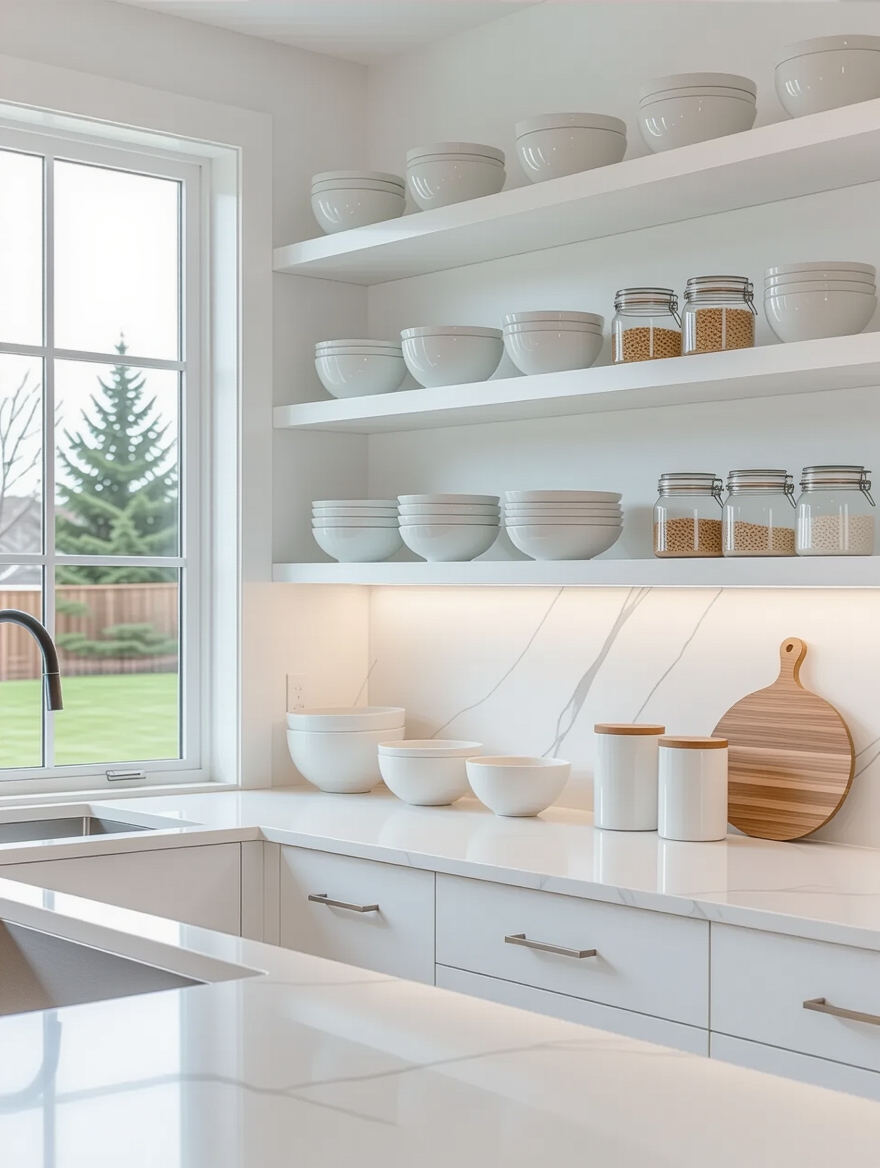
The mistake I see most with open cabinets is overfilling them. A shelf packed wall to wall looks cluttered no matter how neatly it is arranged, while a shelf that is two-thirds full, with real gaps, looks styled. Negative space is the luxury here, and it costs nothing.
Aim for a few deliberate groupings per shelf with breathing room between them. If you run out of room, that is the signal to move things to closed storage. Editing down is what separates a designer shelf from a crowded one.
- Fill each shelf about two-thirds, leaving clear gaps between groups.
- Use three to five groupings per shelf, with gaps between them.
- When a shelf feels full, move items to closed storage.
Keep Everyday Essentials Within Easy Reach
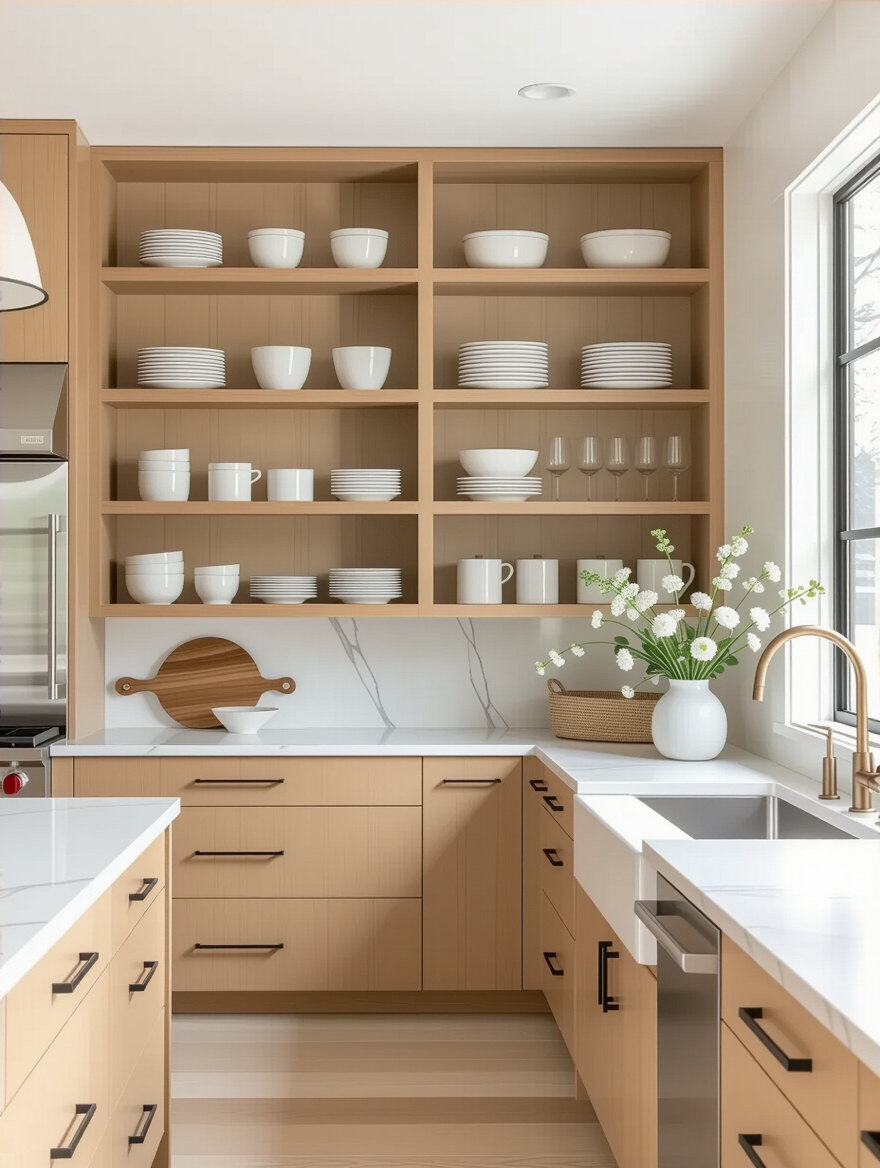
Open cabinets only stay clutter-free if they are also practical, or you will pile things on the counter instead. Keep the dishes, glasses, and mugs you use daily on the lowest, easiest-to-reach shelves, right where your hand goes without thinking. The pretty, occasional pieces belong up high.
This is where styling and real life meet. Arrange by how often you reach for something, and the shelves stay neat because putting things away is easy. When the everyday stuff lives at eye level and arm’s reach, the counters stay clear and the display stays intact.
A few styling terms worth knowing.
📖Negative space
The empty room left around objects; it is what makes a display look intentional.
📖Tablescaping
Arranging objects in layered groupings of varied height for visual interest.
📖The rule of three
Odd-numbered groupings tend to look more natural and balanced than even ones.
Stack Plates Neatly With Dividers
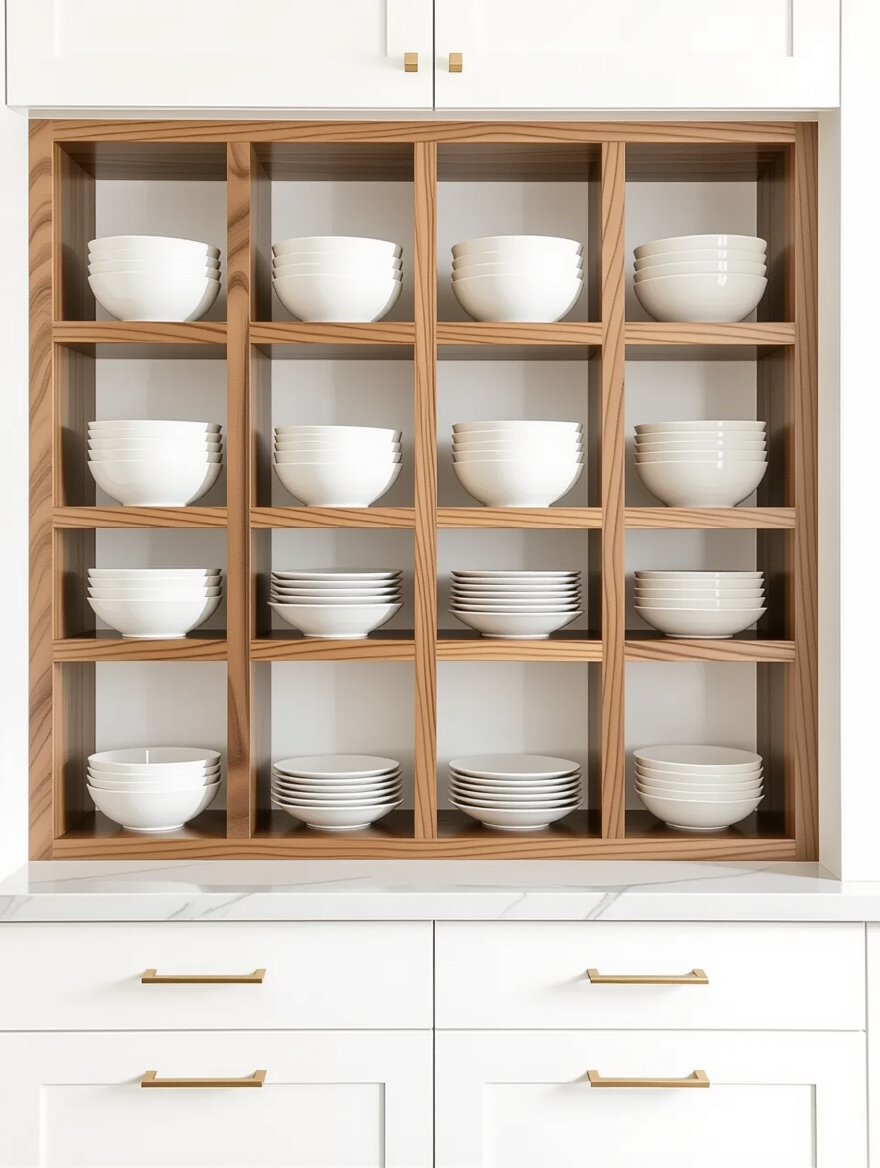
Vertical dividers are a small upgrade that keeps stacks of plates, platters, and trays from sliding into a lean. Slotting large flat items upright, divided, makes them easy to grab one at a time without disturbing the rest, and it turns an awkward stack into a clean row.
A set of wire or wood shelf dividers runs about $15 to $30 and pays for itself in tidiness. It is a cheap, satisfying fix. They work as well in a closed cabinet as on an open shelf, so the whole kitchen stays orderly behind and in front of the doors.
- Stand platters and trays upright in dividers for easy access.
- Keep plate stacks low and divided so they never topple.
- Use the same trick in closed cabinets to tame the whole kitchen.
Maximize Vertical Storage on Open Shelves
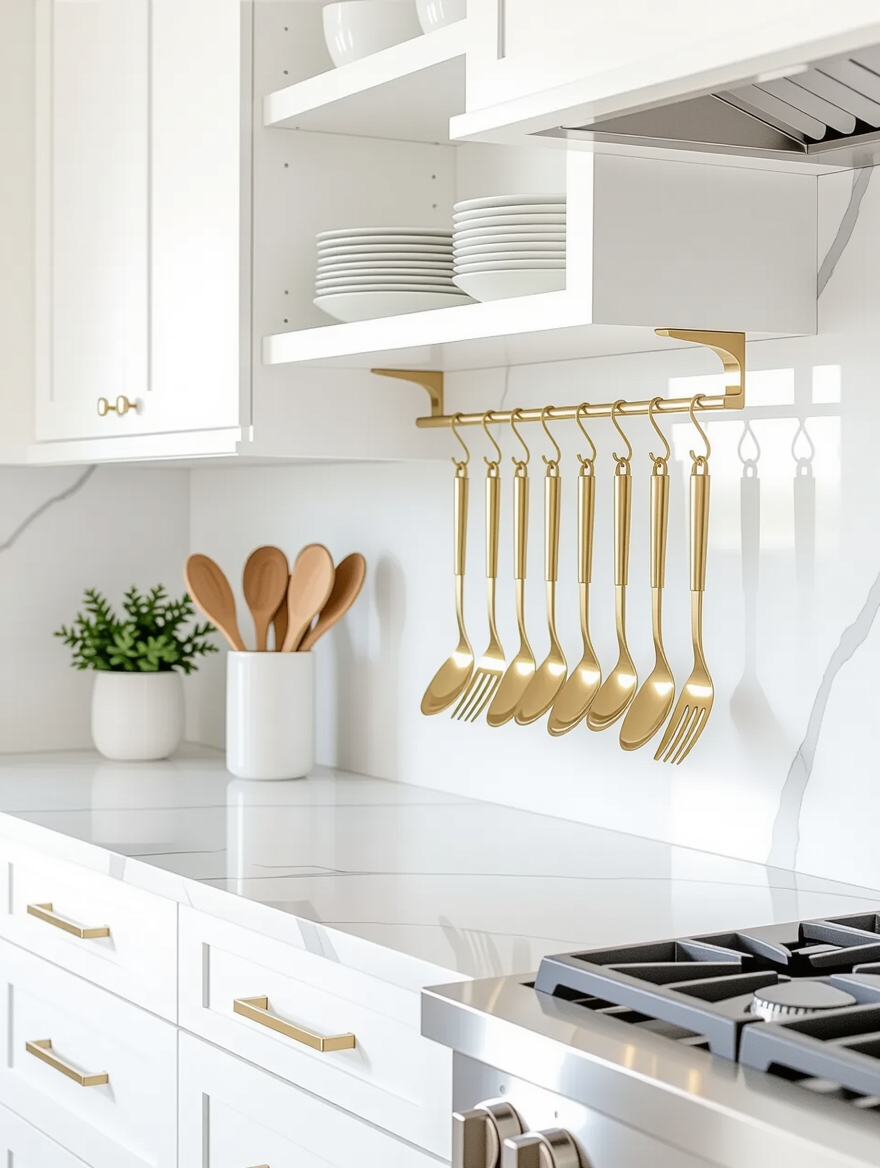
Most kitchens waste the vertical space between shelves, and open cabinets are no exception. Adding a shelf riser or a small stand lets you store a second layer, like cups above plates, without stacking everything into a precarious tower.
Use the height, but leave some air
Hooks are the other vertical win. A few hooks screwed under a shelf or inside a cabinet hang mugs, measuring cups, and utensils, freeing the surface below and adding a tidy, intentional row. It is a five-minute upgrade that buys real space.
The goal is to use the height without crowding the look. Leave air above the top grouping, and let risers and hooks add capacity quietly. Vertical storage should feel roomy, not stuffed.
Layer Items by Size and Use
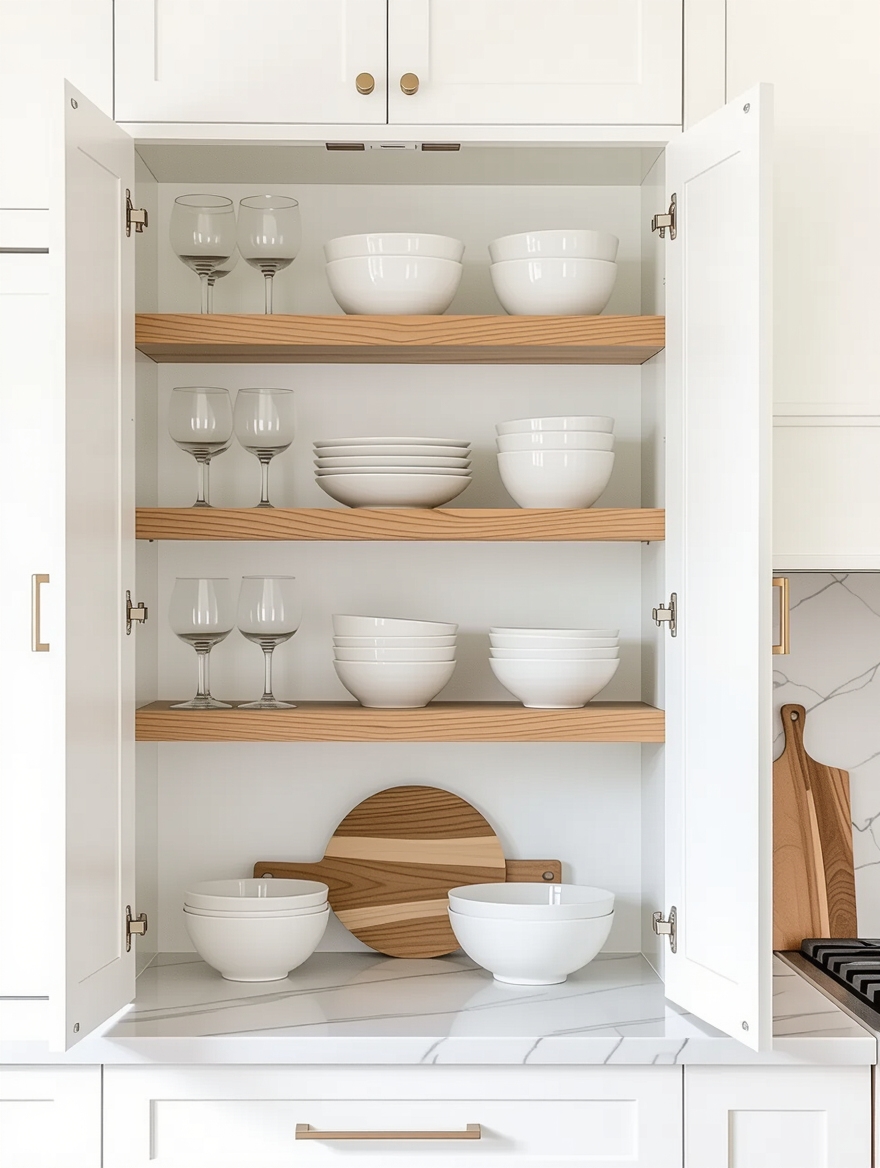
Layering is the styling secret that gives open cabinets real depth. Put taller items at the back, shorter ones in front, and let a small piece of art or a propped board add a backdrop. Group by size and by use so each cluster makes sense, plates with plates, a little stack of bowls anchored by a vase or a plant. The eye treats layered groupings as a styled vignette and a single row of identical items as storage, so a little staggering goes a long way.
- Place tall pieces at the back, short ones up front for depth.
- Anchor each grouping with one taller object, a vase, board, or plant.
- Cluster by both size and use so every group has a logic.
Choose Light Colors for a Bright, Airy Kitchen
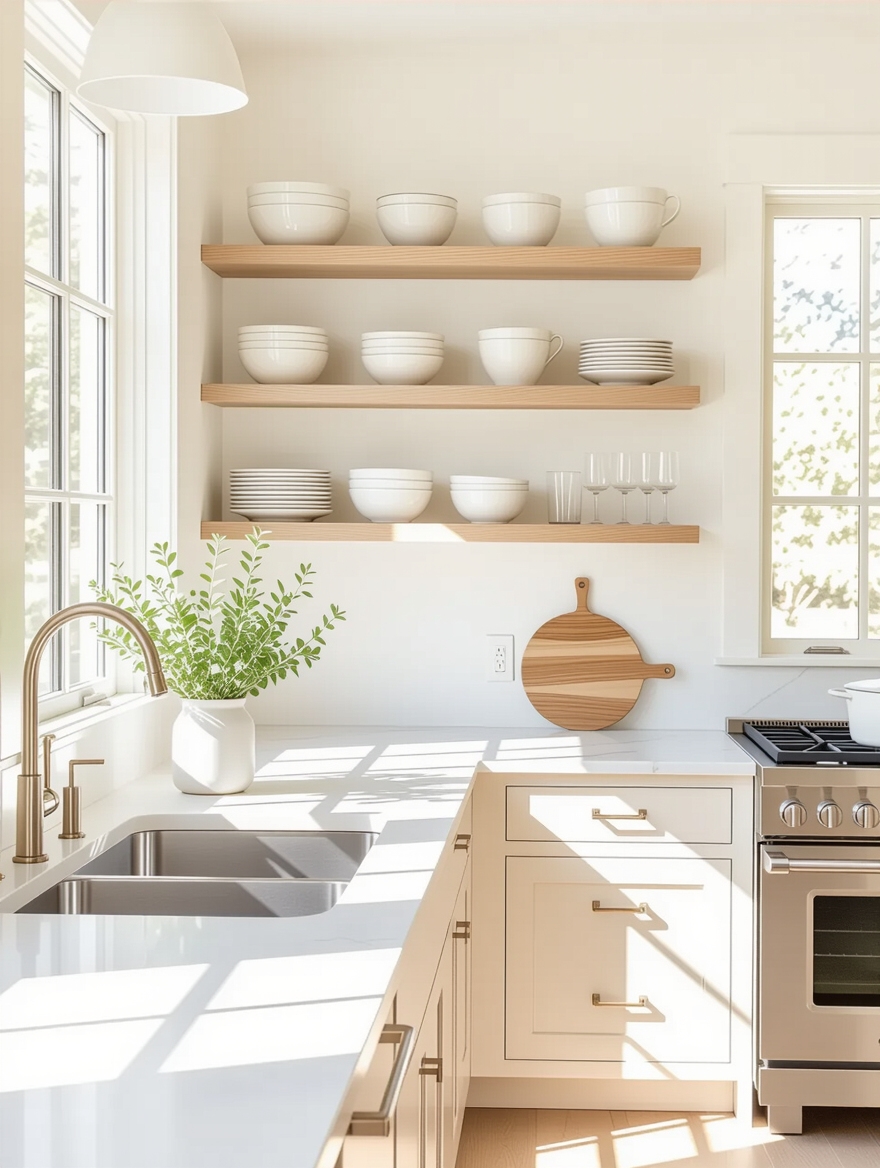
Color does a lot of quiet work in keeping open cabinets feeling calm. Light shelves, walls, and dishware bounce light and let the display breathe, so even a full shelf feels airy and light. White, cream, and pale wood are the safest backdrops for a clutter-free look, the same brightening logic behind light, white cabinets.
If you want color, keep it in the dishware and accessories. I love what a few green plants or one accent hue do against a light background, while dark, busy backgrounds make even a tidy shelf look crowded. Floating shelves in a pale wood or painted finish keep the whole arrangement light on its feet.
- Use white, cream, or pale wood shelves to keep the look airy.
- Add color with dishes and plants, keeping the background pale.
- Choose slim floating shelves so the wall feels open.
Styling Tips That Keep It Clutter-Free
A handful of small habits keep open cabinets looking styled long after you first arrange them. Balance every run of open shelving with enough closed cabinets to hide the bulky, unphotogenic gear, the food processor, the plastic tubs, the spare appliances. Open storage is for the pretty and the frequent; closed storage carries the rest. Labeling baskets and containers, even discreetly, keeps the system intact when the rest of the household puts things away.
Then keep it alive. Add a plant or a small piece of decor to warm up the hardest, most utilitarian shelf, and rotate seasonal pieces, light glass in summer and warmer tones in fall, so the display feels current. A quick five-minute reset once a week, straightening stacks and clearing strays, is all it takes to keep the open look from sliding back into clutter.
Open Cabinet Questions, Answered
?How do I keep open kitchen shelves from looking cluttered?
Edit hard and leave breathing room. Show only a curated portion of what you own, group items by type and color, and fill each shelf about two-thirds so there are visible gaps. Tuck small or mismatched things into baskets, keep daily items reachable, and do a quick weekly straighten. The open look stays clean when the shelves are a display, not overflow storage.
?Are open shelves harder to keep clean than cabinets?
A little, yes. Open shelves collect dust and, near the stove, a thin grease film, so they need a wipe every week or two, more if you cook greasy meals often. That is why many people keep open shelving away from the cooktop and reserve it for items they use and wash regularly, so nothing sits long enough to get grimy.
?What should I store on open shelves versus closed cabinets?
Put the pretty and the frequently used on open shelves: matching dishes, glassware, mugs, and a few styled pieces. Keep the unphotogenic and rarely used behind closed doors: small appliances, plastic storage, bulk food, and mismatched gear. The open shelves carry the display while closed cabinets handle the practical bulk, which keeps the look calm.
?How many items should go on each open shelf?
Aim to fill a shelf about two-thirds, with three to five deliberate groupings and clear space between them. A shelf crammed wall to wall looks cluttered no matter how neat it is, while gaps make the arrangement look intentional. When a shelf feels full, that is your cue to move something to closed storage rather than squeeze it in.
Open, Edited, and Easy to Keep
Clutter-free open cabinets come down to a quiet mindset shift: treat the shelves as a small, edited display, not as bonus storage for everything that does not fit elsewhere. Once you group like with like, leave room to breathe, and hide the rest behind doors, the open look practically maintains itself. The kitchens that nail it are not blessed with less stuff, just stricter about what gets the spotlight.
If your open shelves have crept toward chaos, start with one shelf this weekend. Pull everything off, keep only what you love and use, and put it back with room to spare. That single edited shelf usually sets the standard for the rest, and the clutter-free look gets easier from there.
More to Explore


