

Walk into a kitchen where mint is done right and the room just exhales. The color reads fresh and calm at once, like sea glass with the harsh edges sanded off. Done wrong, though, mint slides straight into dated diner territory, and the line between the two is narrow.
That line is mostly about what you pair it with. Get the metals, the counters, and the shade right and mint feels current and chic. Get them wrong and it feels like a time capsule. Here are fourteen mint green looks that land on the right side of that line, from a single removable accent to a full commitment, with honest costs for each.
Mint, in Short
- Start with a removable accent before you commit; mint is easy to overdo.
- Pair mint with warm brass and a dark counter to keep it chic, not cutesy.
- Your exact shade matters most: cool, warm, or sage-tinged changes everything.
- A little mint goes a long way, so let one strong move carry the room.
Start Small: Test Mint With Accents

Before you paint anything, live with mint in small doses. It is a color people fall for in a photo and tire of on a wall, so removable accents let you test it for real without the regret. I tell clients to bring mint in through textiles and small pieces first, then sit with it for a week.
If it still makes you happy after a few mornings, scale up. If it starts to grate, you are out a tea towel, not a kitchen.
- Try mint dish towels, a runner, or a small appliance before committing.
- Tape a large paint swatch up; it takes two minutes and saves a costly mistake.
- Watch it in morning and evening light, since mint shifts a lot with the hour.
Paint the Lower Cabinets Mint

The most reliable mint look keeps the color grounded: mint on the lower cabinets, white or cream on the uppers. Splitting it this way gives you the color without closing the room in, and it keeps the upper half light and airy. It is the look I reach for when someone wants mint but is nervous about too much of it.
- Keep uppers white or warm cream so the room stays bright.
- A DIY cabinet repaint runs about $200 to $600 in materials; a pro job $1,000 to $3,000.
- Carry the mint onto an island instead if your lowers are in good shape.
Heads-Up
Mint is one of the easiest colors to overdo and one of the hardest to live with long-term if you rush it. Test it in removable form for at least a week before you paint anything, and view it in both daylight and evening light, since mint shifts dramatically with the bulb.
Pair Mint Cabinets With Warm Brass

Here is the single trick that keeps mint from going cutesy: pair it with warm metal. Brass or unlacquered gold hardware and a warm-toned faucet add the richness that stops mint looking like a 1950s diner. Cool chrome does the opposite and pushes it backward in time.
Match every metal in the room to that one warm tone, the pulls, the faucet, the lighting. A consistent warm metal is what makes mint feel grown-up. Hardware runs about $5 to $20 a pull, so it is a cheap way to shift the whole mood.
Mint With Dark Stone or Butcher Block

Counters decide whether mint floats or grounds. This one is non-negotiable. A dark soapstone, a charcoal quartz, or a warm butcher block anchors the pastel and gives the eye somewhere solid to land, which keeps the whole kitchen from feeling like a candy shop.
Light counters under mint cabinets can wash out and fall flat. A darker or warmer surface is what makes the mint pop with intention.
- Dark soapstone or charcoal quartz grounds mint and looks current.
- Warm butcher block softens mint and adds a natural, lived-with feel.
- Quartz runs about $50 to $120 per square foot; butcher block far less.
📋Make Mint Look Expensive
- ✓Ground it with a dark or warm counter, never a flat light one.
- ✓Pair it with warm brass, never cool chrome.
- ✓Add real wood somewhere so the cool color has warmth to lean on.
A Mint Tile Backsplash
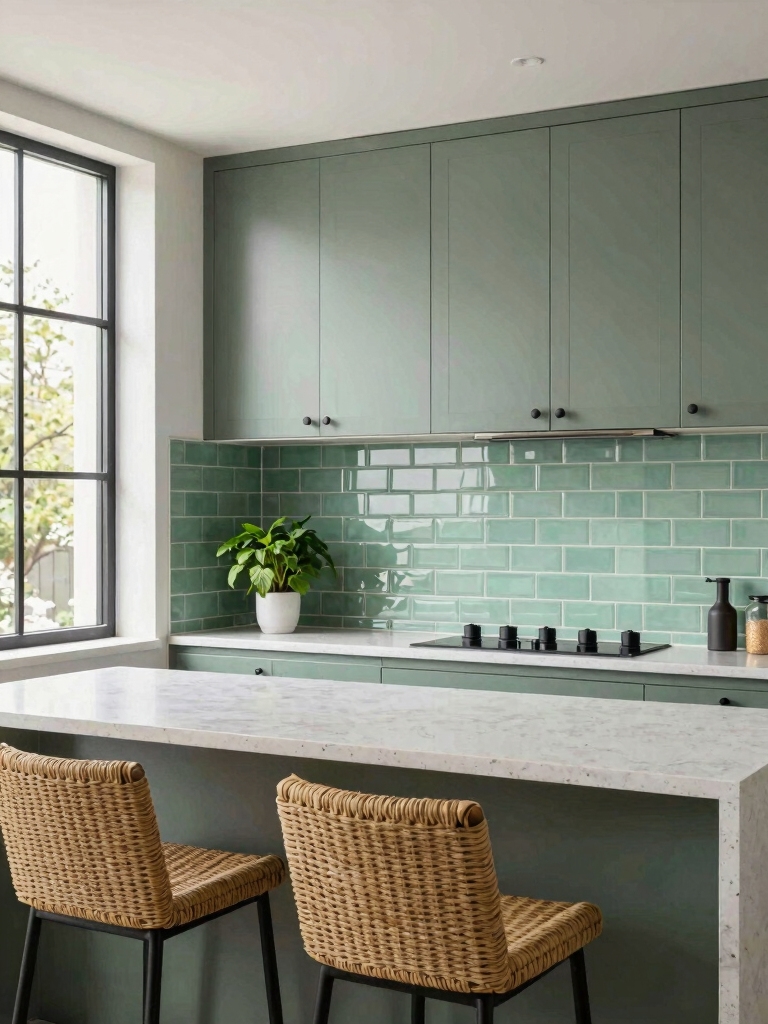
If repainting the cabinets feels like too much, the backsplash is the lower-stakes way in. A mint zellige or a glossy subway tile brings the color in at eye level without touching the cabinets, and because the area is small, you can afford a nicer tile here.
The Renter-Friendly Version
Mint tile against white or wood cabinets is a softer commitment than full mint cabinetry. It is also easy to update later if your taste shifts.
For renters, peel-and-stick mint tile gives much of the effect and comes right off. It runs about $5 to $15 per square foot and goes up in an afternoon.
Natural Wood Shelving to Soften Mint

Mint can tip cold on its own, and warm wood is the cure. A run of open oak or walnut shelving, a butcher block counter, or a wood range hood adds warmth that keeps the green from feeling clinical. The contrast of cool mint and warm grain is what makes the look feel considered.
I love a single wood shelf against a mint wall, styled with just a few pieces. It bridges the cool color and the warmth a kitchen needs.
Keep the wood tone warm rather than gray-washed, since cool wood beside cool mint leaves the room feeling flat. The warmth in these green and wood kitchens shows the balance.
👍Why Wood Works With Mint
- +Warm grain offsets mint’s coolness and stops it feeling clinical.
- +Open wood shelving adds storage and a styling spot for mint ceramics.
- +Wood ages well, so it lasts longer than trendy accents.
👎Where It Goes Wrong
- –A cool, gray-washed wood beside cool mint leaves the room flat.
- –Too much heavy wood can darken a small mint kitchen.
- –Open shelving needs editing, or it undoes the calm mint creates.
Go Full Mint: A Cohesive Green Kitchen

For the bold, full mint cabinetry top to bottom is a real showstopper when it is balanced right. Balance is everything. The best full-mint designs keep every other surface quiet so the green never has to fight for attention. The key is letting mint be the only loud thing in the room, with everything else, counters, floors, walls, kept quiet and warm so the green never overwhelms. Commit fully or not at all; half-hearted mint is what looks dated.
- Keep counters, floors, and walls neutral so the mint stays the star.
- Add warm brass and wood generously to balance all that cool color.
- Choose a slightly muted mint for a full kitchen; a bright one overwhelms at that scale.
A Mint Green Vintage Fridge Focal Point

Not ready to paint? Let one piece carry the color. One object can do it. A retro-style mint refrigerator turns the appliance into the room’s charm without any commitment to the cabinets, and it pairs beautifully with an otherwise white or wood kitchen.
It is a splurge, but it does all the work of a mint kitchen in a single object you can take with you.
- Retro-style mint fridges run roughly $2,000 to $4,000 for the look with modern cooling.
- Keep the surrounding kitchen simple so the fridge stays the focal point.
- A mint stand mixer or kettle is the budget version of the same idea.
Layer Sage and Mint

One of the more sophisticated moves is to layer mint with its grown-up cousin, sage. Using a deeper sage on the lowers or the island and a paler mint above creates gentle depth and keeps the look from feeling one-note.
Two Greens, One Calm Room
The two greens come across as intentional and current together, where a single flat mint can feel a little childish.
Keep the two close in tone so it looks layered, not clashing. The dark green sophistication palette shows how deeper greens behave if you want to push it further.
Matte Mint for Calm Sophistication

Finish changes everything here. A flat or matte mint looks modern and calm, while a high-gloss mint leans retro and can date fast. For a current look, matte cabinet fronts in a soft mint are the safest bet, and they hide fingerprints better too.
Pair matte mint with flat slab doors and minimal hardware and the color suddenly looks like a design choice rather than a throwback. The finish does the talking. The timeless green and white combinations lean on the same restraint.
Find Your Exact Mint Shade
More than any other decision, the exact shade decides whether mint feels chic or cheap. Cool mints lean blue and crisp, warm mints lean yellow and soft, and sage-tinged mints lean gray and grown-up. The wrong undertone next to your light and your wood is what sends mint wrong.
Test your top two or three shades on the actual cabinets, not a tiny chip, and look at them across a full day before you choose. The undertone shifts more than you expect between noon and lamplight.
- Cool mint: crisp and fresh, best with white and warm metals, never chrome.
- Warm mint: soft and friendly, the most forgiving with wood and brass.
- Sage-tinged mint: the most grown-up and current, and the hardest to date.
Lighting, Ceramics, and Textiles
The finishing layer is where mint earns the word chic. Warm lighting around 2700K keeps mint walls from going green-gray and cold at night, so put the kitchen on warm bulbs and a dimmer. Cool white light is mint’s worst enemy after dark.
Then echo the color in small, swappable pieces. A few mint ceramics on an open shelf, matching textiles, a bowl, these cost almost nothing, tie the room together, and let you dial the mint up or down by season. Borrow the styling from these green kitchen ideas to copy.
Mint Green Kitchen Questions, Answered
?Is a mint green kitchen a passing trend?
Mint has come and gone for decades, but a muted or sage-tinged mint paired with warm metals and wood looks far more timeless than a bright, glossy mint. Choosing the right shade and finish is what keeps it from dating.
?What colors go with a mint green kitchen?
Warm brass or gold, natural wood, white or cream, and a dark grounding counter like soapstone or charcoal quartz. Avoid cool chrome and stark cool-white light, which push mint toward a dated diner feel.
?How do I add mint without painting my cabinets?
Start with removable pieces: textiles, a mint backsplash, peel-and-stick tile, or a retro-style mint appliance. These let you bring in the color, test how it lives in your light, and back out easily if your taste changes.
?What is the best shade of mint for a kitchen?
For a current, grown-up look, a slightly muted or sage-tinged mint is the safest. Cool mints suit bright, modern white kitchens, while warmer mints pair best with wood and brass. Always test on the actual cabinets first.
?Does mint green make a kitchen look bigger or smaller?
A pale, cool mint can make a small kitchen feel airy, especially with white uppers and good light. A deep or glossy mint used everywhere can close the room in, so keep it lighter or split it with white in tight spaces.
Find the Mint That Fits Your Light
Mint gets a bad reputation only because it is so often done halfway. Pair it with warm metal and wood, ground it with a darker counter, and choose the shade that flatters your light, and it turns into one of the calmest, freshest colors a kitchen can wear.
Start with one removable accent this week and see how the color lives in your space across a few days. If it still makes you smile, you will know exactly how far to take it, and you will get there without a single expensive regret.
More Hair Inspiration


