

For a decade, the safe kitchen was gray. Now it is green, and the shift is not a fluke of one trend cycle. Green feels warm where gray felt cold, it borrows from nature in a way people crave, and it flatters far more styles than its reputation suggests. That combination is why it is everywhere right now.
I have painted and styled enough green kitchens to know the difference between a shade people love for years and one they tire of fast. Below are the real reasons green is taking over, plus the practical stuff: how light changes it, where to use it, and how to test it without committing your whole kitchen.
Why Green Is Winning
- Green feels warm and natural where gray went cold, which is the core reason designers and homeowners moved on from it.
- It flexes across every style, from cottage sage to industrial olive to dramatic forest, so it does not lock you into one look.
- Light decides the shade, so always test a green in your own kitchen’s exposure before you commit a single cabinet.
- You can try it cheaply with an island, a single wall, or accessories before you ever repaint the whole room.
Why Green Kitchens Bring Warmth Back

The whole green wave is really a reaction to a decade of cold gray. Gray promised a safe neutral and delivered a kitchen that often felt flat and clinical, especially under cool light. Green offers a way out that still behaves like a neutral, since muted greens read as calm and grounding rather than loud.
What makes green feel warm is its root in nature. Sage, olive, and moss echo plants and stone, so the eye accepts them as restful instead of bold. That is why a green kitchen can feel both fresh and timeless at once, which is exactly what people wanted after years of chasing the perfect gray.
Regional Color Preferences and Resale

The question I get more than any other is whether green hurts resale, and the honest answer is: it depends on the green. A muted, nature-based sage or olive behaves almost like a neutral and rarely scares a buyer, while an electric lime is a personal choice that narrows your audience. Taste also runs regional, so what feels bold in one market reads as expected in another.
If resale is on your mind, keep the bold green where it is cheap to undo and the permanent surfaces calmer. Painted cabinets can be resprayed, and accessories swap in an afternoon, so you carry the trend lightly. There is no solid evidence that a tasteful green hurts value the way an oddly specific color might.
- Lean muted (sage, olive, sea green) if resale is a real concern
- Keep bold green on repaintable cabinets, not the counters or floor
- Pair green with warm wood and white so it looks intentional to a buyer
ℹ️Good to Know
There is no solid evidence that a tasteful, muted green hurts resale. Buyers react to oddly specific or very bold colors, not nature-based neutrals, so a sage or olive on repaintable cabinets carries almost no risk, especially since a new owner can respray cabinets for a fraction of a remodel.
Versatile Green Across Every Kitchen Style

Green’s biggest superpower is how many styles it speaks. The same color family that grounds a cozy cottage can sharpen an industrial loft or soften a sleek modern kitchen, just by shifting the shade and the finish. That range is rare in a trend color and a big reason green is not going anywhere soon.
- Cottage and farmhouse: soft sage with brass and wood for a gentle, lived feel
- Modern: a flat olive or deep green on slab fronts for a quiet, rich look
- Industrial: moody hunter green against black metal and concrete
- Coastal: a pale sea green with white for an airy, breezy kitchen
How Light Changes Your Green
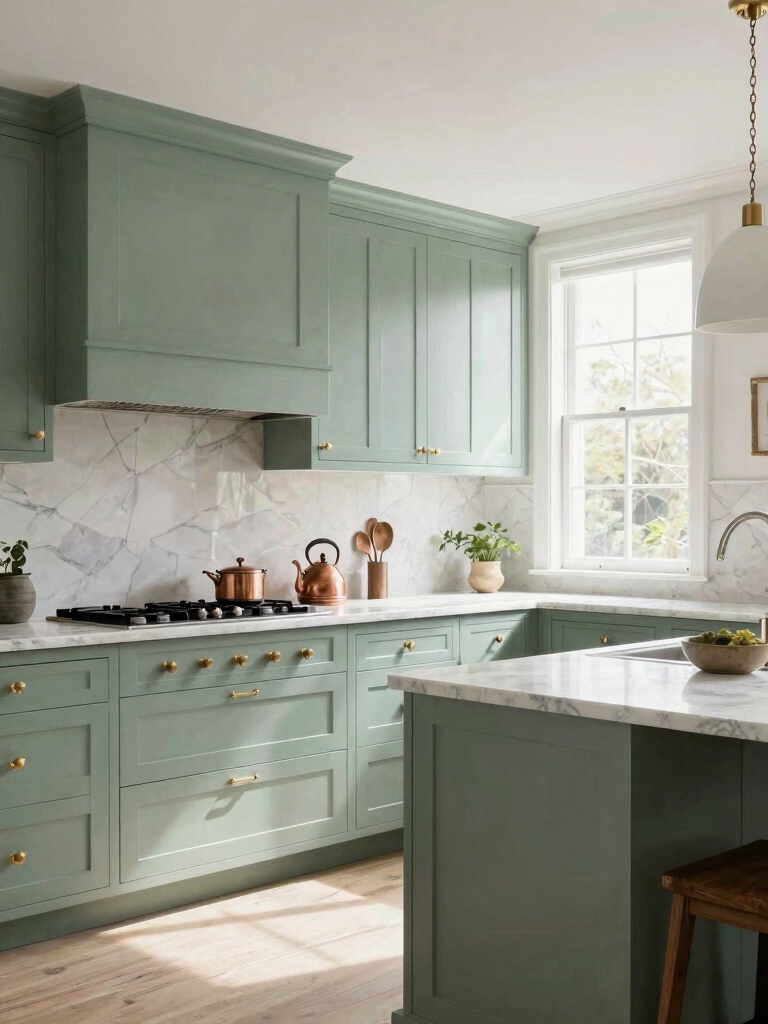
If you take one thing from this list, make it this: light changes green more than almost any other color. A sage that looks soft and gray-green in a bright south-facing kitchen can turn flat and cool in a north-facing one, and warm bulbs at night push the same paint toward yellow. The swatch in the store is not the color you will live with.
Test the Swatch in Your Own Light
North-facing and low-light kitchens want a warmer, slightly yellow-based green so the room does not go cold and dull. South-facing and bright kitchens can carry a cooler or deeper green without it feeling heavy. East and west light shifts through the day, so check your sample morning and evening both.
Always test large swatches on more than one wall and look at them at different times before you buy a single can. This is the step people skip and the reason so many greens disappoint, so give it the day it deserves.
🅰️Warm-based green
Better for north-facing and low-light kitchens, where it keeps the room from going cold and dull. Leans slightly yellow.
🅱️Cool-based green
Better for bright, south-facing kitchens that can carry a deeper, cooler tone without feeling heavy. Leans blue.
Timeless Sage Green Charm
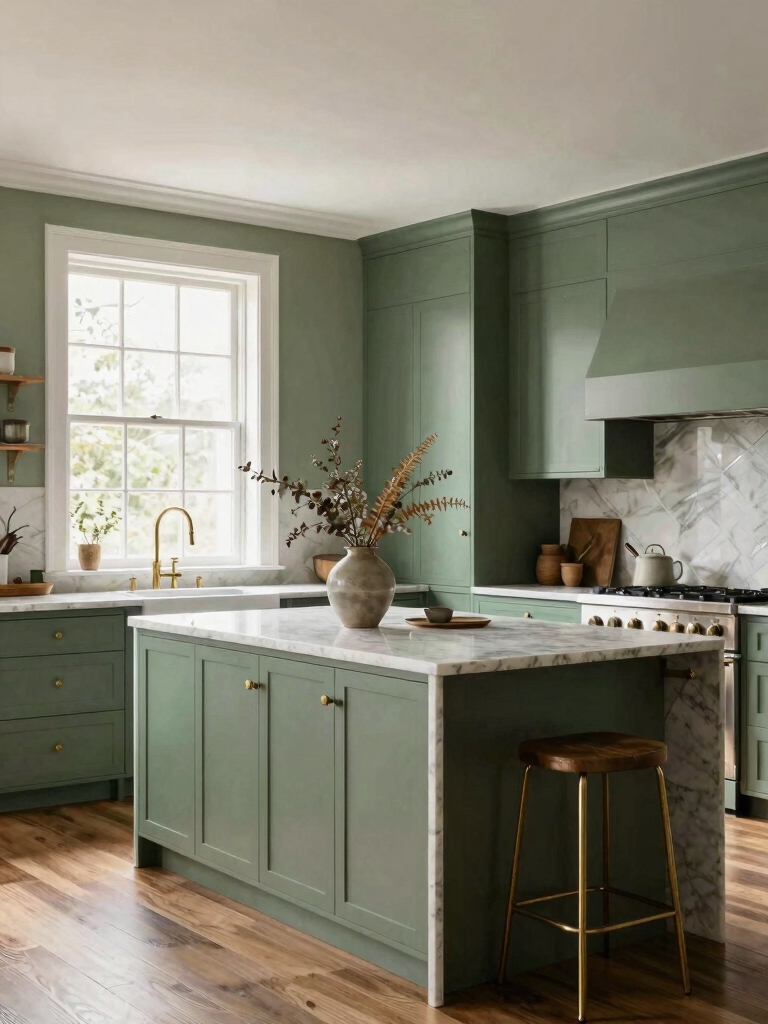
Sage is the green doing the heaviest lifting in this trend, and for good reason. Its soft, gray-tinged tone is gentle enough to act like a neutral, so it calms a kitchen instead of shouting, and it pairs with almost any wood, metal, or stone you already own. It carries a hint of nostalgia without feeling like a throwback.
That balance is why sage feels safe for people nervous about color. It is the shade I suggest first to anyone testing the green waters, since it flatters most light and rarely tires the eye. For more of this gentle direction, a light green kitchen shows how far a soft tone goes.
Dark Green Kitchens: Forest and Hunter Tones

On the other end sits the drama: forest, hunter, and emerald greens that turn a kitchen rich and moody. These deep tones read almost like a dark neutral, the way navy or charcoal does, but with more warmth and life. On lower cabinets or an island, they ground a room and feel truly high-end.
Dark green rewards good light and a little balance. Pair it with brass or warm wood and plenty of under-cabinet lighting so the depth does not swallow the room, and keep the uppers light if the kitchen is small. The contrast is what keeps a dark green kitchen from feeling like a cave.
Used well, deep green is one of the most sophisticated looks available right now, and it pairs beautifully with natural stone, much like a dark green kitchen done with restraint. Commit it to one zone and let it lead.
Heads-Up
A dark green can swallow a small or dim kitchen. Before you commit forest or hunter to a tight room, paint a large sample and live with it for a few days, and plan extra under-cabinet lighting so the depth reads rich, not gloomy.
Where to Put Green: Surfaces That Work

Green works best when you are deliberate about where it lands. The surfaces that carry it beautifully are the ones you can change or that frame the room: cabinets, an island, walls, a backsplash, and accessories. These take color well and let you adjust the dose to your nerve.
Paint and Cabinets, Not Counters
The places to think twice are the permanent, expensive surfaces. A green countertop or a green floor locks you into the trend and costs a fortune to undo if your taste shifts, so most people are happier keeping those neutral. Tile backsplashes sit in the middle, since a green tile is a bigger commitment than paint but smaller than a slab.
The simplest rule is to put bold green where it is cheap and reversible, and keep the costly, hard-to-change surfaces calm. That way you ride the trend without being trapped by it.
Pairing Plants With Green Cabinetry

Part of green’s appeal is how it blurs the line between the kitchen and the garden, and leaning into that connection deepens the effect. Real plants beside green cabinetry feel intentional rather than decorative, because the living green and the painted green talk to each other. It is the easiest way to make a green kitchen feel rooted and calm.
Choose plants that actually want to live in a kitchen’s light and humidity, and vary their greens so the grouping has depth. A trailing pothos, a few potted herbs on the sill, and one larger leafy plant give you layers without clutter. Keep it to a few healthy plants rather than a jungle that competes with the cabinets.
- Potted herbs on the windowsill, both useful and on-theme
- A trailing pothos or ivy to soften an open shelf or cabinet top
- Vary the leaf shades so the living green adds depth, not a flat match
Green in Small Kitchens to Expand Space

Green is not just for big kitchens, and the right shade can actually make a small one feel larger. The trick is choosing a light, soft green and using it cleverly, so the color adds personality without closing the room in. Done right, a small green kitchen feels fresh and open rather than cramped.
- Use a pale sage or mint that reflects light rather than absorbing it
- Keep it tonal, with green walls and cabinets close in shade, so the eye glides
- Add white and a reflective backsplash to bounce light and stretch the space
- Carry green in one bold spot, like the lowers, and keep the rest light
Mixing Metals With Green for Depth

Green and metal are a match, and the metal you choose sets the whole mood. Warm brass and aged bronze make green feel rich and traditional, while black and nickel push it cooler and more modern. Picking the right finish is half of what makes a green kitchen sing.
You do not have to choose just one, either. A warm brass faucet with black hardware gives a green kitchen depth and a custom feel, as long as you let one finish take the lead and the other support. Two metals against green look layered and intentional rather than busy.
- Brass or aged bronze to warm up sage and make green feel timeless
- Matte black or nickel to sharpen a deep or olive green for a modern look
- Let one metal lead and a second accent, so green has room to be the star
Common Mistakes to Avoid
The errors that sink a green kitchen are almost always about skipping the test and overcommitting. The biggest one is buying paint off a tiny chip without sampling it in your own light, which is how a dreamy sage turns dull and cold on the wall. Right behind it is putting bold green on the expensive, permanent surfaces, a green counter or floor that costs a fortune to undo when your taste shifts.
A few more to dodge: choosing a green that fights your fixed elements like the floor or counters, going so dark in a small, dim kitchen that the room closes in, and matching every green in the room so the look falls flat instead of layered. Test the shade, keep the bold green reversible, and vary your greens, and you will land in the part of this trend that lasts. To ease in, a green and white kitchen is a forgiving place to start.
Green Is Here to Stay
Green took over because it does what gray could not: it feels warm, it borrows from nature, and it flatters nearly every style without locking you in. From a barely-there sage to a dramatic forest, there is a green for every kitchen and every comfort level with color, which is exactly why this is more than a passing moment.
Start small and test in your own light. Try green on an island, a single wall, or a few accessories, watch how it behaves through the day, and build from there. Ride this trend the smart way and your green kitchen will still feel right long after the next neutral comes around.
More Hair Ideas


