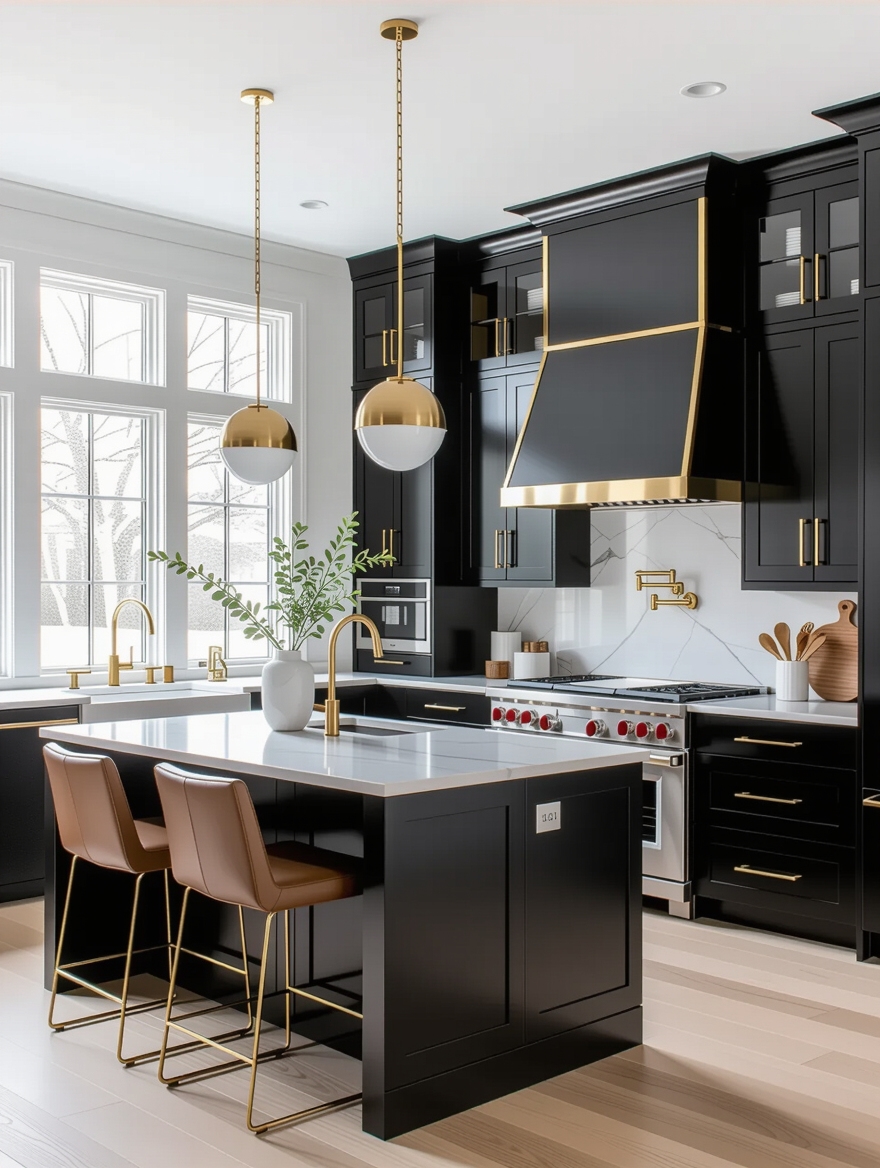

The myth about small kitchens is that you need a renovation to make them work. You do not. The best designer moves are usually small, specific, and cheap, the kind of thing you spot in a magazine photo and think, I could do exactly that this weekend. The skill is knowing which details actually earn their keep.
These thirteen are the steals I keep coming back to: concrete, copyable moves with a real cost attached, the opposite of vague advice to declutter. Each one solves a specific small-kitchen problem, and most cost less than a nice dinner out. Take the two or three that fit your kitchen and leave the rest on the shelf.
Steal These First
The highest-value steals are the specific ones: a toe-kick drawer, a magnetic knife wall, a pull-out beside the fridge. Each fixes a named problem rather than just looking nice.
Most are under fifty dollars and a single afternoon. Pick the steal that matches your worst daily annoyance, do that one properly, and add the next when you are ready.
Steal the Floor-to-Ceiling Shelf Tower for Storage

The move worth stealing here is height. Forget a lone shelf. Build up, not out. Run a narrow tower of shelves from counter to ceiling on one wall, so a sliver of floor holds a whole column of storage. It is the trick that lets a small kitchen out-store a bigger one, and I use it in nearly every tight space I plan.
- Stack shelves all the way up a narrow wall, not just at eye level.
- Put daily items in the reachable middle and rare ones up top.
- Use a small step stool you can tuck away to reach the highest tier.
Steal the Compact Combo Appliance

The steal is going combo, not merely small. Two jobs, one machine. A convection microwave that also bakes, or a washer-style combo, clears a whole counter by retiring a second appliance, and in a small kitchen that swap is worth more than the gadget itself.
It is energy-smart too, since one efficient unit beats running two. I tell people to plan the swap around whatever hogs the most counter, often a bulky microwave, so you reclaim a real working zone for the price of a single upgrade rather than spreading a tight budget thin across three machines.
Steal the Light, Low-Contrast Palette

Designers fake space with color before anything else, and the specific steal is low contrast. Keeping cabinets, walls, and counters in close, pale tones blurs the edges of a room so the eye glides without stopping, which makes a small kitchen feel open.
It is the cheapest steal on the list, a weekend and a couple of gallons. Skip stark white if it feels cold; a soft greige or pale sage keeps the low-contrast trick while adding a little character, the same instinct behind any small kitchen decor refresh.
- Keep cabinets, walls, and counter in close, pale tones for low contrast.
- Carry one floor color throughout so the room reads as one space.
- Save bold color for a single small accent, not a whole wall.
📋Steals you can do this weekend
- ✓A magnetic knife strip to free a drawer.
- ✓A slim pull-out in the gap beside the fridge.
- ✓Under-cabinet LED strips for the counter.
- ✓A cleared counter, down to three styled objects.
Steal the Multi-Functional Island Cart

The steal designers love in a kitchen with no room for an island is a rolling cart that plays three roles. It is prep counter when you cook, a buffet when you host, and storage the rest of the time, all on wheels you can move out of the way.
Prep, buffet, and storage on wheels
Look for locking wheels and a butcher-block or steel top that takes real knife work, plus a shelf for pots and hooks for tools. One good cart does the job of a missing island and a missing cabinet at once.
Plan on $60 to $150 for a sturdy one, and measure your narrowest doorway so it fits through. I have rolled the same cart through three kitchens, and it earned its keep in every one.
Steal the Efficient One-Wall Plan

The plan worth stealing for the tiniest kitchens is the single-wall run, with the sink, stove, and storage all on one line and the rest of the room left open. It keeps the work tight, the path clear, and the budget low, since you finish one wall instead of three.
It is the layout designers reach for in studios and one-wall apartments where every other plan would crowd the room, and it leaves the opposite wall free for a table, a desk, or simply room to breathe.
- Line up the sink, stove, and fridge along one wall in a tight run.
- Leave a clear landing counter between the wet and hot zones.
- Keep the opposite wall open or hold a slim, movable cart for overflow.
Which steal fixes your worst problem?
🎯No storage
Steal the floor-to-ceiling shelf tower and the slim pull-out beside the fridge.
🎯No counter space
Steal the rolling cart and the clutter-free counter rule to clear and add surface.
🎯It feels dark and tight
Steal the low-contrast palette, under-cabinet LEDs, and a reflective surface.
Steal the Stylish Piece That Maximizes Space

The steal here is storage that does not look like storage. Hide it in plain sight. A vintage hutch, a pegboard in a color you love, or a ladder shelf turns organizing into a design feature, so a small kitchen gains room without feeling utilitarian, much like the clutter-hiding moves that keep counters clear.
Because the piece is on display, choose a finish with personality and arrange it with a little care. Now the thing keeping your counters clear is also the thing giving the room its look, which is the two-for-one a tight kitchen needs most.
Steal the Pull-Out Storage Beside the Fridge
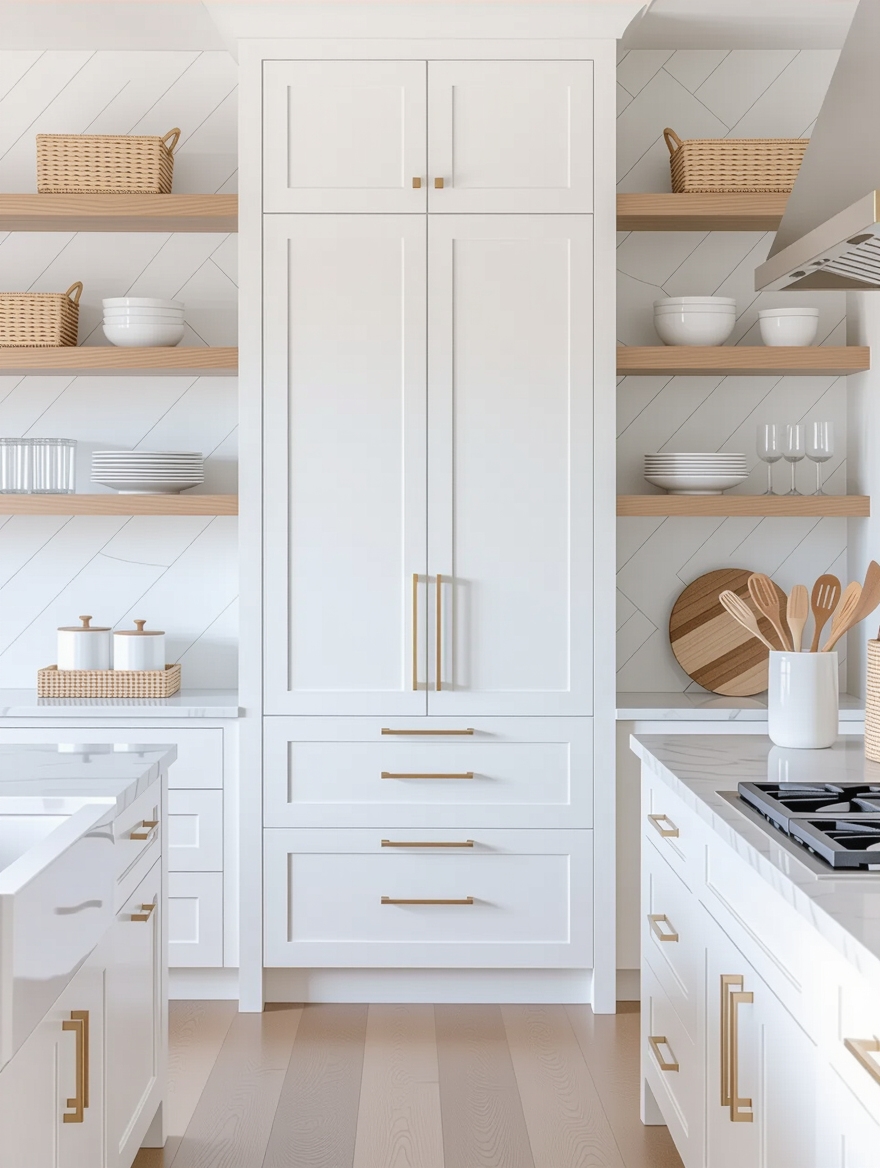
The specific steal that surprises people most is the slim pull-out in the gap beside the fridge. Nobody uses that strip. That dead three-to-six inches fits a tall, narrow pull-out rack that holds a startling number of cans, bottles, and spices.
It is a high-impact, low-cost move, often $50 to $150 for the unit, and it uses space that was doing absolutely nothing. Found storage, basically. Designers love it because it adds real pantry capacity to a kitchen that swears it has no room left, the same wall-and-gap thinking behind any clever small kitchen design plan.
- Measure the gap beside the fridge or oven before buying a slim pull-out.
- Use it for cans, bottles, and spices that waste a full shelf.
- Choose a unit on wheels or runners so the whole rack rolls out to you.
| Steal | Rough cost | Fixes |
|---|---|---|
| Slim fridge-gap pull-out | $50 to $150 | No pantry space |
| Rolling island cart | $60 to $150 | No prep counter |
| Under-cabinet LEDs | $15 to $40 a run | Dark, shadowed counters |
| Magnetic knife wall | $15 to $30 | A jammed drawer |
Steal the Clutter-Free Counter Rule

The cheapest steal of all is also the most powerful: clear the counters to a strict minimum. It costs nothing. Designers stage small kitchens with almost nothing out, because an open surface reads as space while a crowded one shrinks the whole room.
Empty counter, instant space
The rule is to give every small appliance a home behind a door and leave out only a board, a crock of tools, and maybe a plant. Everything else gets put away after each use, which keeps the room camera-ready every day.
I tell people this is the move to do first, because it costs nothing and changes everything. Once the counters are clear, every other steal on this list has room to shine.
Steal the Under-Cabinet Kitchen Lighting Trick

The lighting steal that makes the biggest difference is under-cabinet LED. One ceiling fixture leaves you working in your own shadow, but a strip under the uppers lights the counter directly and makes the whole kitchen feel bigger and warmer after dark.
It is cheap, fast, and the single upgrade I recommend to nearly every small kitchen, because good light flatters every other change you make and bad light hides them. A dim kitchen always feels smaller than its tape measure says, so this is the rare steal that quietly improves all the others at once.
- Run LED strips under the uppers, about $15 to $40 a run and an hour to fit.
- Choose rechargeable or plug-in versions to skip any wiring.
- Pick warm 2700K bulbs so the small space feels inviting, not clinical.
Steal the Reflective Brightening Surface

The last steal is borrowing light with a reflective surface. Bounce what you have. A glossy backsplash, a mirror opposite the window, or glass cabinet fronts all catch and spread the daylight a small kitchen already gets, so the room feels brighter and deeper without a single new bulb.
- Add a glossy backsplash or a mirror across from the main window.
- Aim anything reflective at light or a view, never at a cluttered counter.
- Try glass cabinet fronts on one or two doors for depth without clutter.
Maintenance & Care
Most of these steals are low-maintenance, but a few have small habits worth knowing. A rolling cart’s locking wheels need an occasional check so it stays put, and a butcher-block top wants oiling every month or two to keep its finish.
Under-cabinet LED strips are nearly maintenance-free, though the stick-on kind can need re-taping after a year or two near a steamy stove. Glossy and mirrored surfaces show fingerprints, so a quick wipe keeps them doing their light-spreading job.
The real upkeep is the clutter-free counter rule, which is a habit more than a chore. Spend two minutes resetting the counters after each cook, keep a labeled home for every small appliance, and the whole stolen look holds together. None of these steals demand much, which is exactly why they are worth taking; they keep paying off long after the afternoon you installed them.
Small Kitchen Steal Questions, Answered
?What is the single best small kitchen design steal?
The clutter-free counter rule, because it is free and changes the most. An empty surface signals room instantly. After that, the slim pull-out beside the fridge adds the most real storage for the least money.
?How do I add storage to a small kitchen without a renovation?
Steal the vertical tricks: a floor-to-ceiling shelf tower, a slim fridge-gap pull-out, and cabinet organizers like risers and dividers. Together they roughly double capacity with no building, most for under fifty dollars each.
?What makes a small kitchen look more expensive?
A low-contrast palette, good under-cabinet lighting, and clear counters. Those three designer moves come across as considered and calm, which the eye takes as high-end, no costly materials required.
?Which steal works best for renters?
Anything removable: a magnetic knife strip, a rolling cart, plug-in LED strips, and a mirror. All add function or light, pack up when you move, and leave no marks behind.
Take the Steal, Skip the Reno
The best small-kitchen design is not a renovation; it is a handful of specific, stealable moves that each fix a real problem. A pull-out in a dead gap, a combo appliance, a low-contrast palette, a cleared counter, these are the details that make a tight kitchen work, and none of them need a contractor.
Pick the one steal that targets your biggest daily annoyance and do it this weekend. Bookmark the rest, take them one at a time, and a kitchen you were ready to apologize for becomes one worth showing off, one stolen idea at a time.
More to Explore