

A friend once spent a fortune on a beautiful built-in grill, then set it on a cracked concrete slab with two plastic chairs beside it. The kitchen was great. The combo was not. The lesson stuck with me: an outdoor kitchen is only as good as the patio it lives on, and the two have to be designed together.
A patio combo done right means the cook space and the patio read as one room, matched in flooring, furniture, and style so the whole thing flows. Below are the pairings that work, each matching an outdoor kitchen to the patio setting that makes it sing, from a classic grilling deck to a poolside cabana. The goal is the same every time: a kitchen and a patio that belong together.
Quick Answers
What makes a kitchen-and-patio combo work? The two should read as one room. Match or relate the flooring, carry one style across both, and size the patio so the kitchen, dining, and lounge all fit without crowding. When the cook space and the patio are designed together, the whole yard flows instead of feeling like a grill parked on a slab.
What should I plan first, the kitchen or the patio? Plan them together. Decide the style and the footprint as one project, since the patio surface, the layout, and the furniture all depend on where the kitchen sits and how you will use the space. Designing one without the other is what leaves you with a mismatched combo later.
How big should the patio be for an outdoor kitchen? Big enough for the cooking zone plus dining and lounge areas with clear paths between them. As a rough guide, leave a few feet of clearance around the cooking and walking zones, and size the dining and seating for the largest group you regularly host.
Start With Flow Between Kitchen and Patio

Before any style, a great combo comes down to how the kitchen and patio flow together. The two should feel like one connected room, with the cooking zone, the dining area, and the lounge laid out so people move easily between them and the cook stays in the conversation. Get the flow right and every style on this list works.
I tell clients the simplest trick is continuity underfoot. Run the same flooring, or two materials that clearly relate, from the kitchen across the whole patio so nothing reads as an afterthought slapped onto a slab. Then size the patio generously, leaving clear paths around the cooking zone and room for dining and seating without anyone bumping the cook.
Match the comfort to the cooking, too. A kitchen deserves a patio with real seating, shade, and lighting, so the space invites people to stay rather than stand around the grill. When the kitchen and patio are planned as a pair, the result feels designed, the same groundwork behind the most-copied outdoor kitchen layouts.
The Classic Grilling Patio

The most reliable combo is the classic grilling patio: a solid grill station paired with a paver or flagstone patio, a dining table, and easygoing summer comfort. It is the pairing most yards want, and it never looks dated. The kitchen stays simple, a grill, counter, and storage, and the patio does the rest.
Edge the grill so smoke clears the table
Set the grill station at one edge so smoke blows away from the table, then give the patio a generous dining set, a few lounge chairs, and a string of overhead lights. A brick or stone surface ties the cooking and dining zones together and shrugs off spills and heat.
This is the combo for the cook who wants great food and easy hosting. No theme required. Keep the materials warm and the layout open, and the classic grilling patio handles a Tuesday dinner and a weekend cookout equally well.
Which patio combo fits your yard?
1You want easy, classic hosting
A grilling patio with pavers, a dining set, and string lights.
2You have a pool
A poolside kitchen and cabana built for all-day entertaining.
3You want to use it all year
A covered kitchen and a heated, sheltered patio.
The Minimalist Rooftop Combo

On a rooftop or a modern terrace, a sleek kitchen pairs best with a clean, uncluttered patio that keeps the focus on the view. A low, minimalist cook bar, a tight palette, and large-format pavers or composite decking make the combo feel like a calm extension of a contemporary home. The patio stays open and the sightlines stay clear.
Keep the furniture low and simple so nothing blocks the horizon, and let the floor, the kitchen, and the rail share one quiet material story. A few planters and warm lighting soften the hard lines after dark. Less is the look here. This is a combo where restraint is the whole point, much like a smartly scaled small outdoor kitchen layout.
- Pair a low kitchen with large-format pavers or composite deck.
- Keep furniture low and minimal to protect the view.
- Share one quiet palette across floor, kitchen, and railing.
The Industrial Concrete Combo

An industrial kitchen wants a patio just as tough and material-forward. Pair poured-concrete counters and steel framing with a polished or board-formed concrete patio, and the whole combo reads as one honest, hard-wearing surface from the cook station to the lounge. The materials match, so nothing feels bolted on.
Soften the hard combo so it stays inviting. Add warm wood seating, a few large planters, leather or canvas furniture, and warm overhead lighting to balance all that gray. The contrast of warm furniture against cool concrete is what keeps the space from feeling like a loading dock.
This pairing suits modern and urban homes and anyone who loves raw materials. Because concrete and steel weather honestly, the combo only looks better with age, the same durability behind any concrete outdoor kitchen design.
🅰️Match the flooring
Run one surface from the kitchen across the whole patio for a unified, designed feel. Cleanest look, but commit to it from the start.
🅱️Relate two surfaces
Pair two materials that share a tone, say stone counters over a brick patio. More flexible and forgiving, with a little visual interest.
The Rustic Charm Combo

A rustic kitchen pairs beautifully with a warm, natural patio for a combo that feels like a country retreat. Match a stone or warm-wood cook station with a flagstone, gravel, or reclaimed-brick patio, and add timber beams, a fire feature, and comfortable, well-worn furniture so the whole space feels relaxed and gathered.
The natural materials carry from the kitchen straight out across the patio, so the two read as one cozy room. A stone fireplace or a fire pit gives the patio a heart to circle after dinner, while warm string lights and lanterns wrap the space in a soft glow.
Use plenty of plants and a mix of textures, rough stone, aged wood, woven seating, so the combo feels collected over time. This is the pairing people settle into for long evenings, and it suits farmhouse, cottage, and cabin-style homes especially well. Keep the furniture truly comfortable, since a rustic patio is built for lingering, much like a warm backyard outdoor kitchen space.
- Match a stone or wood kitchen with a flagstone or brick patio.
- Add a fire feature to anchor the patio after dark.
- Layer plants, textures, and soft lighting for a collected feel.
The Mediterranean Courtyard Combo

The Mediterranean combo turns the patio into a sun-warmed courtyard built for long, social meals. Pair a tiled, built-in kitchen with a terracotta or stone-paved patio, then center the whole space on a long communal table under a pergola draped in vines. The patio is the dining room, and the kitchen feeds it.
Warm earth tones, patterned tile, a small fountain, and clustered citrus or olive pots give the courtyard its old-world ease, while the pergola adds shade by day and a frame for lights by night.
I love this combo for a yard built around gathering, since the long table and the open courtyard make every dinner feel like an occasion. Keep the lines a little cleaner than a strict theme so it feels current, and the Mediterranean patio becomes the kind of space guests never want to leave.
- Pair a tiled kitchen with a terracotta or stone patio.
- Center the courtyard on a long table under a vine-draped pergola.
- Add warm tones, a fountain, and potted citrus for the old-world feel.
Pick a patio surface for your combo.
🎯Pavers or flagstone
Classic, warm, and forgiving, the all-purpose patio surface.
🎯Concrete
Tough and modern, ideal for an industrial or minimalist combo.
🎯Composite or wood deck
Warm underfoot and great for rooftops, decks, and modern yards.
The Tropical Tiki Combo

For pure escape, the tropical tiki combo pairs a thatched bar kitchen with a lush, resort-style patio. Build a bamboo or thatch-roofed bar with stools as the cook-and-serve hub, then surround it with a deck or stone patio, abundant tropical planting, and low lounge seating so the whole space feels like a vacation. The bar is the heart, and the planting does the rest.
Use teak and natural materials, string up warm lights and a few lanterns, and tuck the patio among palms, ferns, and big leafy plants so it feels enclosed and private. Add a hammock or a daybed and the combo turns the backyard into a getaway you never have to leave. This pairing suits warm climates and pool yards, and it leans toward a relaxed, leisurely kind of hosting where nobody is in a hurry.
- Build a thatch or bamboo bar as the cook-and-serve hub.
- Surround it with lush planting for an enclosed, private feel.
- Add teak, lanterns, and a hammock for the resort mood.
The Poolside Cabana Combo

When the patio wraps a pool, the kitchen and a cabana make a combo built for all-day entertaining. Set a modern cook station and a bar near the water, with a cabana or covered lounge for shade, so guests move easily from the pool to a drink to a meal without trekking inside. The pool, the kitchen, and the shade structure work as one.
Set the cook station facing the pool and the crowd
Keep the materials pool-friendly and slip-resistant, and lay out the kitchen so the cook faces the water and the crowd. A shaded cabana with comfortable seating gives swimmers a place to dry off and gather, while a bar at the kitchen keeps drinks and snacks right at hand.
This is the combo for a yard that hosts all summer. Put the cooking and the cabana within a few steps of the pool, leave clear, dry paths between them, and the poolside kitchen becomes the center of every warm-weather day.
The Year-Round Covered Combo

The combo that earns the most use is a covered kitchen paired with a sheltered, heated patio you can enjoy in any season. Put the cook space and the seating under a pavilion or a roofed structure, add a fire feature and heaters, and the patio stops being a summer-only spot and becomes a year-round room.
Shelter and warmth are what turn a three-month patio into a twelve-month one. A pergola or pavilion runs roughly $3,000 to $15,000 depending on size, and it is the upgrade that buys the most extra months.
Build a solid roof that vents smoke over the grill, then layer in a fireplace or fire pit, patio heaters, and warm lighting so the space stays comfortable as the temperature drops. Use weatherproof furniture and materials throughout so nothing suffers through the cold months. A covered combo lets you grill a winter dinner or host a fall gathering as easily as a summer cookout, the kind of build behind any covered outdoor kitchen design.
- Put the kitchen and seating under a pavilion or roof.
- Add a fire feature, heaters, and warm lighting for the cold months.
- Use weatherproof furniture so the patio works all year.
Get the Shade and Sun Protection Right
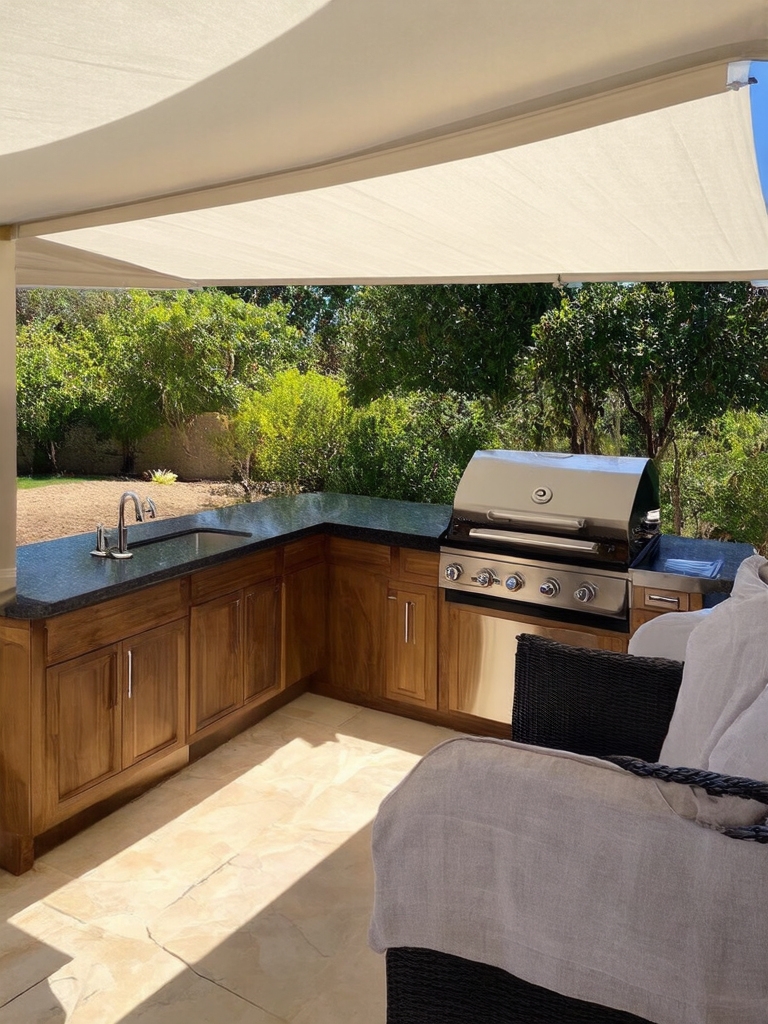
Whatever the style, the combo only works if the patio is comfortable in the sun, so smart shade is the detail that ties it all together. A pergola, a large umbrella, a shade sail, or a retractable awning keeps the dining and lounge zones usable through the hottest part of the day, and protects the furniture and the cook from the worst of the heat.
Match the shade structure to the patio style
I recommend matching the shade to the style: a timber pergola for rustic and Mediterranean, a sleek cantilever umbrella or a tensioned sail for modern, a thatched roof for tropical. Place it over the spots where people sit and eat, and aim it at the afternoon sun, the hottest part of the day.
Good shade is what turns a patio from a midday no-go into an all-day space. It is the quiet detail that decides how many hours the combo actually gets used, and it deserves as much thought as the kitchen itself.
Patio Combo Questions, Answered
?What is the best patio surface for an outdoor kitchen?
Pavers and flagstone are the most versatile, warm, forgiving, and easy to repair. Concrete suits modern and industrial combos and stands up to heavy use, while composite or wood decking works well on rooftops and raised patios. Whatever you choose, make sure it is slip-resistant, heat-tolerant near the grill, and carried across the whole space so the kitchen and patio read as one.
?Should the kitchen and patio match exactly?
They do not have to match exactly, but they should clearly relate. Run one flooring throughout for the cleanest look, or pair two materials that share a tone. Carry one style, palette, and material story across both so the combo feels intentional. The goal is a kitchen and patio that read as a single designed room, not two separate projects sharing a yard.
?How much space do I need for a kitchen and patio combo?
Enough for the cooking zone plus dining and lounge areas with clear paths between them. Leave a few feet of clearance around the grill and the walking routes, and size the dining and seating for the largest group you regularly host. Even a small yard works if you zone it well; the key is room to move between cooking, eating, and relaxing without crowding the cook.
?How do I make a small patio and kitchen combo work?
Zone it carefully and build vertically. Use a compact cook station, a slim bar with stools instead of a big table, and a fold-down or rolling surface for extra prep. Keep one flooring throughout to make the space feel larger, add shade and lighting so it is usable all day, and choose furniture that suits the scale. A well-planned small combo often hosts better than a big, awkward one.
Design the Kitchen and Patio Together
The combos that work all share one thing: the kitchen and the patio were designed as a pair, matched in flooring, style, and scale so they read as one room. Whether you go classic grilling, minimalist rooftop, industrial concrete, rustic, Mediterranean, tropical, poolside, or year-round covered, pick the patio setting that fits your home and build the kitchen into it, not onto it.
Start by deciding the style and footprint of the whole space at once, then choose the flooring, the shade, and the furniture to match. Get the combo right and the backyard stops feeling like a grill on a slab and starts feeling like the best room in the house. Picture the pairing you want, and design both halves together.
Keep the Inspiration Going


