

Most sage inspiration you save assumes a full renovation and a contractor on speed dial. The kitchen you actually have probably needs something smaller: one idea you can try this month without regretting it. The good news is that sage takes to low-commitment changes beautifully, so you can test the color with a few stools before you ever touch a cabinet door.
I have sorted these thirteen ideas by how much they cost and how hard they are to undo, lightest first. Bookmark the ones that fit where you are right now, whether that is a renter who can only swap textiles or an owner ready to repaint. Each note includes a rough price and the catch nobody mentions, so you save the idea knowing what you are getting into.
Sage Ideas by Commitment
| Idea | Commitment | Rough cost |
|---|---|---|
| Sage stools, rugs, textiles | Low, fully reversible | $10 to $90 |
| Sage tile backsplash | Medium | $5 to $15 a sq ft |
| Paint the cabinets | High, a weekend job | $150 to $250 DIY |
| Vintage-style sage appliance | Medium | $80 and up secondhand |
Test Your Sage Paint Under Real Kitchen Light

Before any other idea, this is the one I would tattoo on people: test the color in your own kitchen first. Sage shifts hard between cool daylight and warm bulbs, and the chip that looked perfect in the store can turn gray, blue, or yellow on your wall.
Ten dollars beats a redo
Buy a couple of sample pots, paint two coats on a scrap board, and move it around for a full day. Look at it by the window in the morning and under your real bulbs at night. Ten dollars of samples saves a whole repaint.
This step is free insurance, and almost nobody does it. Skip it and you risk falling for a sage that fights your floors or your light; do it and every idea below gets easier.
Paint Your Cabinets the Right Sage

The highest-impact idea is also the biggest job: a full cabinet repaint. Done well, it looks like a new kitchen for the price of supplies, and sage is forgiving enough to suit almost any room. The whole result lives or dies on prep, so do not rush the boring part. I tell first-timers the sanding and priming is the project; the color is the easy bit. If you are weighing it against a tear-out, the case for painted cabinets is strong.
- Plan two weekends and about $150 to $250 in primer, paint, and supplies.
- Clean, sand, and prime first, or the new sage will peel within months.
- Foam-roll two thin coats for a smooth, factory-style finish.
Which sage idea should you bookmark first?
1I rent and can’t change much
Start with textiles, a runner, and a few sage ceramics, or add a peel-and-stick tile backsplash you can remove later.
2I own but want to test the color
Paint just the island or the lowers, around $80 to $150, and live with it a season before going further.
3I’m ready for the full look
Repaint the cabinets over two weekends, add brass pulls, and pair with butcher block or sage tile.
Pair Sage Cabinets With Butcher Block

If you are painting cabinets anyway, plan the counter to match. I love this pairing. A honey butcher-block top warms sage instantly and gives the kitchen that handmade, cottage feel for far less than stone, which is why it shows up in so many of the kitchens people save and never quite get around to copying.
The trade-off is upkeep: butcher block wants oiling every month or two, and it shows water rings if you ignore it. Choose maple or oak, keep a bottle of food-safe oil under the sink, and it pays you back in warmth for years.
Go Two-Tone With Dark Sage Lowers

Not ready to commit the whole kitchen? Paint only the lower cabinets a deeper sage and leave the uppers pale. It grounds the room, hides the scuffs lowers always collect, and uses half the paint.
It also looks deliberate as long as you echo the green somewhere up high, like a window frame or the island. The thinking behind most two-tone cabinet schemes carries straight over.
- Use a deeper sage on the lowers where wear and splashes land.
- Keep uppers and walls light so the room stays open.
- Tie it together with one shared metal across both levels.
ℹ️Good to Know
Sage can swing a long way under different bulbs, which is why two readers can paint the same color and get very different kitchens. Warm 2700K bulbs push sage toward olive and cozy; cooler 4000K bulbs pull it gray and crisp. Pick your bulbs and your sage together, not separately.
Coordinate Brass Hardware With Sage

The cheapest idea with the biggest payoff is new hardware. Warm brass pulls pick up sage’s warm undertones and make a whole kitchen glow, and the swap costs almost nothing.
Plan on $3 to $8 a pull, so even a full kitchen rarely tops sixty dollars. Unlacquered brass softens to a patina over time; lacquered stays bright if you prefer the polished look.
The one detail people botch is placement. Dry-fit with a template before you drill, because a pull set crooked is permanent and impossible to ignore once you spot it.
Build the Kitchen Around a Sage Island

If a whole green kitchen feels like a lot, let a single sage island carry the color while everything else stays neutral. It is the lowest-risk way to make sage the star, since an island repaints in a weekend if you change your mind. I send hesitant clients here all the time. Big color, small commitment. Easy to undo.
- Paint just the island base sage and keep the perimeter white or wood.
- Top it in butcher block or pale stone so the green has something to lean on.
- Add brass pulls and a couple of stools to finish the anchor.
“For any idea above a textile swap, ask yourself one question: can I undo this in a weekend if I hate it? Stools, decor, and a painted island all pass. A tiled backsplash or a full repaint does not, so those are the ones that earn a sample board and a few days of living with the color before you commit.”
Add a Sage Green Tile Backsplash

A sage tile backsplash brings the color in without painting a single cabinet, which makes it a favorite for people who like their existing fronts. Glossy sage subway tile catches the light; a matte zellige reads handmade and softer.
Light grout keeps it glowing
Plan on roughly $5 to $15 a square foot for the tile, more if you hire the install. A small backsplash is a doable weekend DIY if you are comfortable with a notched trowel and a level.
Keep the grout light to let the green glow, since a dark grout chops the tile into a busy grid. If you want even more color on the wall, a green backsplash can carry the whole room.
Carry Sage From Walls to Open Shelving

Paint a sage wall and then a set of open shelves to match, and the color climbs the room without the cost of cabinets. The shelves break up the wall and give you a spot for everyday dishes.
This works best on one wall, not the whole kitchen, so the green stays restful. Style the shelves with things you actually use, since constant rotation keeps them from gathering dust.
- Match the shelf color to the wall so the run reads as one calm surface.
- Bracket solid wood or painted shelves for about $40 to $80 a pair.
- Limit open shelving to a single wall to keep enough closed storage.
Warm Sage With Natural Wood Accents

Sage on its own can drift a touch cool, so a few wood accents pull it back to warm. A cutting board left out, a wood range hood, or open timber shelves all do the job without any big purchase.
Match the wood temperature to your sage so they agree. A warm, olive sage loves oak; a cooler one suits white oak. For the full version of the pairing, see how a sage and wood kitchen balances the two.
- Add wood in small doses first, like a board or a bowl, before committing to shelves.
- Keep the wood tones consistent so the warmth feels collected.
- Skip a clashing orange-toned wood, which fights a cool sage.
Add Sage to White Cabinets With Tile and Decor
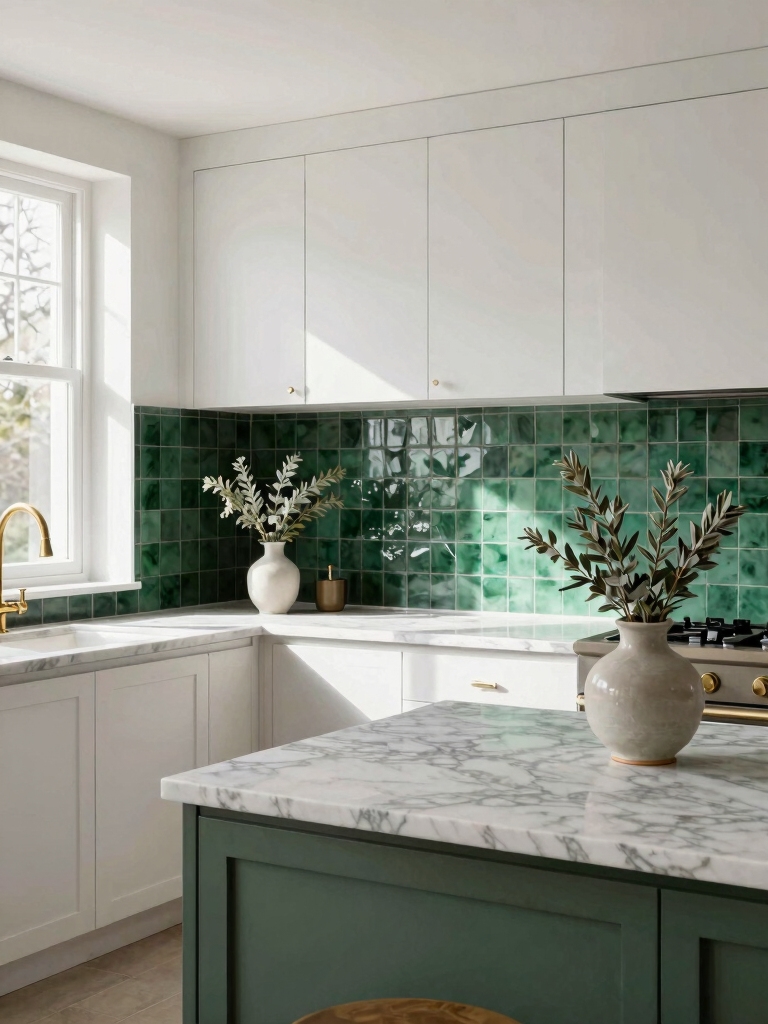
Love sage but stuck with white cabinets you cannot or will not change? Bring the color in through everything but the cabinets: a tile backsplash, sage textiles, a painted island, or green-glazed ceramics on open shelves. This is the renter’s path to the look, and it costs a fraction of a repaint while staying easy to undo when you move. I tell tenants this is where to start, every time.
- Layer sage through tile, textiles, and decor instead of the cabinet fronts.
- Add a single sage element, like a runner or a tiled niche, then build from there.
- Keep the whites warm so the sage accents do not look cold beside them.
Maintenance & Care
Most of these ideas are low-maintenance, but a few have small upkeep habits worth knowing before you commit. Painted cabinets in a quality satin or matte finish wipe clean in under a minute with mild soap and hold up for years; keep a labeled touch-up jar for the inevitable chip and plan to recoat a heavy-use run maybe once a decade.
Butcher block needs oiling every month or two, and sage tile grout wants the usual yearly seal any backsplash gets to keep the lines clean.
The reversible ideas ask almost nothing. Textiles go in the wash, stools wipe down, and a vintage-style sage appliance just needs the normal care any appliance gets. If you are layering several sage tones, the one rule is to keep them in the same family, since a cool green-gray and a warm olive in the same room can quietly clash. When in doubt, fewer tones and a little wood keep the whole thing calm.
Sage Kitchen Idea Questions
?What is the cheapest way to try sage green in a kitchen?
Start with textiles, bar stools, or a few green-glazed ceramics, which cost $10 to $90 and undo in minutes. They let you test the color against your light and finishes before you spend on tile or paint.
?Can I get a sage kitchen without painting the cabinets?
Yes. Bring sage in through a tile backsplash, a painted island, textiles, and decor while leaving white or wood cabinets alone. It is the standard renter’s route and costs a fraction of a repaint.
?How do I pick the right sage green?
Test it in your own kitchen. Paint two coats on a board, look at it by daylight and under your night bulbs, and watch how it shifts. Warm bulbs push sage olive, cool bulbs push it gray, so choose the shade and the lighting together.
?What adds the most impact for the least money?
New brass or black hardware. At $3 to $8 a pull it transforms the feel of sage cabinets for under sixty dollars and takes an afternoon, with no painting required.
Save One, Start Small
The best sage kitchen is the one you actually start, and the surest way to start is small. Bookmark the lightest idea that fits your situation, whether that is a set of stools or a sample board on the wall, and let it tell you how much sage you really want.
From there, the bigger ideas get easier, because you already know your shade works in your light. Save this list, try one thing this month, and build the kitchen you keep scrolling past in your saved folder.
More Looks We Love


