

I once helped a friend who could not figure out why her brand-new open-plan kitchen still felt heavy. The layout was fine, but a tall bank of dark cabinets sat right across the only big window, and a crowded island blocked the path of light into the living room. We moved almost nothing structural, just lightened the cabinets, cleared the window, and slimmed the island, and the room finally breathed.
Airiness comes from a set of deliberate open plan kitchen decisions about light, layout, and openness. The blueprints below are the choices that make a house feel bright, breezy, and ready for entertaining, from pulling in natural light and connecting to the outdoors to keeping the floor clear and the palette pale. Most cost far less than you would guess.
Quick Answers
What makes an open plan kitchen feel airy? Light and openness, mostly: a layout that pulls in natural light, a pale palette, reflective surfaces, and an uncluttered, well-zoned floor that lets the eye and air move freely.
Does indoor-outdoor flow really help? Yes. Connecting the kitchen to a patio or garden with big doors borrows light and view, making the whole open plan feel larger and brighter, especially in warm months.
What is the biggest airiness killer? Clutter and a dark, blocked layout. Too much stuff on the counters and a heavy island or cabinet in the light’s path will sink an airy plan faster than anything.
The Social, Functional Open Kitchen

An open-plan kitchen earns its keep by being social and bright at once: the cook stays connected to the room, and light travels the whole floor without walls to stop it. That openness is the foundation every airy blueprint builds on, since you cannot make a chopped-up, walled kitchen feel breezy no matter how pale the paint. Openness comes first.
The trade-off is honest. Open plans carry noise, cooking smells, and visible clutter across the space, so an airy kitchen needs a strong range hood, real storage, and the discipline to keep surfaces clear. Get the openness and the light right first, and the airy feeling follows. Skip the basics and even a big bright room feels close.
- Open layouts let light and air travel the whole floor.
- The cook stays social, connected to the dining and living zones.
- Airiness needs clear surfaces, storage, and a good range hood to last.
Layouts That Maximize Natural Light

The most important airy blueprint is the one that pulls in the most daylight, so I recommend planning the layout around your windows, not against them. Light wins. Keep tall cabinets and the fridge off the wall with the best window, run lowers along it instead, and place the sink or a prep zone there so you work in the light.
An island keeps the floor open for light to cross, and orienting the main run so the cook faces a window makes the whole space feel brighter. If you are renovating, even adding a window, or swapping a solid door for a glass one, transforms how airy the plan feels, the same priority behind any open floor plan that wins on light.
- Keep tall cabinets and the fridge off your best window wall.
- Put the sink or prep zone at the window so you work in daylight.
- Choose an island over a peninsula to keep the floor open to light.
Heads-Up
An open plan amplifies clutter, noise, and cooking smells, the enemies of an airy feel. Before you chase light and pale colors, make sure you have enough closed storage and a range hood that vents outside, or the airy look will not survive daily cooking.
Designing Indoor-Outdoor Kitchen Flow

The blueprint that makes a kitchen feel truly airy is connecting it to the outdoors. A wall of glass, a set of bifold or sliding doors, or even a large window over the sink borrows light, view, and a sense of space from the garden or patio beyond. Borrow the outside.
When the doors open onto a deck or courtyard, the kitchen effectively doubles in the warm months, and even closed, the glass floods the room with daylight. Align the indoor flooring with an outdoor surface in a similar tone to blur the line, and place the dining or seating zone near the doors so the connection gets used. It is the single most transformative airy move, and it turns cooking into something that happens half outdoors.
- Add bifold or sliding glass doors to open the kitchen to a patio.
- Place the dining or seating zone near the doors so the flow gets used.
- Match indoor and outdoor flooring tones to blur the boundary.
Defined Zones That Keep the Harmony

I tell clients airy does not mean empty and undefined; the breeziest open plans still have clear zones, they just mark them lightly. A cooking core, a dining spot, and a relaxed seating area each need their own place, defined by an island, a rug, or a change in lighting rather than walls. Clear zones keep an open kitchen from feeling like a furniture warehouse, which feels cluttered even when it is technically open.
The trick for airiness is to zone with the lightest possible touch. Two or three soft cues, an island edge, a pendant, a rug, are plenty, and keeping the furniture low and leggy lets light and the eye travel over and under it. The result is a floor that feels both open and purposeful, the same balance behind any well-merged open kitchen and living room.
- Mark zones with an island, a rug, or lighting instead of walls.
- Use two or three light cues so the space stays open and airy.
- Keep furniture low and leggy so light travels over and under it.
📋Indoor-Outdoor Flow Checklist
- ✓Glass doors or a big window connecting to outside
- ✓A usable patio, deck, or courtyard just beyond
- ✓Flooring that relates inside and out
- ✓An outdoor dining or lounge spot to draw you through
- ✓A threshold that sits flush, with no big step
Blending the Dining Area Into the Kitchen
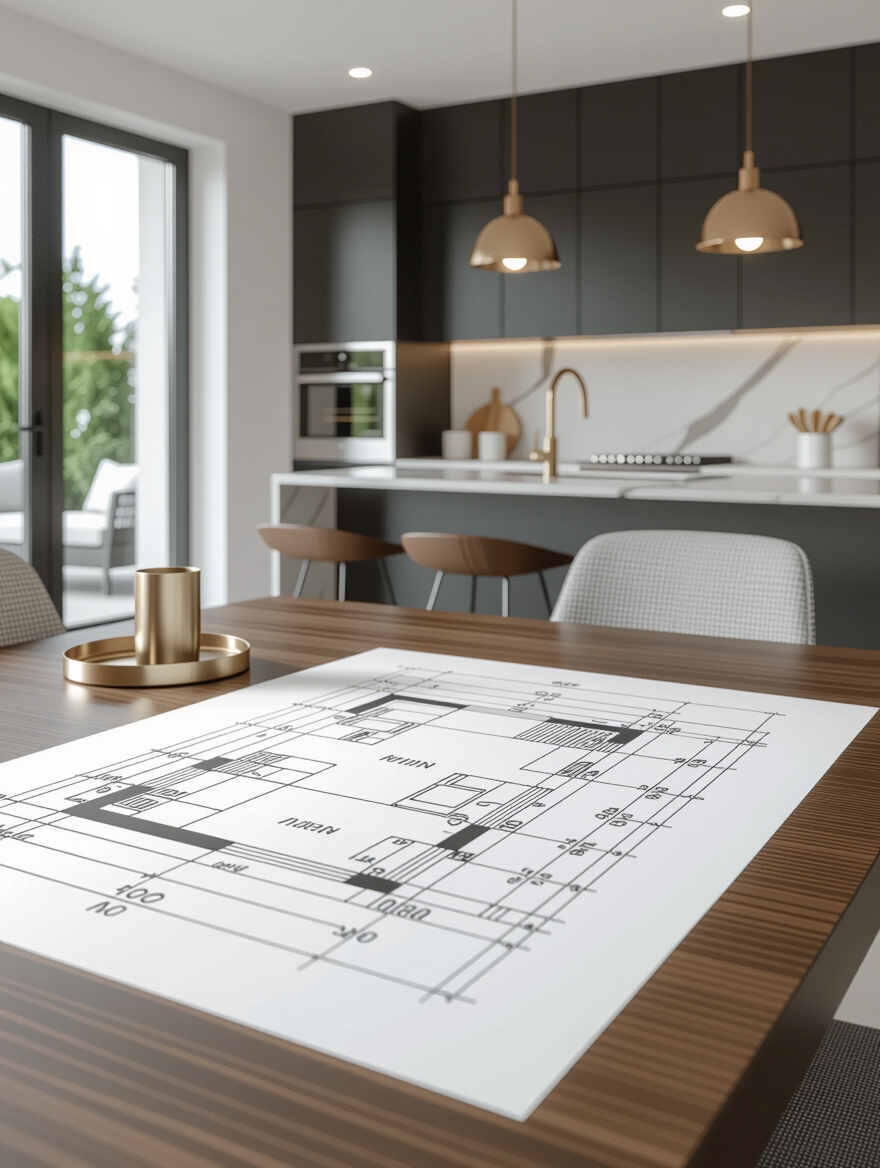
An airy open plan handles dining without crowding the floor. A table just off the island, a built-in banquette, or an extendable island that doubles as dining keeps eating close to cooking without filling the room with bulky furniture. The goal is a dining spot that feels like part of the kitchen, close and light.
Keep dining furniture light and the table clear
Keep the dining furniture light to protect the airy feel: a slim table, leggy or transparent chairs, a bench that tucks away. A banquette is the airiest option in a tight space, since it seats more people in less room and hides storage below the seat.
Anchor the dining zone with one light fixture and a shared palette so it belongs, then keep it clear when not in use. A dining table buried under mail is the fastest way to sink an otherwise airy plan.
Smart Storage for a Clutter-Free Open Kitchen

No airy blueprint survives a cluttered counter, so storage is where the airy look is won or lost. Plan generous closed storage from the start: full-height cabinets, deep drawers, an appliance garage for the toaster and blender, and a closed home for everything you would rather not see. The airy trick is to keep the surfaces that catch the light, the counters and the island, almost bare, since visible clear space is what feels breezy.
Hide the working clutter, display only a few styled pieces, and do a quick daily reset, and the open plan keeps the light and the calm. Clear counters, clear air. The same discipline that keeps shelves clutter-free keeps a whole airy kitchen working.
- Build in full-height cabinets and deep drawers for real storage.
- Hide small appliances in an appliance garage to clear the counter.
- Keep counters and the island nearly bare so light has room to land.
Two airy-kitchen myths.
❌ Myth: An airy kitchen has to be all white.
✅ Reality: Light and reflective matter more than the exact color. A pale sage or warm greige can feel just as airy as white.
❌ Myth: You need a big kitchen to feel airy.
✅ Reality: No. Light, mirrors, clear surfaces, and an open floor make small kitchens feel airier than big cluttered ones.
Islands That Maximize Space

An island can make an open plan feel more airy or more cramped, depending entirely on how it is sized. A right-sized island organizes the room around one clean surface and leaves the floor open, while an oversized one chokes the very flow that makes the space feel breezy. I see oversized islands kill airiness all the time. Leave 36 to 42 inches of clearance on every side, no exceptions.
For the airiest result, keep the island visually light: a pale or reflective top, slim legs or a floating look where you can, and seating that tucks fully under so the floor stays clear. In a smaller open plan, a slim island or a peninsula keeps the air moving better than a big block ever could, much like clever small kitchen island ideas.
- Leave 36 to 42 inches of clearance so the island never blocks the flow.
- Choose a pale or reflective top to keep the island feeling light.
- Tuck seating fully under so the floor stays clear and open.
Light Colors and Airy Finishes

Color is the cheapest airy blueprint there is. Light, low-contrast finishes, white, cream, pale wood, soft sage, bounce daylight and blur the room’s edges, so the walls feel farther away and the space looks bigger. Keep the cabinets, walls, and counters in a similar light tone, since high contrast chops the room into pieces and shrinks it. Pale opens it up.
Texture keeps a pale palette from feeling lifeless: matte and shiny, smooth and rough, a little warm wood against the white. Save bold color for small accents, and let the bulk of the room stay light and reflective. A coat of pale paint, often $200 to $400 for a DIY cabinet refresh over a weekend, can transform how airy a kitchen feels, and each coat dries in a couple of hours.
- Choose light, low-contrast colors so the walls feel farther off.
- Keep cabinets, walls, and counters in a similar pale tone.
- Add texture and small accents so the pale palette stays interesting.
Glass and Reflective Surfaces to Brighten
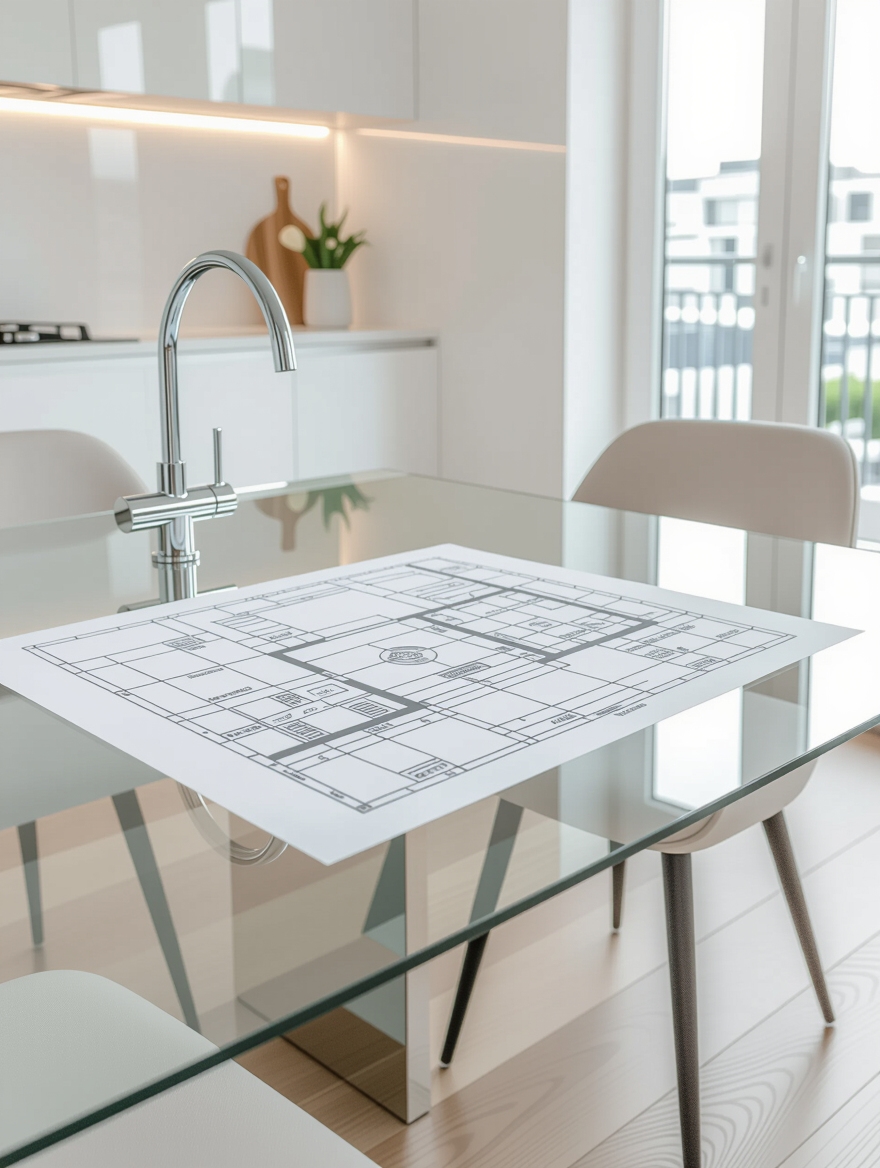
Reflective surfaces are the airy blueprint’s secret weapon, since they multiply whatever light you have. A glossy backsplash, polished stone, glass-front cabinets, a big mirror, and even shiny hardware bounce daylight deeper into the room, so an open plan feels brighter than its windows alone would manage. Glass-front uppers and interior windows also let light pass straight through the cabinetry. Reflection multiplies the light.
Use reflection thoughtfully so the kitchen sparkles without glare. A mirror opposite the main window nearly doubles the light it throws, a glossy backsplash brightens a dark corner, and pairing shiny surfaces with matte counters keeps it from feeling like a hall of mirrors. These touches deliver a lot of brightness for the money, the kind of move that makes a kitchen feel spacious instantly.
- Use a glossy backsplash or polished stone to bounce light deeper.
- Hang a mirror opposite the main window to nearly double the light.
- Pair reflective surfaces with matte counters to avoid glare.
Airy, Uncluttered Minimalist Kitchens

The airiest blueprint of all is minimalism, because empty space and clean lines are exactly what feels breezy. Handleless cabinets, integrated appliances, an uninterrupted counter, and as little as possible on display let the eye glide across the room without snagging on clutter or hardware.
The look depends on real storage and tidy habits, since the calm only holds if the surfaces stay clear. Keep the palette pale, the lines long and unbroken, and a single uncluttered island as the anchor, and a minimalist open plan feels almost weightless. It is the most demanding airy style to maintain, but the payoff is a kitchen that feels like a deep breath every time you walk in.
- Choose handleless cabinets and integrated appliances for clean lines.
- Keep counters and shelves nearly empty so the eye glides across.
- Maintain real storage and tidy habits to hold the airy calm.
Common Mistakes to Avoid
A few mistakes sink an airy open plan no matter how good the bones are. The biggest is blocking the light, parking a tall cabinet, fridge, or heavy island in the path of the main window so the daylight never reaches the room. Close behind is clutter on every surface, which reads as heavy even in a big bright space, and a palette with too much dark, high-contrast color that chops the room into pieces and shrinks it.
The subtler mistakes are about scale and zoning. An oversized island or too much bulky furniture clogs the flow that makes a plan feel breezy, while no zoning at all leaves the open floor feeling like an aimless warehouse. Match the furniture to the space, keep the light path clear, lean pale and reflective, and stay ruthless about clutter, and the airy feeling takes care of itself.
Airy Open Plan Questions, Answered
?How do I make my open plan kitchen feel more airy?
Clear the light path and the clutter first. Keep tall cabinets and the fridge away from your best window, lighten the palette to pale, low-contrast tones, add a reflective surface or two, and keep the counters and island nearly bare. Pairing those with a right-sized island and clear zones makes even a modest kitchen feel bright and breezy.
?Is indoor-outdoor flow worth it for an open kitchen?
Often, yes. Connecting the kitchen to a patio or garden with glass or bifold doors borrows light, view, and a sense of space, and effectively extends the room in warm months. It is one of the most transformative airy upgrades, though it is a renovation-level project; on a budget, a larger window over the sink captures some of the same effect.
?What colors make a kitchen feel airy?
Light, low-contrast colors, white, cream, pale wood, soft sage, and warm greige, all bounce daylight and make a room feel larger. The key is keeping the contrast low so the cabinets, walls, and counters read as one bright space. Save bold color for small accents, and add texture so the pale palette stays interesting.
Build in the Light and Air
An airy open-plan kitchen is built, not stumbled into, and the blueprint is consistent: pull in natural light, connect to the outdoors where you can, keep the floor open and well-zoned, lean on a pale, reflective palette, and stay relentless about clutter. None of it requires a mansion or a huge budget, since most of the airiest moves, clear counters, light paint, a mirror, a slimmer island, cost little and change everything.
So look at your own kitchen and ask: where is the light getting blocked, and what is making the space feel heavy? The honest answer is usually a dark cabinet in front of a window, a crowded counter, or an island too big for the room, and fixing just that one thing is often all it takes to let the whole space finally breathe.
More Hair Inspiration


