
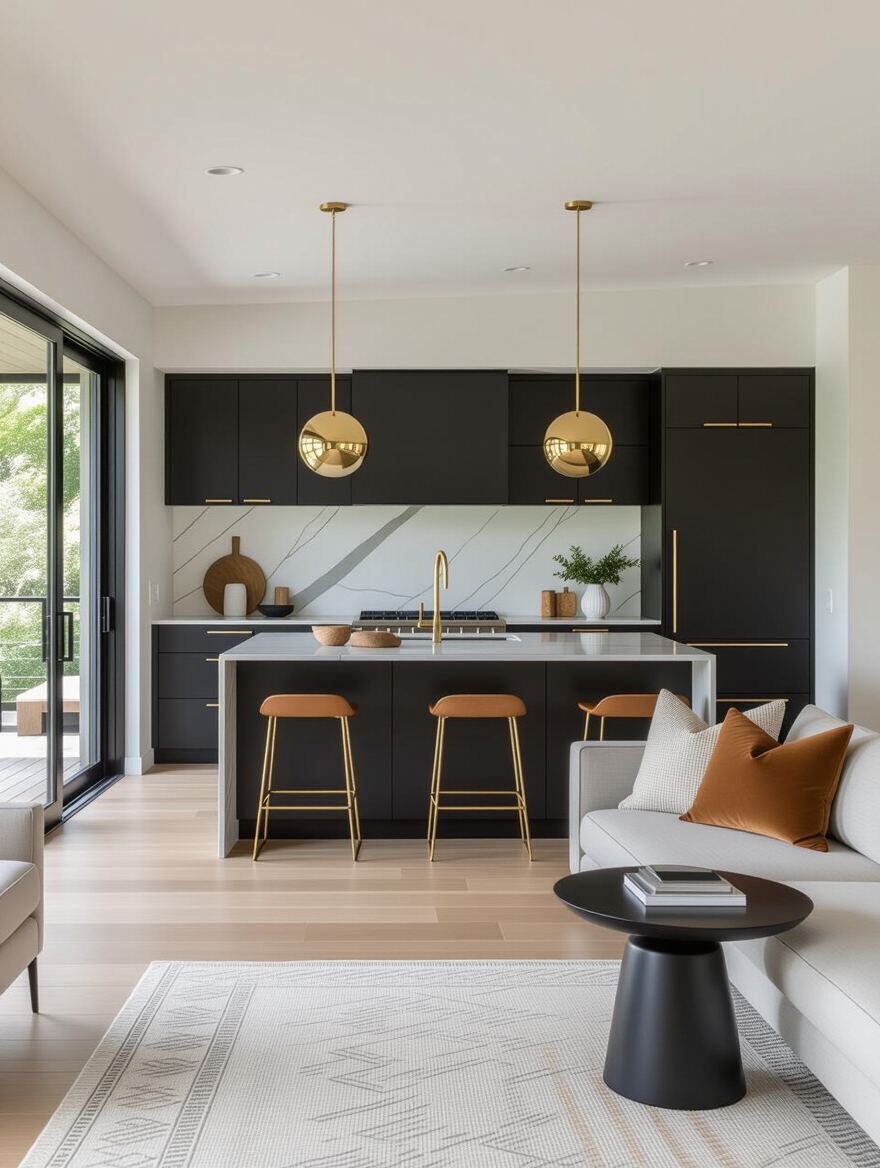
The first studio I lived in had the kitchen, dining, and living room all in one room barely bigger than a parking spot. It should have felt chaotic, and at first it did, until I learned that an open kitchen and living room is really several small zones sharing one floor. Once I started designing it that way, the whole space opened up. Zones, not chaos.
These sixteen open kitchen and living room moves are the ones that make a tiny shared space feel like a real home instead of a crowded box. They zone without walls, tie the floor together, and lean on furniture that connects the two areas while keeping the room airy. None of them need more square footage; they just use it smarter.
Making One Room Work as Several
| Move | What it does | Quick win |
|---|---|---|
| Zone without walls | Marks kitchen, dining, and lounge | A rug and a light fixture per zone |
| One continuous floor | Ties the whole room together | Run the same flooring throughout |
| Transparent furniture | Keeps sightlines and air open | A glass table, acrylic chairs |
| An island or peninsula | Divides and connects at once | Storage on one side, seats on the other |
Define Zones Without Walls

The first move in any open kitchen and living room is to give each area its own identity without building a wall. Zoning with rugs, lighting, and furniture tells the eye where the kitchen ends and the lounge begins, so a single room feels like a cozy, organized home with clear areas. The cues are subtle, but together they do the work walls used to. Layer two or three and the room organizes itself in the eye:
- A rug under the seating to anchor the living zone
- Pendants over the island to mark the kitchen zone
- A sofa or console turned to face away, defining the lounge
- A change in ceiling light or color to signal each area
One Floor to Tie It Together

While zones divide the room, the floor should unite it, so running one continuous flooring across the kitchen and living area is a quiet magic move. A single material flowing through both zones makes a tiny shared space feel like one larger, cohesive room.
The floor is the thread that sews it together. A hard threshold strip between zones is the most common mistake here, since it visually cuts the room in two. Pick one floor that handles both spills and lounging:
- Luxury vinyl plank, durable enough for the kitchen, warm for the lounge
- Run the planks in one direction across the whole space
- Avoid a hard transition strip that visually chops the room
- Choose a mid-tone that hides crumbs and wear in both zones
Sliding and Pocket Doors

In a tiny shared space, a swinging door wastes floor you cannot spare, so sliding or pocket doors are an easy win. They glide along the wall or tuck inside it instead of swinging out, which keeps the flow between the kitchen and living zones smooth and frees the floor a hinged door would block. Even a few inches matter in a room this size. Doors steal floor.
Reclaim the Swing
A pocket door can close off the kitchen when you want to hide the mess, then disappear into the wall when you want it open. A sliding barn-style door does the same with more style and less wall surgery. Either way, the floor stays clear.
These doors keep the open feel while giving you the option to divide when you need it. For more on merging the two rooms, my genius ways to merge an open kitchen and living room guide goes deeper.
🅰️One continuous floor
Running the same flooring through both zones ties the room together and makes a tiny shared space feel larger. The strongest move for cohesion.
🅱️A rug to divide
Layering a rug over the continuous floor marks the living zone without breaking the flow. Best used on top of one floor, not instead of it.
An Island That Bridges the Two

The single most useful piece in an open kitchen and living room is an island or peninsula, because it divides and connects the two zones at the same time. It gives the kitchen storage and prep on one side and the living area a place to sit and gather on the other, drawing a soft line between them without a wall. It is the natural heart of a shared room. One piece, two jobs.
Size it to leave at least 36 inches of walkway, and let it face the living space so the cook stays part of the gathering:
- Storage and prep on the kitchen side, seating on the living side
- A raised bar to screen the cooking mess from the lounge view
- A waterfall edge or wood top so it looks like a piece of furniture
- Pendants above to anchor it as the divider between zones
Maximize the Shared Space

When the kitchen and living room share one tiny floor, every piece has to earn its keep, so maximizing the function of each one is the difference between cozy and cramped. A storage ottoman that doubles as a coffee table, a bench that seats and hides clutter, a console that serves and stores, each one does two jobs so the room stays open.
Every Piece, Two Jobs
Look at every item and ask what second purpose it could serve. Nothing earns a spot for one job. In a shared space, every piece should pull double duty, since the floor is too precious for one-trick furniture.
Done well, this makes a tiny combined room do the work of two larger ones. For the storage logic on the kitchen side, my small kitchen storage ideas to hide clutter guide helps.
A few open-plan terms worth knowing:
📖Zoning
Using rugs, lighting, and furniture to mark separate areas, kitchen, dining, lounge, within one open room.
📖Sightline
The clear path your eye travels across a room. Keeping sightlines open is what makes a small shared space feel larger.
📖Peninsula
An island attached to a wall or cabinet run on one end, which divides the kitchen from the living zone while saving floor.
Compact Appliances That Blend In

Because the kitchen is always on view from the sofa, compact and integrated appliances keep it from dominating the living room. Slim, built-in models that wear cabinet fronts let the kitchen recede into the background, so the shared space feels like a living room with a kitchen in it, calm and unbroken. Choose appliances that hide rather than shout:
- Panel-ready fridge and dishwasher fronts to match the cabinets
- An 18-inch dishwasher and a counter-depth fridge to save space
- A combination microwave-oven to skip a second appliance
- An induction cooktop with downdraft to lose the bulky hood
Flexible Furniture That Adapts

A tiny shared space changes through the day, from cooking to dining to lounging, so flexible furniture lets the room shift with it. Lightweight, foldable, and nesting pieces move easily, tuck away when not needed, and adapt the layout for guests or quiet nights. The room can be three different setups in one footprint. My small kitchen ideas on a budget under 500 dollars guide keeps the pieces cheap.
Pick pieces you can actually move or fold without a fight, and the shared space flexes with ease:
- A drop-leaf or extending table for everyday and dinner-party sizes
- Nesting side tables that split for guests or stack to save floor
- Foldable or stackable chairs that store flat against a wall
- A lightweight ottoman that moves between zones as needed
Hide the kitchen or feature it in an open plan?
🎯Blend it in
Panel-ready appliances and cabinets that match the living-room palette let the kitchen recede. Best when you want the lounge to lead.
🎯Make it a feature
A bold island, open shelves, and a statement backsplash turn the kitchen into the room’s focal point. Best when you love to cook and entertain.
Transparent Furniture for Air

One clever trick for a tiny open plan is transparent, low-profile furniture that the eye sees straight through. Clear acrylic chairs, a glass-topped table, or a slim-legged sofa keep both the sightlines and the floor visible, so the room feels airy even when it is full of pieces. Less visual weight means more apparent space. See-through wins:
- Clear acrylic or ghost chairs at the dining spot
- A glass or acrylic coffee or dining table
- A sofa and chairs on slim, raised legs to show floor beneath
- Open or raised bases instead of solid, boxy ones
Vertical Storage on the Kitchen Side

In a shared space, floor storage steals room the living area needs, so pushing the kitchen’s storage up the wall keeps the floor clear for living. Tall cabinets to the ceiling, a backsplash rail, and shelves in the airspace hold what the counters cannot, which keeps the kitchen zone tidy and the open room uncluttered. The wall does the work the floor used to.
Reserve the high reaches for rarely used items and keep the daily things grabbable. A tidy kitchen wall matters more here than in a closed kitchen, since it is always part of the living room view. A single cluttered shelf can pull focus from the whole lounge. For more ways to claim the height, my small kitchen ideas modern homes are loving piece covers the look.
Open Shelving to Connect the Rooms

Open shelving works beautifully in a shared space, because it softens the line between the kitchen and living zones. A run of open shelves styled like the living room, with a few books, a plant, and some nice pieces, makes the kitchen feel like an extension of the lounge itself. It is the move that knits the two together. My open-plan kitchen blueprints for airy homes guide covers the whole layout.
Keep it edited and matched to the living-room palette, since whatever sits here is part of the whole room:
- Style the shelves with a mix of dishes, books, and greenery
- Match the palette to the living area for one cohesive look
- Keep it light and spaced so it never reads as clutter
- Use closed cabinets below for the daily kitchen mess
Open Kitchen and Living Room Questions, Answered
?How do you divide a small open kitchen and living room?
Divide it with cues, not walls. A rug anchors the living zone, pendants mark the kitchen, and an island or peninsula draws a soft line between them. A console or sofa turned to face the lounge also signals where one area ends and the next begins, all while keeping the open, airy feel.
?Should the flooring be the same in an open kitchen and living room?
Usually yes. One continuous floor across both zones makes a small shared space feel like one larger, cohesive room. Choose a durable material like luxury vinyl plank that suits both the kitchen and the lounge, run it in one direction, and layer a rug to mark the living area without breaking the flow.
?How do I make a tiny open-plan space feel bigger?
Keep the sightlines and floor open. Use transparent, low-profile furniture, push the storage up the wall, run one continuous floor, and unify the palette across both zones. The fewer visual breaks and the more floor you can see, the larger a tiny shared kitchen and living room will feel.
?What furniture works best in a small open-concept room?
Flexible, double-duty, and transparent pieces. A storage ottoman, a drop-leaf table, nesting tables, and clear acrylic chairs all save space and keep the room airy. Look for furniture that folds, nests, or rolls, and for slim or see-through bases that show the floor and keep the sightlines open.
One Room, Many Lives
A tiny open kitchen and living room only feels cramped when you treat it as one overstuffed room instead of several smart zones sharing a floor. Zone it with rugs and light, tie it with one floor, divide it with an island, and keep the furniture light and flexible, and a parking-spot-sized space starts living like a real home for cooking, eating, and relaxing.
So look at your shared space and name its zones first, then design each one to do its job while staying open to the others. The magic is never more square footage. It is smarter use of what you have. It is treating one small room as the several lives it actually holds, and giving each of them room to breathe.
More to Explore


