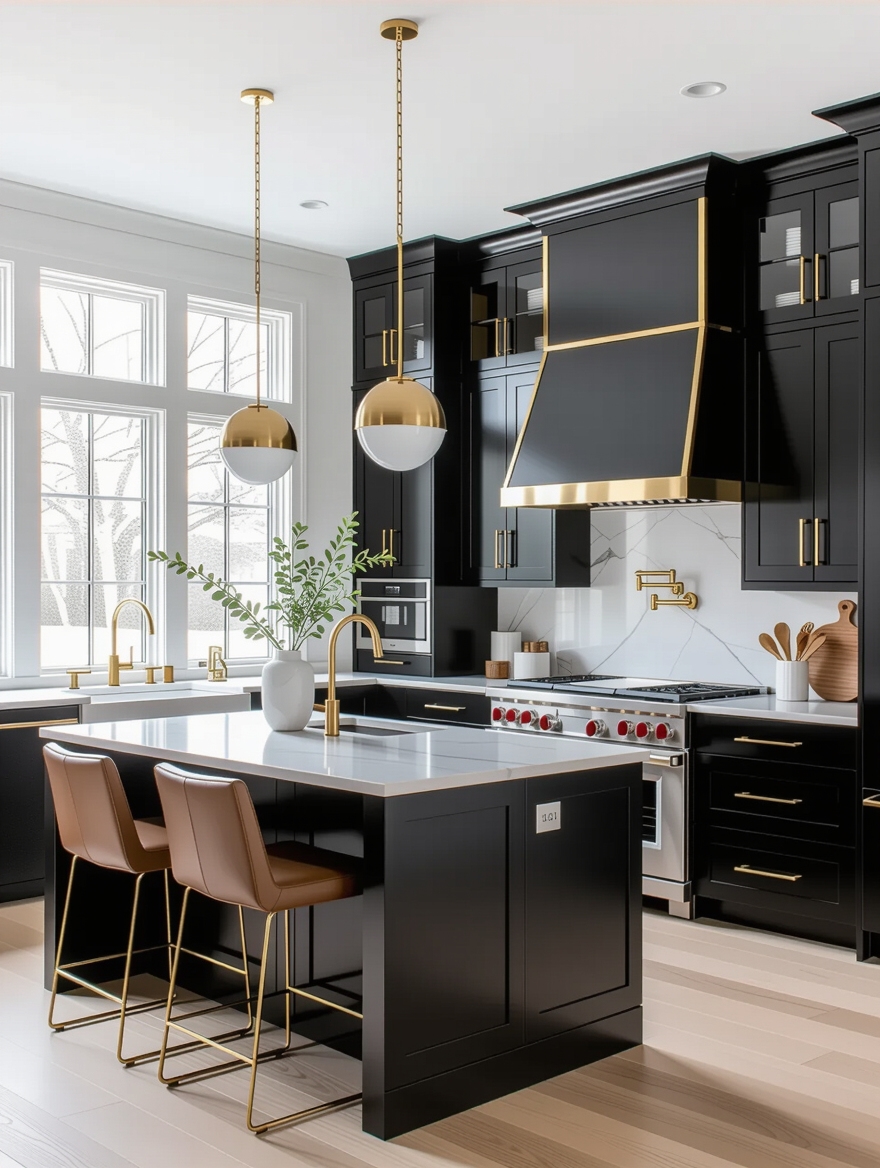

A modular kitchen is just a kitchen built from standard, ready-made units that snap together like building blocks. In a small kitchen, that is a quiet superpower. Instead of a carpenter guessing at custom sizes, you pick units that fit your walls to the inch, so no space turns into a useless filler strip.
These fifteen small modular kitchen ideas show how the system shines in a tight room: tall units that climb the wall, corner modules that reach the dead wedge, sliding shutters that save swing space, and zoned cabinetry that puts everything where it belongs. The result is a setup that looks sleek and works twice as hard as its footprint.
Why Modular Suits a Small Kitchen
- Modules size to the inch, so a small kitchen wastes no filler space
- Tall and corner units reach storage a standard layout leaves dead
- Sliding shutters skip the swing that a hinged door needs
- Built-in organizers come standard inside the modules
- The clean, unbroken fronts make a tight kitchen look bigger
Plan a Modular Layout That Fits

A modular kitchen lives or dies on the planning, because the whole point is matching standard units to your exact walls. Start by measuring every run and marking the windows, doors, and outlets, then choose base, wall, and tall modules that fill those widths with nothing left over.
The beauty of the system is that it sizes to the inch, so a small kitchen wastes no space on filler panels. My kitchen ideas for small spaces that work guide covers the planning groundwork. Get the layout right on paper and the rest is assembly:
- Measure each wall and note where windows, doors, and outlets land
- Pick base, wall, and tall modules that fill the widths exactly
- Plan the work triangle before you lock the module order
- Choose a one-wall, L, or galley arrangement to suit the room’s shape
Tall Modular Units for Vertical Storage

The hardest-working module in a small kitchen is the tall unit. A floor-to-ceiling tall module packs a pantry, a broom cupboard, or a stack of pull-out drawers into a single slim column, using the full wall height that a standard layout leaves to dust. One tall unit can hold what a whole run of base cabinets does, in a fraction of the floor space. Height is free real estate. Most small kitchens leave the top foot of every wall to dust.
Reserve the top reaches for what you use rarely and keep the daily things at eye level. I tuck a tall pull-out pantry beside the fridge in nearly every small modular kitchen I plan, because it turns a six-inch gap into real storage. For more on hiding the bulk, my small kitchen storage ideas to hide clutter guide helps.
📋Modular Planning Checklist
- ✓Measure every wall, window, door, and outlet position
- ✓Match base, wall, and tall modules to those exact widths
- ✓Lock the work triangle before choosing module order
- ✓Spec the internal fittings while you plan, not after
Modular Storage Units That Configure

The real magic of modular is what goes inside each box. Configurable internal fittings let you order the same cabinet with pull-outs, dividers, or a carousel built in, so the storage matches what you actually own instead of a generic shelf.
You decide the insides when you plan, and the modules arrive ready to work. No retrofitting later. The fitting is part of the unit, sized to slide out smoothly on full-extension runners. Mix and match these as your needs demand:
- Pull-out wire baskets for vegetables and pantry goods
- A built-in cutlery and utensil tray sized to the drawer
- A tall pull-out larder that slides the whole pantry out
- Bottle pull-outs for the skinny gaps beside an appliance
Modular Corner Units That Reach

Every kitchen has a blind corner, and modular systems solve it better than anything a small kitchen had before. A corner module with a rotating carousel or a magic-corner pull-out swings the whole cavity out to you, so the dark wedge that used to swallow your pots becomes the most-reached cabinet in the room. The corner stops being dead space. It earns its keep at last.
These units come standard in most modular lines, so you simply specify the corner type when you order. A carousel spins; a magic corner glides the inner shelves out as the door opens. My small kitchen island ideas nobody talks about guide covers more unconventional fixes like these.
I always spec one of these in a small modular kitchen, because the corner is the single biggest pool of recoverable space. A couple of cubic feet come back for the price of one fitting.
Open-Shelf Modules to Lighten the Run

A wall of solid modules can feel heavy, so dropping in an open-shelf module or two lightens the whole run. The gap of visible wall and the air around the dishes keep a small kitchen from feeling boxed in, and the contrast makes the closed units look intentional. A little goes a long way. Use the open modules with restraint so they stay sleek, since a wall of open shelving in a small kitchen quickly reads as clutter:
- Place one open module at eye level, not a whole wall of them
- Style it with a few matched pieces and real space between them
- Let the wall color show behind the shelf for a sense of depth
- Keep daily dishes here so they stay dusted by use
Built-In Organization in Every Module

A modular kitchen arrives organized, which is its quiet advantage over a built-from-scratch one. Built-in organizers, drawer dividers, plate racks, spice pull-outs, come standard inside the modules, so every item has a home from day one. There is no retrofitting later, because the order was designed in.
Order Designed In, Not Added On
Spec the inserts that match your habits: a deep drawer with a pegboard divider for pots, a narrow pull-out for oils by the stove, a cutlery tray sized to the exact drawer. Each one keeps the clutter sorted behind a clean front.
This designed-in order is why a modular kitchen stays tidy with less effort. For the room-wide version of that thinking, my small kitchen ideas modern homes are loving piece covers the look.
Open modules or closed shutters for your wall?
🎯Open-shelf modules
Lighten the run and show off a few matched pieces. Best in small doses, since they need editing and a regular dusting.
🎯Closed shutter modules
Hide the clutter for a calm, sleek look. The better pick if the kitchen stays busy and you would rather not see the contents.
Modular Zones for Each Task

The modular approach makes it easy to build the kitchen around zones, since you assign each module a job before it ever arrives. Task zones group the right storage with the right spot, so the prep tools live by the sink and the spices by the stove. A small kitchen feels twice as smooth when nothing makes you cross the room mid-recipe. Zoning does that.
Plan the modules in this order so the workflow flows:
- A prep zone module by the sink, with bins and a knife block built in
- A cooking zone by the stove, with oil and spice pull-outs in reach
- A storage zone tall unit for dry goods near the prep area
- A cleanup zone pairing the sink, dishwasher, and a hidden bin module
Multi-Function Modules That Stretch Space

In a small kitchen, the best modules earn their footprint twice. Multi-function units fold a second job into one box, a breakfast bar that pulls out of a base cabinet, a worktop that extends, a magic corner that doubles as a pantry. Each one stretches the space without adding a single unit to the floor.
Look for these clever modules when you plan the run:
- A pull-out breakfast bar hidden inside a base module
- An extendable worktop that adds prep space, then slides away
- A tall module that combines a pantry and a broom cupboard
- A base unit with an integrated bin and recycling pull-out
Two myths keep people away from modular kitchens:
❌ Myth: Modular always means expensive
✅ Reality: Not so. Standard module sizes are mass-produced, so a modular kitchen often costs less than full custom while still fitting your walls almost as precisely.
❌ Myth: Modular looks boxy and cheap
✅ Reality: Modern modular lines come in flat-panel, matte, and real-wood finishes that look high-end. The clean, unbroken fronts are exactly what makes a small kitchen feel sleek.
Compact Appliances Built Into Modules

Modular systems are built to swallow appliances, which keeps a small kitchen looking clean and unbroken. Compact built-in appliances slot into dedicated modules and wear cabinet fronts, so the machines blend into the run instead of jutting out and chopping it into pieces. Choose narrow, integrated models and the whole kitchen looks like one calm surface. The eye glides instead of snagging. An integrated fridge alone can make a galley feel a foot wider:
- An 18-inch dishwasher in a dedicated module for galley widths
- A built-in microwave or oven at counter height to free the floor
- A counter-depth or integrated fridge that lines up flush
- An induction hob set into the worktop for a smooth, flush top
Sliding Shutters That Save Swing Space

A hinged cabinet door needs clear space to swing, and in a tight kitchen that swing is always in the way. Sliding or roller shutters on the modules glide sideways or roll up instead, so you never lose a walkway to an open door. It is a small change that pays off every time two people share the room. Doors are the hidden space thief. A roller shutter on a tall pantry, in particular, frees the whole strip of floor a swinging door would have claimed:
- Roller shutters on a tall pantry module that lift up out of the way
- Sliding fronts on wall units where a swing would block the aisle
- A pocket-door appliance garage that hides the gear, then tucks away
- Lift-up flap doors on high modules so nothing swings into your face
A Setup Built to Fit
The reason modular works so well in a small kitchen is that it refuses to waste an inch. Units size to your walls, corners and tall columns reach the dead space, sliding shutters skip the swing, and the organizers come built in. Put together, that is a kitchen that looks sleek and works far above its footprint.
So measure your walls, decide what each module needs to do, and build the room from units that fit exactly. Start with the tall unit and the corner module, since those recover the most space, and add from there. For the broader plan, my small kitchen design plans a homeowner needs guide maps it out. A small kitchen planned this way ends up feeling like it was made to measure, because it was.