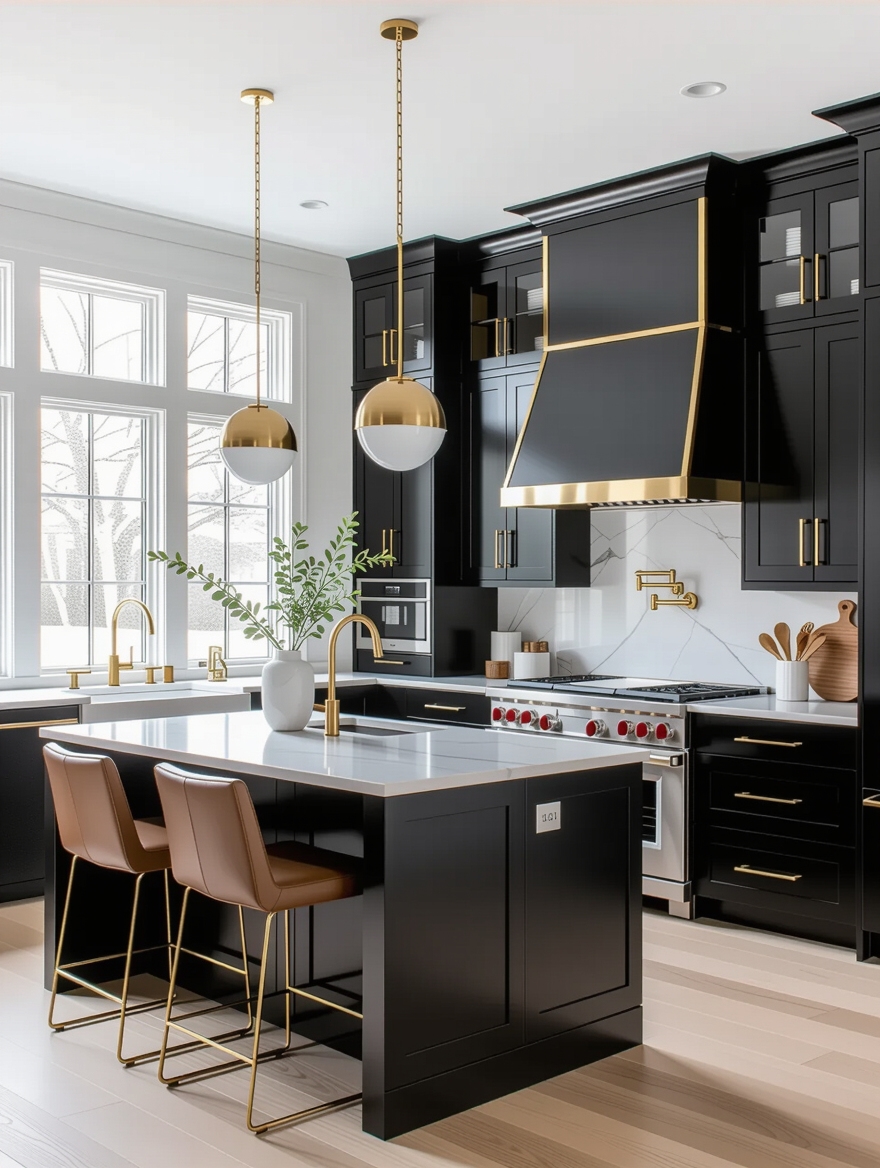

What makes a parallel kitchen feel cramped is almost never the length. It is the corridor down the middle and the two walls of cabinets pressing in from either side. Fix the gap, lighten the walls, and clear the run, and the same two-counter kitchen feels twice as open. The footprint never changes. The feel does.
These ten small parallel kitchen ideas are about that lightness: the right walkway width, pale colors on both runs, storage that climbs instead of crowds, and reflective surfaces that push the walls apart. None of them move a wall. All of them make a tight galley feel airy enough to enjoy.
What Opens Up a Parallel Kitchen
| Move | Why it opens the run | Quick win |
|---|---|---|
| Wider gap | A 42-inch aisle lets two pass | Plan it before cabinets |
| Light color | Pale walls recede on both sides | Paint both runs the same tone |
| Clear walkway | Nothing on the floor or aisle | Wall-mount the bins and stools |
| Reflective surfaces | Bounce light down the corridor | A glossy backsplash on one run |
Widen the Gap Between the Runs

The single number that makes or breaks a parallel kitchen is the gap between the two runs. Too narrow and the kitchen feels like a hallway you cook in. Aim for 42 inches if you can, with 36 the bare minimum, and the corridor feels like a room instead of a squeeze. That width lets two people pass and lets the oven and dishwasher doors open without blocking the aisle.
If you are planning from scratch, set the gap before anything else, since every other choice flows from it. My kitchen ideas for small spaces that work guide covers the groundwork:
- 42 inches of aisle for comfort and two cooks
- 36 inches as the absolute minimum for one cook
- Check that opposing doors and drawers do not clash mid-aisle
- Shallower 21-inch base cabinets on one run to widen a tight gap
Light Colors on Both Runs

In a parallel kitchen, you have two full walls of cabinets staring at each other, so color does double the work. Light, low-contrast colors on both runs make the surfaces recede, so the corridor feels wider than it measures. Dark cabinets on facing walls close the gap to the eye. Pale ones open it right up.
Same Tone, Both Sides
Keep both runs in the same or close tones so the kitchen feels like one calm space across both walls. Match the ceiling and any open wall to the cabinets to lift the whole corridor.
If you want one hit of color, put it on a single short wall at the end, where it draws the eye through the corridor. For more on a light palette, my small kitchen ideas modern homes are loving piece covers it.
Keep the Walkway Clutter-Free

An airy parallel kitchen lives or dies on the walkway, because anything in that corridor closes it in instantly. Keeping the aisle and the counters clear is the fastest way to make the run feel open, since the eye takes an unbroken path as space. Pull everything off the floor and out of the aisle:
- Wall-mount the bin and any stools so the floor stays clear
- Keep small appliances off the counters, in a cabinet or garage
- Skip a runner rug that visually chops the corridor in two
- Leave the aisle completely open, with no cart parked in it
📋Airy Parallel Kitchen Checklist
- ✓A 42-inch aisle, or 36 at the very least
- ✓Both runs in the same light, low-contrast tone
- ✓Nothing on the floor or in the walkway
- ✓Cabinets to the ceiling on both walls
Go Vertical on Both Walls

A parallel kitchen has twice the wall height of most layouts, so vertical storage is your biggest asset. Taking cabinets to the ceiling on both runs and using rails on the backsplash means everything has a home up high, which keeps the counters and the corridor clear below. The room gains storage without losing an inch of that precious aisle.
Reserve the top reaches for what you rarely touch and keep a slim step stool handy. Tall cabinets up to the ceiling also draw the eye upward, which lifts a low corridor.
This is where a parallel kitchen quietly beats other small layouts: two full walls of vertical room. My small kitchen storage ideas to hide clutter guide covers what to put where.
Open Shelving on the Upper Run

Two walls of solid upper cabinets can feel heavy in a corridor, so swapping the uppers on one run for open shelving lightens the whole kitchen. The visible wall and the air around the dishes keep one side from pressing in, while the other stays closed for the bulk. The contrast is what makes it work, and it keeps the corridor from feeling like a tunnel.
Pick the run that holds the prettier dishes for the open side, and keep the everyday chaos behind the closed doors opposite. One light wall facing one solid one is the balance that opens a galley without making it feel bare:
- Open the uppers on one run only, keeping the other closed
- Keep the shelves edited, with matched pieces and real space between
- Let the wall color show behind for a sense of depth
- Store daily dishes here so use keeps them dusted
Slim Appliances to Keep the Aisle Clear

In a parallel kitchen, a fridge that juts into the aisle is a daily nuisance, so slim and counter-depth appliances keep the corridor walkable. A counter-depth fridge lines up flush with the cabinets rather than sticking five inches into the aisle, and an 18-inch dishwasher and a slim cooktop free both counter and walkway. Every inch you reclaim from a bulky machine goes straight back into the corridor.
Footprint Over Features
Spread the appliances across both runs so neither side gets crowded, and keep the fridge at one end where its swing has room. A panel-ready fridge blends into the run and stops breaking up the line. My small kitchen design plans a homeowner needs guide maps the full plan.
Choosing by footprint here pays off every time you squeeze past. The aisle stays clear. The kitchen keeps its airy feel even mid-cook.
Bright Lighting Down the Corridor

A dim corridor always feels narrow, so even, layered lighting is one of the cheapest ways to open a parallel kitchen. Bright lighting down the whole run erases the shadows at the ends that the eye mistakes for walls, so the corridor feels like it stretches the full length. Light both runs and both ends so nothing falls dark:
- Recessed cans down the center of the corridor for even overhead light
- Warm-white under-cabinet LED strips on both runs, around $20 to $40
- A light at each end so the corridor never trails into shadow
- Dimmers so the kitchen softens for the evening
How should you split the appliances across two runs?
🎯Wet on one, hot on the other
Put the sink and dishwasher on one run, the cooktop and fridge on the other. Keeps water and heat tasks separated and the workflow tight.
🎯Spread to avoid crowding
Split the big appliances across both runs so neither side bunches up. Best when one run is shorter or holds a window.
Reflective Surfaces to Open the Walls

Reflection does extra work in a parallel kitchen, because a glossy surface on one run bounces light straight across to the other. Reflective surfaces, a high-gloss backsplash, lacquered cabinet fronts, or a polished counter, scatter daylight down the corridor and make the walls feel farther apart than they are. In a galley with one window, every bounce counts. Light is scarce here.
Use the reflective finish on one run and keep the other calmer so the kitchen does not turn glaring. A glossy backsplash behind the cooktop is usually enough to lift the whole corridor. For the wider toolkit of these tricks, my small kitchen remodel tricks that make a tiny space feel huge guide goes deeper.
Maximize Space by Minimizing Clutter

Nothing shrinks a parallel kitchen to the eye like clutter on two facing counters, so the most powerful airy trick is to minimize what sits out. Clear both runs down to a few daily things and the corridor instantly feels wider, because the eye takes uninterrupted surface as space. With two counters on display, the discipline matters double here.
Clear Counters, Wide Run
Give every item a home in the vertical storage and behind closed doors, so the counters stay bare without effort. Hide the small appliances, pull the utensils onto a rail, and keep only what earns its spot on the surface.
I tell anyone with a galley to treat the counters like the floor: a clear path is the whole goal. My small kitchen organization ideas to declutter guide walks the room corner by corner.
🅰️Glossy finishes
High-gloss fronts and backsplash bounce light across the corridor and feel the most open. They show fingerprints, so they ask for more wiping in a busy kitchen.
🅱️Matte finishes
Matte fronts hide marks and feel calm and current, but they absorb light instead of bouncing it. Best paired with a glossy backsplash so the run still gets some bounce.
Mirrors and Glass to Stretch the Run

The boldest way to open a parallel kitchen is to add a touch of mirror or glass that tricks the eye into seeing more depth. A mirrored backsplash or glass-front cabinets let light and sightlines pass through instead of stopping at a solid wall, so the corridor feels like it opens out at the end.
Used sparingly, the effect is striking, and a little goes a long way. Keep these touches to one stretch so the kitchen does not turn into a hall of mirrors:
- A mirrored or antiqued-glass backsplash on one short stretch
- Glass-front upper cabinets on one run to lighten the wall
- A glass or acrylic shelf that the eye sees straight through
- A mirror on the end wall to double the length of the corridor
Parallel Kitchen Questions, Answered
?How wide should the gap be in a parallel kitchen?
Aim for 42 inches between the two runs, with 36 inches the absolute minimum. That width lets two people pass and lets the oven and dishwasher doors open without blocking the aisle. Anything narrower and the kitchen feels like a hallway you cook in, which is the main thing that makes a galley feel cramped.
?How do you make a parallel kitchen feel less cramped?
Lighten both runs with pale, low-contrast color, keep the walkway and counters completely clear, take storage to the ceiling on both walls, and add a reflective surface to bounce light down the corridor. None of it moves a wall, but together these make the two-counter run feel far more open and airy.
?Where should the fridge go in a parallel kitchen?
Put the fridge at one end of a run, ideally where its door has room to swing without blocking the aisle. Choose a counter-depth or panel-ready model so it lines up flush with the cabinets instead of jutting five inches into the corridor. Keep the sink and cooktop split across the two runs for a tight workflow.
?Is a parallel kitchen good for a small space?
Yes, it is one of the most efficient small layouts. Two facing runs put everything a half-turn away and give you twice the wall for storage. The trick is keeping the gap between them wide enough to feel open, around 42 inches, and lightening both runs so the corridor reads as a room rather than a tunnel.
?What colors make a parallel kitchen look bigger?
Light, low-contrast tones on both runs: soft white, pale greige, or a quiet sage keep the facing walls receding instead of pressing in. Match the ceiling and any open wall to the cabinets, and save bold color for a single end wall, where it draws the eye through the corridor rather than squeezing the sides.
Two Walls, One Open Room
A parallel kitchen feels tight only when you let the corridor and the two facing walls work against you. Widen the gap, lighten both runs, climb the walls for storage, clear the aisle, and bounce the light around, and the same galley feels open and airy without a single wall moved. The corridor becomes a room you want to cook in.
So start with the easiest win this week, probably clearing the counters and the walkway, and watch how much wider the run already feels. Which of these would open your kitchen the most? Try that one first, live with the lift, and add the next when you are ready.
More Ideas Here