
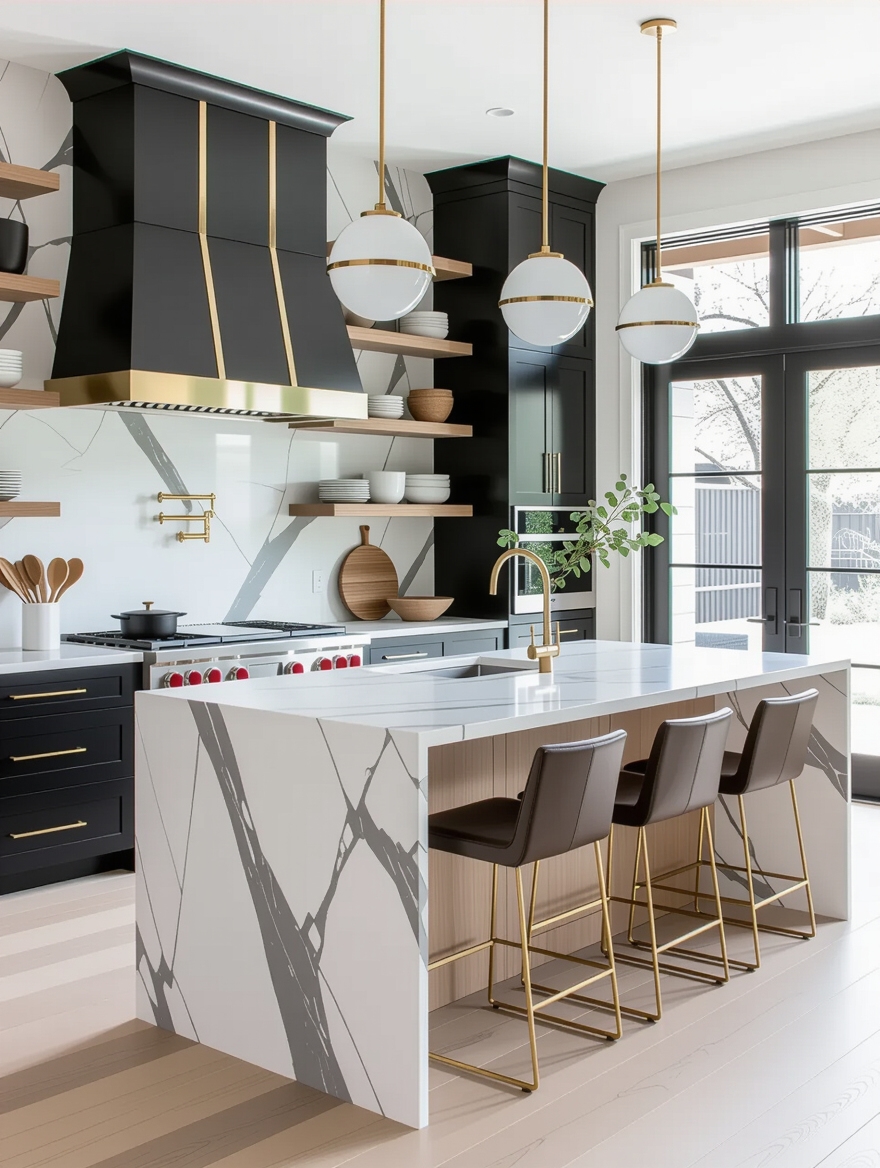
The myth about an upscale open kitchen is that it takes a gut renovation to get there. In reality, the difference between an open kitchen that looks builder-basic and one that looks designed is a handful of interior touches, the flooring, the lighting, the materials, the way the whole space is tied together. None of them require knocking down a wall.
These are the details that lift an open kitchen from functional to polished, and most cost far less than new cabinets. Each touch below does double duty in an open plan, since everything is on view at once, so one good move ripples across the whole floor. Here is where to focus, and the catch to watch for with each.
Quick Answers
What actually makes an open kitchen look high-end? The finishing touches more than the budget: continuous flooring, layered lighting, a mix of wood and metal, and a tight palette that ties the open space together.
Do I need to remodel to lift the look? Usually not. Most of these touches, lighting, styling, hardware, and materials, work without moving a wall or replacing cabinets.
What is the most overlooked touch? Lighting. A layered scheme with dimmers does more to lift an open kitchen after dark than almost any single material upgrade.
An Open Kitchen Layout That Improves Flow

Before any finishing touch, the layout has to flow, because no amount of styling rescues a kitchen you have to fight. In an open plan that means clear paths between the sink, stove, and fridge, and an island placed to guide traffic around the work zone.
Flow first, then the finishing touches
The touch that lifts a good layout is generous clearance. Tight aisles make even a beautiful kitchen feel cramped, so keep main walkways around 42 inches and the room instantly feels more considered. Space itself feels like luxury.
I tell clients to fix the flow first and decorate second. A layout that moves well is the foundation every other touch sits on, and it is the one thing styling cannot fake, the same groundwork behind the smartest open-plan kitchen and living room combos.
Continuous Flooring Enhances Connectivity
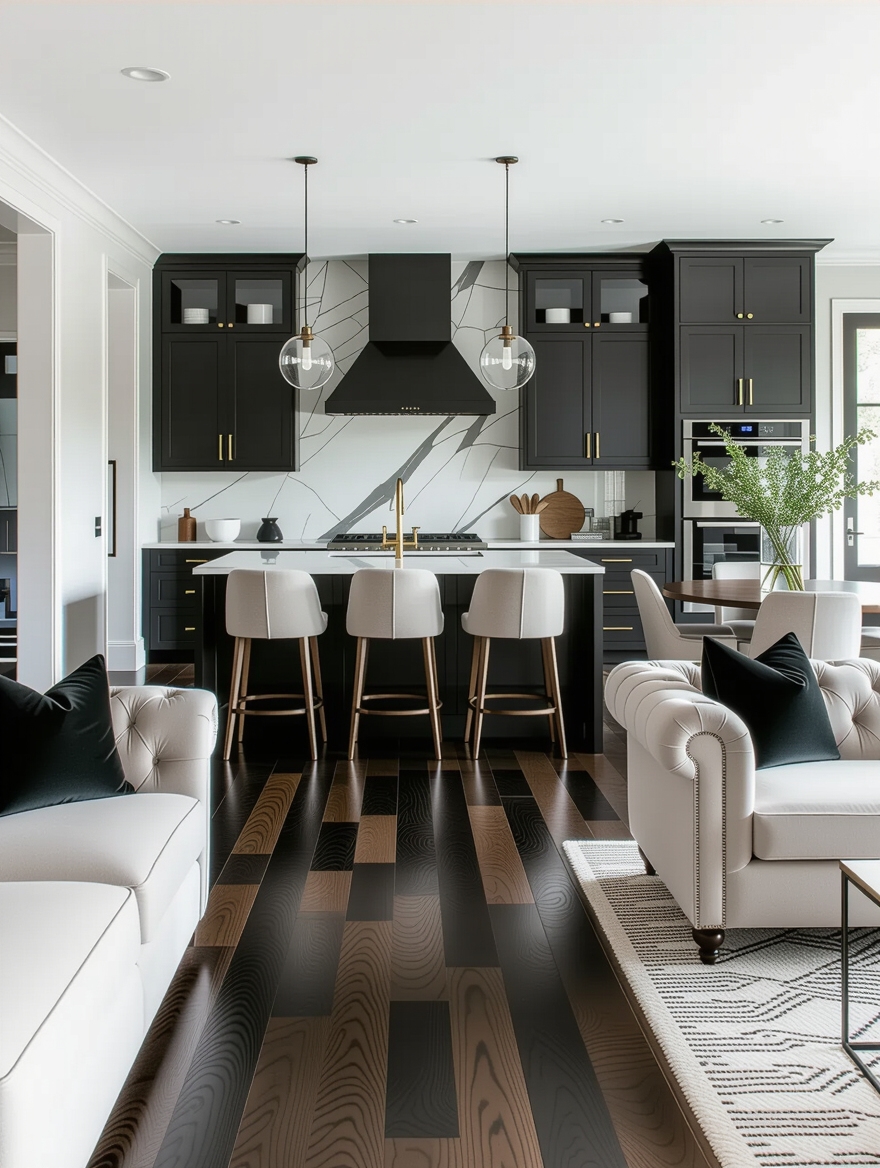
Running one flooring material through the kitchen and the connected living space is the quiet touch that makes the whole floor look intentional. Where a change in flooring chops an open plan into pieces, a single continuous run enlarges it and signals that the space was designed as one.
Luxury vinyl plank and sealed hardwood are the go-to choices because they survive kitchen spills and living-room traffic alike. Lay the planks in one direction across the whole floor, and the room looks like a single, larger space. Budget about $4 to $9 per square foot for quality vinyl, installed, a touch that pays back in how finished the room looks. One floor unifies it all.
Heads-Up
Resist cramming an island into a small open kitchen just because you want one. If it leaves you under 36 inches of clearance on any side, it will choke the flow and undo every other upgrade. A slim peninsula or a rolling cart is often the better touch.
Harmonize Colors With the Flooring

Once the floor flows, the colors should agree with it. The touch that lifts an open kitchen is a palette that nods to the flooring: warm wood floors love cream and sage cabinets, while cool gray floors suit white and charcoal. When the cabinet, wall, and floor tones share an undertone, the whole space looks pulled together.
I recommend picking the floor first when you can, since it is the hardest element to change, then building the palette outward from it, the way a green-and-white kitchen keeps every tone in the same family.
- Match cabinet and wall undertones to the floor’s warmth or coolness.
- Choose the floor first, then build the palette around it.
- Keep the whole open space in one undertone family for a calm look.
A Functional Kitchen Island That Earns Its Keep
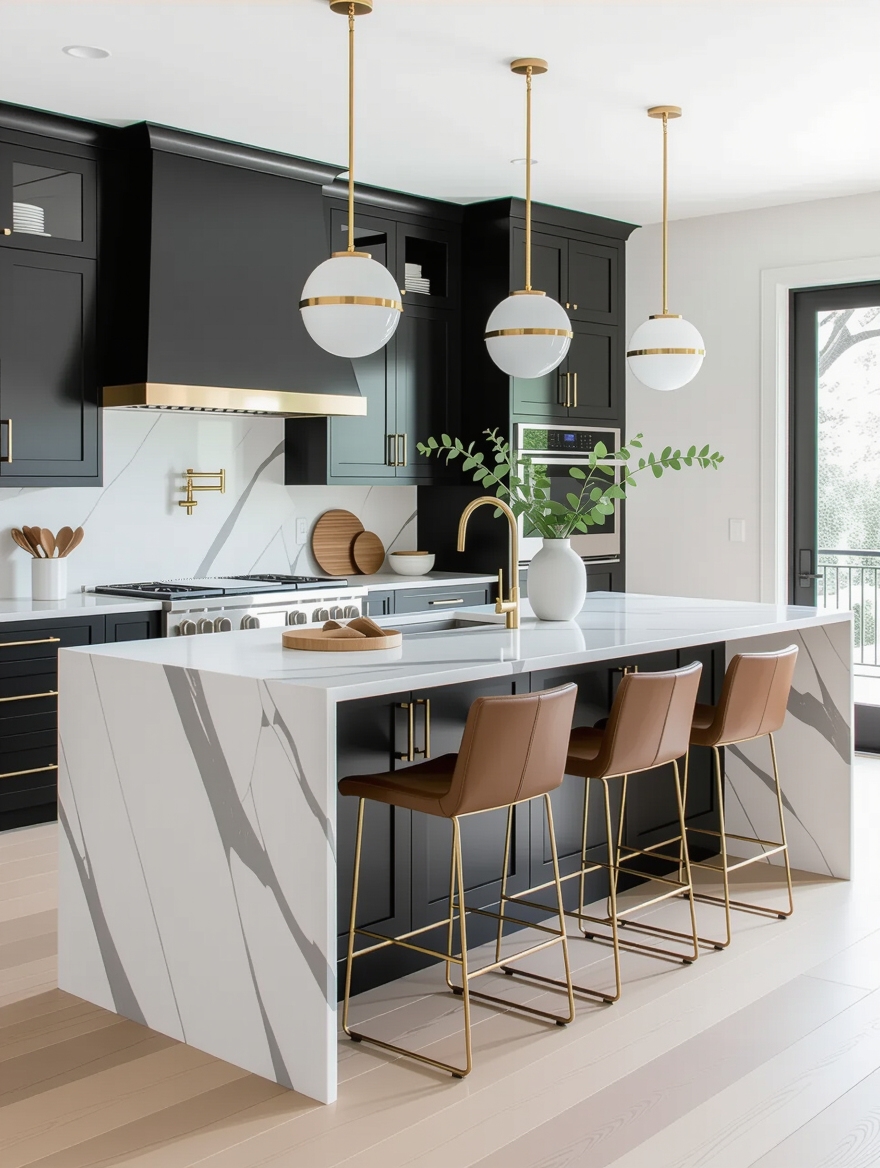
In an open kitchen the island is the touch everyone notices, so it should work as hard as it looks good. Give it storage on every face, an overhang of about 12 inches for stools, and ideally a contrasting top or color that makes it a deliberate centerpiece. A walnut or marble top on an otherwise simple kitchen is a small upgrade that lifts the whole room.
Keep 36 to 42 inches of clearance around it so it never clogs the flow, and seat people on the living-room side so the island doubles as a social anchor, much like the cleverest small kitchen island ideas.
- Give the island a contrasting top or color to make it a centerpiece.
- Build in storage on every side so it earns its footprint.
- Leave 36 to 42 inches of clearance so it never blocks traffic.
Match your palette to the floor you already have.
🎯Warm wood floors
Lean into cream, sage, or warm white cabinets and brass accents.
🎯Cool gray floors
Pair with white, charcoal, or cool blue cabinets and matte black.
🎯Pale or whitewashed floors
Almost anything works; let the cabinets carry the color.
Glass Dividers That Zone Without Blocking Views

Glass dividers are the touch that solves the open plan’s oldest problem: how to break up the space without closing it in. A framed glass partition, a Crittall-style panel, or a half-height glass screen marks where the kitchen ends while light and sightlines pass right through, so the room stays bright and connected.
They are especially useful for containing cooking smells and noise a little without sacrificing the open feel, a real upgrade in a busy household. Black-framed glass looks modern and architectural, while clear frameless panels nearly disappear. Expect a framed glass partition to run $600 to $2,000 depending on size, a meaningful but high-impact touch.
- Use a glass partition to zone the kitchen while keeping the light.
- Choose black-framed glass for a modern, architectural touch.
- Add a half-height screen to tame noise without closing the space.
Balanced Kitchen Lighting for Task and Mood

If one touch lifts an open kitchen more than any other, it is lighting, because it is the difference between a flat, evenly lit box and a layered, inviting room. Balance the three layers: bright task light where you work, a feature fixture over the island or table, and ambient light for the living zone.
The catch most people miss is that a single overhead does none of these jobs well. Add under-cabinet strips for prep, a statement pendant for presence, and put it all on dimmers so the same space flexes from bright cooking to a low evening glow. Consistent warm bulbs, around 2700K to 3000K, keep the whole floor feeling like one room. Lighting carries the space.
Which divider touch fits your open kitchen?
1You want to keep it fully open
Skip the divider; zone with the island, a rug, and lighting instead.
2You want to tame noise and smell
A half or full glass partition contains both without darkening the room.
3You want an architectural edge
A black-framed Crittall-style panel adds structure and a designer look.
Layered Lighting That Sets the Mood

Beyond function, lighting fixtures are the jewelry of an open kitchen, and the right ones lift the whole space. A sculptural pendant over the island, a pair of pretty sconces, or an oversized linear fixture above the table become focal points that signal a designed room.
Treat fixtures like the room’s jewelry
Mixing fixture styles, as long as they share a metal or a mood, adds the layered, collected look that flat builder lighting lacks. Vary the heights and shapes across the zones, but keep one thread, all brass, all black, all warm, so the mix feels intentional.
I love what one real statement fixture does for an otherwise simple kitchen. It is the cheapest way to make a plain open kitchen feel custom, often $200 to $600 for a piece that anchors the whole room.
Style Your Kitchenware on Open Shelves
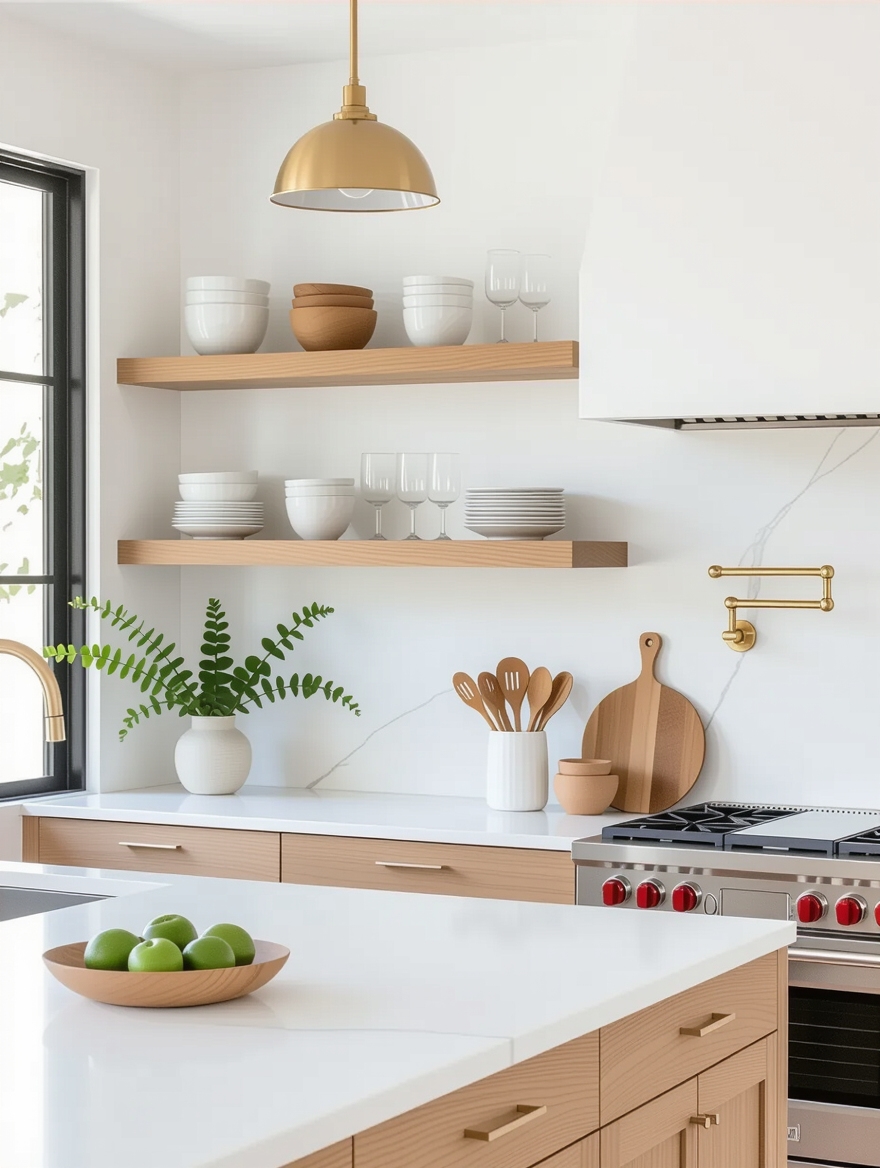
Open shelves are the touch that makes an open kitchen feel personal, as long as you style them with restraint. A short run of shelving holding matching dishes, a few stacked bowls, a plant, and one piece of art adds warmth and a sense of a real, lived-with home.
The trick is editing: show a curated fraction, leave breathing room, and group by color so it lifts the room rather than cluttering it. Keep the styling near eye level and away from the greasy stove zone, and it becomes a small, ever-changing focal point you can refresh in minutes.
- Style a short run of shelves with matching dishes and one plant.
- Leave breathing room so the display lifts the room.
- Keep open shelves away from the stove so they stay clean.
Mix Warm Wood and Sleek Metal

The touch that gives an open kitchen depth is a deliberate mix of materials, especially warm wood against sleek metal. A walnut island or open shelves bring warmth, while brass, black, or stainless hardware adds a crisp, modern edge, and together they keep the space from feeling either cold or rustic.
The trick is balance and repetition. Choose one warm material and one metal, then repeat each in two or three places so the mix looks intentional. A wood shelf, a wood stool base, and a wood board paired with brass pulls and a brass faucet look like a designed scheme. Balance is everything here.
- Pair one warm wood with one metal, then repeat each a few times.
- Use wood for warmth and metal for a crisp, modern edge.
- Echo each material in two or three spots so the mix looks deliberate.
A Cohesive Color Palette Ties It Together

The final touch is the one that makes every other touch work: a cohesive color palette across the whole open space. When the kitchen, dining, and living zones share two or three core colors and a repeated accent, the open floor looks like one designed room, the same connected effect you get when you merge an open kitchen and living room with intent.
Pick a main neutral, a secondary tone, and one accent, then carry them through cabinets, textiles, and decor in each zone. The cabinets and the sofa can differ in style, as long as they share a family. This is the cheapest, highest-impact touch of all, since paint and textiles cost little and instantly pull a scattered open plan together.
- Choose a main neutral, a secondary tone, and one accent color.
- Carry the palette through cabinets, textiles, and decor in every zone.
- Let the zones share a family of tones rather than matching exactly.
Styling Tips to Keep the Look Sharp
A few small styling habits keep an open kitchen looking lifted day to day. Keep the counters mostly clear, since visible surface is what looks polished, and let a single tray, a bowl of fruit, or a vase of greenery be the styled moment instead of a crowd of objects. Repeat your metal and wood touches in the accessories so the whole space feels considered.
Then layer in life. A plant or two softens the hard lines of an open kitchen, fresh flowers or a bowl of citrus add an easy hit of color, and rotating a few seasonal pieces keeps the room feeling current. None of it is expensive, and a five-minute weekly tidy keeps every other touch looking its best.
Open Kitchen Touch Questions, Answered
?How can I make my open kitchen look more high-end without remodeling?
Focus on the finishing touches. Add layered lighting with a statement fixture and dimmers, tighten the color palette across the whole open space, mix warm wood with a metal finish, and style a shelf or two with restraint. These changes cost far less than new cabinets and lift the whole room because everything is on view at once.
?What is the most impactful upgrade in an open kitchen?
Lighting, by a wide margin. A single overhead leaves the room flat, while a layered scheme, task light, a statement fixture, and dimmable ambient light, makes an open kitchen feel designed and inviting. It is also one of the cheaper upgrades, often a few hundred dollars for a fixture that anchors the room.
?Should flooring be the same throughout an open kitchen and living room?
Almost always, yes. One continuous material visually enlarges the space and signals that the open plan was designed as a whole. Luxury vinyl plank and sealed hardwood are popular for handling both kitchen spills and living-room traffic. If you do change materials, keep the transition flush and the tones closely related.
?Do glass dividers defeat the purpose of an open kitchen?
Not if used lightly. A glass partition or half-height screen marks a zone and tames a little noise and cooking smell while letting light and sightlines pass straight through, so the space stays open and bright. Black-framed glass adds an architectural touch, while frameless panels nearly disappear.
?How do I keep open shelves from looking cluttered?
Edit hard and leave breathing room. Show a curated portion of what you own, group by color, and keep the display to a short, well-spaced run. Style with matching dishes, one plant, and a single piece of art, keep it away from the greasy stove zone, and do a quick weekly straighten to keep it looking intentional.
Small Touches, Big Lift
An open kitchen rarely needs a renovation to look its best; it needs the right touches in the right places. Continuous flooring, a cohesive palette, layered lighting, a mix of wood and metal, and a few styled shelves do more for the everyday feel of the room than a far more expensive gut job, and because everything is on view, each touch lifts the whole floor at once.
If your open kitchen feels close but not quite there, bookmark this list and tackle one touch at a time, starting with lighting and palette, the two that change the most for the least. One finished touch usually makes the next one obvious, and the room comes together faster than you would expect.
More Looks We Love


