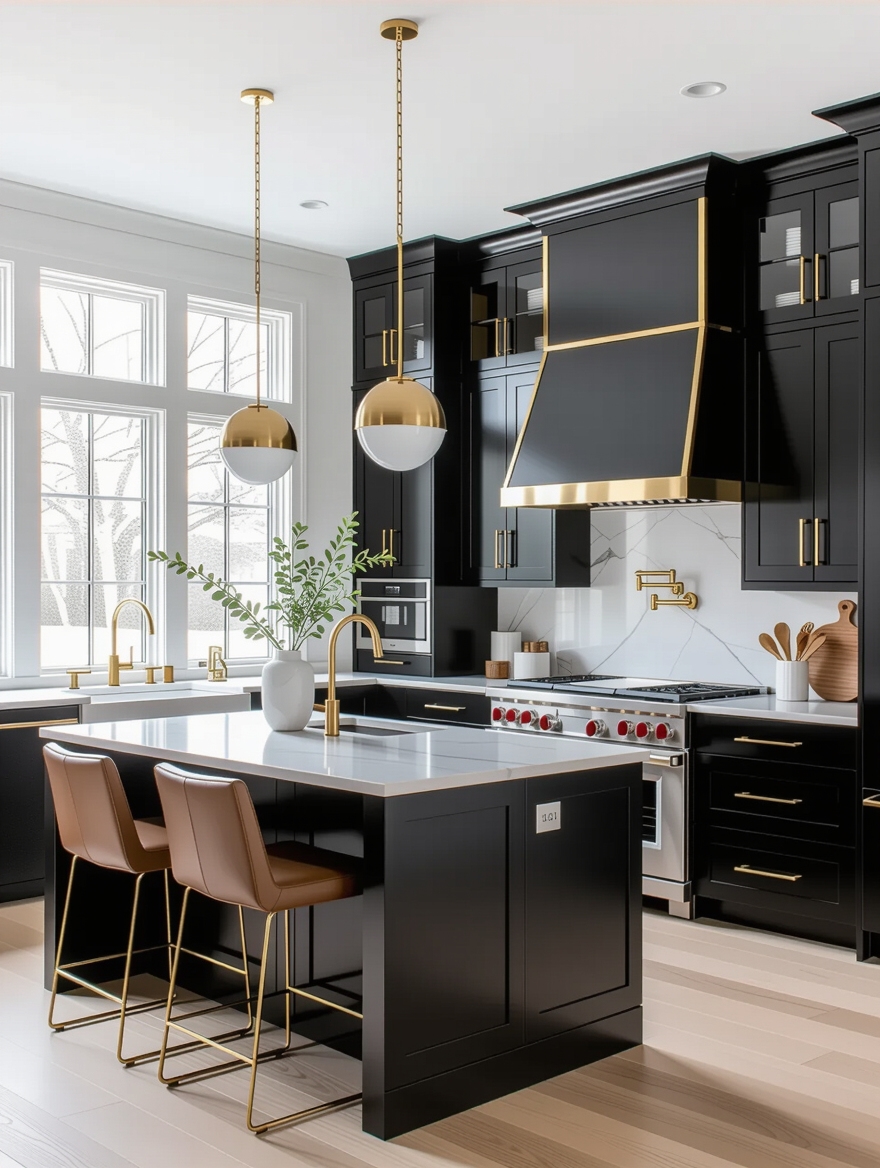
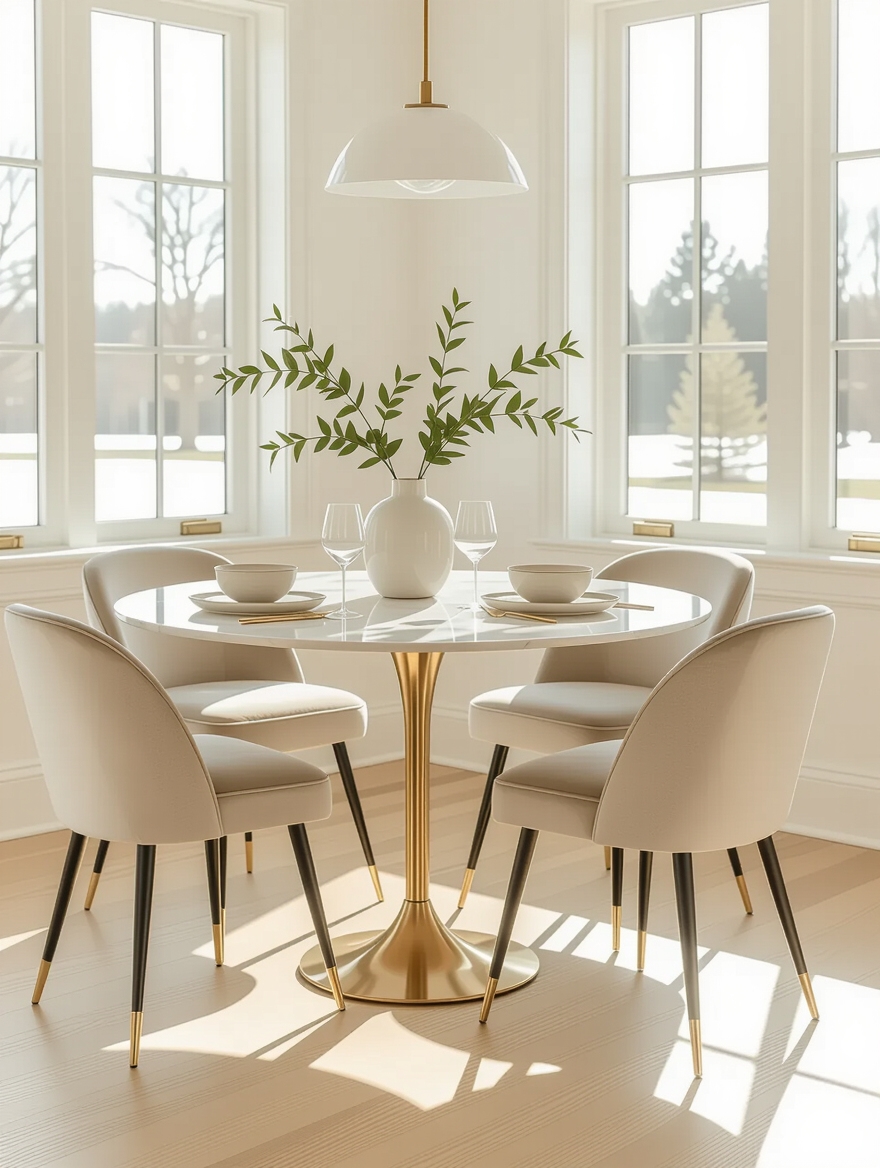
There is a particular kind of happy that comes from a coffee at a little table tucked into the corner of a tight kitchen, even when the whole room is barely bigger than the table itself. A breakfast nook does not need square footage. It needs the right table sized to the spot you have. I have squeezed a real breakfast spot into corners people swore were too small.
These eleven small kitchen table ideas are the ones that actually fit a nook: wall-mounted, drop-leaf, round, and built-in options that seat people without blocking the room. Each comes with the sizes and clearances that make it work, so you can pick the one your corner can actually hold.
Before You Choose a Table
The table that works in a breakfast nook is the one matched to the exact space and the way you sit down. Before you fall for a shape, measure the corner and leave room to move: you want about 36 inches behind a chair to push back and stand, and roughly 24 inches of table width per person. A round table fits more people in a tight corner than a square one, since there are no corners to dodge.
Then decide how often you actually use it. A daily breakfast spot wants real seating and a sturdy top. A once-in-a-while perch can be a drop-leaf or a wall-mounted shelf that folds away the rest of the time. Match the table to your routine and the nook earns its space instead of stealing it.
Measure for Comfort Before You Buy
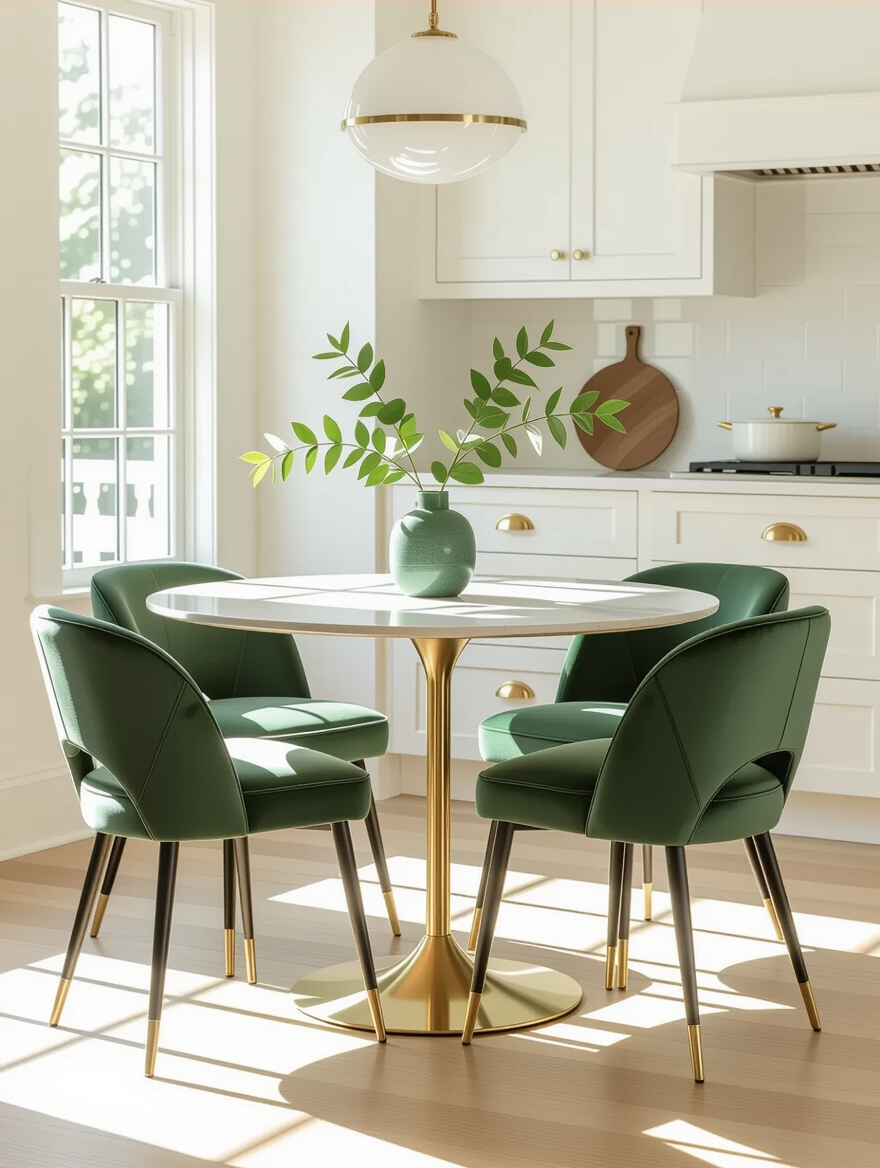
The most common nook mistake is buying for looks and finding out nobody can actually sit down. A few minutes of measuring saves that heartbreak, since comfort in a tight corner comes down to a handful of clearances. Get these right and even a tiny nook feels easy to use:
Sketch the corner with these numbers before you shop:
- About 36 inches behind a chair to push back and stand up
- Roughly 24 inches of table width per person seated
- A table height near 30 inches to pair with standard chairs
- At least 18 inches between the seat and the underside of the table
Flexible, Space-Saving Breakfast Tables
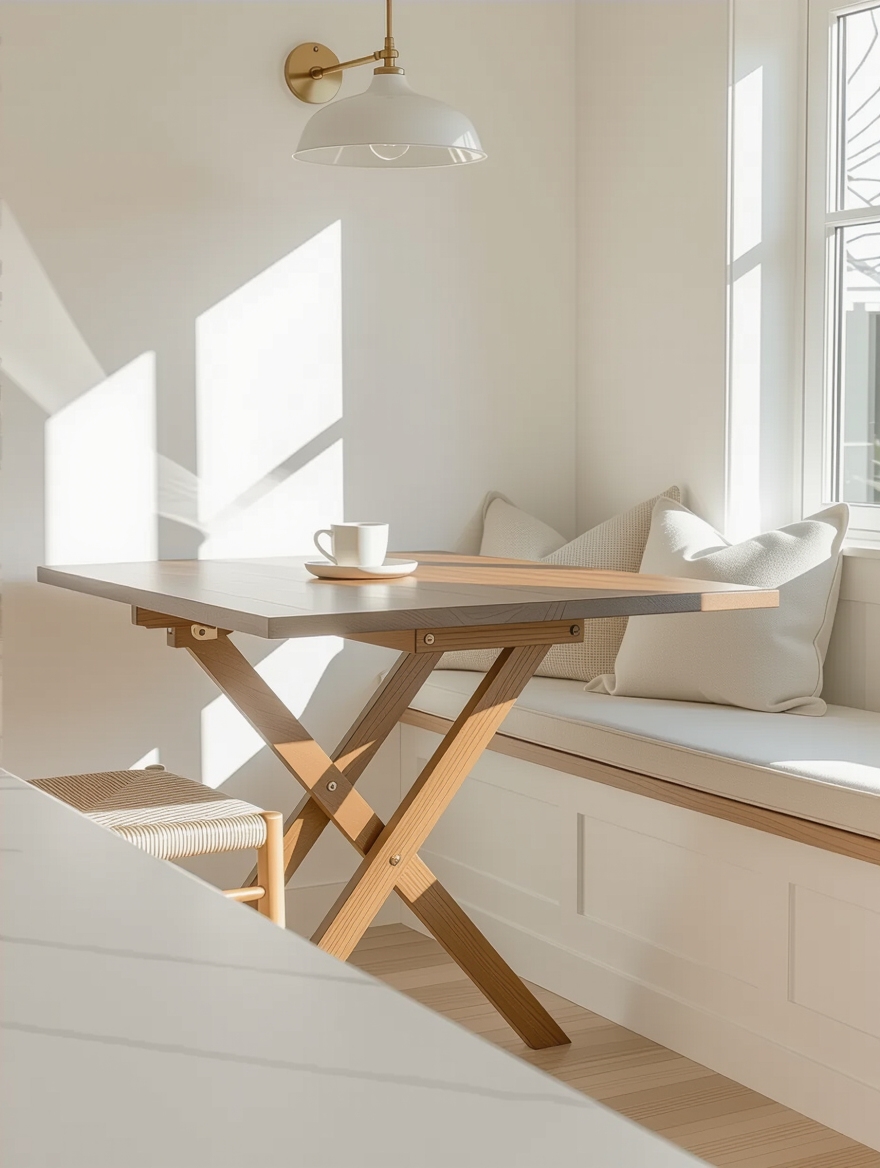
The hardest-working nook table flexes with the day. A drop-leaf or extending table sits slim against the wall for solo coffee and opens up when someone joins you, which is exactly the trick a small kitchen needs. One leaf down it seats one or two; both up it handles four. I keep mine down most mornings.
One Table, Two Sizes
Look for a sturdy gate-leg or a butterfly extension that locks flat, and a top you can wipe down fast. A solid drop-leaf runs $80 to $200 and saves a permanent table’s footprint every day you eat alone.
This is the pick when your nook hosts one person most mornings and a crowd on weekends. For more double-duty furniture, my small kitchen ideas modern homes are loving piece covers the rest.
📋Measure Your Nook First
- ✓36 inches behind a chair to stand up comfortably
- ✓24 inches of table width per person
- ✓18 inches of knee room under the table
- ✓A clear path to the seats that no one has to climb over
A Wall-Mounted Table That Folds Away

When even a slim table is too much most of the time, a wall-mounted fold-down table is the answer that gives the floor back. Hinged to the wall, it lifts up for a meal and drops to a few inches of shelf when you are done, so the nook only exists when you need it. It is the most space-thrifty seat in the kitchen. Folded, it almost disappears.
Mount it into studs at about 30 inches high, and pair it with two folding or stackable chairs that tuck away too. A wall-mounted leaf runs $40 to $120 and installs in an afternoon, the kind of cheap win my small kitchen ideas on a budget under 500 dollars guide is full of.
This works best for one or two people in the very tightest kitchens, where a standing table would block the only path.
Cozy Built-In Bench Seating

A built-in bench, or banquette, is the secret to seating more people in a small footprint, because a bench tucks right to the wall where chairs cannot. Running seating along one or two walls of the corner lets three or four people squeeze in where a chaired table would fit two. It is the cozy heart of most breakfast nooks. A bench just fits more.
Add a hinged seat and the bench hides storage, linens, rarely used pots, or seasonal serveware, inside. Soften it with a cushion and a couple of pillows so the hard corner becomes somewhere you linger. For more cozy dining ideas, my small kitchen and dining room ideas for cozy gatherings guide goes further.
A Round Table for a Tight Corner
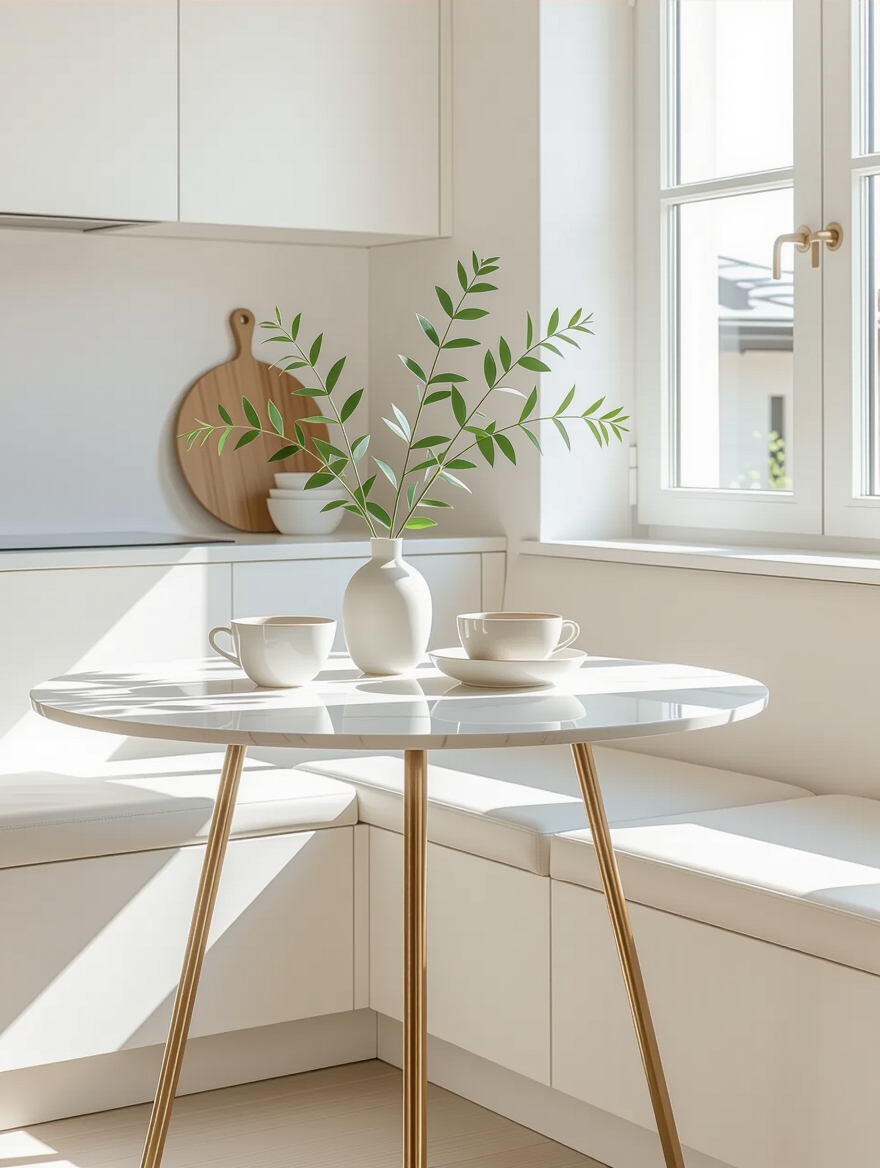
In a tight nook, a round table almost always beats a square one. With no sharp corners to bump or dodge, a round top fits more comfortably against a bench, lets people slide in and out easily, and seats an extra person around its curve. A 36-inch round seats four where a square of the same size feels cramped. Curves win in corners.
A pedestal base helps even more, since there are no legs to straddle when you scoot a chair in. Choose a top around 30 to 36 inches across for a small nook, and you get a sociable little table that never blocks the room.
Bench or chairs in a small nook?
🎯Built-in bench
Seats more in less space and tucks to the wall. Can hide storage inside, though it does not move once installed.
🎯Chairs
Flexible and easy to move or borrow for other rooms. They take more floor, since each one needs room to push back.
Slim Tables That Hug the Wall
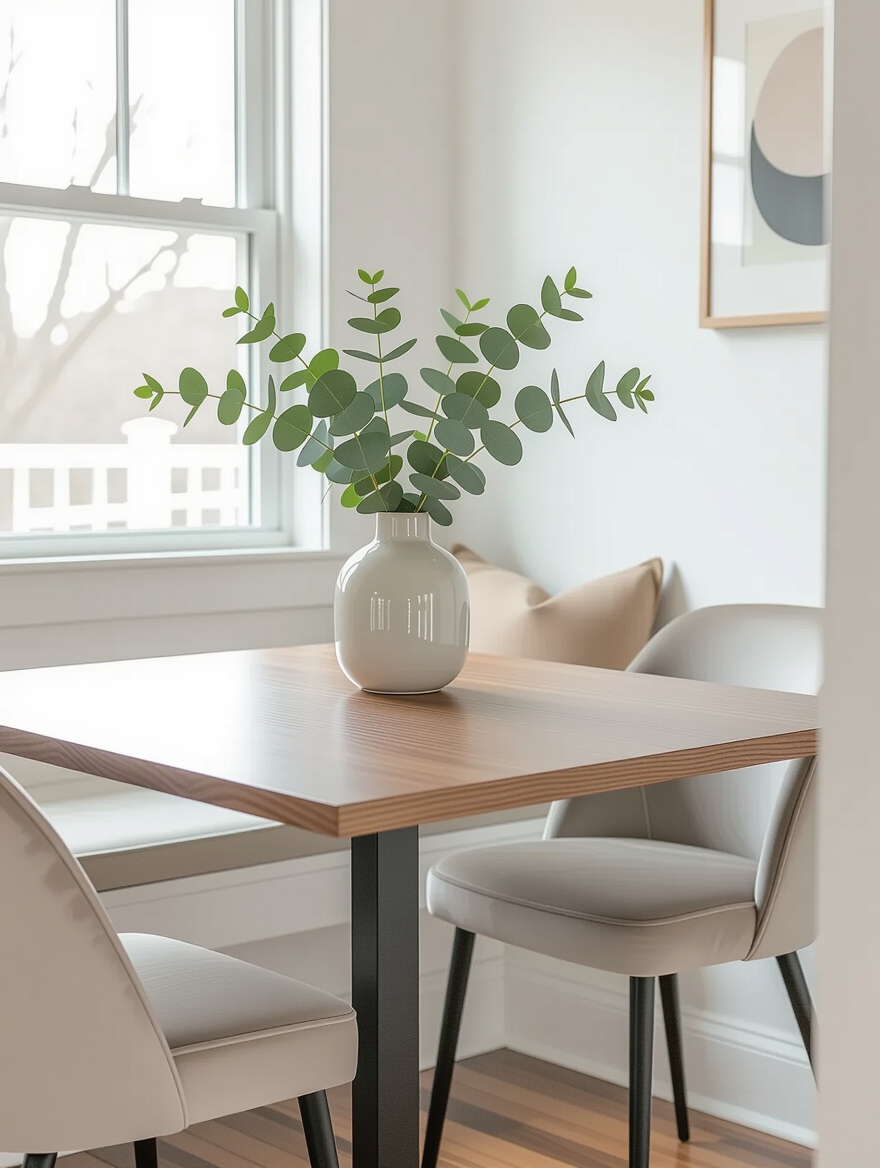
When the nook is really a strip along one wall, a slim console-style table gives you a spot to eat without eating the walkway. A narrow top, 16 to 20 inches deep, runs along the wall like a bar and seats people on one side facing out. No corner needed. It is the move for a galley or a pass-through with nowhere else to put a table:
- A 16 to 20-inch-deep top so the aisle behind stays clear
- Stools that tuck fully under when no one is eating
- A wall-anchored version to skip the floor legs entirely
- A length that fits the wall, leaving room to pass at each end
Tables That Add Storage Too
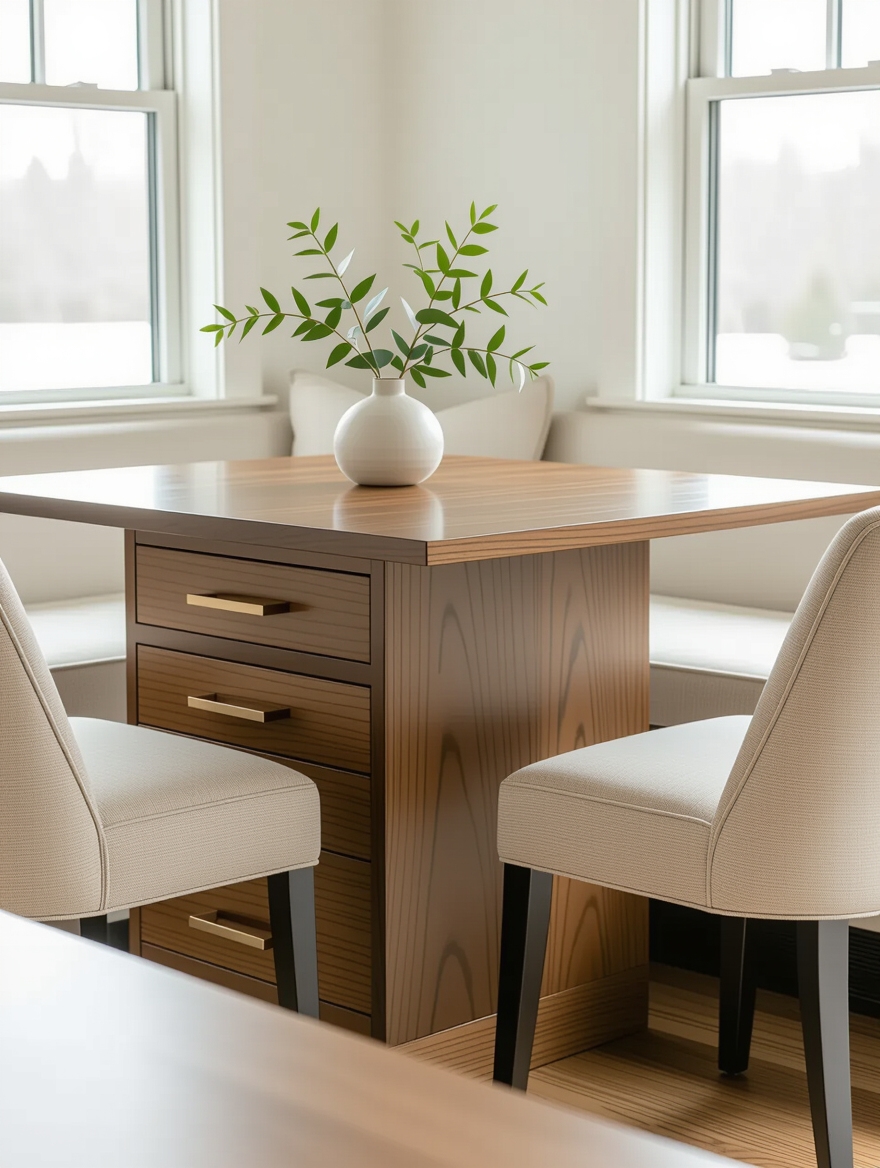
In a small kitchen, the best nook table earns its footprint twice by holding more than plates. A table or bench with built-in storage, a shelf below, a drawer, or a lift-up seat, turns the dining spot into extra pantry or linen space the room badly needs. Every piece in a tight kitchen should pull double duty. A table is no exception.
Look for a table with a lower shelf for baskets, a small drawer for napkins and chargers, or a banquette base that opens for bulk storage. The meals happen on top while the clutter hides below. For more hidden-storage tricks, my small kitchen storage ideas to hide clutter guide covers the rest.
A Cozy, Rustic Nook

Sometimes the table itself sets the mood, and a rustic wood table gives a small nook instant warmth and character. A reclaimed or farmhouse-style top, paired with a bench and a few soft textiles, turns a plain corner into the kind of spot you want to sit in with a second cup. Character does not need square footage.
The wood does most of the work, and a few warm details finish it. Lean into texture over color so the small corner stays calm while still feeling collected:
- A solid or reclaimed wood top that takes daily wear with grace
- A simple bench softened with a long cushion and pillows
- A small pendant or sconce to light the table and set it apart
- A runner or a couple of woven placemats to warm the surface
Heads-Up
A corner bench seats more, but think about access before you build. The person in the inside corner has to slide all the way in, which is fine for kids but awkward for guests who arrive last. If adults use the nook daily, keep one open end so no one is trapped against the wall.
Stylish Compact Table Picks
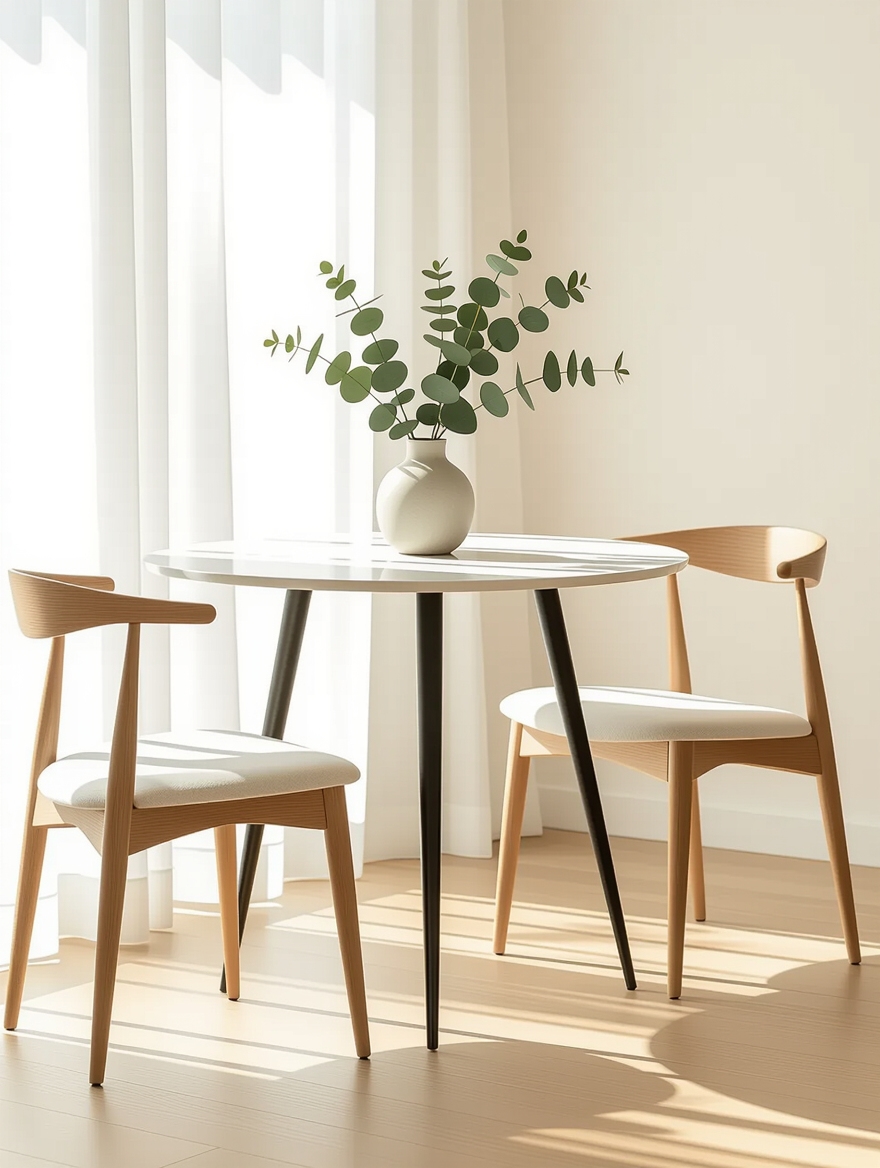
A nook table can be small and still look intentional rather than like an afterthought. The compact tables that work hardest pair a tiny footprint with a clean, current look, so the corner feels designed even at two feet across.
Scale the visual weight to the room and a little table holds its own. A light, leggy base reads airier than a chunky one in a tight space, so the table never dominates the corner:
- A bistro table, 24 to 28 inches across, for a true two-seater
- A slim metal-and-wood base that reads light, not bulky
- A drop-leaf in a painted finish to match the cabinets
- A nesting pair you split for two seats or push together as one
Versatile Tables That Pull Double Duty

The most valuable nook table in a small home does more than hold breakfast. A versatile table becomes a prep surface, a desk, and a homework spot as the day moves, which justifies its footprint many times over. In a tight kitchen, a piece that only does one thing is a luxury you cannot afford. Make it earn its keep:
- A wipeable top sturdy enough to double as prep space
- A height that works for both eating and laptop work
- Casters on one version so it rolls in as an island when needed
- A folding model you stow flat between its many jobs
Styling Tips to Finish the Nook
Once the table fits, a few small touches turn a functional corner into a spot people actually choose to sit in. A pendant light hung low over the table instantly defines the nook as its own little room, and a cushion or two on the bench makes the seating somewhere you linger past breakfast. Keep the styling light so it never crowds the table you fought to fit.
Add one personal note, a small plant, a bowl of fruit, a piece of art on the wall above, and stop there. In a tight nook, restraint is what keeps it feeling cozy instead of cluttered. For more low-cost charm, my small kitchen decorating ideas for instant charm guide has plenty of ideas.
Small Kitchen Nook Questions, Answered
?What size table fits a small breakfast nook?
Aim for a top around 30 to 36 inches across for two to four people, and leave about 36 inches behind each chair to stand. A round 36-inch table seats four in a tight corner better than a square one. For the smallest spaces, a drop-leaf or a wall-mounted fold-down keeps the footprint to almost nothing.
?Is a round or square table better for a small kitchen?
A round table usually wins in a small kitchen. With no sharp corners, people slide in and out more easily, it fits snugly against a bench, and you can squeeze an extra seat around the curve. Square and rectangular tables suit a long wall or a galley, but a corner nook almost always works better round.
?How do I add seating to a tiny kitchen with no room for a table?
Go vertical against the wall. A wall-mounted fold-down table with two stackable stools gives you a real seat that disappears when you are done, and a narrow console-style bar along one wall seats people facing out without blocking the walkway. Both add dining to a kitchen that has no floor to spare.
?What makes a breakfast nook feel cozy?
Enclosure and warmth. A bench against the wall, a pendant hung low over the table, a cushion or two, and a personal touch like a plant or some art turn a plain corner into a spot you want to sit in. Keeping the styling light is what keeps a small nook cozy rather than crowded.
A Seat Worth Squeezing In
A breakfast nook is one of the few ways a small kitchen gives you something a big one cannot: a cozy, tucked-away spot that feels intentional precisely because it is small. The trick is matching the table to the corner, a drop-leaf where space is tight, a round top against a bench, a fold-down where nothing else fits.
So measure your corner, picture how you actually use it, and pick the table built for that. Which spot in your kitchen is quietly waiting to become the place everyone gathers over coffee? Find it, fit the right little table, and a tight kitchen gains the warmest seat in the house.
More to Explore