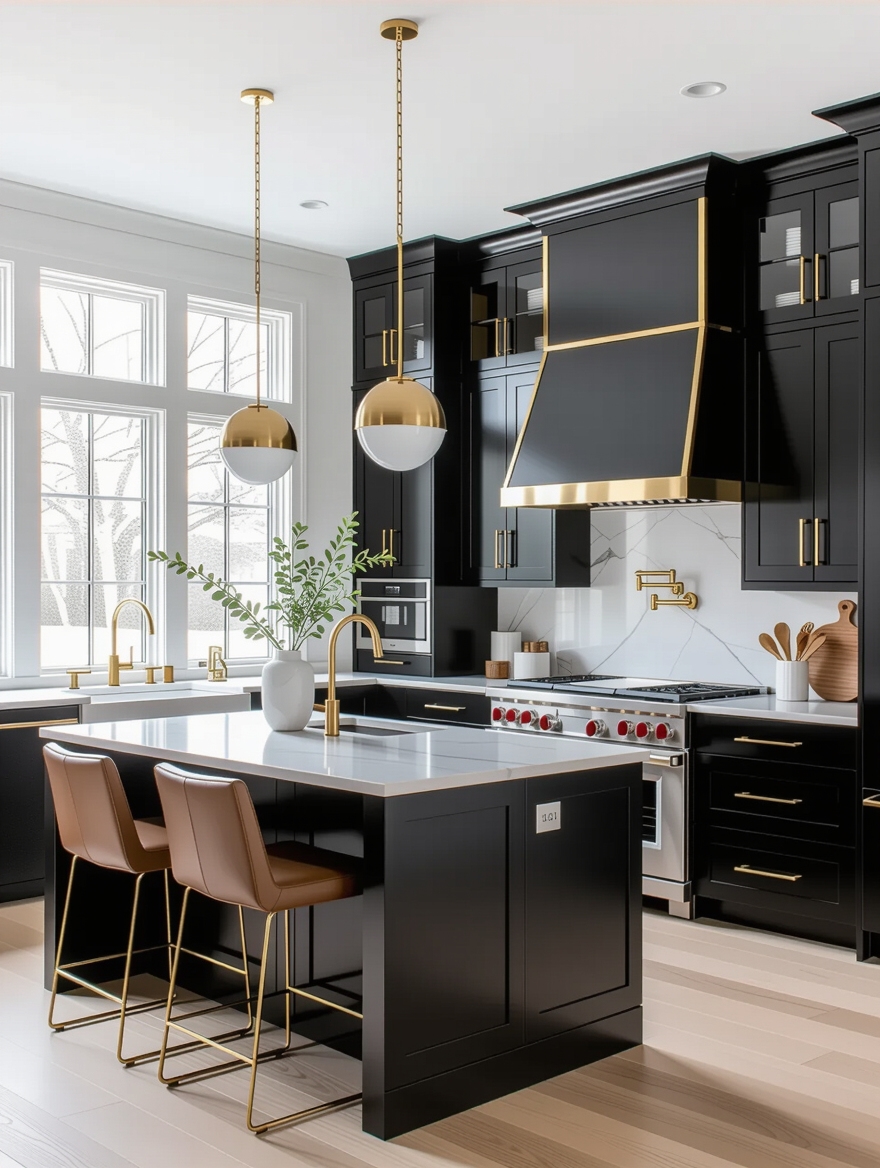

People assume a small kitchen means a worse kitchen, and that is simply wrong. I cooked in a galley barely six feet across for years and never once wished it bigger, because every inch was working. A tiny kitchen that is dialed in beats a sprawling one that wastes its space, and the fixes that get you there are the kind you end up bragging about.
These are the ideas worth obsessing over, the clever ones that make visitors ask where you got that. Each comes with the practical detail that decides whether it works in real life, from the inches to the cost, so you can copy the ones that fit your kitchen and skip the gimmicks.
The Ideas Worth Obsessing Over
- Climb the walls: hooks, rails, and ceiling-height shelving turn empty vertical space into the storage a small kitchen is missing.
- Right-size the gear: slim appliances and stackable, nesting cookware give back counter and cabinet you did not know you had.
- Make furniture fold: a drop-leaf table or rolling cart adds prep and seating that vanishes when you are done.
- Edit relentlessly: the single best small-kitchen upgrade is owning less and giving everything a hidden home.
The Real Challenge of a Small Kitchen

Before the clever ideas, name the real problem, because a small kitchen is not failing for lack of square feet. It is usually short on three specific things: counter to work on, reachable storage, and light. Solve those three and the size stops mattering.
Counter, Storage, and Light
Most small kitchens lose their counter to appliances and clutter, bury their storage at the backs of deep cabinets, and sit under one dim ceiling bulb. Every idea on this list targets one of those three, which is why they actually move the needle instead of just looking cute in a photo.
So as you read, ask which of the three a given fix solves for you. That focus is the difference between a kitchen that merely looks tidy and one that really works at dinner rush.
Maximize Vertical Space With Shelves and Hooks

The wall above your counter is the storage a small kitchen forgets it owns. Hanging your daily tools and stacking shelves toward the ceiling frees the cabinets and counters for the things that have nowhere else to go. This is the upgrade I am asked about most, because it costs little and instantly buys breathing room you can feel.
- A rail with S-hooks over the backsplash for utensils, mugs, and a colander
- A magnetic knife strip to clear the block off the counter and the drawer
- Shelving carried to the ceiling, with the top reserved for what you rarely touch
- A pegboard wall you can rearrange as your gear changes
Heads-Up
Going vertical only helps if you can reach it. Reserve the very top shelves and high hooks for lightweight, rarely-used items, and keep a sturdy step stool tucked into a gap. Heavy pots stored overhead are a daily hazard, not a clever solution.
Open Shelves for Style and Easy Access

Open shelves earn their place in a small kitchen because they skip the bulk of a wall cabinet and keep the room from feeling boxed in. A single floating shelf holds the plates and mugs you use daily while the wall above stays light and open, which makes the whole kitchen breathe a little easier.
The catch is that a cluttered shelf in a tiny room shouts twice as loud as it would in a big one. So treat the shelf as a working display: keep only your everyday pieces on it, and let the daily reach-and-return be the thing that keeps it tidy. No styling session required, just honest daily use.
If your dishes are mismatched, a shelf may not be your friend, and a glass-front cabinet hides the jumble while keeping the open feel. Match the idea to what you actually own, and the same editing instinct behind a clutter-free counter keeps it looking right.
Create Zones for Cooking, Prep, and Storage

A small kitchen runs smoothest when every task has a clear home, even if that home is only a foot of counter. Defining a cooking zone, a prep zone, and a storage zone keeps you from criss-crossing the room and turns a cramped space into an efficient one. The zones can overlap; they just need to be intentional.
Store things where you use them and the kitchen starts to run itself. Pots and oils by the stove, knives and boards by the prep counter, dishes by the dishwasher: that simple logic saves steps you do not have room to waste. In a tight footprint, an organized flow beats extra square feet.
- Keep oils, salt, and tools by the stove, within a single reach while cooking
- Put knives, boards, and a bin at your main prep stretch of counter
- Store everyday dishes by the dishwasher so unloading is one short loop
🅰️Defined zones
Best when two people cook or you batch tasks; assigns every job a home so you stop criss-crossing the room.
🅱️One flexible counter
Best in the tiniest kitchens, where a single multi-use stretch beats dividing a few feet into rigid zones.
Multi-Functional, Space-Saving Furniture

In a small kitchen, furniture that does only one thing is a luxury you cannot afford. The pieces worth obsessing over fold, roll, or hide a second job inside, giving you prep space or a seat exactly when you need it and disappearing the rest of the time. A wall-mounted drop-leaf table is the classic for a reason.
A rolling cart is the unsung hero here, parking under a counter and rolling out as an island, a bar, or extra prep when guests arrive. Look for hidden storage in everything, from a bench seat that lifts to an ottoman that stashes table linens, so every piece earns its footprint twice over.
- A wall-mounted drop-leaf table for prep or two seats, folded flat after
- A rolling cart that tucks away and rolls out as island or bar
- Seating with storage inside, so the floor space works double duty
Slim Appliances Made for Small Kitchens

Standard appliances are sized for kitchens you do not have, and swapping them for slim versions is the quiet win that gives back real counter and cabinet. An 18-inch dishwasher instead of 24 hands you half a cabinet, and a 24-inch range or a cooktop-plus-wall-oven splits the difference between capacity and footprint.
The market has caught up, so you no longer sacrifice much to go small. Counter-depth and column refrigerators keep the box from jutting into the walkway, and combination units like a washer-dryer or a microwave-convection oven do two jobs in one slot. For a serious cook in a tiny kitchen, right-sizing is the move.
Before you buy, measure twice and check the door swings, since an appliance that blocks a drawer or a walkway undoes its own benefit. The goal is gear scaled to the room, not crammed into it.
💡Measure the door swings
Before you buy any slim appliance, check how its door opens. An 18-inch dishwasher or a compact oven that blocks a drawer or the walkway when open costs you the space it was supposed to save. Tape the swing on the floor before you commit.
Light Colors to Make a Kitchen Feel Larger

Paint is the cheapest square footage you can buy, and in a tiny kitchen the color you choose changes how big the room feels. Pale, soft tones bounce daylight and soften the lines where walls meet cabinets, so the eye reads the space as larger than the tape measure says. A small kitchen in one continuous light tone always feels roomier than the same room broken into contrasting blocks.
Lean tonal, keeping cabinets, walls, and trim within a shade or two, so nothing chops the room into pieces. If you crave color, save it for one small, swappable accent rather than a bold cabinet run that closes the space in. A wrong paint choice costs a weekend to redo, which makes it the lowest-risk experiment in the kitchen.
Reflective Surfaces to Brighten and Expand
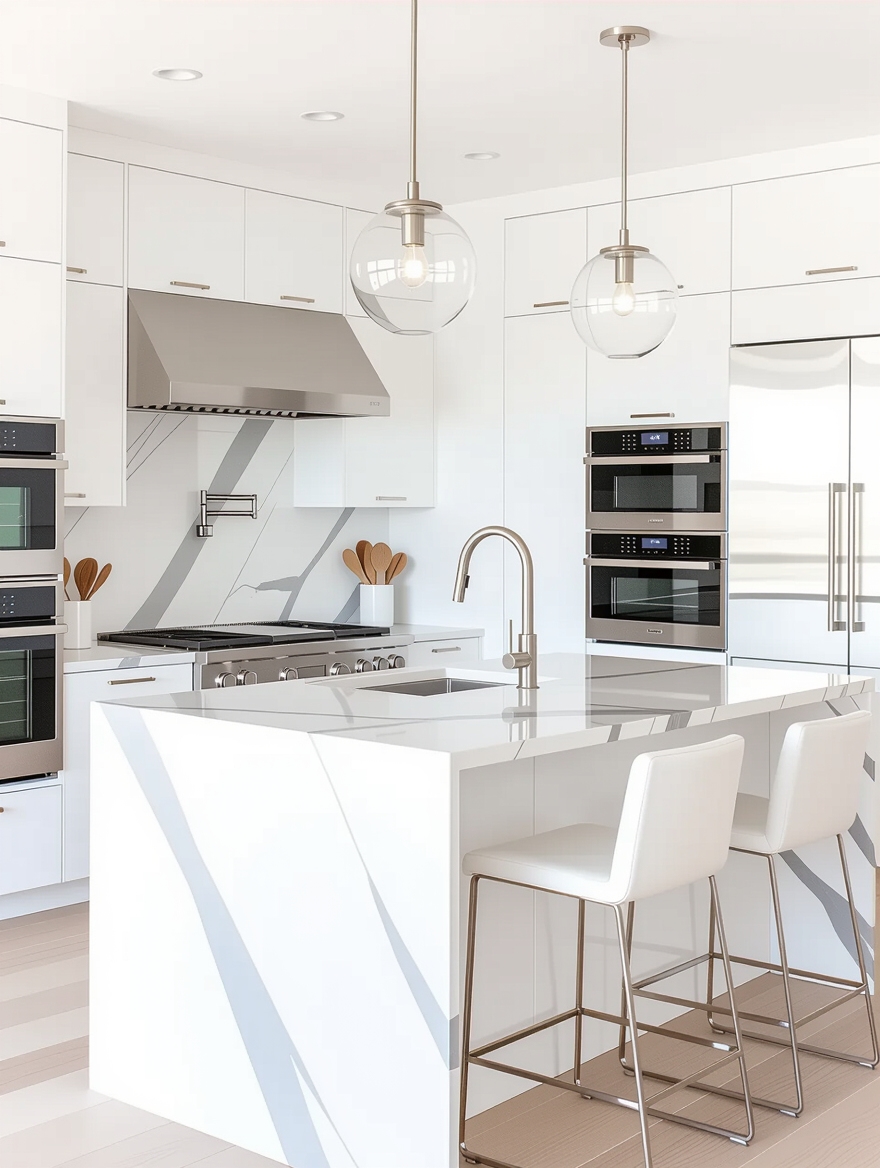
Borrow a trick from cramped restaurants and let reflection do the heavy lifting. A shiny surface doubles whatever light and view you already have, which is exactly what a small, dim kitchen is missing. A few well-placed reflective touches make the room feel both brighter and bigger without any construction.
- A glossy or glass-tile backsplash to bounce light across the counter
- High-gloss cabinet fronts in a dark kitchen for an extra hit of brightness
- A mirror or mirrored splash to visually stretch a tight wall
- Keep most surfaces matte around it, so one reflective element does the work
Pull-Out Cabinets for Hidden Storage

The most-wasted space in any kitchen is the dark back half of a deep cabinet, and a small kitchen cannot afford to lose it. Pull-out shelves and slim pull-out pantries fix that by bringing the whole cabinet forward, so nothing disappears behind anything. Suddenly a frustrating cabinet becomes the most efficient one you own.
Bring the Back of the Cabinet Forward
These are also some of the few upgrades a renter can do and undo, since wire pull-out baskets and tension organizers need no permanent install. For owners, retrofitting a pull-out shelf is a modest job that pays off every single day, and a nine-inch pull-out pantry slots into a gap you wrote off.
Add drawer dividers and clear bins inside, and the hidden storage stays organized instead of becoming a deeper junk drawer. Visible and reachable is the whole point, the same thinking behind the best small-kitchen design solutions.
Fold-Down and Space-Saving Dining

You can eat in a tiny kitchen without surrendering your one stretch of counter, as long as the dining setup folds, tucks, or doubles up. A wall-mounted drop-leaf table becomes a two-seat dinner spot and then disappears, while a slim breakfast bar off the end of a counter seats people without a separate table at all.
The trick is borrowing space rather than dedicating it. A pull-out counter extension, a couple of stools that slide fully under an overhang, or a narrow bar against the wall all give you a place to eat that is not there when you do not need it. That flexibility is what makes dining work in a footprint that has none to spare.
- A drop-leaf or wall-mounted table that folds flat between meals
- Stools that tuck fully under a counter overhang or bar, out of the walkway
- A pull-out counter extension for a temporary table that hides away
Common Mistakes to Avoid
The fastest way to ruin a small kitchen is to keep too much stuff, so the real first fix is editing, not buying. Most cramped kitchens are not short on space; they are overloaded with single-use gadgets, duplicate tools, and dishes for parties that happen twice a year. Pare down to what you use, switch to stackable and nesting cookware, and corral the rest in clear, labeled containers so you can actually find it.
A few more traps to dodge: cramming in an island or bulky table that strangles the walkway, going dark or high-contrast so the room feels even smaller, and leaving every appliance out on the counter you need for prep. Keep the bold choices reversible, lean light and reflective, and give everything a hidden home. Do that, and a small kitchen stops feeling like a compromise, the kind of clever, livable space that obsession-worthy design ideas are built on.
Small Kitchen Questions
?What is the single best upgrade for a small kitchen?
Editing what you own, then going vertical with the rest. Most small kitchens are overloaded, not undersized. Pare down to what you use, then add hooks, rails, and ceiling-height shelving to free your counters and cabinets. It costs little and changes everything.
?How do I add a dining spot to a tiny kitchen?
Borrow the space instead of dedicating it. A wall-mounted drop-leaf table, a slim breakfast bar off a counter, or stools that tuck fully under an overhang give you a place to eat that disappears when you do not need it, so you never lose your prep counter.
?Are slim appliances worth it?
Yes, if you measure first. An 18-inch dishwasher or a counter-depth fridge hands back real cabinet and walkway space, and combination units do two jobs in one slot. Just check the door swings so the appliance does not block a drawer or path when open.
?How do I keep a small kitchen from feeling cramped?
Lean light and reflective, and keep the counters clear. Pale tonal colors and a glossy or mirrored surface make the room feel larger, while clear counters and hidden storage keep it calm. Avoid dark, high-contrast schemes that chop a tiny room into pieces.
?Can I do these upgrades as a renter?
Many of them, yes. Tension-mounted pull-out baskets, peel-and-stick hooks and LED strips, a rolling cart, and an over-the-sink board all add storage and counter without drilling, and they come with you when you move. Save the permanent fixes for a kitchen you own.
Tiny, and All the Better for It
A small kitchen does not need an apology, just a plan. Climb the walls for storage, right-size the appliances and the cookware, make the furniture fold, bounce the light, and edit until everything you own has a home. Stack a few of these together and your tiny kitchen will out-cook a careless big one any day.
So which of the three, counter, storage, or light, is your kitchen shortest on? Start there with one idea this weekend, and you will quickly see why a well-planned small kitchen is the kind people end up obsessing over.
More to Explore