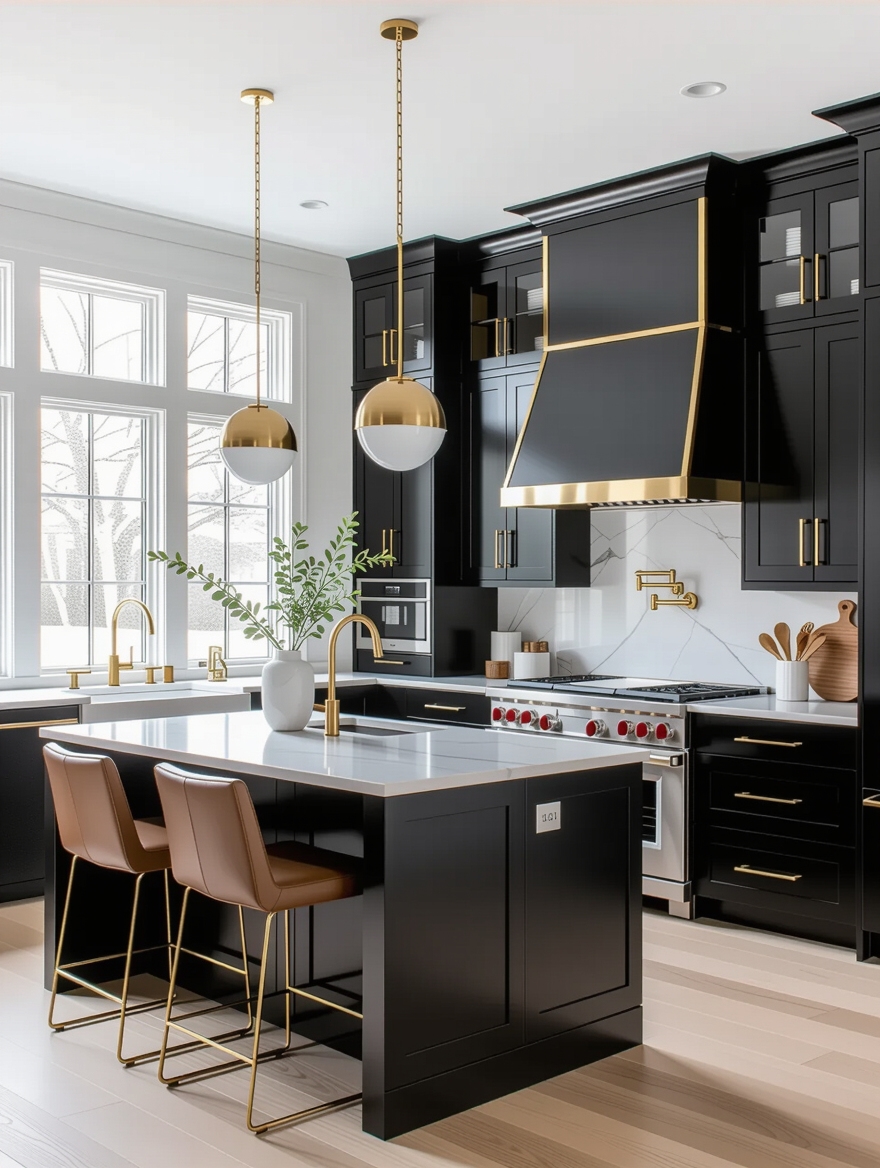

Half the small-kitchen storage hacks online look clever and fail in real life, the over-stuffed lazy Susan that jams, the suction rack that crashes down at midnight. The ones that actually work share a simple logic: they use the empty vertical and hidden space a small kitchen wastes, and they hold up to daily use. Those are the only ones worth your money.
Below are the small-space storage moves I have seen survive real kitchens, sorted from free, instant fixes to small buys that earn their keep. I have priced each and flagged where it fails, so you skip the Pinterest fantasies and spend on what holds. Most need no renovation and no permission from a landlord.
Small-Space Storage, Ranked
| Move | Rough cost | Best for |
|---|---|---|
| Cup hooks under shelves | $4 to $8 a pack | Mugs and utensils off the counter |
| Magnetic knife strip | $15 to $25 | Knives out of the drawer, freeing space |
| Over-the-door rack | around $15 | Lids, foil, and wraps on the door |
| Rolling cart | $40 to $100 | A movable extra counter and pantry |
Maximize Vertical Kitchen Storage

The first rule of small-kitchen storage is to stop fighting for floor and counter and start climbing the walls. Most small kitchens waste the air above the counter and below the upper cabinets, which is prime real estate for shelves, rails, and hooks. Going vertical is the single shift that frees the surfaces you actually need to cook on.
Think in zones up the wall: a rail at backsplash height for daily tools, a shelf above it for jars and bowls, and hooks underneath the cabinets for mugs. Each layer holds what would otherwise eat counter space. I tell anyone in a tight kitchen to clear the counters onto the walls before buying a single new cabinet.
The honest limit is weight and walls, since plaster or tile needs the right anchors and renters have rules. Stick to lighter items up high, use proper fixings, and lean on the no-drill options below where you cannot make holes. Our hide-the-clutter storage guide goes deeper on the concealed side.
Hang Cookware to Declutter

Pots and pans are the bulkiest things in a small kitchen, so hanging them empties an entire cabinet at once. A wall rail with S-hooks or a slim ceiling rack over a counter puts your everyday cookware in reach and turns it into a bit of display. In a tiny kitchen, that one move frees the cabinet you needed for food. I reach for a wall rail first in any cramped galley.
It only looks good if the cookware does, so hang the matching, characterful pieces and keep scratched nonstick behind a door. Anchor any rack into studs or use proper toggles, since a loaded rail is heavy.
- Hang daily pans on a wall rail with S-hooks to empty a cabinet for food
- Use a slim over-counter rack if you have no spare wall, anchored into studs or joists
- Keep the ugly, scratched pans hidden and hang only the ones worth seeing
Two quick questions to aim your small-kitchen storage:
1Can you drill into the walls?
If yes, wall rails, magnetic strips, and screw-in hooks give the most secure storage. If you rent or have tricky walls, lean on over-the-door racks, adhesive hooks, tension rods, and a rolling cart, all no-drill.
2Where do you run out of room first, counter or cabinet?
Counter-starved kitchens win most from going vertical, hooks, rails, shelves. Cabinet-starved ones gain most from interior organizers, risers, lazy Susans, and upright dividers that reclaim wasted volume inside.
Magnetic Strips for Organization
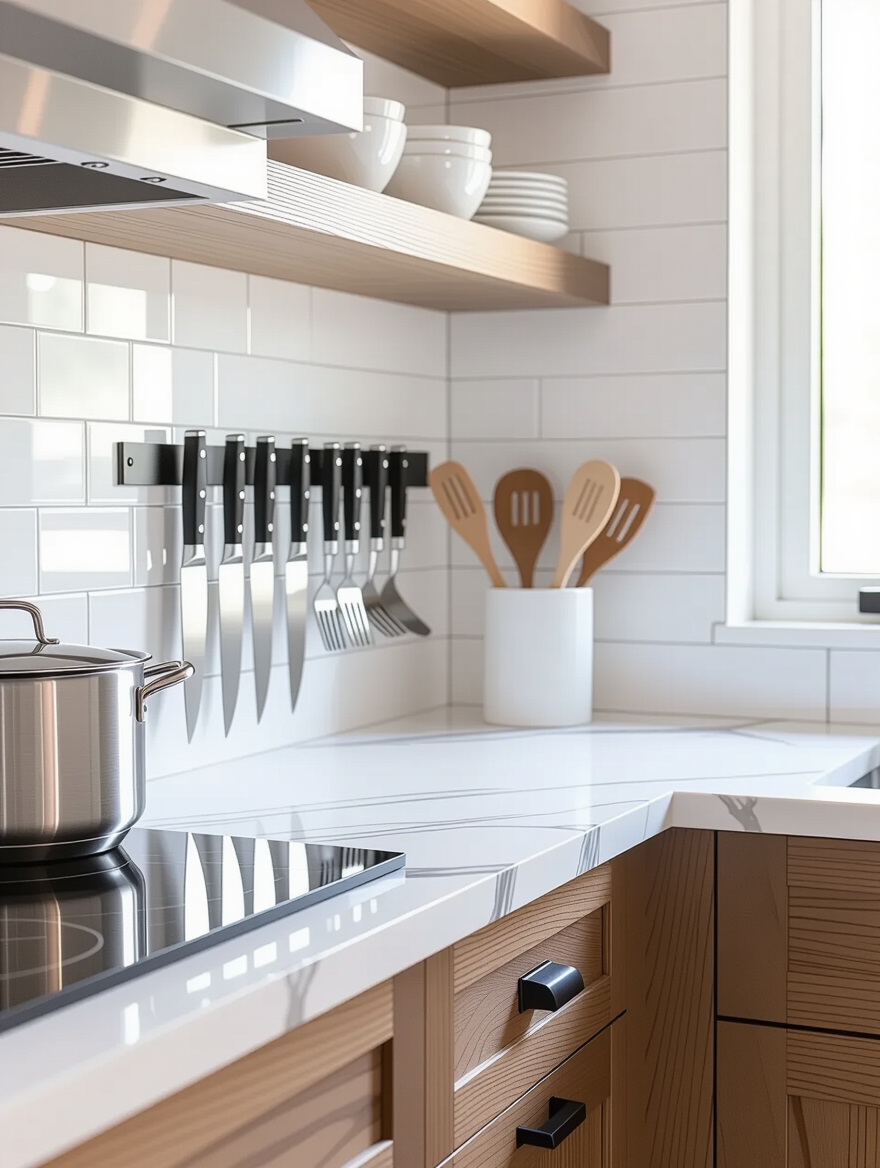
A magnetic strip clears the counter knife block and the dangerous drawer jumble in one cheap move, holding knives and metal tools flat against the wall. At about $15 to $25, it frees a whole drawer and a chunk of counter, which is gold in a small kitchen. It also keeps blades visible and grabbable while you cook.
Mount it on the wall near your prep zone, into a stud or with heavy adhesive backing, and set it low enough to reach safely. One honest caveat applies with young kids around, since a strip at counter height is risky, so keep it high or skip it until they are older.
- Mount a magnetic strip near the prep zone to free a drawer and counter space
- Use it for metal tools too, scissors, peelers, so they leave the crowded drawer
- Place it out of small children’s reach, or choose an in-drawer dock instead
Optimize Space With Door and Wire Racks

The inside of cabinet and pantry doors is the most-wasted space in a small kitchen, and a slim rack turns each one into a shallow shelf. Over-the-door and screw-in racks, from about $15 and ten minutes to hang, hold lids, foil, wraps, spices, and cleaning bottles on a surface that was doing nothing. You gain a whole storage wall you did not know you had.
Use the door, not just the shelf
Wire shelf risers do the same trick inside the cabinet, splitting one tall shelf into two usable levels so plates and bowls stop stacking precariously. Both are no-build, drop-in fixes that suit renters perfectly.
The catch is weight and clearance, since a loaded door rack can stress hinges and a riser must leave room for what sits above. Load doors with light items, check the cabinet still closes, and these become some of the highest-value moves in the whole kitchen. I tell clients to raid every door before adding a single cabinet.
🅰️No-drill (renter-friendly)
Over-the-door racks, adhesive hooks, tension rods, a rolling cart, and stackable bins. Lower load limits, but they leave with you and need no permission.
🅱️Drilled-in (owner)
Wall rails, magnetic strips, screw-in hooks, and mounted shelves. Far more secure and load-bearing, ideal when you can put holes in the wall.
Maximize Cabinet Storage Efficiency

A small kitchen’s cabinets are often half-empty in practice, with dead air above short items and unreachable corners. Drop-in organizers, pull-out baskets, shelf risers, and a corner turntable reclaim that wasted volume so the cabinets hold what they should. This is where the biggest hidden gains live in a tight kitchen.
Tune the inside to what you own: deep drawers or slide-out baskets for pots, a lazy Susan for the black-hole corner, and tiered risers for cans and spices. Our whole-kitchen storage playbook covers the system in full.
- Add a lazy Susan, around $8 to $15, to rescue a deep corner cabinet
- Fit slide-out baskets so the back of a deep cabinet is reachable without kneeling
- Use risers to split tall shelves, since dead air above mugs is wasted storage
Add Storage With Hooks

Hooks are the cheapest small-kitchen storage going. I scatter a few packs in the right spots and free a surprising amount of room. Cup hooks under a shelf hang mugs, adhesive hooks inside a cabinet door hold measuring cups, and a row along a backsplash rail catches utensils and towels. At a few dollars a pack, they are almost free space.
Put the hook where the item is used
The trick is putting hooks where the item is used, mugs by the kettle, utensils by the stove, so they earn their spot rather than just decorating the wall. A handful of well-placed hooks does more than one more crowded drawer.
Adhesive hooks are the renter’s friend, but be honest about their weight limit, since an overloaded stick-on hook fails at the worst moment. Use screw-in cup hooks for anything heavier, and keep the adhesive ones for light, daily grabs.
A small kitchen does not need more cabinets. It needs the empty walls and dead corners you already have, finally put to work.
Add Storage With Open Shelves

Where a deep upper cabinet would crowd a small kitchen, a slim open shelf adds storage and keeps the room feeling open. A narrow shelf above the counter or in an awkward gap holds everyday dishes and jars within reach, and it costs far less than cabinetry. In a tiny kitchen, open shelves often store more usefully than the boxy cabinet they replace.
Keep small-kitchen shelves working rather than purely decorative, stacking the bowls and glasses you use daily so the storage stays honest. Because you use the pieces, they get washed and never gather the grime that plagues display-only shelves. Our open-shelf styling guide shows how to keep them tidy.
The honest trade-off is that everything shows, so open shelves reward people who keep things neat. Pair a short open run with closed lower storage for the clutter, and you get the airy look without the mess on display.
Space-Saving Kitchen Furniture
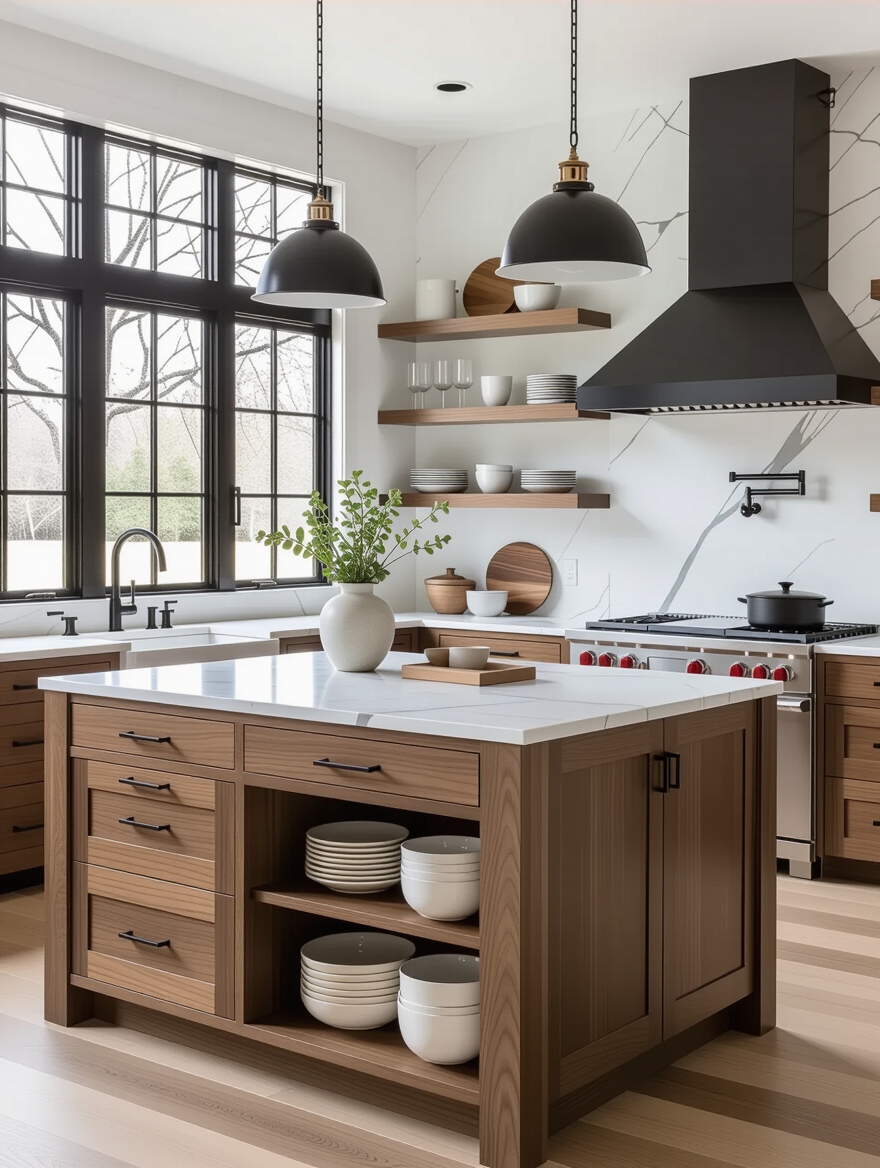
When the built-ins are maxed out, the right furniture adds storage you can move or fold away. A rolling cart slides into a gap to serve as extra counter, pantry, and prep station, then tucks away after; a drop-leaf table folds flat against the wall; a slim bookcase becomes an open pantry. These flexible pieces suit renters and tiny kitchens, since they leave with you and adapt to the day.
- Add a rolling cart, $40 to $100, for movable counter, storage, and prep in one
- Choose a drop-leaf or wall-mounted table that folds flat when you need the floor
- Use a narrow shelving unit or bookcase as an open pantry where no cabinet fits
Store Flat Things Upright

Stacking flat items, baking sheets, cutting boards, pot lids, is how small cabinets turn into avalanches, since you lift five to reach the sixth. Storing them on their edge in a slim divider means you pull out exactly the one you want, and the narrow slot fits places a stack never could, a move our very-small-kitchen storage tricks use constantly. It is one of the most satisfying fixes in a tight kitchen.
- Stand trays and boards in a wire file rack or a tension-rod divider so each pulls out alone
- Use a narrow gap beside the fridge or oven for an upright tray slot
- Store lids on edge in a rack so they stop sliding around the cabinet floor
Organize With Stackable Containers

In a small kitchen, the shape of your containers decides how much fits, and stackable square ones beat round bags and boxes every time. Square, clear, stackable canisters use the full depth and height of a shelf with no wasted gaps. You see what is inside at a glance. They turn a chaotic shelf into tidy, countable columns.
Square and stackable beat round and random
Decant the staples you use most, flour, rice, pasta, cereal, into uniform stackable canisters, and corral the awkward packets in a clear bin. The uniformity is what saves the space, since mismatched containers leave dead air between them.
Be realistic and start with the few staples you use constantly rather than canistering everything at once. A handful of well-chosen stackable containers does more for a small cabinet than a drawer full of odd tubs, and our declutter-first plan covers where to begin.
Small-Kitchen Storage Questions People Ask
?What is the best storage solution for a small kitchen?
Going vertical, since the walls and the air below your upper cabinets are the space a small kitchen wastes most. Wall rails, hooks, slim shelves, and door racks free the counters you cook on, and they cost little. Pair them with interior cabinet organizers to reclaim the dead space inside, and you gain room without a renovation.
?How do I add storage to a rental kitchen without drilling?
Lean on no-drill options: over-the-door racks, adhesive hooks rated for the weight, tension rods as dividers, a freestanding rolling cart, and stackable bins inside cabinets. These add real storage, leave no damage, and travel with you, so you never need the landlord’s permission or lose your deposit.
?How do I stop my small kitchen cabinets from being a mess?
Reclaim the wasted volume and contain what is inside. Add shelf risers to split tall shelves, a lazy Susan for the corner, slide-out baskets for deep cabinets, and square stackable containers for staples. Storing flat items like trays and lids upright stops the avalanche, so you grab one without toppling five.
Put Your Empty Walls and Corners to Work
Small-kitchen storage that actually works is not about cramming more in; it is about using the vertical and hidden space you already own. Climb the walls with rails and hooks, reclaim the dead air inside cabinets, store flat things upright, and add one movable piece, and a tight kitchen suddenly breathes.
So pick the one spot that frustrates you most, the crowded counter or the black-hole corner, and try a single cheap fix there this week. Build out from what works, skip the hacks that do not, and you will gain real room without moving a wall.
More Hair Inspiration