

Open floor plans get hyped, but the wins are real once you know what you are actually gaining. Joining the living room and kitchen into one open concept space trades walls for light, sightlines, and togetherness, and in the right home those payoffs are hard to give back once you have lived with them. The trick is to capture the wins on purpose.
This is the honest version of what an open plan gives you, and what it asks in return. Each section below is a specific win, more light, better flow, a social kitchen, with the move that secures it and the catch to watch for. Because no layout wins on every front, I will flag where an open plan costs you something too.
The Wins at a Glance
| The win | How you get it | The catch |
|---|---|---|
| More light | One floor, fewer walls, a mirror or two | Glare and heat may need managing |
| Togetherness | Sightlines from kitchen to sofa | Noise and mess travel too |
| A bigger feel | Continuous flooring, low furniture | An empty room feels like a lobby |
The Big Win: A Spacious, Connected Living Space

The headline win is connection. With the wall gone between the kitchen and living room, the cook is part of the conversation, kids stay in view, and the whole floor shares one pool of light and air. A modest house can live much larger because the eye travels uninterrupted from one end to the other, the same effect behind the best open-plan kitchen and living room combos. The connection is the prize.
That spaciousness is partly real and partly a trick of sightlines. You have not added square footage, but removing the visual stops makes the space feel a third bigger. The win is largest in small and mid-sized homes, where every borrowed sightline counts.
- The cook joins the room and the conversation while working.
- Light and air move freely, brightening the whole floor.
- A small footprint lives larger thanks to long, clear sightlines.
Win More Space by Defining the Zones

The paradox of an open plan is that you win the most usable space by quietly defining it. A wide-open room with no zones feels like a showroom, and people drift to the edges. Give the kitchen, dining, and living areas clear identities and the same square footage suddenly works harder.
Define just enough, then stop
Definition comes from soft cues: a rug, a light fixture, the island’s edge, the back of a sofa. Two or three are plenty. The win is a space that feels both open and purposeful, where you know where to cook, eat, and relax without a single door.
The honest catch is balance. Under-define and the room feels aimless; over-define and you have rebuilt the walls in furniture. The sweet spot is enough structure to guide you and enough openness to breathe.
How to capture the connection win when you open up a wall.
1Check the wall first
Confirm with a pro whether it is load-bearing before anything else.
2Plan the sightline
Decide what the sofa will see, and aim it at the kitchen’s best side.
3Keep one floor
Run the same flooring through both zones so the space looks like one.
4Light it in layers
Add task, feature, and ambient light so each zone still works.
Define Spaces With Style

Beyond the basics, the zones can carry a little style of their own while still belonging to one home. A slightly different light fixture over the dining table, a feature wall behind the sofa, or open shelving marking the kitchen all signal a change with personality.
The win here is character without chopping the space up. Each zone gets a touch of its own identity, so the kitchen feels like the kitchen and the living area like a retreat, yet they share a palette and materials so nothing clashes across the open floor.
Keep the signals subtle and few. One styled cue per zone is enough; more than that and the eye gets busy, undoing the calm that made you open the space in the first place.
Let Furniture Define the Functional Zones

Furniture is the most flexible way to win clear zones, since you can move it tomorrow. The back of a sofa draws the line between living and kitchen, a dining table claims its own footprint under a light, and the island edges the cooking zone. Floating the seating rather than pushing it to the walls is what makes the win land.
Scale is the quiet factor. Undersized pieces bobbing in an open room look like an afterthought, so size the sofa and rug to the zone itself. Pieces with legs and lower backs keep sightlines and light flowing while still marking territory.
📋Style-Forward Zone Markers
- ✓A distinct light fixture over the dining table
- ✓A feature wall or color behind the sofa
- ✓Open shelving that frames the kitchen edge
- ✓A console or bench at the zone boundary
- ✓A change in rug pattern between the zones
Unified Lighting Across the Zones
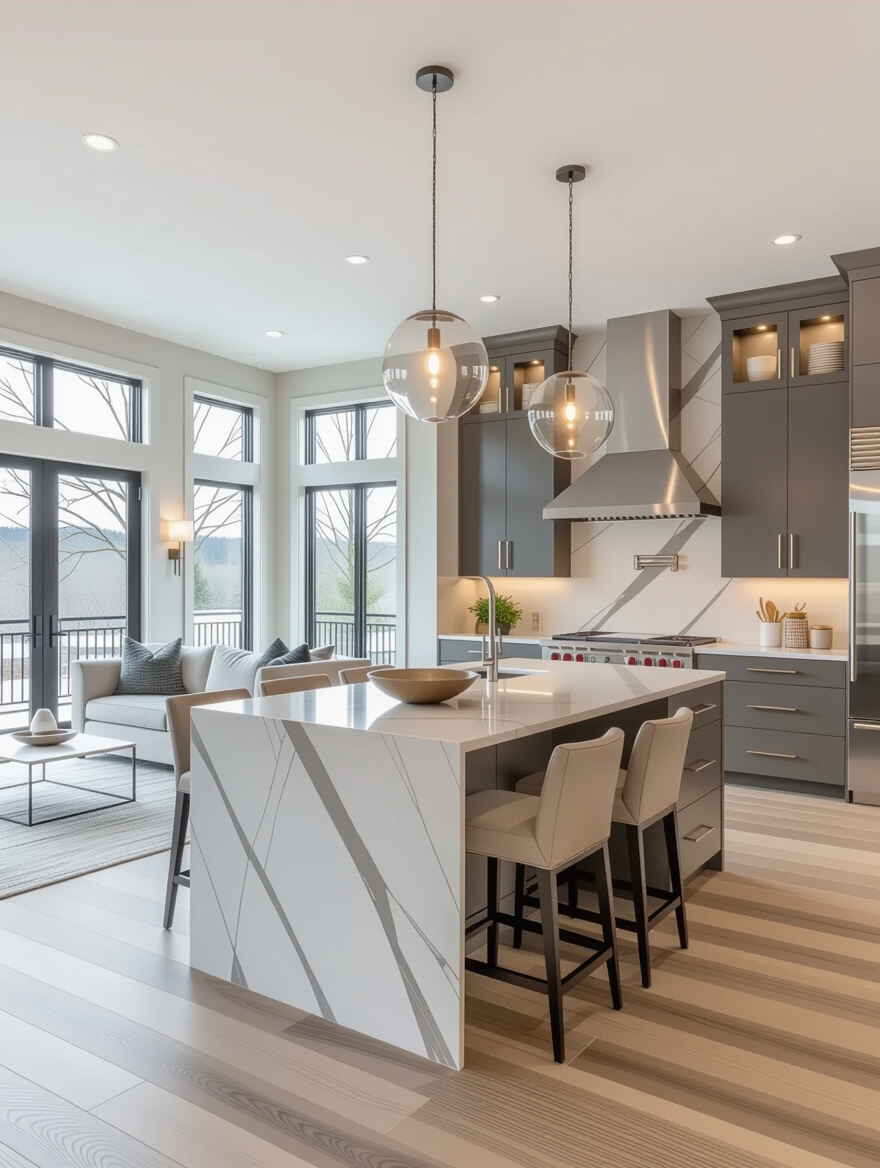
Lighting is where an open plan is won or lost after dark, because one ceiling fixture cannot light a cooking zone, a dining table, and a reading nook equally. The win is a layered scheme: bright task light in the kitchen, a feature fixture over the table, and softer lamps and dimmers in the living area.
Tie them together by keeping the fixture styles related and, just as important, the bulb color consistent. A warm white around 2700K to 3000K across the whole floor stops the kitchen from glowing blue next to a cozy living room.
Dimmers are the cheap upgrade that pays off nightly, letting the same open space shift from bright cooking to low-key evening. I tell clients dimmers are the one lighting upgrade nobody regrets, and skipping them is the most common open-plan mistake after dark.
Make the Island a Versatile Kitchen Hub

If one piece delivers the most wins, it is the island, and I love how much work it quietly does in an open plan. It serves as prep space, casual seating, storage, and the border between cooking and living all at once. To capture every win, seat people on the living-room side for conversation, build storage into each face, and leave 36 to 42 inches of clearance so it never clogs the flow.
A custom island runs $3,000 to $6,000, but a stock cabinet base with a butcher-block or stone top captures most of the benefit for far less, much like clever small kitchen island ideas prove.
- Orient the seating toward the living room so guests face the cook.
- Pack storage into every side to win back cabinet space.
- Hold 36 to 42 inches of clearance so the island never blocks traffic.
Not sure which light each zone needs? Match the job to the fixture.
🎯Kitchen prep
Bright, cool-leaning task light: under-cabinet strips plus recessed cans.
🎯Dining or island
One feature pendant or a small cluster, on a dimmer, hung low.
🎯Living area
Warm lamps and a dimmable overhead for flexible, cozy evenings.
A Cohesive Color Strategy That Ties It Together

A shared palette is the quiet win that makes a kitchen and living room feel like one designed room rather than two that happen to touch. Carry one or two main colors across both zones, repeat a wood tone or metal finish, and let rugs and textiles bridge them.
The cabinets and the sofa can differ in style as long as they share a family, so the open floor looks intentional from every angle. A green-leaning kitchen, for instance, can lean on the same logic as a green-and-white scheme.
- Repeat one or two core colors in both the kitchen and living zones.
- Echo a single wood or metal finish across the open floor.
- Bridge the zones with rugs and textiles in the shared palette.
Rugs That Define Cozy Spaces

Rugs are the fastest, most affordable win in the whole open plan, and the one I recommend first to anyone on a budget. A single large rug under the living-room seating carves a cozy room out of the open floor, softens the acoustics, and tells the eye exactly where the lounge zone begins. For the size that holds the front legs of your furniture, plan on roughly $200 to $800.
Layer a second rug under the dining table if the space allows, sized so chairs stay on it even when pulled out. Keep the two rugs related but distinct, so they read as one scheme. In a hard-surfaced open plan, rugs are also the easiest fix for the echo that big connected rooms tend to have.
Maximize the Natural Light You Have
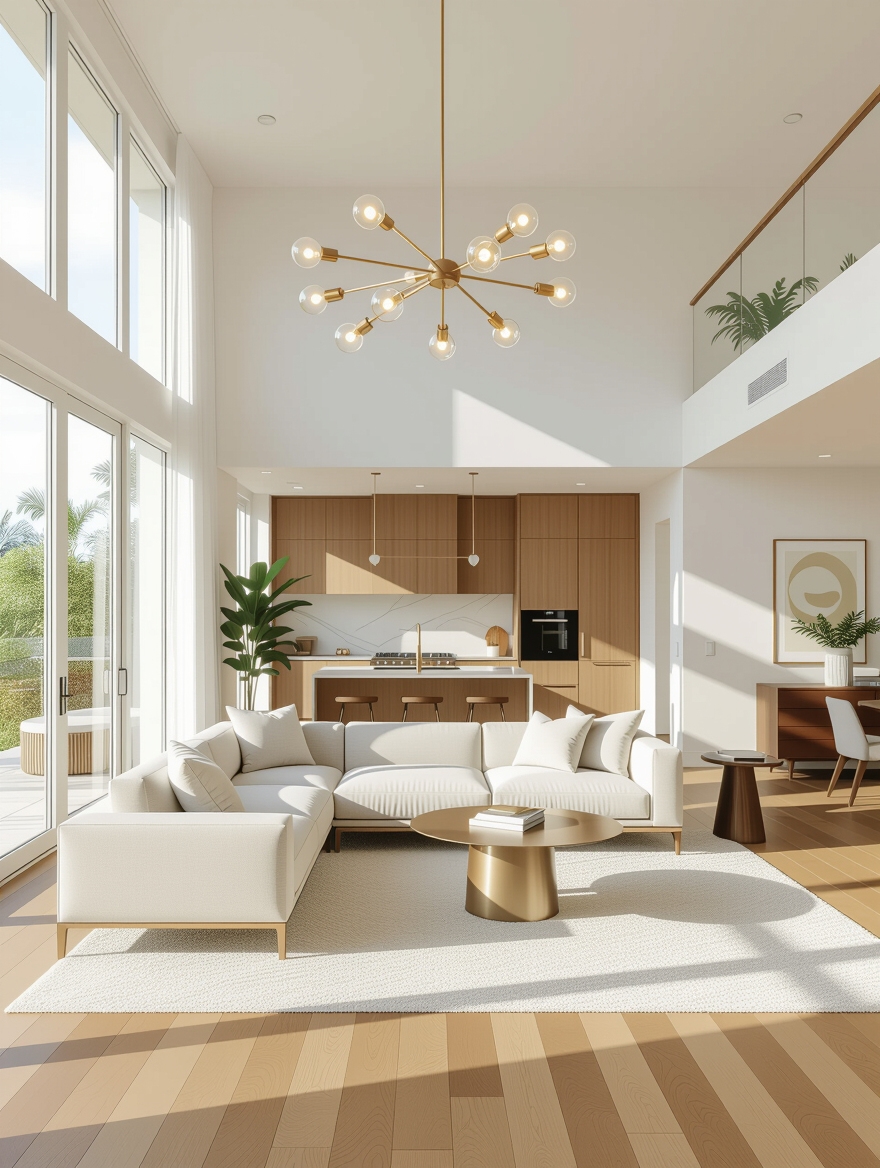
Few wins feel as good as the daylight that finally reaches the whole space once you open up a floor. With fewer walls to stop it, light from the kitchen window can travel to the far side of the living room. The move is to protect that path: keep tall furniture and uppers out of the window’s line, and choose pale, reflective finishes that carry light deeper.
A few cheap tricks multiply the win. A large mirror opposite the main window nearly doubles the light it throws, sheer or skipped window treatments keep the path open, and light flooring sends the sun further into the room.
- Keep the brightest window’s sightline clear of tall furniture.
- Hang a mirror opposite that window to bounce light deeper.
- Choose pale floors and finishes that send daylight further in.
One Cohesive Flooring Throughout the Open Space

Flooring is the single biggest visual win in an open plan, and the easiest to get wrong. One floor, one room. Running one continuous material through the kitchen and living room makes the whole floor read as one space and instantly enlarges it. Luxury vinyl plank and sealed hardwood are the favorites because they survive kitchen spills and living-room traffic alike, the same thinking behind smart kitchen flooring ideas, classic to bold.
If you must change materials, keep the transition flush and the tones close so it marks a zone without tripping anyone, an approach that also works with bolder kitchen tile designs. For high-traffic open floors, porcelain tile and tough-finished wood hold up best. Whatever you choose, run the planks in one direction across the whole space for the cleanest result. Plan about 24 hours of cure time before furniture goes back onto a freshly sealed floor.
Common Mistakes to Avoid
The open-plan wins are easy to lose to a few predictable mistakes. The biggest is no zoning at all, which turns the prize spaciousness into a lobby. Close behind are an oversized island that clogs the traffic you opened up, mismatched flooring that chops the floor back into pieces, and forgetting that sound and cooking smells now travel everywhere, so a strong range hood and soft surfaces become real essentials.
Two modern wins are worth grabbing while you plan. Smart lighting and switches let one open space change mood at a tap, which matters more when three zones share a room, and designing for easy traffic and accessibility, wide clear paths and a barrier-free flow, makes the open plan work for every age. Both are far cheaper to build in now than to add later.
Open Floor Plan Questions, Answered
?Is an open floor plan worth it for a small home?
Often yes, because the wins are largest where space is tight. Removing walls lets light and sightlines travel the whole footprint, so a small home lives noticeably larger. The catch is that small open plans need careful zoning and storage, since there is nowhere to hide clutter, but the payoff in light and flow is usually worth it.
?What flooring is best for an open floor plan?
One continuous material throughout almost always wins, since it visually enlarges the space and avoids choppy transitions. Luxury vinyl plank and sealed hardwood are popular because they handle kitchen spills and living-room traffic equally well. Run the planks in one direction across the whole floor, and if you change materials, keep the transition flush and the tones related.
?What are the biggest downsides of an open kitchen and living room?
Mainly noise, cooking smells, and visible clutter, since everything now shares one space. A strong vented range hood, soft surfaces like rugs and upholstery, and enough closed storage handle most of it. The other catch is heating, cooling, and lighting one large room well, which a layered lighting plan and good zoning largely solve.
Win the Open Plan on Purpose
An open floor plan does not win automatically, but the payoffs are real when you go after them deliberately: more light, easy connection, a space that lives larger, and a kitchen at the heart of the home. Each win has a move that secures it and a catch worth planning around, and none of them require more than thoughtful choices.
If you are opening up a wall or rethinking a plan you already have, pick the win you want most, more daylight, a more social kitchen, a calmer flow, and start there. Secure one win well and the others tend to follow, and the open space starts paying you back at every meal.
More Looks We Love


