

How do you divide an open kitchen without rebuilding the wall you just removed? That is the puzzle of open living: you want the light and connection of one big space, but you also want the kitchen to feel like its own room sometimes. The answer is a partition that suggests a boundary instead of building one.
There is a whole spectrum of ways to do it, from a solid island that quietly draws the line to a sheer curtain you can pull across when the dishes pile up. Each partition idea below divides the space a different amount, so you can pick exactly how separate you want the kitchen to feel. None of them put the wall back.
The Short Version
- Partitions let you zone an open kitchen without losing the light and connection a full wall would kill.
- Solid dividers (islands, half walls, bookcases) define strongly; see-through ones (glass, grilles, shelves) keep it open.
- Flexible options, sliding panels and curtains, let you open or close the space on demand.
- Match the partition to your real need: noise, mess-hiding, or just a visual line.
Why Open Partitions Enhance Connectivity
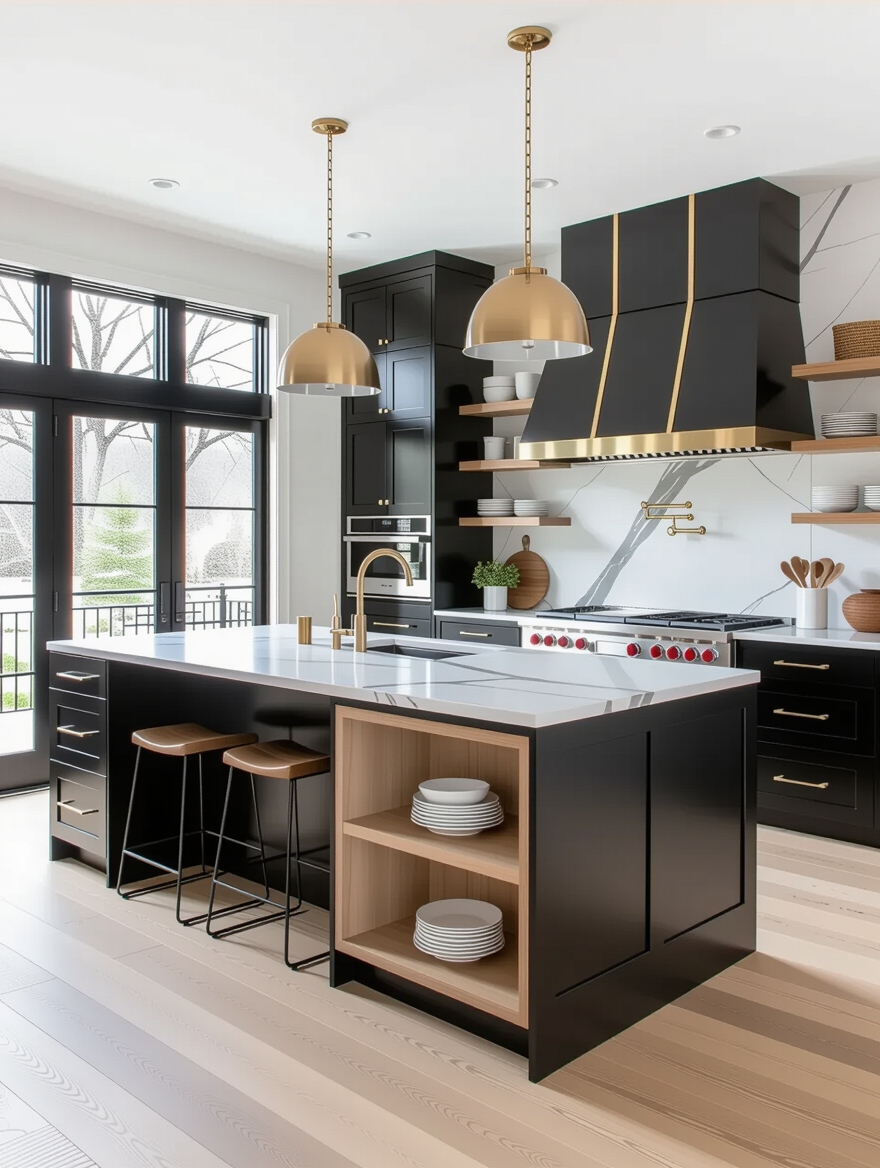
A partition sounds like the opposite of open, but the good ones actually protect what makes open living work. They give the kitchen a sense of place, contain a little of the noise and mess, and add architectural interest, all while letting light and sightlines pass through. The trick is choosing one that divides just enough, the gentler cousin of the moves you use to merge a kitchen and living room.
Think of partitions on a scale. At one end are solid dividers like islands and half walls that define strongly; at the other are see-through options like glass and grilles that barely interrupt the view. Where you land depends on how much separation you actually want, and most kitchens want less than people fear.
- Partitions give the kitchen its own identity without closing it off.
- They hide a little clutter and soften noise without a full wall.
- Most let light and sightlines pass right through.
The Kitchen Island as a Natural Divider
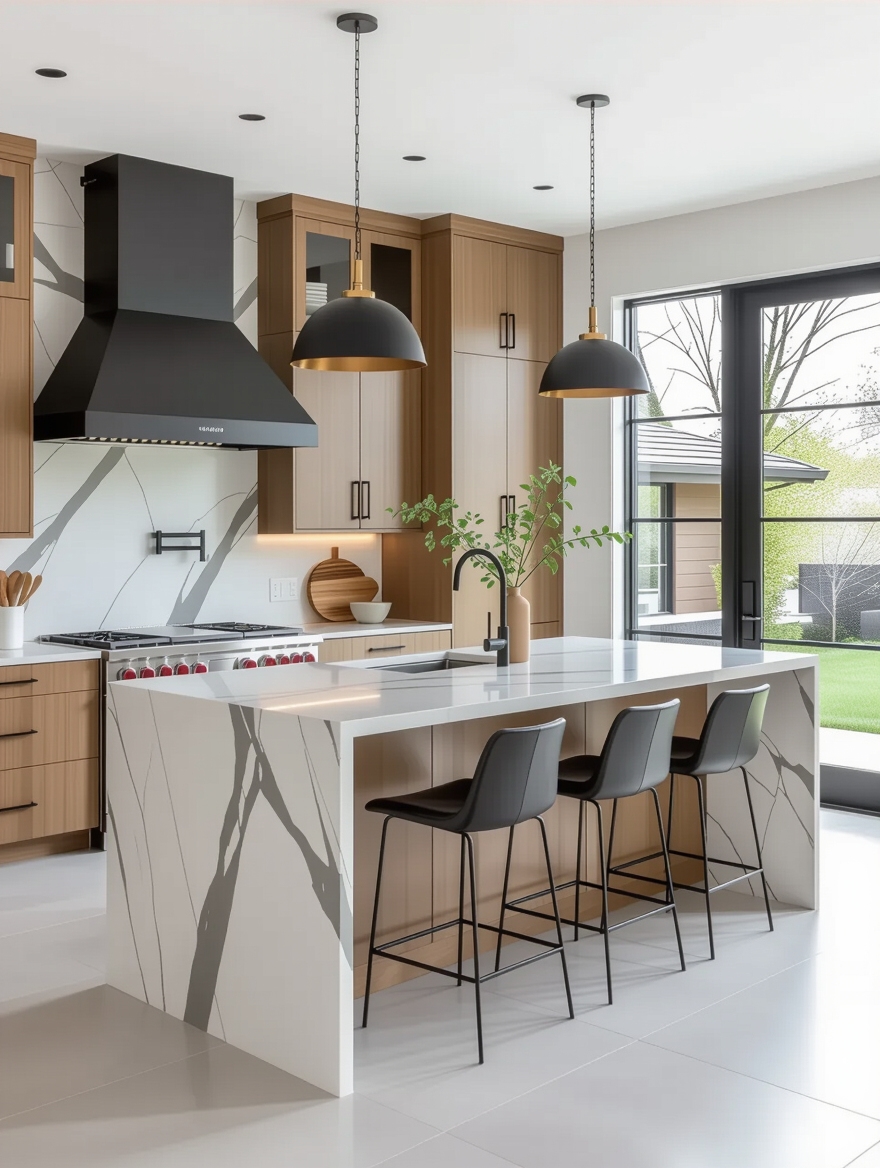
The simplest partition is one most open kitchens already have: the island. A run of cabinetry with a counter on top draws a clear line between cooking and living while adding storage, prep space, and seating. It is the lowest-effort divider there is, since it does five jobs at once and never closes the room in. The island already does the work.
To make an island work harder as a partition, give it a back panel or a contrasting finish on the living-room side, so it looks like a piece of furniture from the sofa. A waterfall end or a slightly raised bar adds presence. Where a full island will not fit, a peninsula does the same dividing job anchored to one wall, the way clever small kitchen island ideas prove.
- Use the island as a built-in divider between cooking and living.
- Finish the living-room side like furniture so it looks intentional.
- Swap in a peninsula where a full island will not fit.
How to choose the right partition for your kitchen.
1Name the problem
Is it noise, visible mess, or just a fuzzy boundary? That sets the type.
2Pick your separation level
Solid for strong division, see-through to barely interrupt the view.
3Check the light
Make sure the divider does not block your main window’s path.
4Start removable
Try a curtain or screen before committing to a built-in partition.
Half Walls for Cozy, Subtle Boundaries
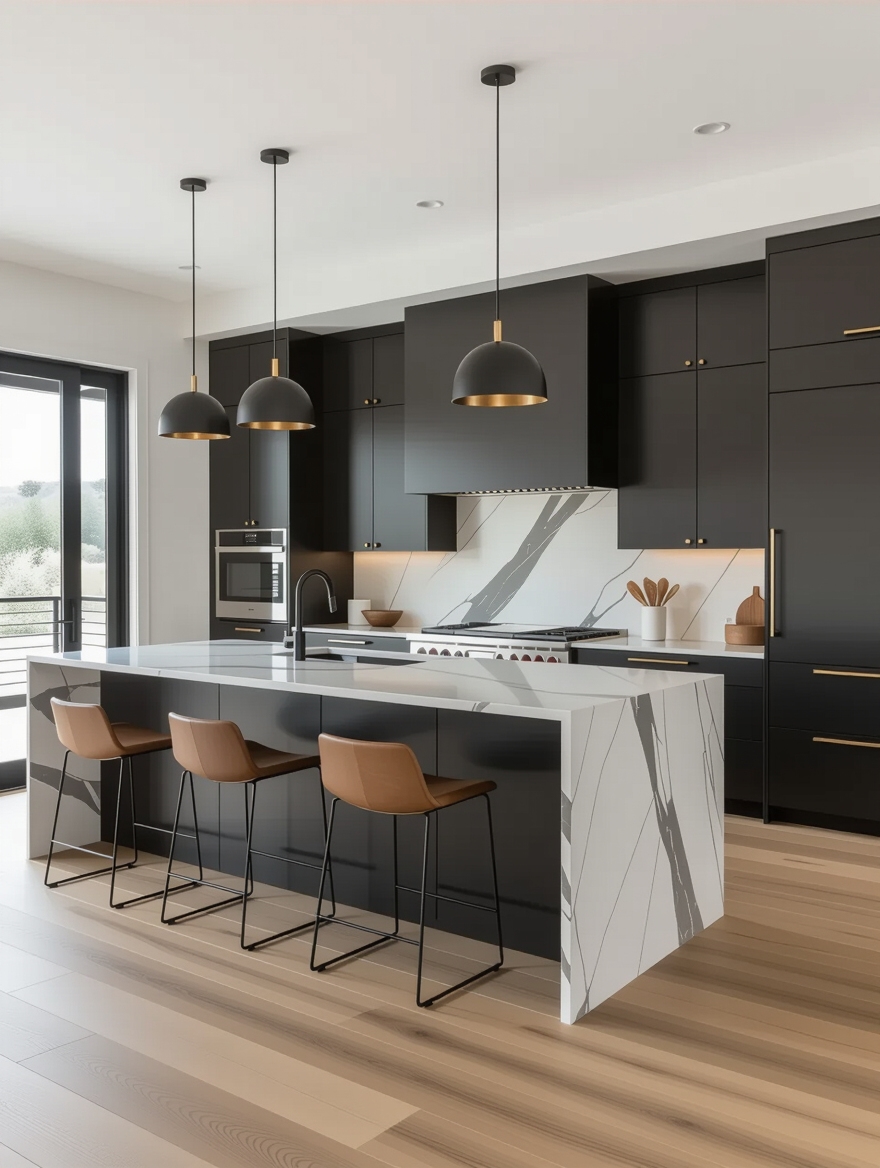
A half wall, or pony wall, is the middle ground between open and closed, and it solves a lot of problems at once. Rising about counter or bar height, it hides the kitchen’s working mess from the living room, gives you a spot for outlets and a bar overhang, and still lets light and conversation flow over the top.
Top it with a wood or stone counter and a couple of stools and the half wall becomes a breakfast bar too. It is one of the more permanent partitions here, so it suits people who know they want a lasting boundary. I recommend keeping it low, around 36 to 42 inches, so it screens clutter without blocking the view.
Glass Panels for Transparent Boundaries
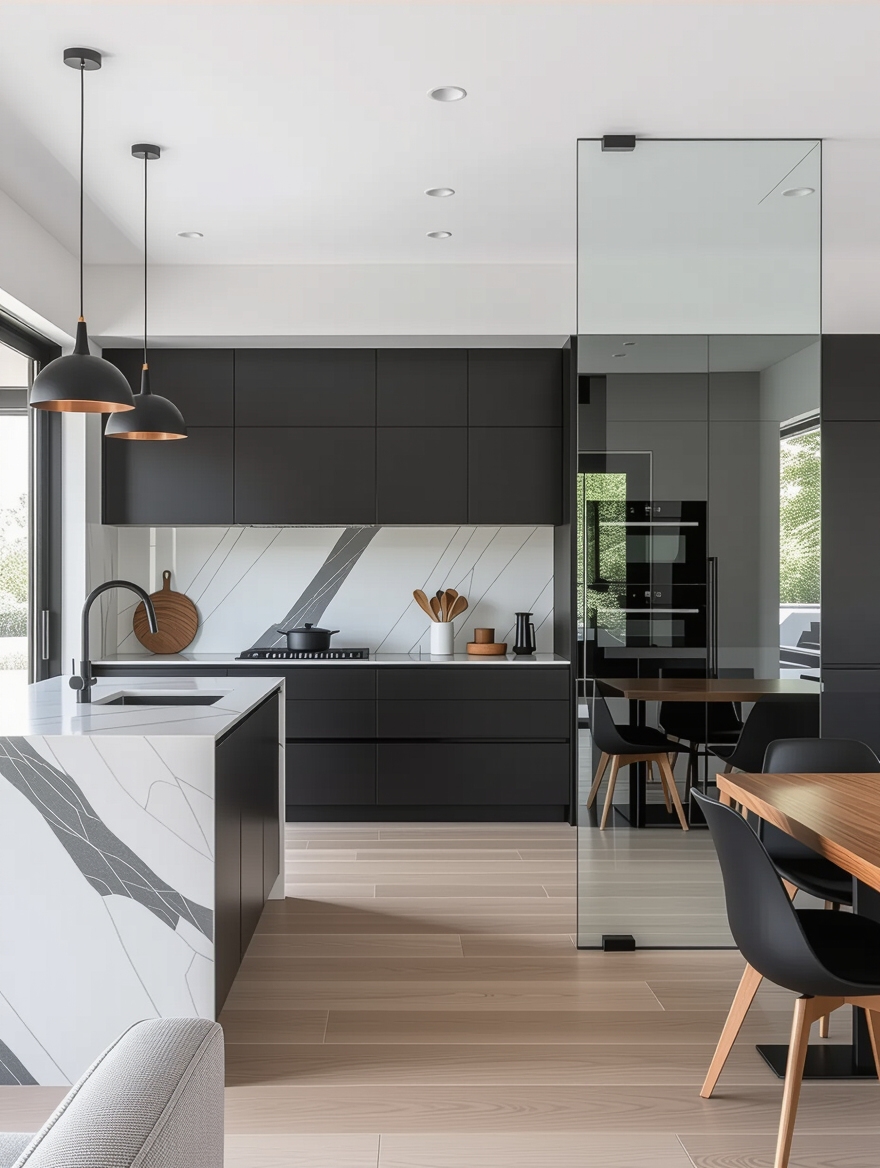
When you want a real boundary without losing a single ray of light, glass is the answer. A framed glass partition, a Crittall-style panel, or a half-height glass screen marks where the kitchen ends while the view and the light pass straight through, so the room stays bright and connected. Glass loses nothing.
Black-framed glass looks modern and architectural and has become a designer favorite; clear frameless panels nearly disappear. Glass also contains cooking smells and noise a little better than an open gap. Expect a framed glass partition to run roughly $600 to $2,000 depending on size, one of the pricier but higher-impact interior touches that lift a kitchen.
| Partition | Divides | Keeps light |
|---|---|---|
| Island or peninsula | Medium | Fully |
| Half wall | Medium-strong | Mostly |
| Glass panel | Light | Fully |
| Curtain or screen | Adjustable | Varies |
Floating Shelves That Display and Divide
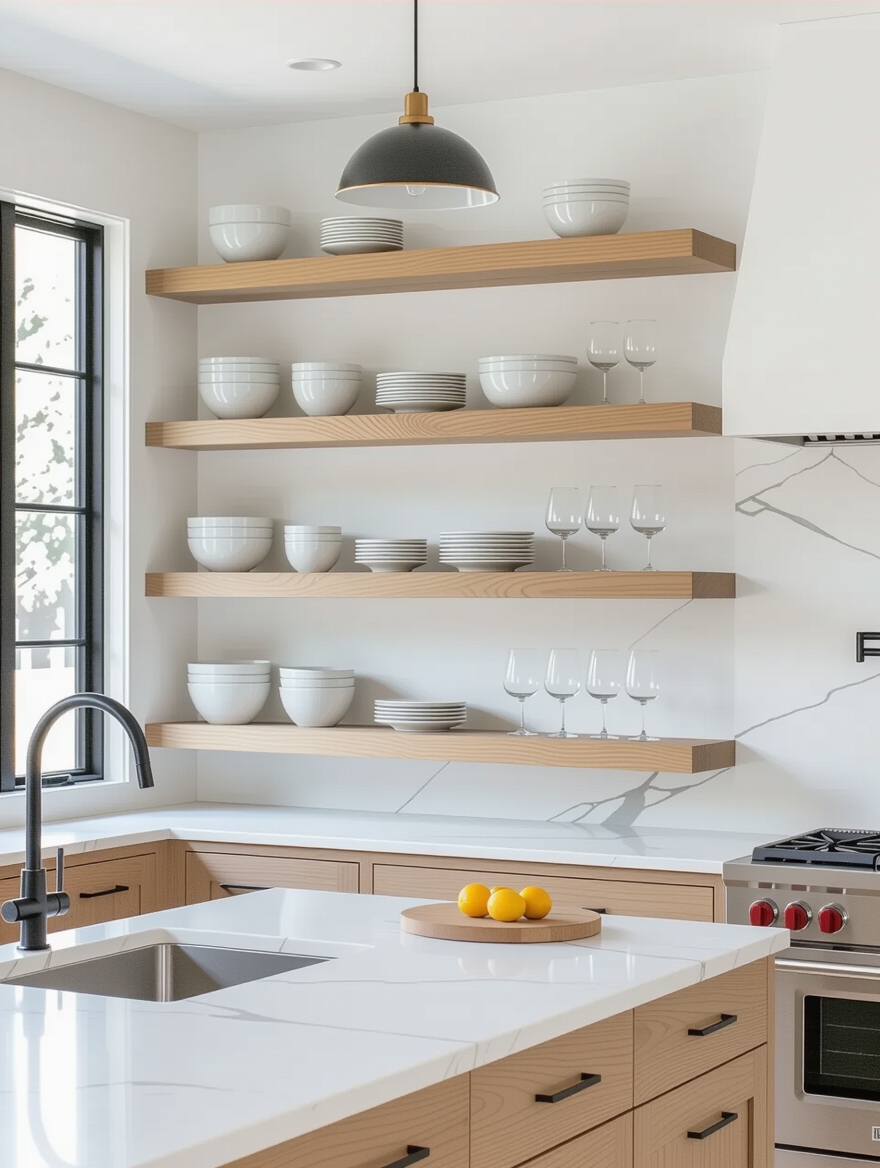
Open floating shelves are a clever partition because they divide and display at the same time. A unit of shelves, open on both sides, marks the edge of the kitchen while letting light filter through the gaps, and it gives you a spot to style dishes, plants, and books that both rooms can enjoy.
Let the shelves divide and decorate at once
The look stays airy only if the shelves stay edited, so treat them as a curated display, not storage overflow. Style with restraint, leave gaps, and the partition lifts both spaces. A ceiling-mounted or floor-to-ceiling open shelf unit makes the strongest visual line.
I love this one for renters and the commitment-shy, since a freestanding open shelf needs no construction and moves with you. It is one of the cheapest ways to draw a real boundary.
Bookcases as an Open Kitchen Divider
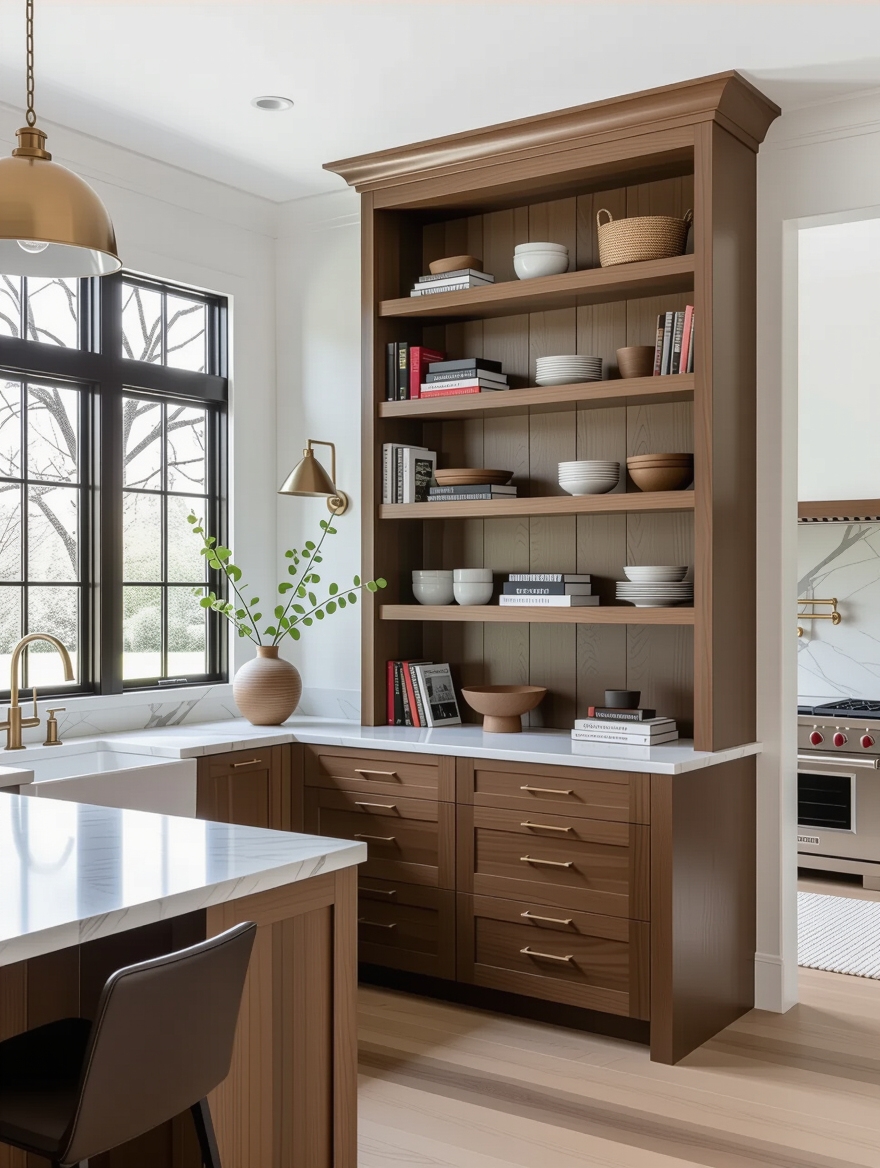
A bookcase or open shelving cabinet is a partition you can buy and place in an afternoon, which makes it the easiest real divider on this list. Positioned at the end of the island or between the kitchen and living zones, a tall open-backed bookcase blocks just enough sightline to define the kitchen while keeping the airy, see-through quality.
Fill it with a mix of books, baskets, and a few kitchen-friendly pieces so it works for both rooms. The open back is the key part, since a solid one would wall the space off, while an open or glass-backed unit keeps the light moving.
- Place an open-backed bookcase at the kitchen’s edge to define it.
- Mix books, baskets, and decor so it suits both rooms.
- Choose an open or glass back so it divides without blocking light.
Two myths about dividing an open kitchen.
❌ Myth: A partition undoes the whole point of going open.
✅ Reality: Only a solid floor-to-ceiling one does. See-through dividers zone the space while keeping the light and connection.
❌ Myth: You need construction to divide a space.
✅ Reality: No. A bookcase, screen, or curtain divides an open kitchen with zero building.
Sliding Panels for Flexible Space Division
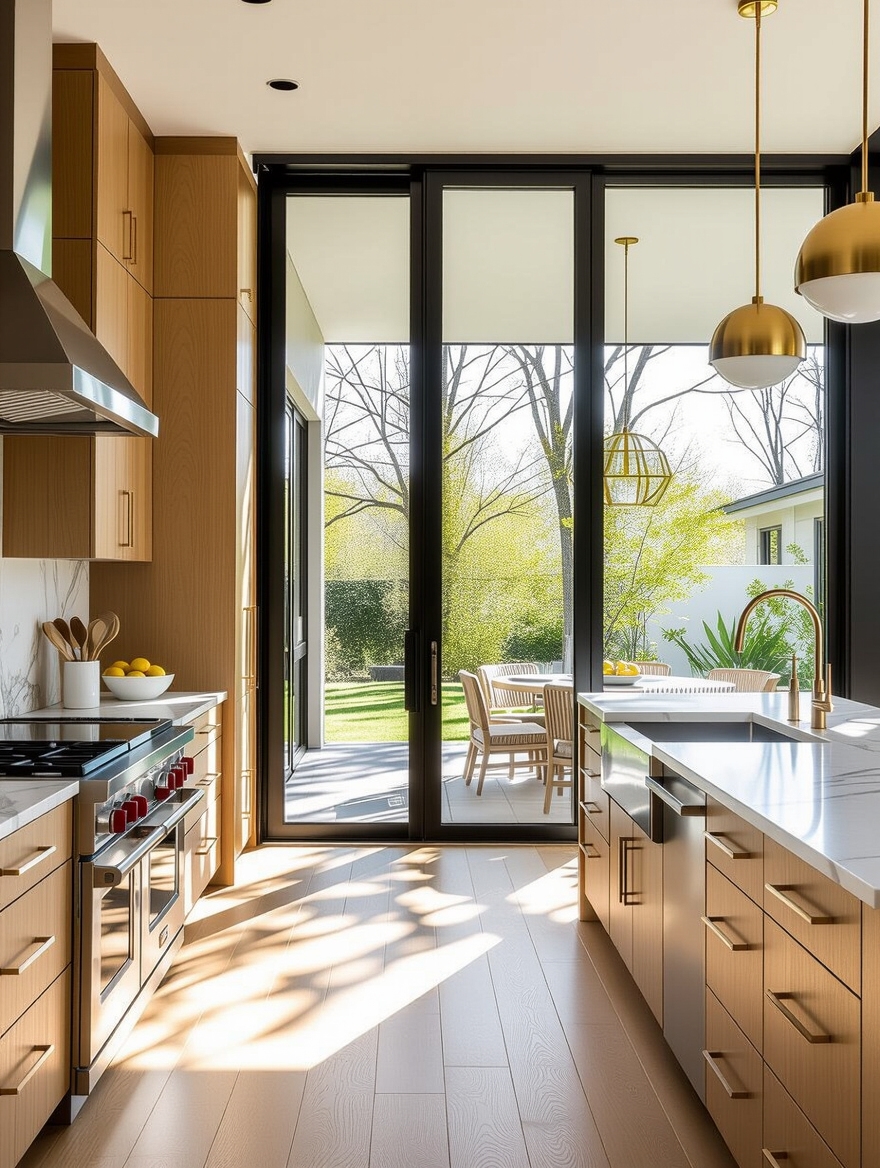
If you cannot decide between open and closed, sliding panels let you have both. Barn doors, pocket panels, or sliding screens tuck away to keep the kitchen fully open most of the time, then glide across to hide the mess, contain cooking smells, or quiet the space when you need to.
This flexibility is the whole appeal: open for a party, closed while the dishwasher runs or someone works nearby. Track-mounted panels in wood, glass, or rattan suit almost any style, and they take up no floor space when open. A barn-door kit takes a couple of hours to hang.
The trade-off is cost and a little construction, since the track and panels need mounting. Budget a few hundred dollars for a simple barn-door kit and more for custom pocket panels, but you are buying a divider that appears only when you want it.
Curtains and Fabric Partitions
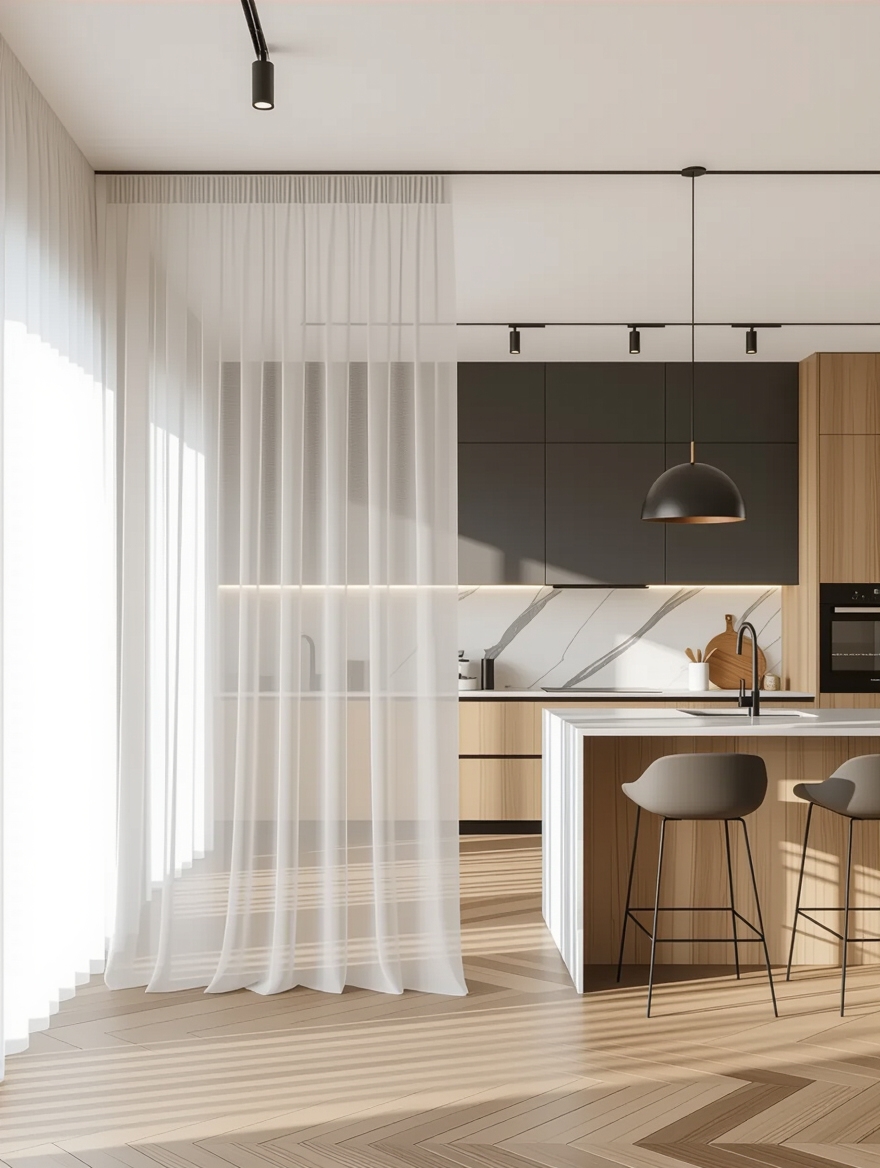
The softest and cheapest partition is fabric. A curtain on a ceiling track, a hanging linen panel, or a folding fabric screen draws a gentle line between the kitchen and living room, adds warmth and texture, and pulls aside completely when you want the space wide open. Fabric is the friendliest option.
Fabric is the renter’s and the budget’s best friend here, since a curtain and a track cost very little and leave no permanent mark. A heavier curtain even absorbs some of the noise that hard open rooms bounce around, which is a quiet bonus.
Keep the fabric washable, since anything near a kitchen catches grease and steam over time. Choose a color that ties the two rooms together, and the curtain becomes a soft architectural feature.
Modern Metal Grilles to Define the Kitchen
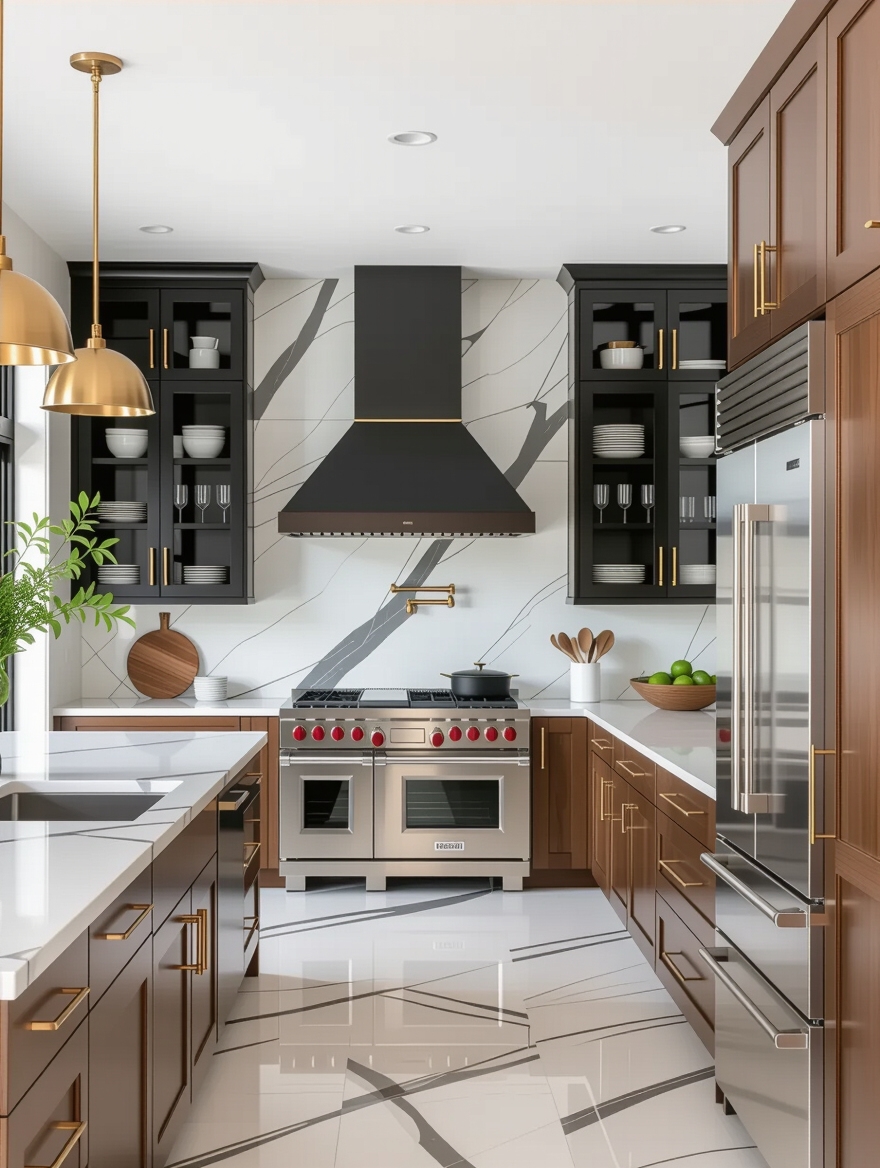
For a partition with real design presence, a metal grille or slatted screen is hard to beat. A laser-cut panel, a run of vertical metal slats, or a fluted screen marks the kitchen’s edge with a strong architectural line while the gaps keep light and air moving through. It looks intentional and high-end, even when the rest of the kitchen is simple. The pattern is the feature.
Black or brass metal screens lean modern and dramatic, while warmer wood slats soften the same idea. Because the pattern itself is the feature, a grille works best where you want the divider to be seen. It is more of a statement than a curtain, so commit to it as a design choice.
- Use a metal or slatted screen for an architectural, high-end divider.
- Choose black or brass for drama, wood slats for warmth.
- Let the grille be a feature, since the pattern is the whole point.
Cozy Yet Airy Kitchen Separation
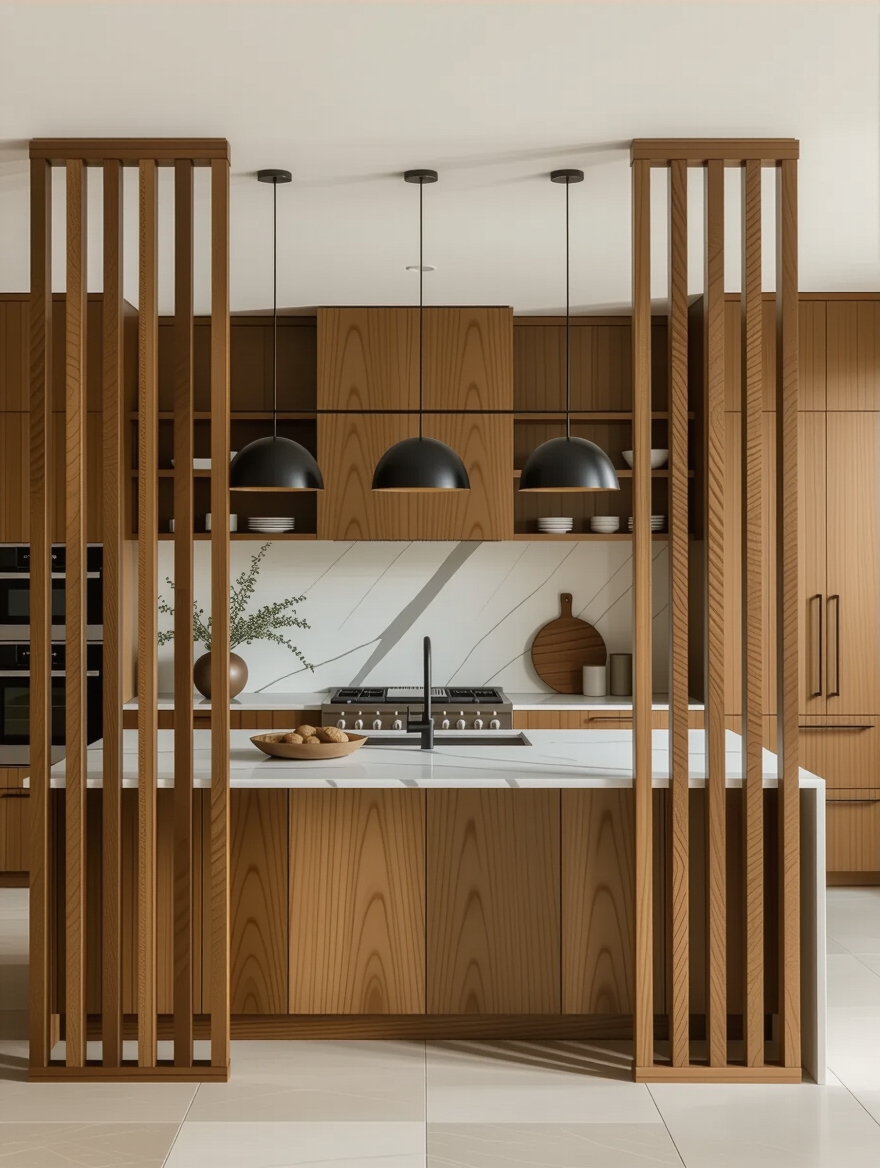
The best open kitchens often use more than one partition, layering a couple of soft dividers to feel cozy and airy at once. An island plus a run of pendant lights, or a half wall topped with open shelving, divides more convincingly than any single element while keeping the light. The combination is what makes a space feel zoned yet connected, the same balance behind thoughtful home decor that flows between living room and kitchen.
The rule is to stop before it feels closed. Two gentle cues, an island and a change in ceiling or lighting, feel cozy; pile on four and you have rebuilt the wall. Aim for the lightest touch that gives the kitchen its own sense of place, and let color carry some of the work, the way green kitchen walls add instant character with no divider at all.
- Layer two soft dividers, like an island plus pendants, for gentle zoning.
- Stop at two or three cues so the space stays open.
- Let color and lighting do some of the dividing without any partition.
Common Mistakes to Avoid
The partition mistakes I see most turn up again and again. The biggest is over-dividing, stacking so many screens, walls, and shelves that you have quietly rebuilt the wall you removed and lost the open feel entirely.
Close behind is blocking the light, placing a solid divider where it shadows your main window or darkens the kitchen. And a partition that ignores the room’s style, a rustic screen in a sleek modern kitchen, looks like an add-on rather than part of the design.
The subtler mistake is choosing the wrong amount of separation for your real problem. If your issue is cooking smells, a curtain will not fix it but a glass panel and a good range hood might; if it is just a fuzzy boundary, an island is plenty and a built wall is overkill. Match the partition to the problem, start with the most removable option, and you will rarely regret it.
Open Kitchen Partition Questions, Answered
?How do you divide an open kitchen without building a wall?
Use a partition that suggests a boundary instead of a solid wall. An island or half wall draws a clear line, a glass panel or metal grille divides while keeping the light, and a curtain or sliding screen lets you open or close the space on demand. Pick the type based on how much separation you actually want.
?What is the cheapest way to partition an open kitchen?
A fabric curtain on a ceiling track or a freestanding folding screen is the cheapest option, often well under $100, and it leaves no permanent mark, which makes it ideal for renters. A freestanding open bookcase is the next step up. Both divide the space with zero construction and can be moved or removed anytime.
?Do glass partitions keep an open kitchen feeling open?
Yes, more than almost any other divider. Glass marks a clear boundary while light and sightlines pass straight through, so the room stays bright and connected. It also contains cooking smells and noise a little better than an open gap. Black-framed glass adds an architectural look, while frameless panels nearly disappear.
?Will a partition make my kitchen feel smaller?
Not if you choose a see-through or removable one. Glass, open shelving, grilles, and curtains divide the space without blocking light, so the kitchen still feels open. The risk comes from over-dividing or using a solid divider that shadows the room, so keep partitions light and stop at two or three before the space feels closed in.
Divide It Your Way
The beauty of partitioning an open kitchen is that you get to decide exactly how open it stays. A solid island or half wall draws a firm line, glass and grilles divide while keeping every ray of light, and curtains or sliding panels let you change your mind by the hour. There is a partition for every budget, every style, and every level of separation you might want.
If your open kitchen feels a little too exposed, start with the cheapest, most removable option that targets your actual problem, often a curtain, a screen, or just rearranging the island. Live with it for a while before building anything permanent. The right partition makes an open kitchen feel like the best of both worlds, open when you want it, defined when you need it.
More Hair Inspiration


