

The myth about a great open kitchen is that it takes a gut renovation and a designer’s budget. Most of what actually makes one work is a stack of small design hacks that pros reuse on every project, clever bits of storage, furniture, and lighting that punch far above their cost. None of them require moving a wall.
These are the tricks that separate an open kitchen that feels calm and runs smoothly from one that looks great empty and falls apart the moment you cook in it. Each of these designer tips is something a working pro would actually do, with the catch worth knowing, so you can borrow the ones that fit your space and skip the rest.
The Hacks at a Glance
- Most open-kitchen wins come from small hacks, smart storage, multi-use furniture, layered lighting, not a bigger budget.
- Get everyday things off the counter and into reach with vertical racks, wall rails, hidden drawers, and an appliance garage.
- Use furniture and an island to zone the space, and keep sightlines low so it still feels connected.
- Light, layered finishes and lighting make an open kitchen feel bigger and work better after dark.
Stylish, Accessible Kitchen Organization Hacks
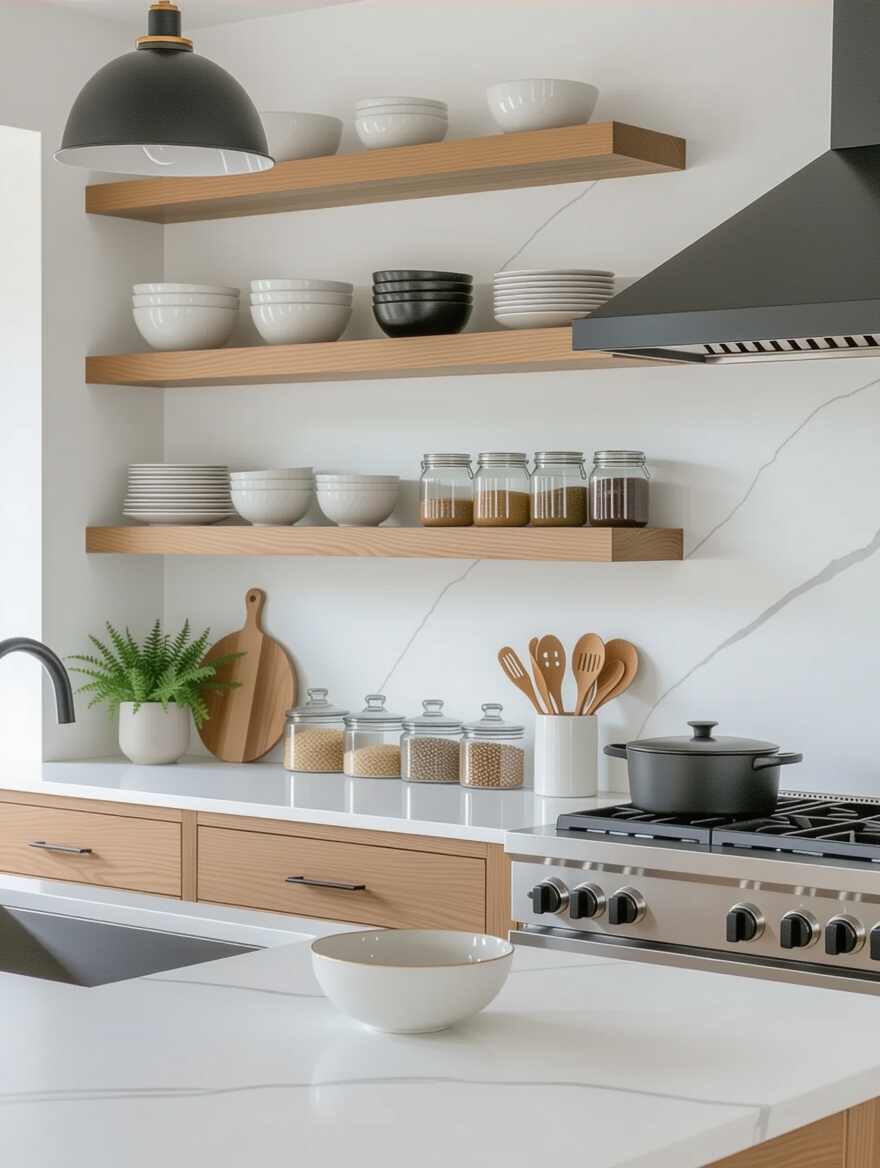
The first hack I love is making the things you use daily both reachable and good-looking, so they live out in the open without reading as clutter. A short run of open shelving or a wall rail at eye level keeps mugs, oils, and everyday plates within a single reach, which keeps them off the counter. The pro move is to style what stays visible, matching jars, a tidy row of mugs, so accessibility doubles as decor.
- Put daily items on one eye-level shelf or rail for one-reach access.
- Decant oils and staples into matching containers so the visible stuff looks deliberate.
- Keep this zone away from the stove so grease does not coat it.
Optimize Vertical Storage Top to Bottom

Open kitchens often lose storage when walls come down, so pros claw it back vertically. Take cabinets to the ceiling past any soffit, add a high shelf for rarely used pieces, and use the awkward space under cabinets and inside doors with racks and rails. The hack is to think in full height, floor to ceiling.
Do not forget the bottom. Toe-kick drawers in the base cabinets reclaim a few inches everyone else wastes, perfect for flat trays and linens, and a tall pull-out pantry turns a narrow gap into serious storage. These tricks add real capacity without a single extra cabinet footprint, the same smart thinking behind clever small kitchen storage ideas.
Two things people get wrong about open kitchens.
❌ Myth: Open kitchens are automatically messier.
✅ Reality: Only without a system. With reachable, styled storage they stay calmer than crammed closed cabinets.
❌ Myth: You need a big remodel to fix the flow.
✅ Reality: Most flow problems are solved by storage and furniture hacks, not new walls.
Stylish Hidden Storage That Cuts Clutter
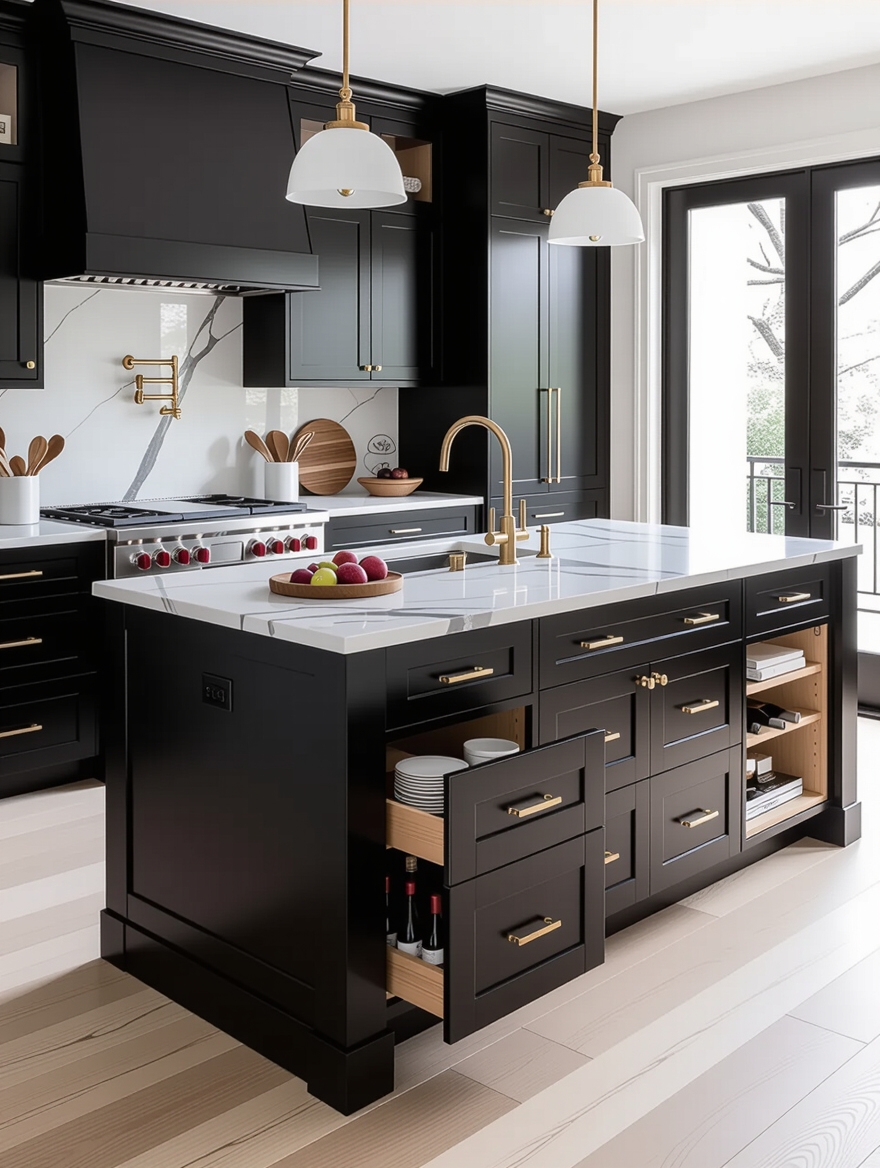
When everything is on view, hidden storage is gold, and pros build in as much as they can. Appliance garages with a roll-up door hide the toaster and blender, deep drawers swallow pots without a stack, and a corner lazy Susan or magic corner makes the dead corner usable.
Give every messy thing a closed home
The point is to give every cluttering thing a closed home so the open parts can stay clean. A pull-out trash and recycling cabinet, a charging drawer for devices, and a dedicated spot for the mail all keep the daily mess from landing on the island.
Hidden storage is also where I tell clients to spend if the budget is tight elsewhere. Custom drawer inserts and pull-outs cost more than a plain shelf, but in an open kitchen the payoff in calm is worth it.
Free the Counters With Wall-Mounted Organizers
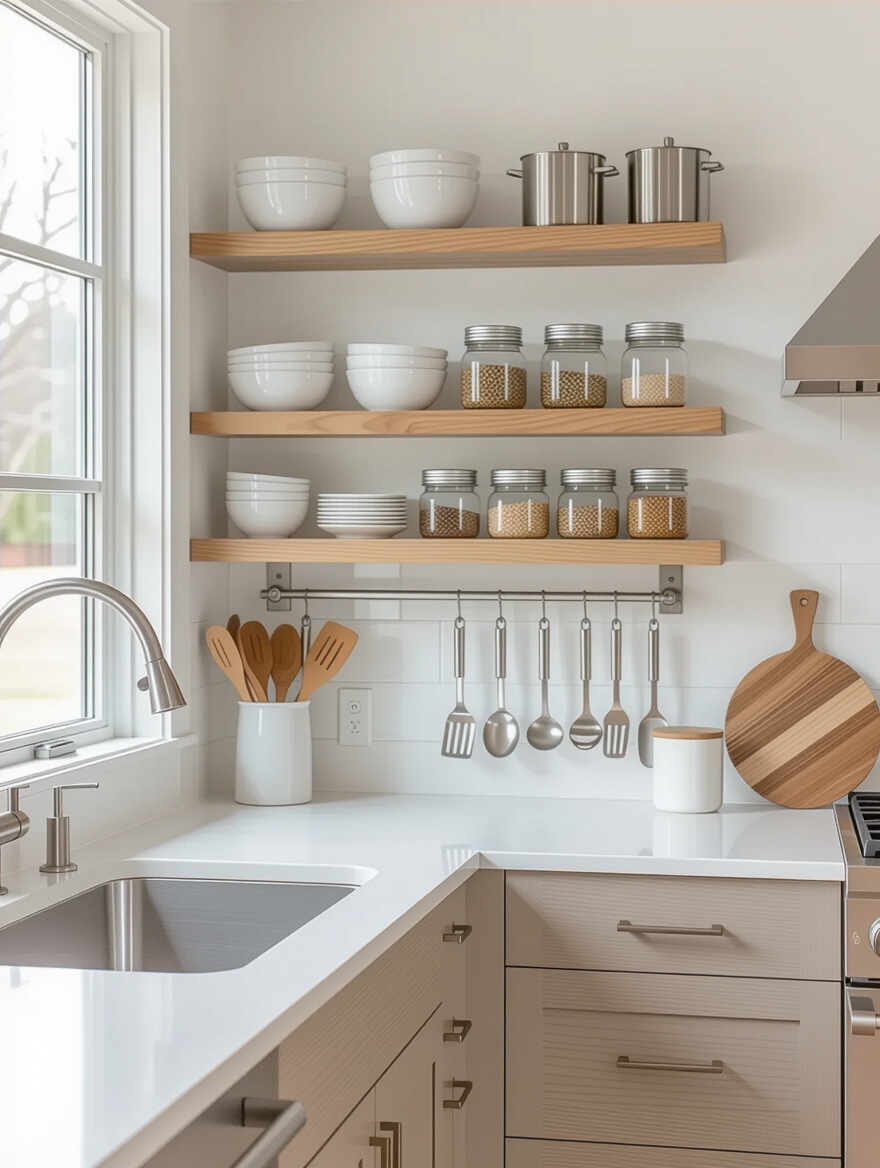
Clear counters are the difference between an open kitchen that looks designed and one that looks busy, so pros push storage onto the walls. A magnetic knife strip, a hanging rail with hooks for utensils, a wall-mounted spice rack, and a pegboard panel all move daily tools off the surface and into reach. Most go up in under an hour with a drill.
Put tools on the wall, right where you use them
The bonus is that wall storage looks intentional when it is arranged with a little care. A row of matching brass hooks or a tidy rail of utensils looks like a design choice, while the same tools in a counter crock look like clutter.
Keep the wall systems near where you actually use the tools, knives and utensils by the prep zone, spices by the stove. A hack only helps if it lands where your hand reaches for the thing.
Pick the hidden-storage hack for your biggest clutter source.
🎯Counter gadgets everywhere
An appliance garage hides the toaster and blender behind a roll-up door.
🎯A useless corner cabinet
A lazy Susan or magic corner turns dead space into real storage.
🎯Overflowing trash on display
A pull-out bin cabinet keeps trash and recycling out of sight.
Versatile, Multi-Functional Furniture
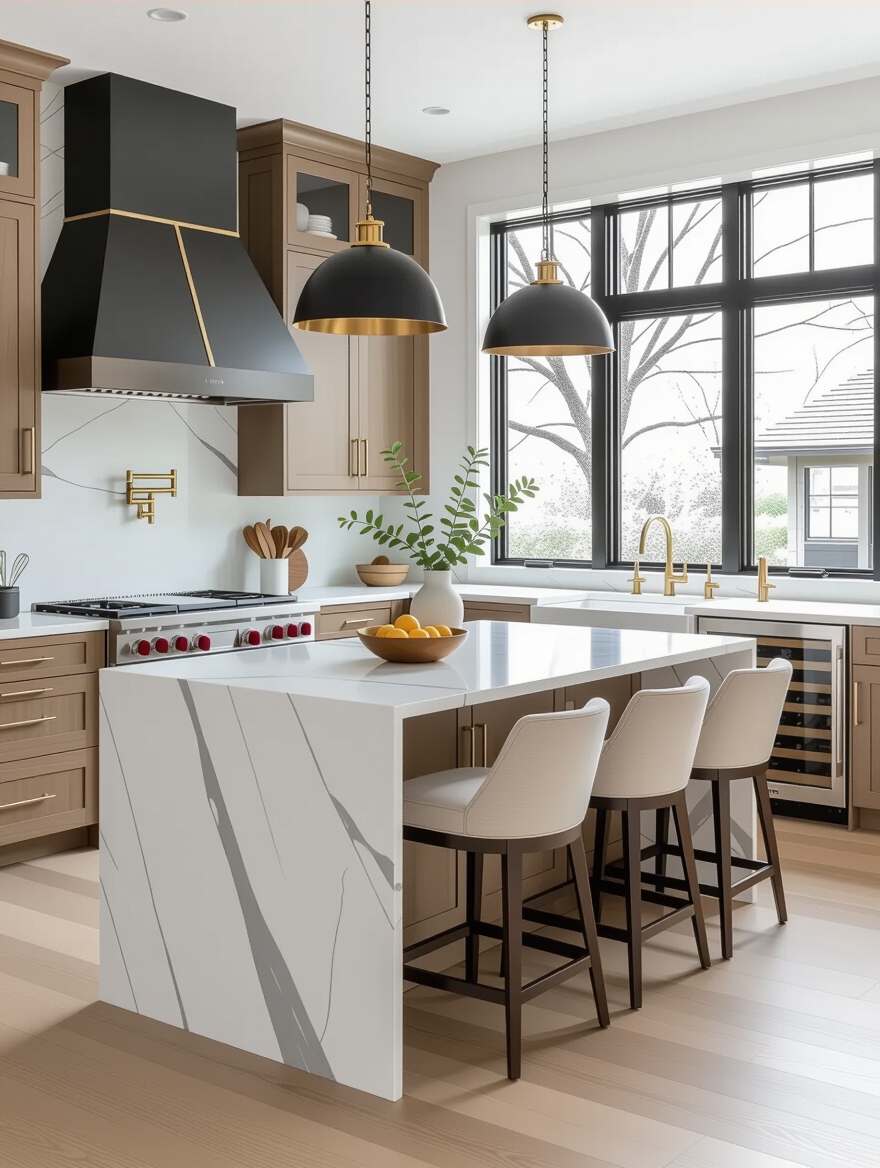
In an open kitchen the furniture is on display and usually doing two jobs, so pros choose pieces that flex. A drop-leaf or extending table, a storage bench, a bar cart that rolls where it is needed, and stools that tuck fully under the island all adapt as the space shifts from cooking to hosting.
The hack is buying fewer, harder-working pieces. One bench with storage beats a chair plus a separate bin, and a console that doubles as a buffet earns its footprint twice. In a smaller open kitchen especially, multi-use furniture keeps the floor clear and the sightlines open.
- Choose a table that extends for guests and shrinks for daily use.
- Pick seating and benches that hide storage inside.
- Use a rolling cart so one surface serves prep, coffee, or a bar.
A Functional Open Kitchen Island

No surprise that the island is the hack pros lean on hardest, because in an open kitchen it does four jobs at once: prep, storage, seating, and a soft border to the living area. The trick is loading it with function, storage on every face, an overhang for stools, maybe a prep sink, while keeping it sized to the room, the way the smartest small kitchen island ideas do.
Hold 36 to 42 inches of clearance around it so it never clogs traffic, and seat people on the living-room side so the cook faces the party. A custom island runs $3,000 to $6,000, but a stock cabinet base topped with butcher block or stone delivers most of the benefit for a fraction of that.
- Build storage into every side of the island you can.
- Leave 36 to 42 inches of clearance so it never blocks the flow.
- Seat guests on the living side so the cook stays social.
👍Multi-use furniture wins
- +Fewer pieces keep the sightlines open
- +Each item earns its footprint twice
- +Flexes from weeknight to dinner party
👎Watch out for
- –Convertible pieces can feel flimsy if cheap
- –Too many gadgets-in-one get fussy to use
- –Storage furniture still needs editing inside
Define Zones for Cooking and Gathering

Because an open kitchen shares a floor with the dining and living areas, pros quietly draw rooms with furniture and finishes. A rug under the table, the island edging the kitchen, and the back of a sofa facing away all signal where one zone stops and the next begins.
The hack is using two or three subtle cues, kept minimal, so the space stays open while everyone instinctively knows where to cook, eat, and relax, the same zoning logic behind any well-planned kitchen design.
- Use a rug and a light fixture to mark the dining zone.
- Let the island act as the kitchen’s built-in border.
- Keep zone cues to two or three so the space stays open.
Thoughtful Furniture Arrangement for Sightlines

How you place furniture decides whether an open kitchen feels connected or chaotic, so pros guard the sightlines. The goal is a clear line from the kitchen to the living area and back, so the cook stays part of the room and the messy work zones stay off the main view.
Keep the lines of sight low and clear
Keep furniture low and leggy near the boundaries so the eye and light travel over and under it, and float the seating rather than ramming it against the walls. A sofa with a low back can divide the space without blocking the connection that made you open it up.
I recommend aiming the best views on purpose. Point seating toward a window or the tidy side of the island, and angle the sink and prep zone away from where guests sit, so the open layout always shows its best face.
Blend Appliances Into the Design
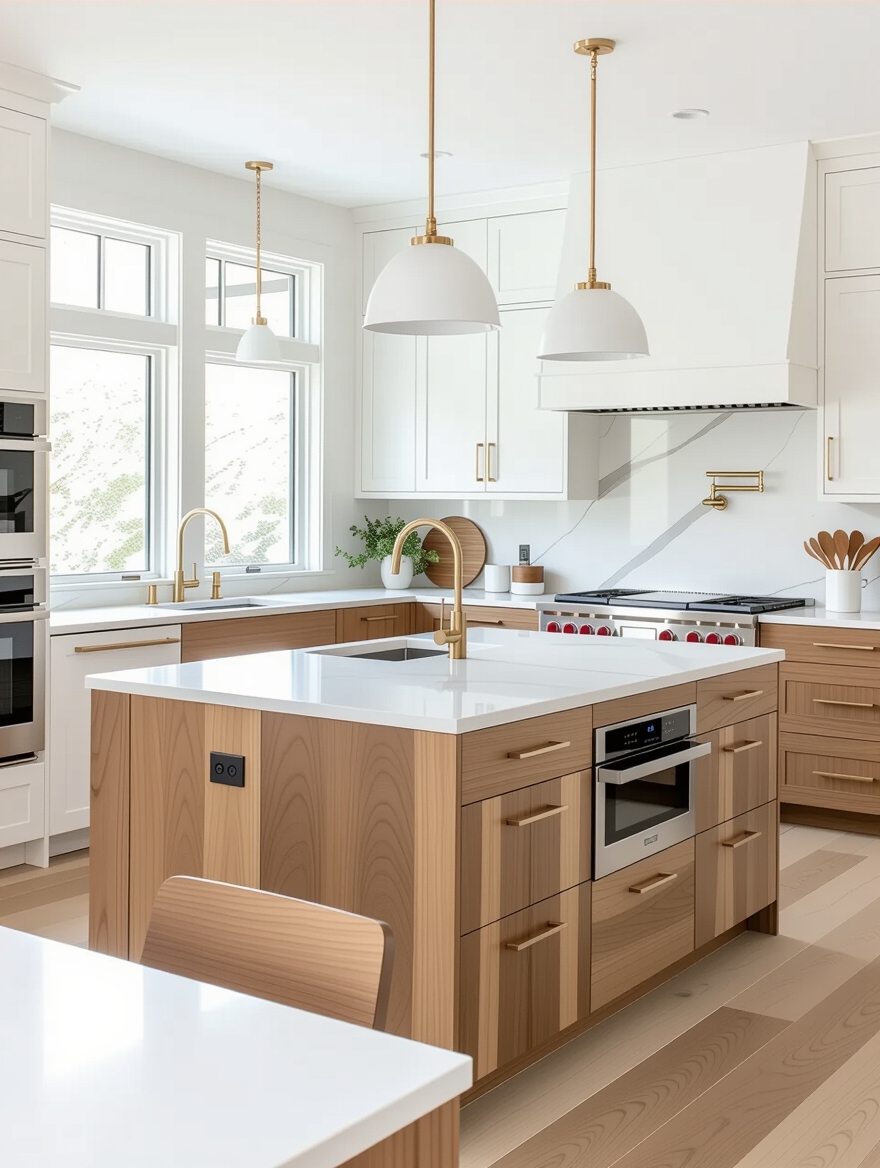
Appliances that shout break the calm of an open kitchen, so pros work to make them disappear. Panel-ready refrigerators and dishwashers wear cabinet fronts, a counter-depth fridge sits flush, and built-in or wall ovens tuck into the cabinetry flush with the run.
Make the appliances quiet and recede
Sound matters as much as looks here, because you hear everything from the sofa. Choose a quiet dishwasher rated around 44 decibels or lower and a range hood that truly vents outside, since odor and noise now travel the whole floor.
If a full panel-ready kitchen is out of budget, a coordinated stainless or matte-black suite still looks calmer than a mismatched mix. Consistency is the cheap version of the hack.
Brighten the Space With Light Colors

The simplest hack for making an open kitchen feel larger is leaning light. Light is free square footage. Pale cabinets, walls, and counters bounce daylight across the whole floor, so the space feels bigger and airier than its square footage.
Pros pair that with reflective touches, a glossy backsplash, a big mirror, polished hardware, to push light deeper, and they keep the bold color to accents so the base stays calm. A light floor run in one direction ties it together and stretches the room further, a trick you see in many a green kitchen people love.
- Choose pale cabinets and counters to bounce daylight around.
- Add a mirror or glossy backsplash to throw light deeper.
- Keep strong color to accents so the open space stays calm.
Who It Suits Best
These hacks suit almost any open kitchen, but they pay off most for a few people. If you live in a smaller home where the kitchen is always on view, the storage and counter-clearing tricks are close to essential. Busy families and anyone who entertains a lot get the most from the zoning, island, and multi-use furniture hacks, since those handle the daily mess and the crowd at once.
They suit budgets of every size, too, which is the real point. Renters and tight budgets can grab the low-cost wins, rails, baskets, light paint, an appliance garage, while a full remodel can build in toe-kicks, panel-ready appliances, and custom pull-outs from the start. Pick the hacks that match your kitchen and your wallet, and leave the rest.
Open Kitchen Hack Questions, Answered
?What is the best hack for storage in an open kitchen?
Going vertical and hidden. Take cabinets to the ceiling, add toe-kick drawers and a tall pull-out pantry, and use wall rails and an appliance garage to keep daily items reachable but off the counter. Open kitchens lose wall storage when the walls come down, so reclaiming it up high and inside the cabinetry is where pros focus first.
?How do you keep an open kitchen from looking cluttered?
Clear the counters and hide the mess. Move tools onto wall rails and into hidden drawers, give every gadget a closed home, and keep only a few styled items on display. Pair that with clear zones and a quick daily reset, and the open kitchen stays calm because nothing is forced to pile up on the surfaces.
?Do I need to remodel to improve my open kitchen?
Usually not. Most of these hacks, wall organizers, multi-use furniture, better lighting, hidden bins, work without moving a wall or replacing cabinets. A remodel lets you build in toe-kick drawers and panel-ready appliances from the start, but renters and tight budgets can still capture most of the benefit with low-cost, removable fixes.
?How do pros make appliances blend into an open kitchen?
Mainly with panel-ready fronts and counter-depth sizing, so the fridge and dishwasher wear cabinet doors and sit flush with the run. Built-in ovens and minimalist controls help too. On a budget, a single coordinated finish, all stainless or all matte black, looks far calmer than a mismatched mix, and a quiet dishwasher keeps the noise down.
Small Hacks, Big Difference
A great open kitchen is rarely the result of one big move; it is a stack of small hacks that pros repeat because they work: reachable storage, hidden clutter control, smart zoning, quiet appliances, and light that does double duty. None of them require knocking down more walls, and most cost far less than a renovation.
If your open kitchen feels off, you might start with the single hack that targets your biggest daily annoyance, the cluttered counter, the crowded corner, the appliance you hate looking at, and build from there. One solved problem usually makes the next one obvious.
More Hair Inspiration


