

Stand in the doorway of a well-laid-out open kitchen and you feel it before you analyze it: light reaching the far wall, the cook turning easily from sink to stove, conversation drifting between the island and the sofa. None of that is luck. It comes from the open kitchen layout, the shape and flow of the room, which decides how the whole space lives.
Modern living asks a lot of a kitchen, that it cook, gather, and connect to the rest of the home at once, and the right layout makes all three feel easy. Below are the open concept kitchen layouts that work for real homes, from tight galleys to sprawling U-shapes, with which one fits which space and how to make it flow.
Quick Answers
What is the best open kitchen layout for a small space? An L-shape or a galley-with-island. Both keep the work zone compact and the room open, using corners and a single island instead of bulky cabinet runs.
Which layout offers the most storage? A U-shape, since it wraps cabinetry on three sides. It needs more room, but no other open layout packs in as much counter and storage.
Do open kitchens still suit modern living? Yes, more than ever. The trick is matching the layout shape to your room and adding an island or peninsula to anchor the open space.
What an Inviting Open Kitchen Layout Does
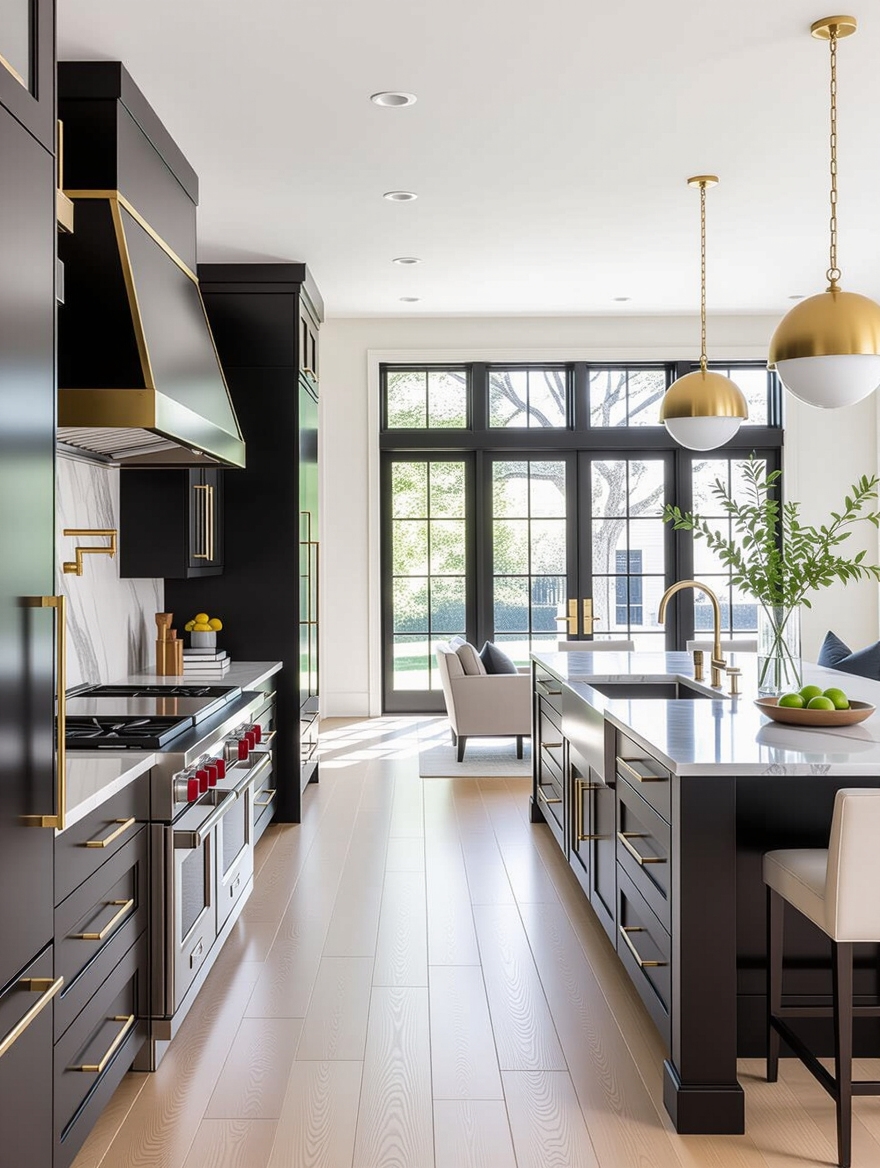
Before picking a shape, it helps to know what a good open layout is actually doing. It keeps the cook’s work zone, the sink, stove, and fridge, tight and efficient, while opening the room outward so light and people flow freely. The layout is the bones. Everything else is decoration on top.
An inviting open kitchen connects without losing function. You want a clear work triangle for cooking, an anchor like an island or peninsula to edge the space, and unobstructed sightlines to the living area. Get the shape right and the room feels both social and easy to cook in, which is the whole promise of going open.
- A tight work triangle keeps cooking efficient even in an open room.
- An island or peninsula anchors the space and marks the kitchen’s edge.
- Clear sightlines connect the cook to the rest of the home.
Open Kitchen Layouts for Small Spaces
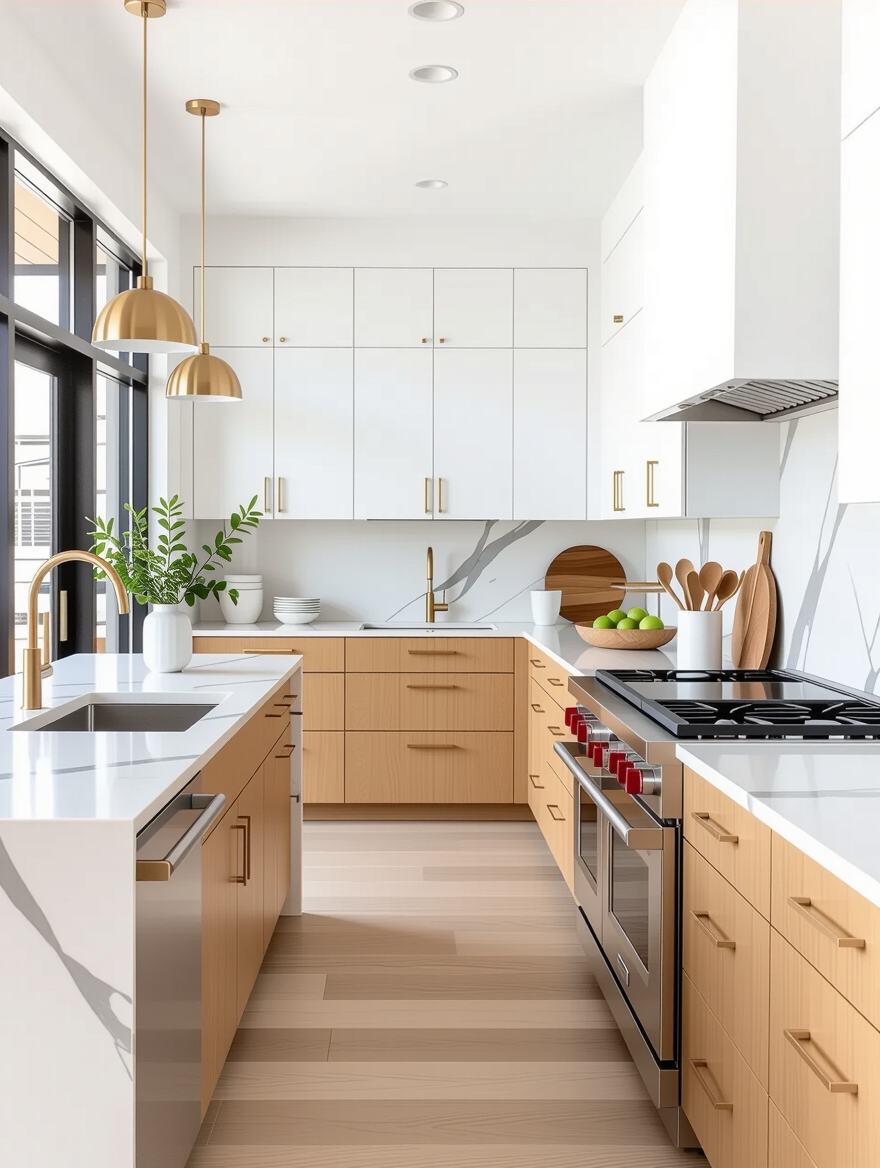
Small homes gain the most from going open, because borrowing sightlines makes a tight kitchen feel far larger. The layouts I recommend most here are the L-shape, which uses two walls and leaves the room open, and the galley-with-island, which keeps everything within a step or two. Both avoid the bulky cabinet runs that would close a small room in.
Keep it light and low to protect the openness: pale cabinets, a slim island or a peninsula where a full island will not fit, and stools that tuck fully under. A single run of open shelving keeps one wall from feeling heavy. In a small open kitchen, every inch you do not block is space you get to keep, the same logic behind clever small kitchen layout tricks.
- Choose an L-shape or galley-with-island to keep a small kitchen open.
- Use a slim peninsula where space is too tight for a full island.
- Keep cabinets pale and stools tucked to protect the open feel.
👍Open layouts give you
- +Shared light across the whole floor
- +A social kitchen connected to the living space
- +A bigger, more flexible feel
👎But ask you to manage
- –Noise and cooking smells that travel
- –Clutter that is always on view
- –Lost wall storage where cabinets used to go
Open Kitchen Design for Large Homes
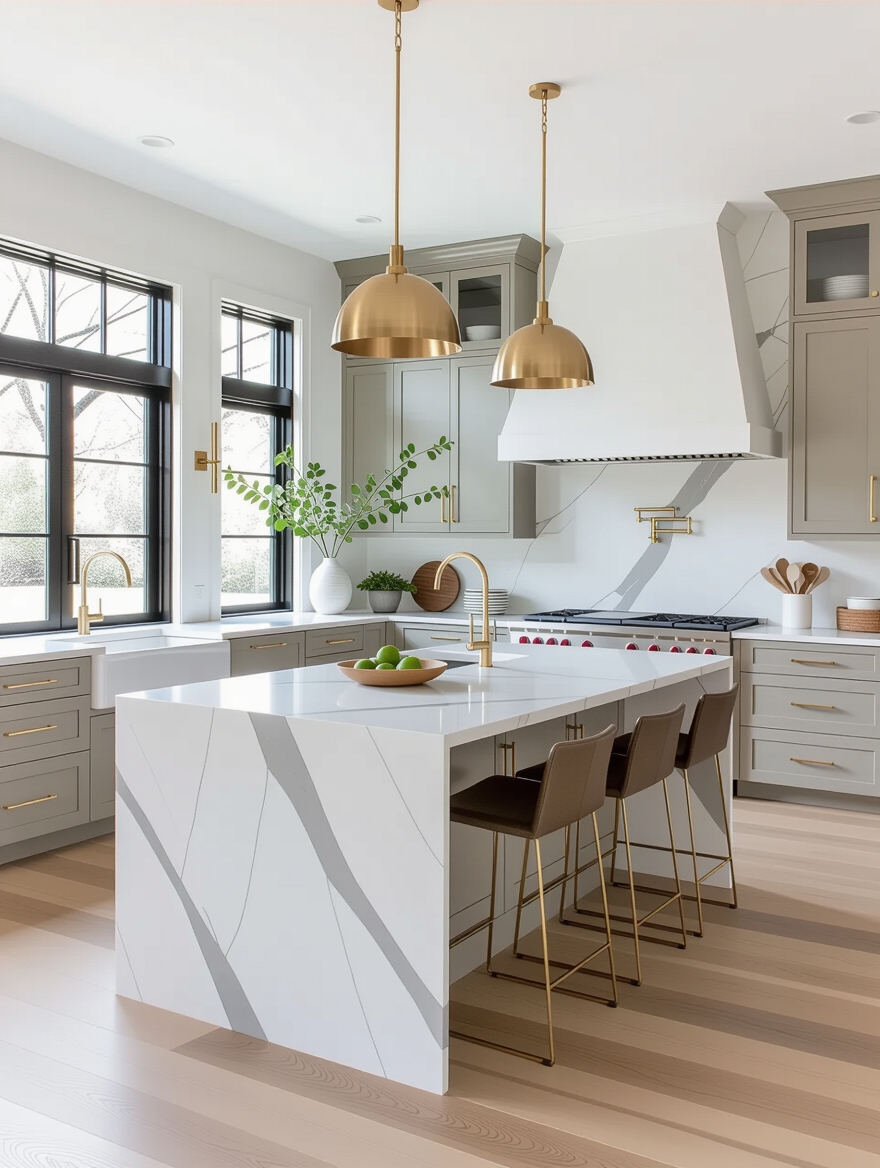
Big open kitchens have the opposite problem: too much space, which can feel cavernous and cold if it is not organized. The fix is to break the volume into purposeful zones, a cooking core, a generous island, a dining area, a casual seating nook, so the room feels gathered. Big rooms need zones.
A large island or even a double island earns its keep here, giving the cook prep space and the room a clear center. I tell clients with big kitchens to think in zones first and finishes second, because an oversized room without structure just feels like a hotel lobby.
Use rugs, lighting, and a consistent palette to tie the zones together so the scale feels generous. In a large home, the layout’s job is to make all that space feel intentional and warm.
L-Shaped Open Kitchen Layouts That Work
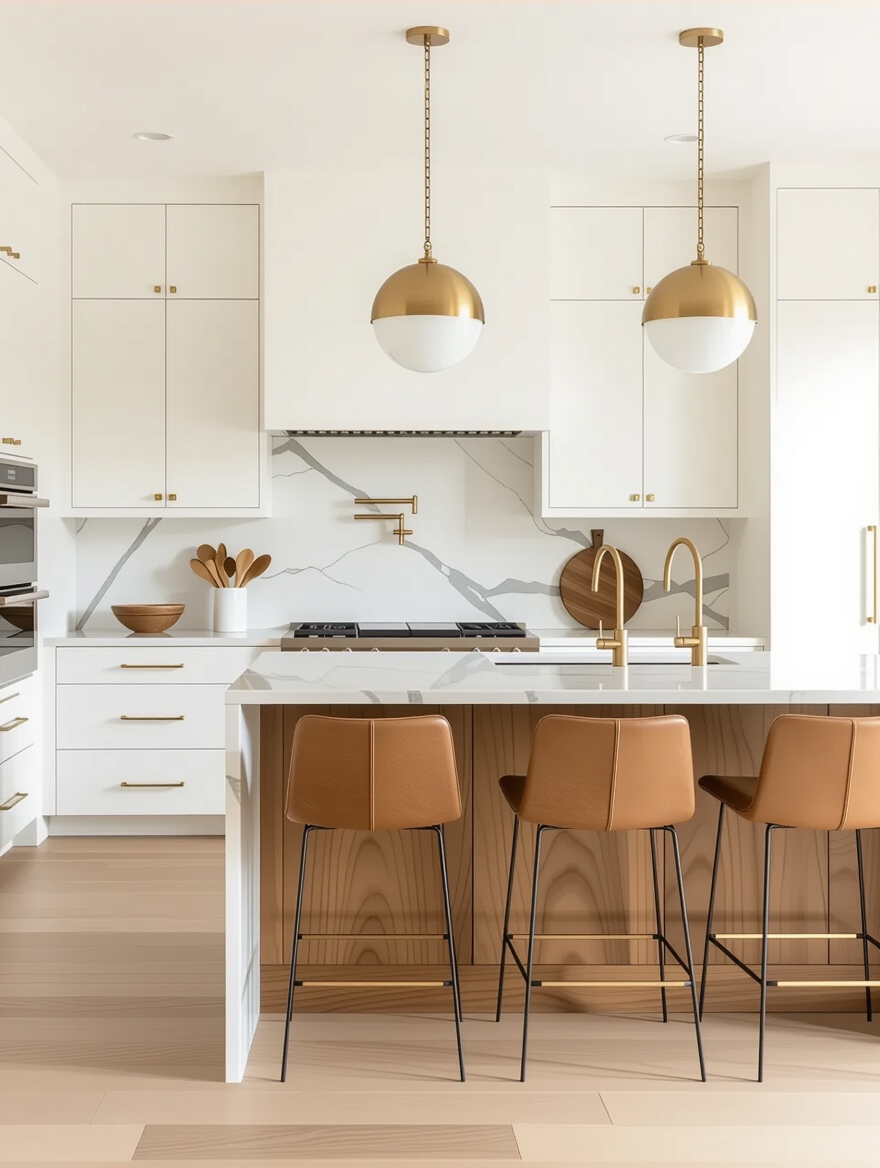
The L-shape is the most versatile open layout, which is why it fits so many homes. Two perpendicular runs of cabinetry use a corner efficiently and leave the rest of the room open for an island, a table, or a path to the living area. It suits small and large spaces alike, and it keeps the work triangle compact while opening two full sides to the room.
Add an island in the open leg of the L and you get extra prep, seating, and a natural border to the living zone, all without boxing anything in. For most modern open kitchens, the L is the safe, smart starting point. It rarely disappoints.
- Run cabinets along two perpendicular walls to use the corner well.
- Leave the open sides clear for an island, table, or walkway.
- Add an island in the open leg for prep, seating, and a soft border.
A few layout terms worth knowing.
📖Work triangle
The path between sink, stove, and fridge; keeping it tight makes cooking efficient.
📖Galley
A corridor layout with counters on one or two parallel walls.
📖Peninsula
A counter run attached to a wall or cabinet at one end, like a connected island.
U-Shaped Open Kitchens for Maximized Storage

When storage and counter space top your list, the U-shape wins. Wrapping cabinetry around three sides gives you more storage and work surface than any other open layout, with the cook surrounded by everything within reach. It is the workhorse for serious cooks and big families.
The catch is that a U needs room, since three walls of cabinets can feel enclosed in a tight space. Keep at least one side open to the living area, or replace one leg with a peninsula or island so it still feels open. Light counters and uppers, or open shelving on one leg, keep a U-shape from feeling heavy.
- Wrap three sides in cabinetry for maximum storage and counter space.
- Open one leg to the living area so it still feels connected.
- Use light finishes or open shelving so the U does not feel closed in.
Galley-Style Open Kitchens, Efficient and Modern
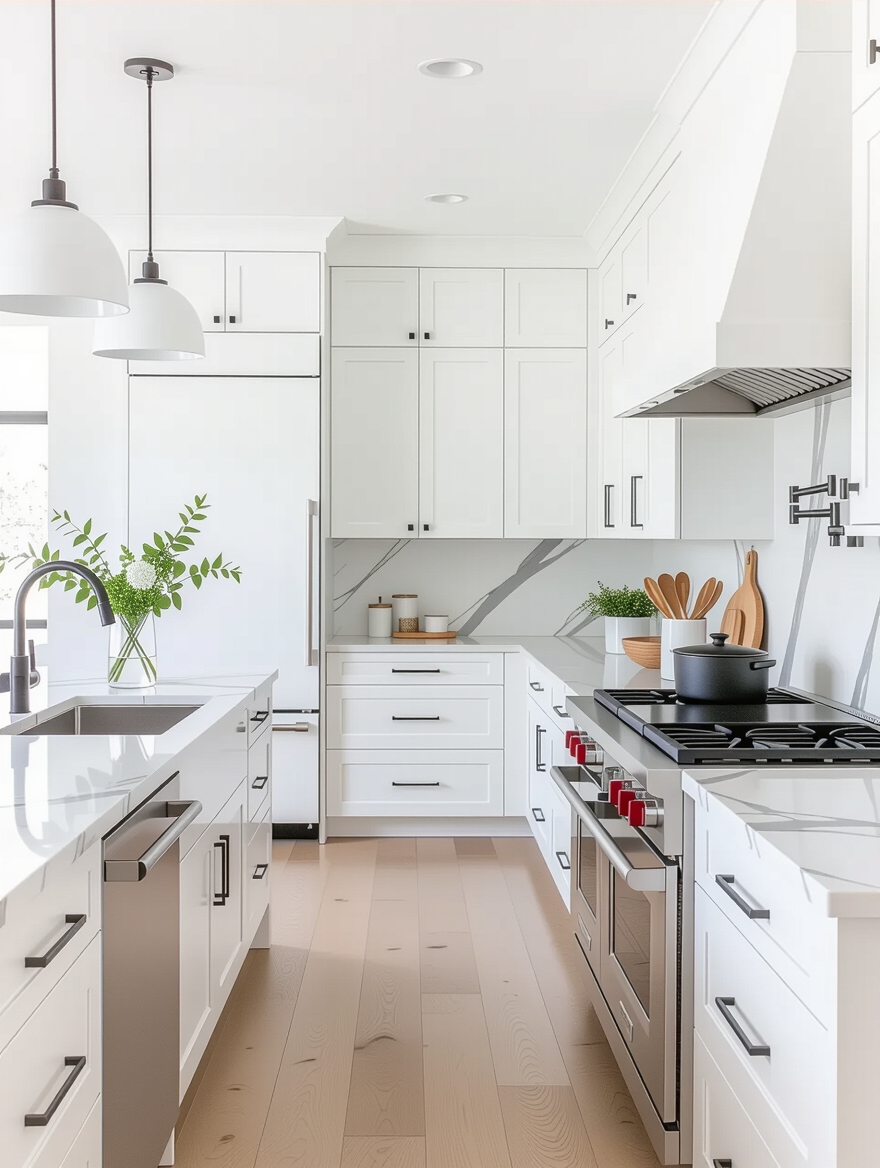
The galley, two parallel counter runs, is the most efficient layout there is, putting everything a single step away, which can cut real minutes off a busy dinner prep. Two runs, one easy step. Opened up on one end to the living space, a galley loses its old corridor reputation and becomes a sleek, modern cooking zone that still connects to the room.
Open one end and the galley turns modern
It shines in narrow spaces and apartments, where two tight runs make better use of a long, slim footprint than any other shape. The trick for modern living is to open at least one end and keep the aisle generous, around 42 inches, so two people can pass.
I love a galley with an island on the open side for city kitchens. You get the efficiency of parallel runs plus the social anchor of an island, in a footprint that would defeat an L or a U, the kind of thinking behind smart modern kitchen architecture.
💡Storage Tip
In a U-shaped open kitchen, the corners are prime real estate that often go to waste. Add a lazy Susan or a magic-corner pull-out so the deep corner cabinets actually earn their space.
Islands That Keep the Flow and Connection
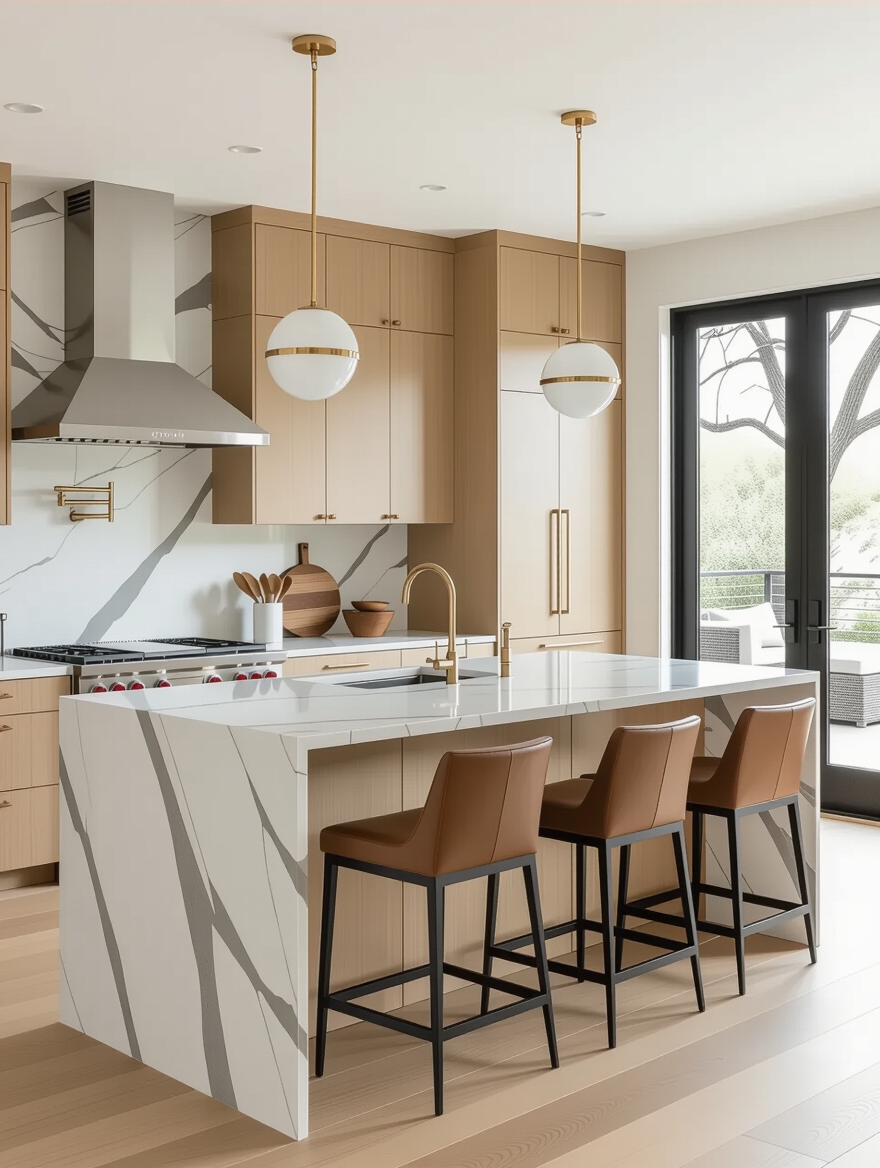
Whatever the shape, an island is what ties an open kitchen to the rest of the home. It edges the kitchen, adds prep and storage, seats guests, and gives the living area a place to stop, all at once. The key is sizing it to the room and the layout: leave 36 to 42 inches of clearance on every side so it never clogs the flow, and orient seating toward the living space so the cook stays in the conversation.
In a small kitchen a slim island or peninsula does the same job, while a large room can carry a double island, the way the smartest island setups everyone copies prove.
- Size the island to leave 36 to 42 inches of clearance all around.
- Face the seating toward the living area to keep the cook social.
- Use a peninsula in small kitchens where a full island will not fit.
Breakfast Bars That Define Open Kitchens

A breakfast bar is the simplest way to add seating and a soft boundary to an open kitchen at once. A raised counter or an extended island edge with a few stools gives a casual spot for coffee, homework, and quick meals, and it marks where the kitchen ends without a wall. Bars are quietly social.
Bars work where a full dining table will not fit, which makes them perfect for apartments and small open plans. Allow about 24 inches of width per stool and a 12-inch overhang for knees, and the bar stays comfortable for everyday use.
The bonus is social. Seating someone at the bar puts them right across from the cook, so the person making dinner is never working alone. In a busy household, that little counter becomes the most-used seat in the house.
Cozy, Functional Dining Integration
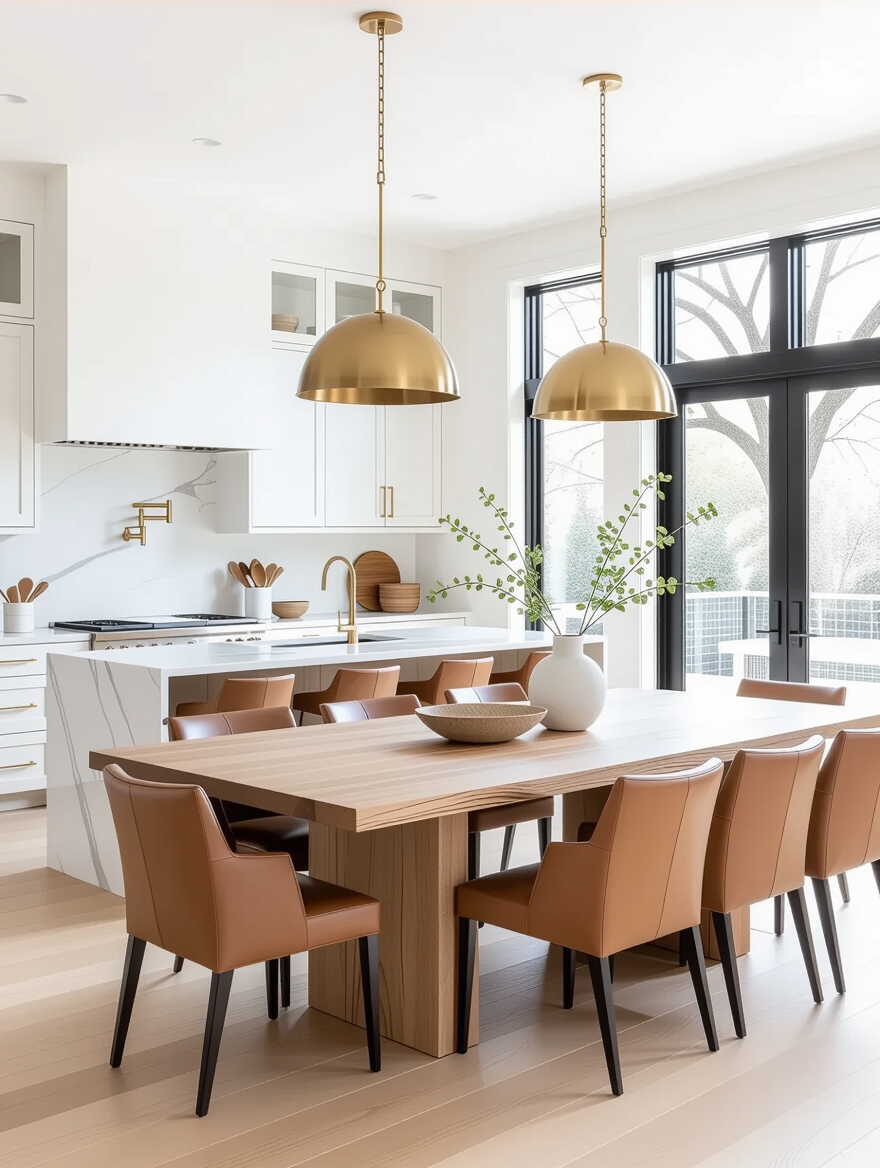
Folding a real dining area into the open kitchen is what makes everyday meals happen, since the table sits right where the food is. A table just off the island, or a built-in banquette in a corner, turns the open space into a place the whole family actually eats, the same connected feel behind the best open-plan kitchen and living room combos.
Keep the table a few steps from the island
Match the dining zone to the kitchen with a shared palette and one defining light fixture, so it feels like part of the same room. A banquette is the space-saver here, seating more people in less room and hiding storage under the bench.
Keep the table within a few steps of the island so serving and clearing stay easy. The closer the cooking and eating zones sit, the more the open layout earns its keep at dinnertime.
Blending the Living Room and Open Kitchen
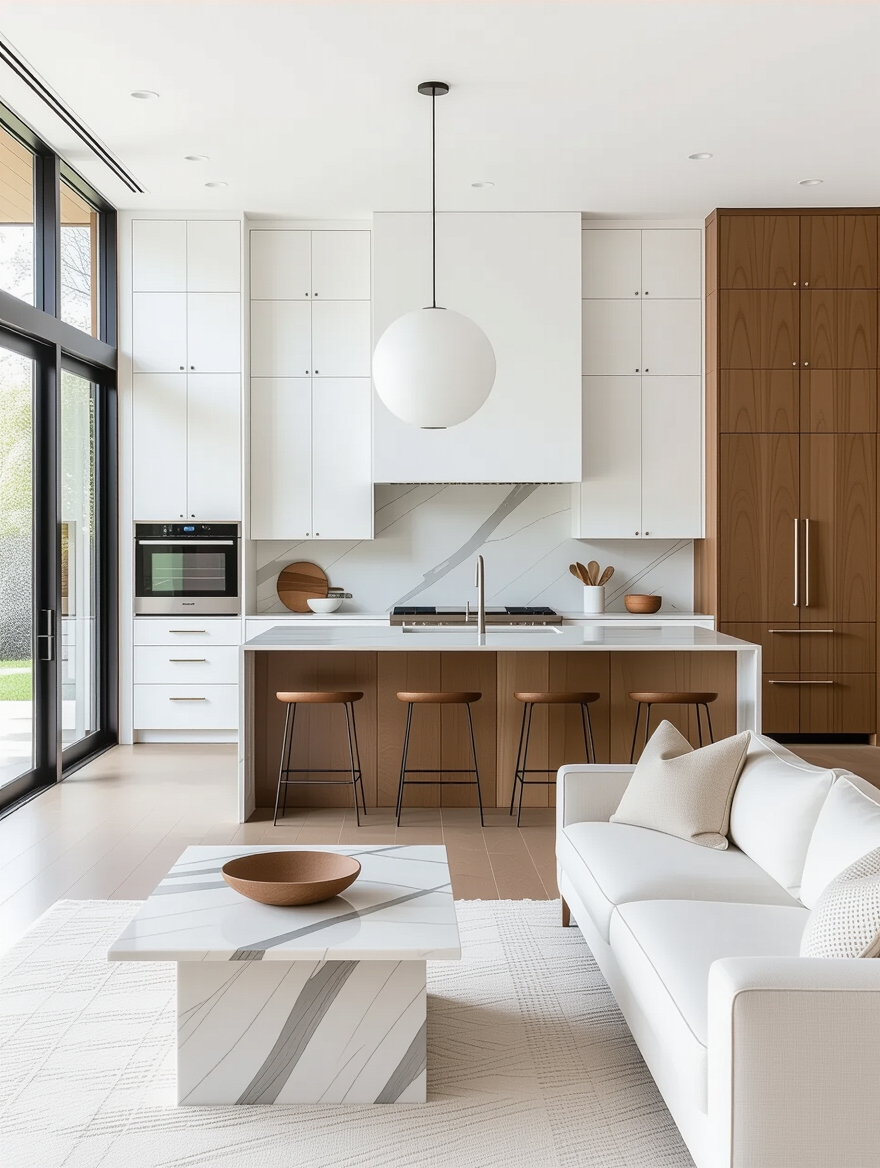
The final job of an open layout is to blend the kitchen and living room into one cohesive space, not just knock down the wall between them. That means carrying a palette, a flooring, and a lighting language across both zones so the eye reads them as a single, intentional room.
Blend the two, do not just connect them
Repeat a material or two, warm wood, a metal finish, a paint color, from the kitchen into the living area, and let the back of a sofa or an island quietly mark the line between them. Run one continuous floor throughout to stitch the two together, the same approach behind any modern, design-led kitchen.
When it works, you stop noticing where the kitchen ends and the living room begins, which is exactly the point. The two spaces share light, style, and life, and the whole floor feels bigger for it.
What to Expect From an Open Layout
Choosing an open kitchen layout is mostly about honest trade-offs. Expect to gain light, connection, and a bigger-feeling home, and expect to manage more noise, cooking smells, and visible clutter in return. A good range hood, enough closed storage, and soft surfaces in the living zone handle most of the downsides, so plan for them from the start.
On cost and effort, a layout change that moves cabinets or a wall is a real renovation, often several thousand dollars and a licensed contractor for anything structural. Rearranging an island, adding a peninsula, or opening one end of a galley is far cheaper. Match the layout to your space and your budget, and an open kitchen pays you back every single day.
Pick the Shape, Then the Style
An open kitchen lives or dies by its layout. Match the shape to your space, an L for flexibility, a U for storage, a galley for efficiency, an island to anchor it all, and the room will cook well and connect easily before you have chosen a single finish. The style sits on top of good bones.
If you are planning or reworking an open kitchen, bookmark this list and start by naming your layout, then build the island, seating, and zones around it. Get the shape right for how you live, and modern open living falls into place from there.
More Looks We Love


