
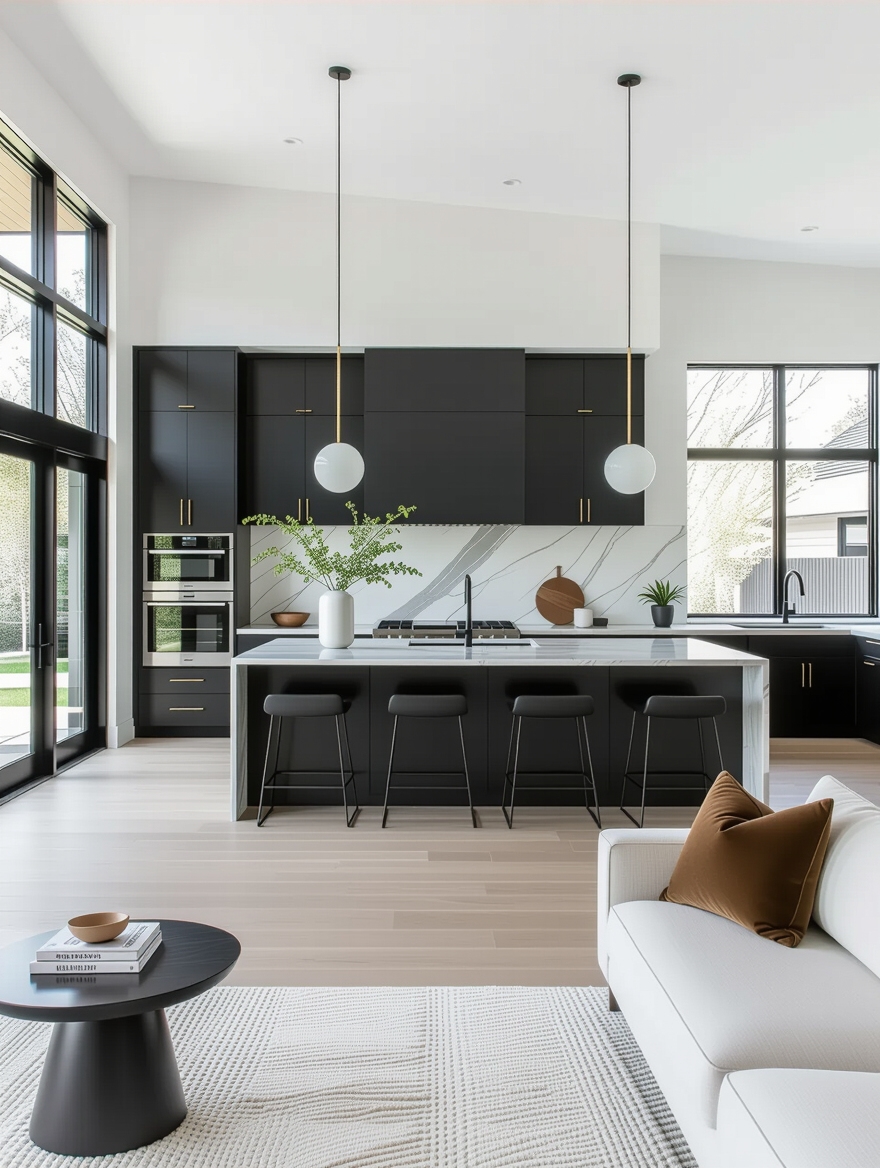
Walk into a lot of open-plan homes and you can feel the seam: a kitchen decorated by one set of rules and a living room by another, sharing a floor but not a vibe. The best open concepts hide that seam, so the eye flows from couch to counter without a jolt. That is the whole art of an open kitchen-living room, and it is more about cohesion than knocking down walls.
These are the must-sees that make an open plan work, from defining zones without walls to choosing a floor that connects both rooms. Most are about planning and a few smart choices rather than big money, so you can make a connected space feel calm and intentional instead of like two rooms crammed together.
What Makes an Open Plan Work
- Connect, then define: tie the two rooms together with a shared palette, then use an island, a rug, or color to mark each zone.
- Run one floor throughout: a single continuous flooring is the biggest trick for making an open plan feel like one space.
- Hide the kitchen clutter: in an open plan the kitchen is always on display, so lean hard on closed, hidden storage.
- Plan the sightlines: the cook should face the living space, and the messy zones should sit out of the main view.
Togetherness in a Spacious Design

The reason open concepts took over is simple: people want to be together. Cooking while the kids do homework, entertaining without being stuck in a separate kitchen, keeping an eye on the living room while dinner simmers, all of it happens when the wall comes down. The open plan reflects how families actually live now, not how houses were divided up decades ago.
Beyond togetherness, an open layout lets light and sightlines travel between the spaces, so the whole area feels larger and brighter than the same square footage split into rooms. That sense of openness is the payoff people fall for, and it is why the layout still tops most renovation wish lists.
The trade-off, and the reason the rest of this list exists, is that an open kitchen is always on display and the two spaces can clash if you are not deliberate. Plan for both the connection and the zoning, and you get the togetherness without the chaos.
Smart Space Optimization Ideas

An open plan only works if you plan it around real use, so start by mapping where each activity happens. Decide where the cooking, eating, and lounging zones sit, keep the kitchen’s work triangle tight, and make sure the paths between zones stay clear so traffic flows instead of cutting through the living room. Good open layouts feel easy because the planning did the work.
- Map the cooking, dining, and lounging zones before placing anything
- Keep the kitchen work triangle tight even in a big open space
- Leave clear pathways so traffic flows around, not through, the living area
- Position the island or seating to bridge the kitchen and living zones
Is an open kitchen-living room right for you? Be honest:
1Does a sink of dishes on display stress you out?
If yes, plan extra closed storage and a sink you can tuck behind an island lip, since an open kitchen is always visible.
2Do you cook with strong smells often?
If yes, invest in a powerful range hood, since open plans let cooking smells travel into the living space far more than a closed kitchen.
Smooth Kitchen and Living Integration
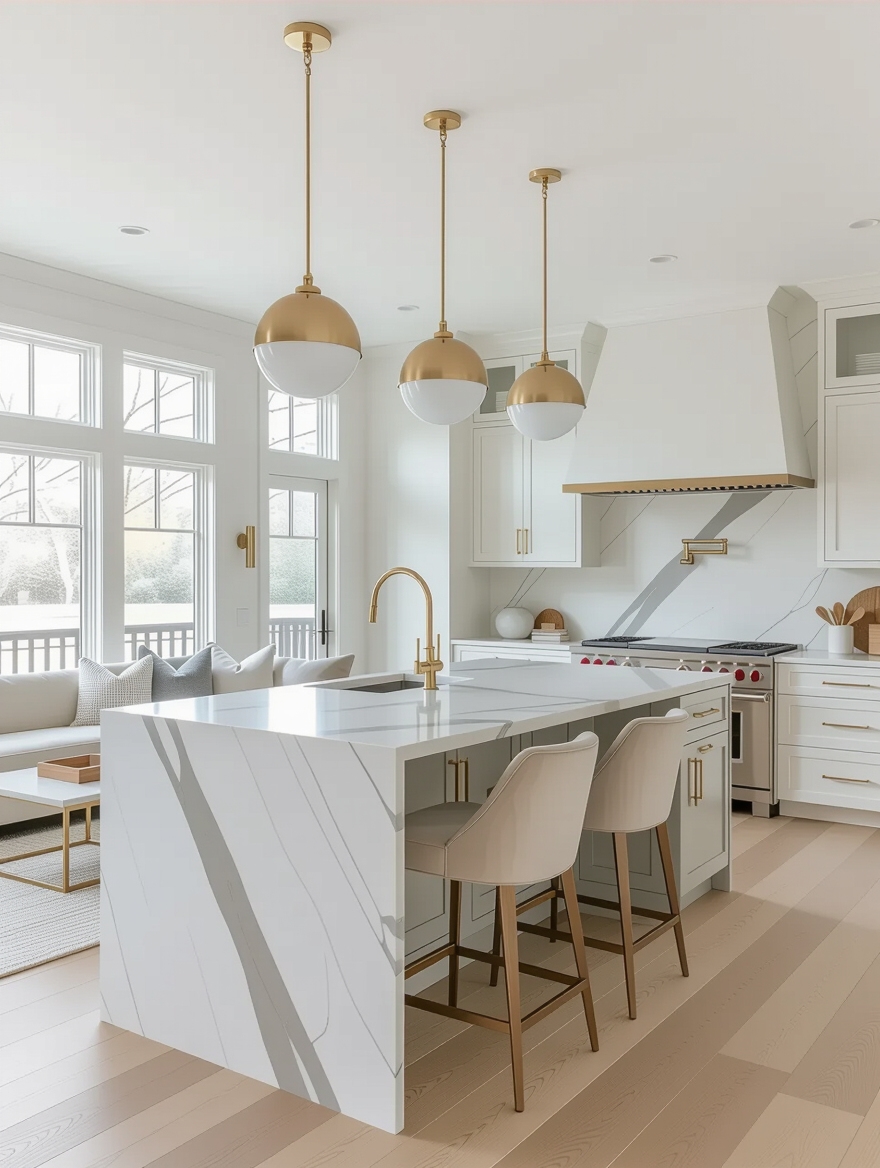
The secret to a connected open plan is a shared palette that carries across both spaces. When the kitchen and living room pull from the same family of colors, woods, and metals, the eye flows between them as one room instead of stopping at an invisible border. You do not need everything to match, just to relate, with a few repeating tones that thread the spaces together.
Pull one or two colors from the living room into the kitchen, repeat a wood tone or a metal finish in both, and echo a material across the zones, like the same stone on the island and a side table. That gentle repetition is what makes an open plan feel designed as a whole, the same instinct behind the best merged open layouts.
- Pull one or two colors from the living room into the kitchen
- Repeat a wood tone or metal finish in both zones
- Echo a material, like the same stone, across the spaces
Island Designs for Open Spaces

In an open plan, the island does the job a wall used to, anchoring the kitchen and drawing the line to the living space without closing anything off. A well-placed island faces the cook toward the room, gives guests a place to perch, and quietly marks where cooking ends and gathering begins. It is the single most useful piece in an open kitchen-living room.
- Use the island to anchor the kitchen and face the cook toward the room
- Add seating so it becomes the natural gathering edge between zones
- Lean on hidden storage so the always-visible island stays calm
- Tie its finish to the living room, much like a curated island design
The open-concept belief worth questioning:
❌ Myth: Open-concept always makes a home feel bigger
✅ Reality: It opens sightlines, but it also puts the kitchen mess on display and lets noise and smells travel. The lasting version pairs it with strong storage, a good hood, and clear zoning.
❌ Myth: You have to remove a whole wall
✅ Reality: Not always. A widened doorway, a half-wall, or a pass-through gives much of the open flow for far less demolition and cost.
Lighting Ideas for Open Concepts

Lighting is one of the most powerful ways to define zones in an open plan without building a single wall. Different fixtures over different areas, pendants over the island, a chandelier over the dining table, soft lamps in the lounge, quietly tell the eye where one zone ends and the next begins. The change in lighting style does the zoning for you.
The trick is keeping the fixtures related in finish or feel so the space still reads as one, while varying them enough to mark each zone. Put each area on its own dimmer so you can light the kitchen bright for cooking and the lounge low for relaxing at the same time, the layered approach behind any mood-changing kitchen lighting.
- Use distinct fixtures over the island, dining, and lounge to mark zones
- Keep finishes related so the open space still reads as one room
- Put each zone on its own dimmer for independent control of the mood
Durable Flooring for a Connected Look

Running one continuous flooring through the kitchen and living room is the single biggest move for making an open plan feel like one space. When the same floor flows under both the couch and the counter, the eye reads the whole area as connected, where a change in flooring chops it back into separate rooms. Continuity is the goal here.
One Floor, Marked by Rugs
The catch is that the floor has to survive the kitchen and feel good in the living room, so choose a material that does both. Luxury vinyl plank, porcelain that looks like wood, and sealed hardwood all handle kitchen spills while bringing warmth to the lounge, giving you durability and a connected look at once.
If you want to subtly mark the kitchen zone, do it with a rug in the living area rather than a change in flooring, so the floor stays continuous. That keeps the open feel while still giving the lounge its own soft anchor.
📋Flooring for an open plan
- ✓Is it one continuous material across both spaces?
- ✓Can it handle kitchen spills and still feel warm in the lounge?
- ✓Are you marking zones with rugs, not a change in flooring?
- ✓Does the tone tie into both the kitchen and the living palette?
Storage to Keep It Clutter-Free

In an open plan the kitchen is always on display, so hidden storage is not optional; it is what keeps the whole space looking calm. Every dish left out and every gadget on the counter is visible from the couch, which means leaning hard on closed cabinets, deep drawers, and clever organizers is the only way to keep an open kitchen from feeling messy. Clear counters are the open plan’s best friend.
- Lean on closed cabinets and deep drawers over open shelving here
- Add an appliance garage to hide small appliances off the counter
- Use a walk-in or appliance pantry to keep bulk storage out of sight
- Keep the island clear, since it is the most-seen surface in the room
Color Strategies to Define Zones

Color is the clever, wall-free way to mark zones while keeping the open plan cohesive. Working within one overall palette, you can give the kitchen island a bold color, paint an accent wall behind the lounge, or use a deeper tone in one zone to quietly signal where it begins. The shared base keeps the space unified while the accents do the dividing.
The key is restraint and repetition, so let one or two accent colors appear in both zones, even if one carries more weight in each. A green island in the kitchen echoed by green throw pillows in the lounge, for example, both connects the spaces and lets each have its own character.
This is the cheapest must-see on the list, since it is mostly paint and accessories. Used thoughtfully, color defines an open plan more gently than any divider, the same logic behind a confident bold-color kitchen.
Furniture for Open Concepts

In an open plan, furniture does the zoning a wall would, so how you place it matters as much as what you choose. A sofa with its back to the kitchen defines the lounge, a console or a pair of chairs marks a boundary, and a rug grounds each seating area, all without closing off the space. Arrange the pieces to create rooms within the room, and the open plan gains structure while staying open.
- Float the sofa with its back toward the kitchen to define the lounge
- Use a rug to ground each zone and mark its edges
- Keep furniture cohesive in style and palette so the whole space relates
- Add a console or chairs as a soft divider between zones
Smart Kitchen Tech Integration

Because an open kitchen is part of the living space, building in a little smart tech keeps it calm and convenient at once. Integrated speakers, lighting and shades on a single tap, and hidden charging keep cords and clutter out of sight while making the whole area easier to live in. The best tech here disappears into the room rather than cluttering it.
- Put lighting, shades, and music on smart controls for the whole open space
- Build in hidden charging so devices do not clutter the visible counters
- Choose integrated, panel-front appliances so the kitchen recedes into the room
- Plan any wiring during a renovation, when it is far cheaper than a retrofit
Open Concept Kitchen Living Room Questions
?How do I define zones in an open kitchen-living room without walls?
Use an island, lighting, color, and furniture instead of walls. An island anchors the kitchen, distinct fixtures over each area mark the zones, a bold accent color signals where one begins, and a floated sofa with a rug defines the lounge. Together they give structure while keeping the space open.
?Should the kitchen and living room match in an open plan?
They should relate, not match exactly. Pull from one shared palette, repeat a wood tone or metal finish, and echo a material across both spaces so the eye flows between them. A few repeating tones thread the rooms together while still letting each zone have its own character.
?What flooring is best for an open concept?
One continuous, durable material that suits both rooms, like luxury vinyl plank, wood-look porcelain, or sealed hardwood. Running the same floor throughout makes the open plan read as one space, while a change in flooring chops it back into separate rooms. Mark zones with rugs instead.
?How do I keep an open kitchen from looking messy?
Lean hard on hidden storage, since the kitchen is always on display. Use closed cabinets, deep drawers, an appliance garage, and a pantry to keep clutter off the counters, and keep the island clear since it is the most-seen surface. A powerful range hood also keeps smells from traveling.
Connect the Spaces, Define the Zones
A great open kitchen-living room balances two things at once: connecting the spaces so they flow as one, and defining the zones so each still has a purpose. Tie them together with a shared palette and one continuous floor, then mark the kitchen, dining, and lounge with an island, lighting, color, and furniture. Lean hard on hidden storage, since the kitchen is always in view.
Plan around how you really live, keep the sightlines and storage in mind, and a few smart choices will turn a big shared space into a calm, connected home. Get the connection and the zoning right, and the open plan delivers the togetherness everyone wants without the clutter and chaos that sink the ones done by accident.
More to Explore


