

The first open-plan home I styled had a beautiful modern kitchen and a cozy, traditional living room sharing one big room, and the two halves looked like they belonged to different houses. The cabinets were sleek and white, the sofa was tufted and brown, the rugs and art pulled in opposite directions. Nothing was wrong on its own. Together, they fought.
That is the whole challenge of an open living room and kitchen: the two zones of an open concept home are always in view at once, so they have to be paired, not just placed in the same room. Below are the style pairings that work, from modern minimalist to coastal to farmhouse, with the trick that ties any of them together: carrying one style and one palette across both spaces.
The Short Version
- An open living room and kitchen feel best when the two zones are paired as one cohesive style, not decorated separately.
- Pair the palettes first: a shared two-or-three-color scheme is what makes the spaces read as one room.
- Any style works, modern, rustic, coastal, mid-century, as long as you carry it across both zones.
- Repeat materials and finishes from the kitchen into the living area to seal the pairing.
The Airy, Modern Living Pairing
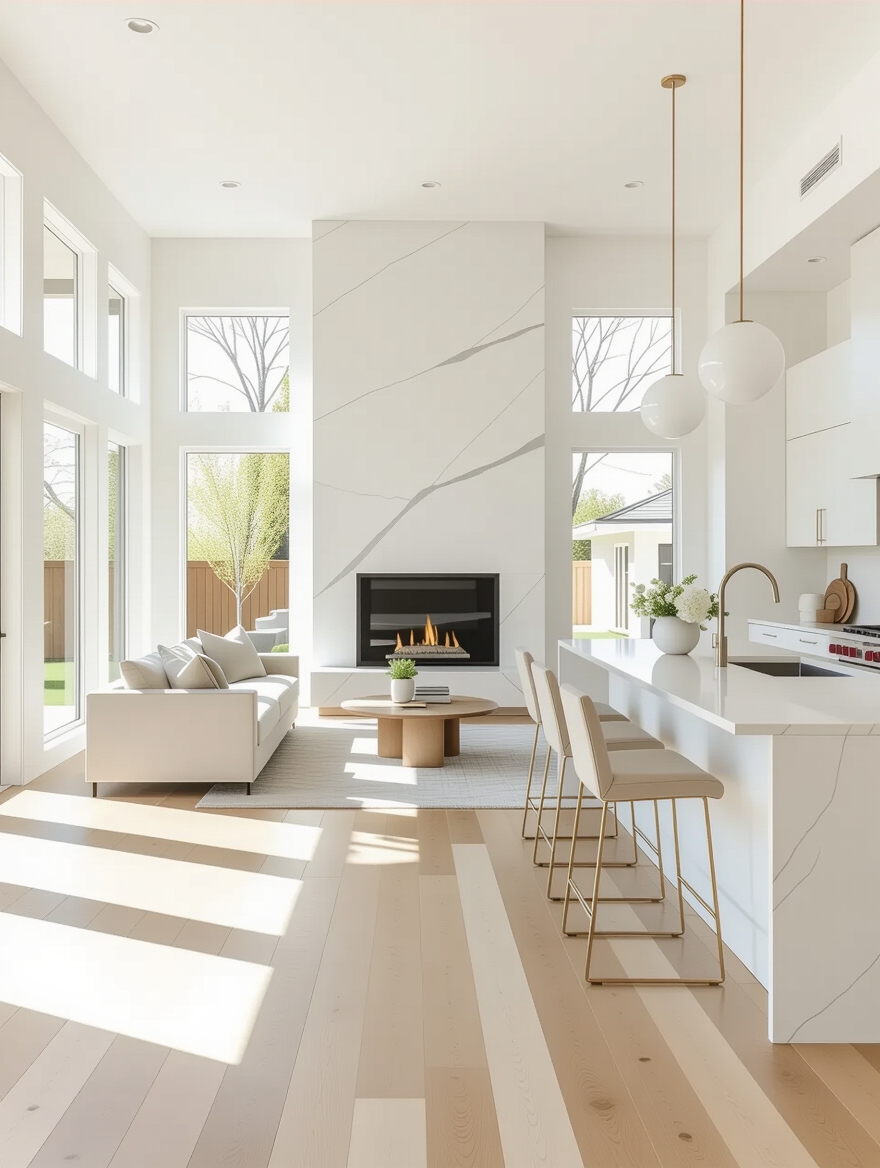
An open living room and kitchen are really one room with two jobs, so the styles have to agree. When the kitchen and the living area share a look, a palette, a material thread, a level of formality, the whole space feels calm and bigger. When they clash, even a beautiful kitchen and a beautiful living room cancel each other out.
The airy, modern pairing is the easiest place to start, because its light palette and clean lines flatter almost everything. Pale cabinets, a neutral sofa, light wood, and a little black or brass tie the two zones together with almost no effort. Get the pairing right and the open space looks designed as a whole, the same payoff behind well-judged interior touches that lift a kitchen.
- Pair the kitchen and living styles so they read as one room.
- Share a palette, a material, and a level of formality across both.
- A light, modern pairing is the most forgiving starting point.
Modern Minimalist Living and Kitchen Design
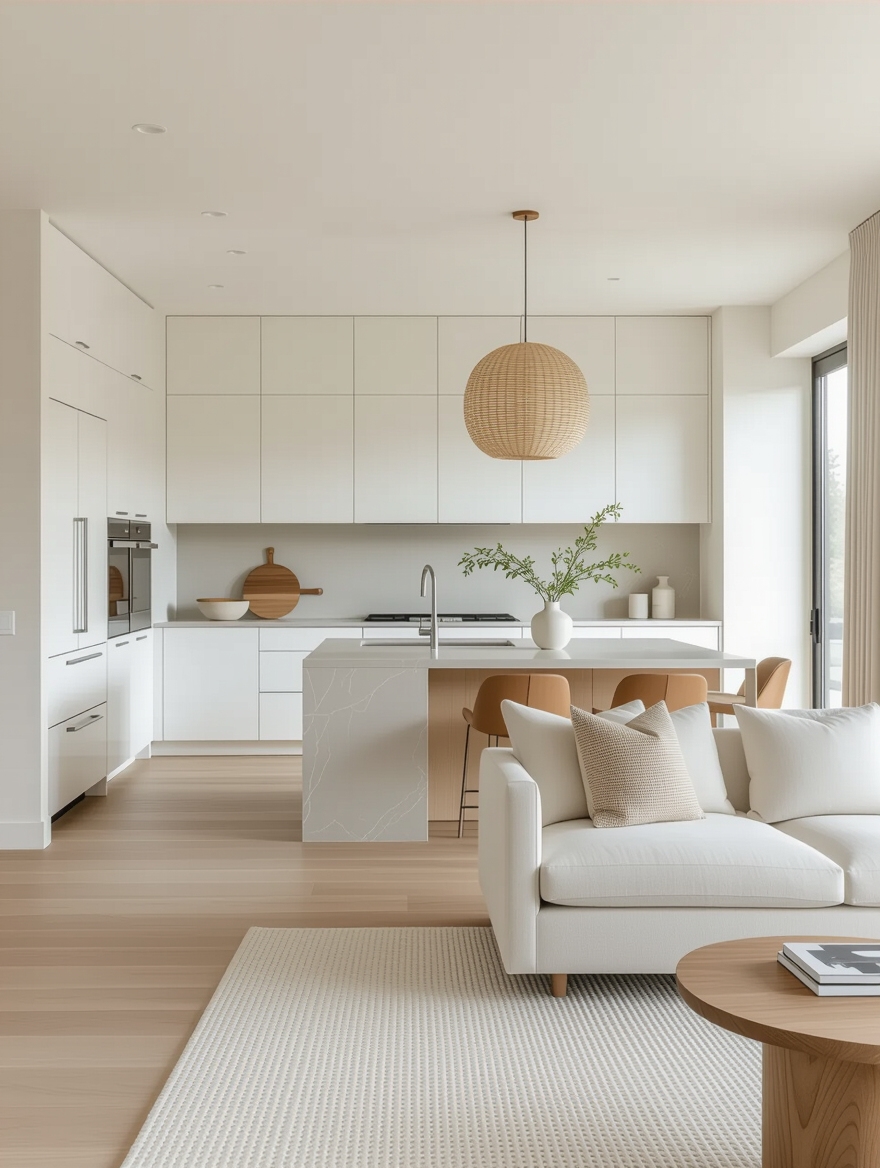
The modern minimalist pairing is all clean lines, neutral tones, and clutter kept to a minimum across both zones. Handleless cabinets in the kitchen pair with a low, simple sofa in the living area. A stone counter echoes a stone coffee table. The whole space stays serene because nothing competes.
Keep both zones equally edited
The key to pairing minimalist zones is restraint on both sides. A sleek kitchen next to a busy, overstuffed living room breaks the spell, so keep the seating and decor as edited as the cabinetry. A few quality pieces, a consistent palette, and clear surfaces let the two zones flow as one calm space.
I recommend warming a minimalist pairing so it does not feel cold. Natural wood, soft textiles, and one or two organic shapes bring life to all the clean lines. Repeating those warm touches in both zones is what makes the pairing feel like home.
ℹ️Good to Know
In an open plan, the eye sees the kitchen and living room at the same time, so the brain judges them as a single space. That is why a mismatched pairing looks ‘off’ even when each zone is lovely on its own, and why a shared palette does so much work.
Cozy Rustic Pairings That Blend
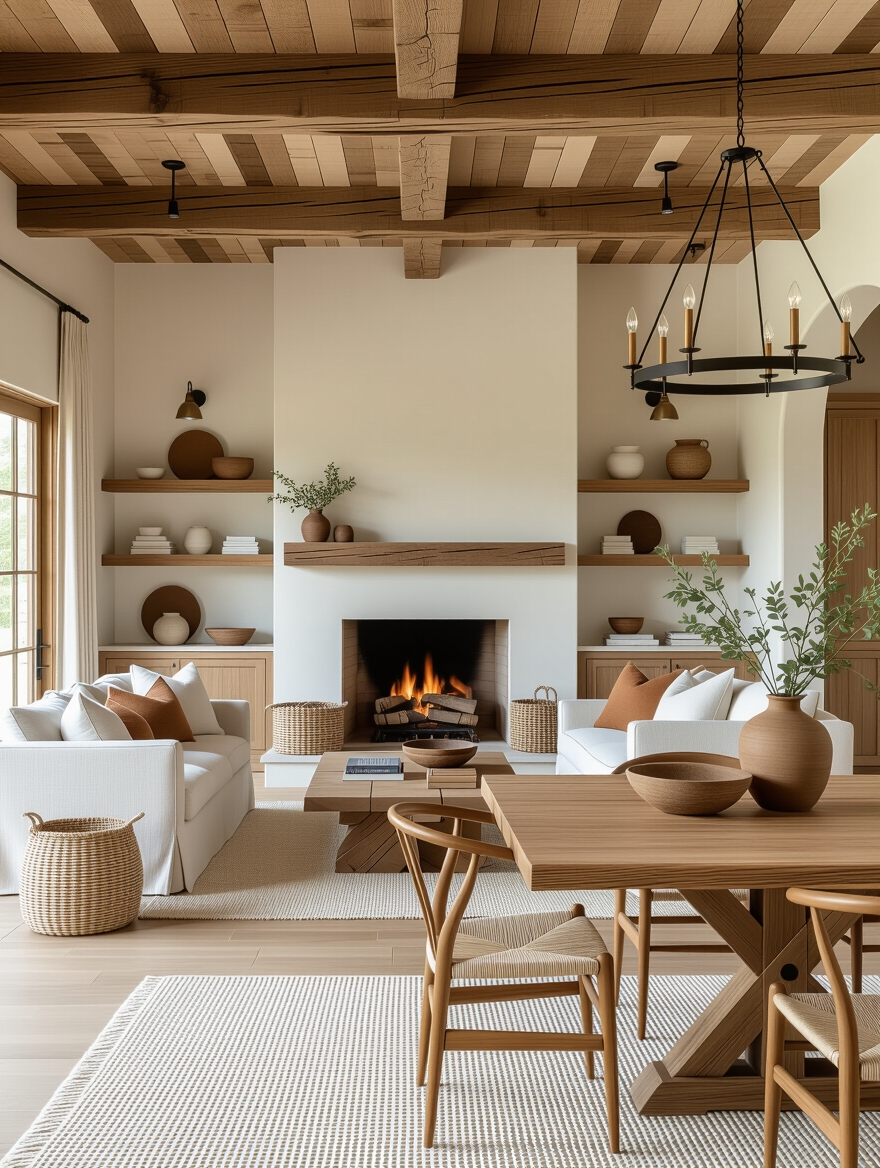
The cozy rustic pairing brings warmth, wood, and texture across the whole open space, and it is among the most welcoming combinations there is. I love how a rustic pairing pulls the whole room together. Pair a farmhouse or wood kitchen with a living area full of soft, layered textiles, a chunky coffee table, and natural materials, and the two zones share an easy, well-worn feel.
The thread that blends them is the wood: a wood island that echoes a wood console, the same beam or shelf material in both areas, warm tones carried from the cabinets to the sofa. Keep the palette earthy and the materials honest across both zones, and the rustic pairing feels collected over time, the same warmth behind any merged kitchen and living room.
- Carry warm wood and earthy tones across both zones.
- Pair a wood kitchen with layered, textured living-room pieces.
- Repeat one natural material to blend the two areas.
Airy Minimalist Elegance
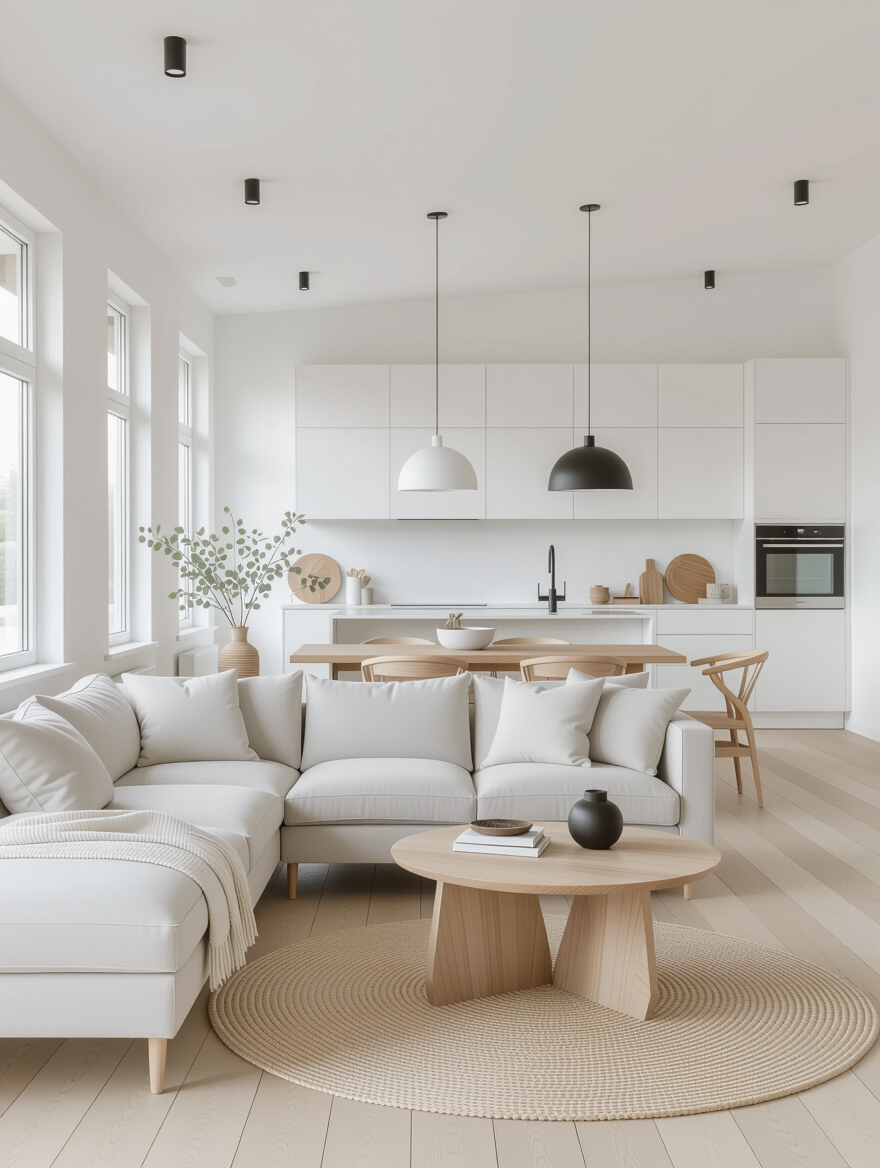
A more elegant take on the airy pairing keeps things light and minimal but adds a layer of polish. Think pale cabinets paired with a refined neutral sofa, marble or quartz echoed from the kitchen counter to a living-room surface, brass accents in both zones, and a restrained, sophisticated palette throughout. It is minimalist with a little luxury.
The pairing works because the elegance is consistent. A high-end kitchen beside a budget-looking living room feels off, so let the quality and the calm match on both sides. A few refined touches, good lighting, a quality rug, one beautiful art piece, repeated across the zones make the whole open space feel considered and expensive.
- Pair pale cabinets with a refined, neutral living-room scheme.
- Echo marble, quartz, or brass from the kitchen into the living area.
- Match the quality and calm on both sides for a polished look.
Two pairing myths.
❌ Myth: The kitchen and living room should match exactly.
✅ Reality: No. They should share a palette and a feel, but identical is boring. Coordinated, not matchy, is the goal.
❌ Myth: You have to pick one single style for the whole space.
✅ Reality: Mostly yes, for cohesion, but you can blend two related styles, like rustic and modern, if they share a palette.
Bold Industrial-Chic Pairings
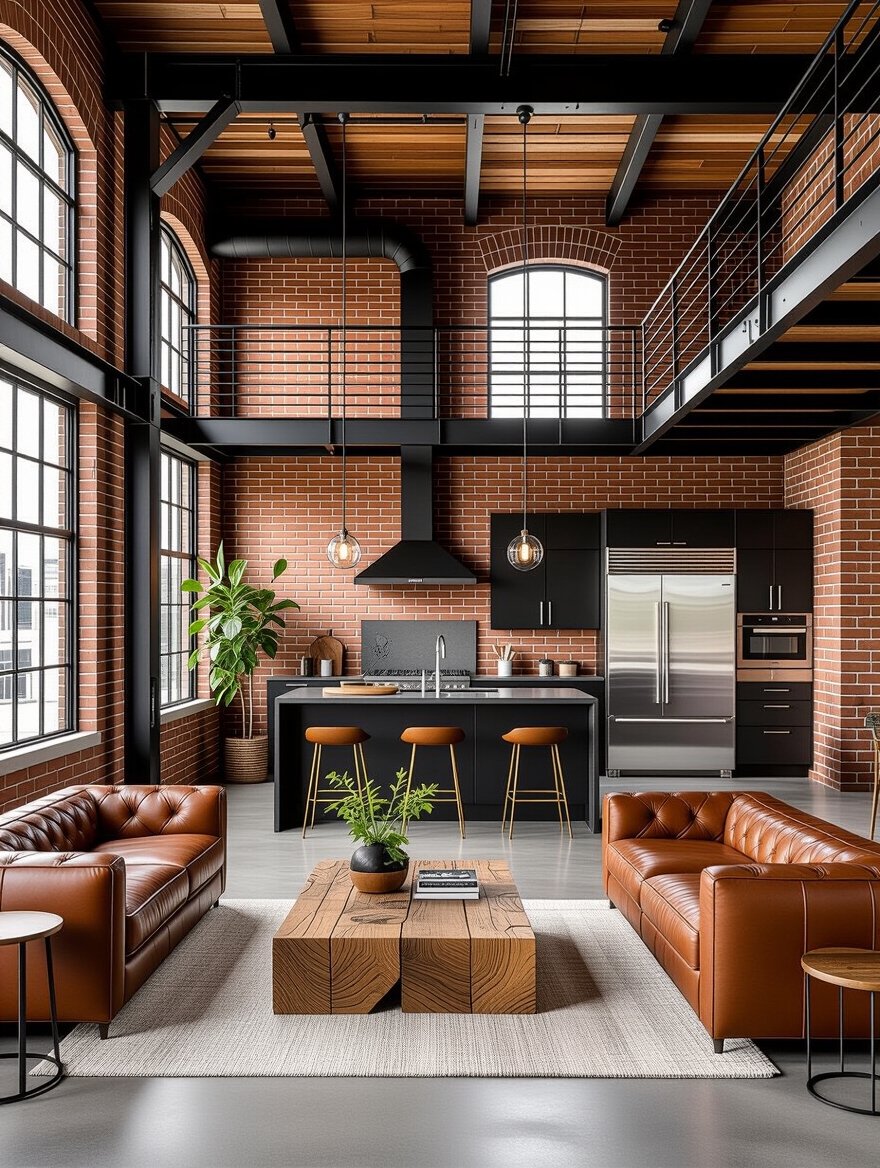
The industrial-chic pairing brings raw materials and a loft-like edge across both zones, and it suits open spaces with good ceiling height and light. Exposed brick, blackened metal, and concrete in the kitchen pair with leather seating, metal-framed furniture, and Edison or black pendant lighting in the living area. The hard materials tie the two zones into one cohesive, urban look.
Warmth is what keeps an industrial pairing from feeling cold. Carry wood and leather through both spaces, soften the living area with a rug and textiles, and let warm lighting balance all the metal and concrete. When the raw materials and the warm touches both repeat across the zones, the industrial pairing looks intentional.
Bright Coastal Pairings for Harmony
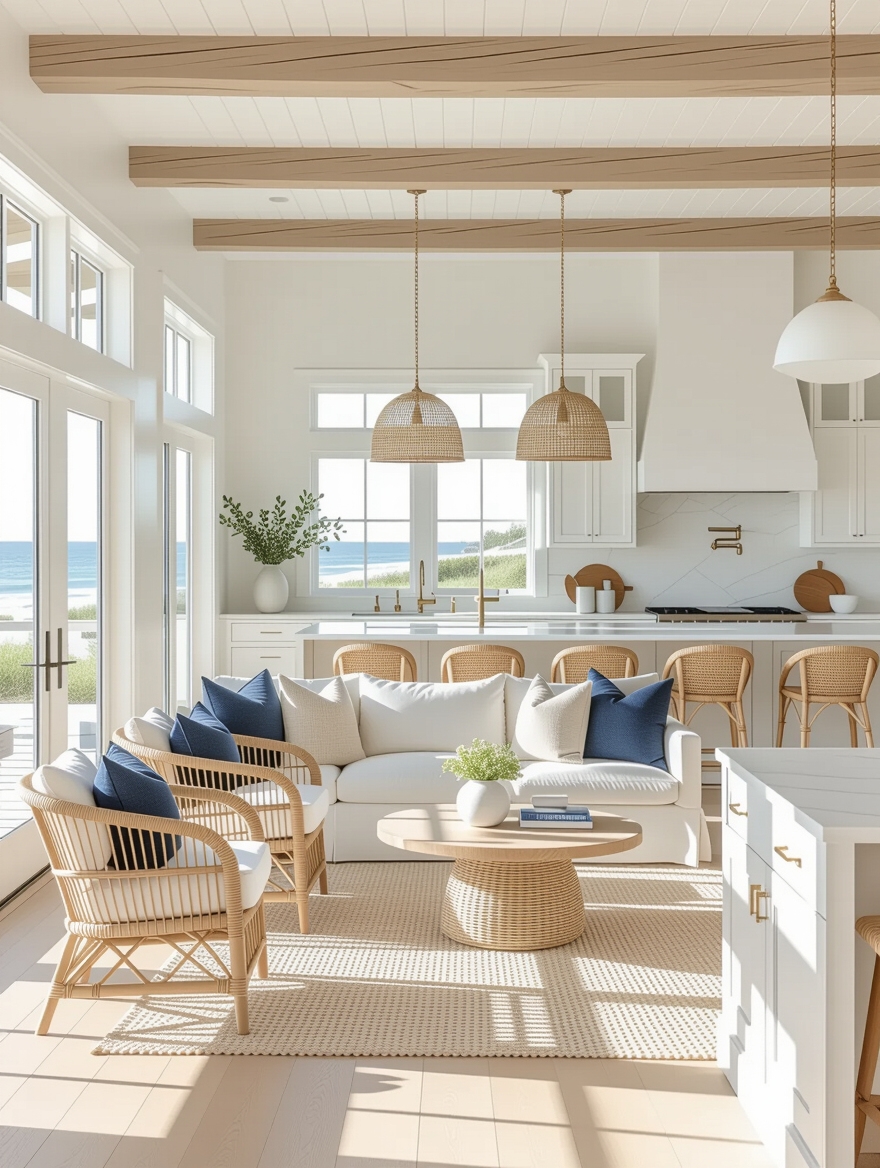
The coastal pairing is bright, breezy, and among the most naturally harmonious combinations, because its soft palette flows so easily across an open space. Pair a white or pale-blue kitchen with a living area in sandy neutrals, natural textures, and a few ocean-inspired blues, and the two zones feel like one airy, relaxed room.
Rattan, jute, light wood, and linen carry the coastal feel from the kitchen stools to the living-room sofa, while a consistent light palette keeps everything calm and connected.
The trick is restraint. A few coastal cues, a woven light, a blue accent, organic shapes, in both zones look elegant, while a pile of seashells and anchors tips into theme-park. I see this tip into theme-park fast. Keep it light and natural across both spaces, and the coastal pairing feels like a permanent vacation, the same airy ease behind kitchens that feel spacious instantly.
- Pair a pale kitchen with sandy neutrals and a touch of blue.
- Carry rattan, jute, and light wood across both zones.
- Keep coastal cues subtle so it looks elegant, not themed.
How to pair a coastal kitchen and living room.
1Start with the palette
Whites, sandy neutrals, and one or two blues across both zones.
2Add natural texture
Rattan, jute, light wood, and linen in the kitchen and the living area.
3Keep it light
Pale finishes and sheer or no window treatments to maximize the airy feel.
4Layer a few coastal touches
A woven pendant, a blue accent, organic shapes, repeated in both zones.
Timeless Mid-Century Modern Design
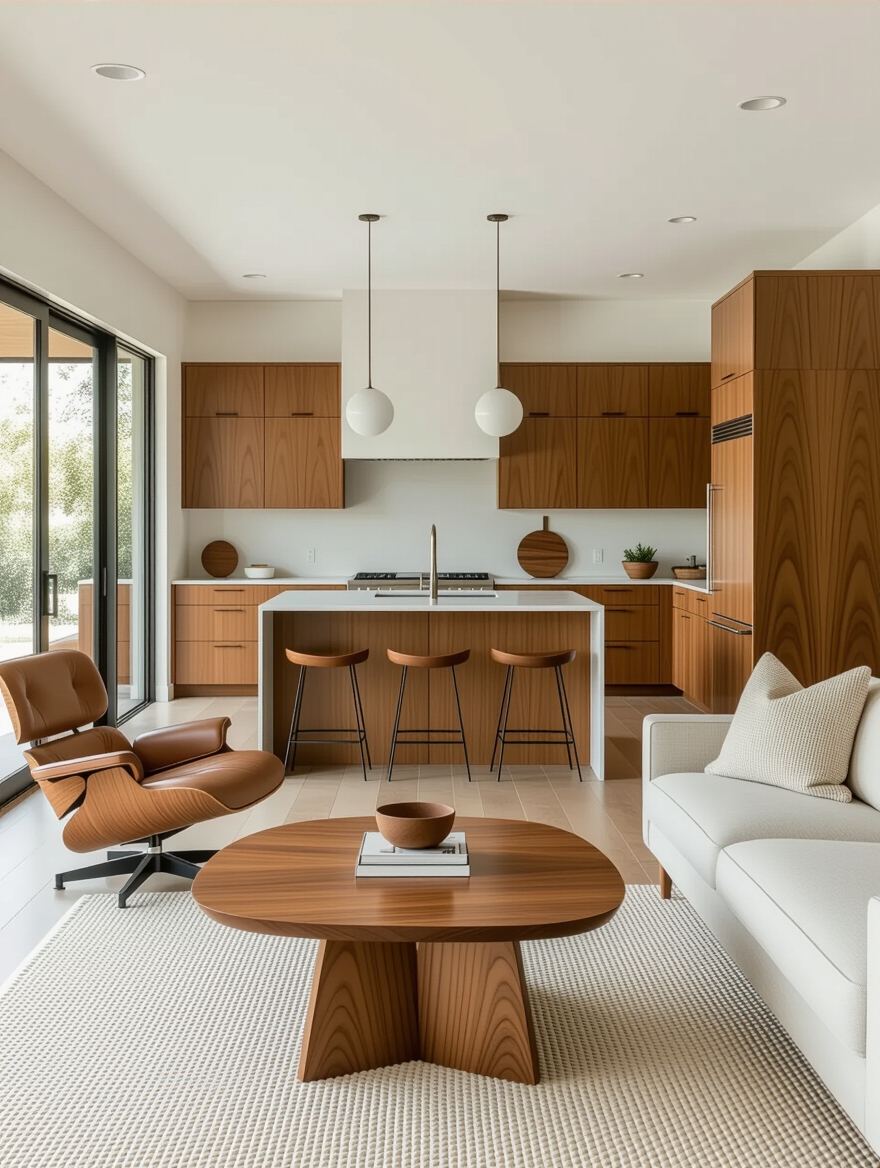
The mid-century modern pairing is timeless because its clean lines and warm woods bridge the kitchen and living room so naturally. Pair flat-front wood or color-pop cabinets with iconic living-room pieces, a low walnut sideboard, tapered-leg chairs, a statement pendant, and the two zones share that warm, retro-modern language.
Walnut and teak are the connecting thread, carried from the kitchen into the living-room furniture, while a few bold accent colors, mustard, olive, burnt orange, can appear in both zones for a cohesive hit of personality.
The style pairs beautifully with open plans because it was practically designed for them, all low, leggy furniture that keeps sightlines open. Keep the wood tones and the clean silhouettes consistent across both spaces, and the mid-century pairing feels naturally pulled together.
- Pair wood or color-pop cabinets with low, leggy mid-century furniture.
- Carry walnut or teak from the kitchen into the living area.
- Repeat one or two bold accent colors in both zones.
Rustic Farmhouse Comfort and Charm
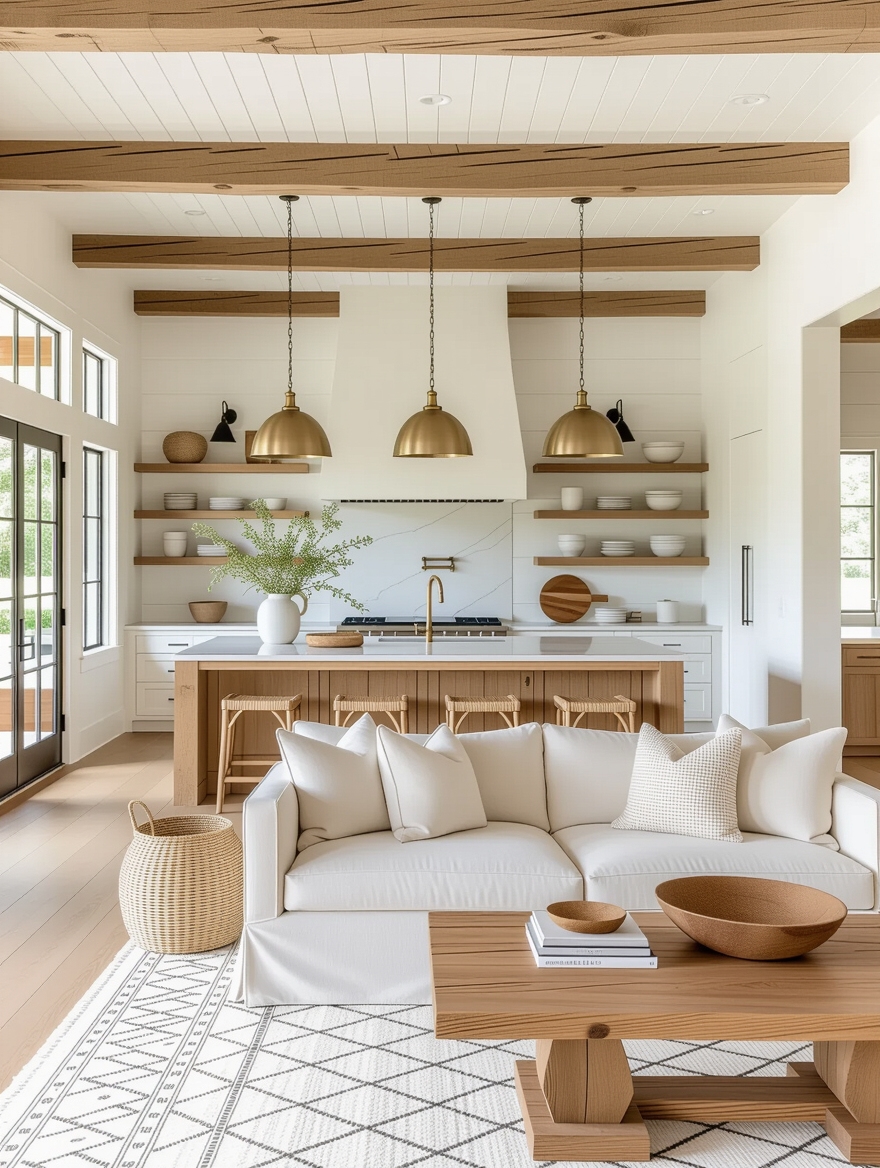
The farmhouse pairing is the cozy, gather-everyone combination, and it blends the kitchen and living room with warmth and a little nostalgia. Pair a shaker or apron-sink kitchen with a comfortable, slipcovered living area, warm wood tones, and a few vintage touches, and the whole open space feels like a welcoming country home.
Shiplap, wood beams, a farmhouse table, and soft, washable textiles carry the look across both zones, while a palette of creams, warm whites, sage, and natural wood ties it together.
The charm comes from comfort, so keep the seating soft and the materials forgiving, since this is a style built for real family life. Blend a few modern touches to keep it current, and the farmhouse pairing stays cozy without sliding into country cliche, much like a timeless green-and-white kitchen.
- Pair a shaker or farmhouse kitchen with cozy, slipcovered living pieces.
- Carry shiplap, wood, and warm whites across both zones.
- Add a few modern touches so it stays current, not cliche.
Color Harmony Across the Two Zones
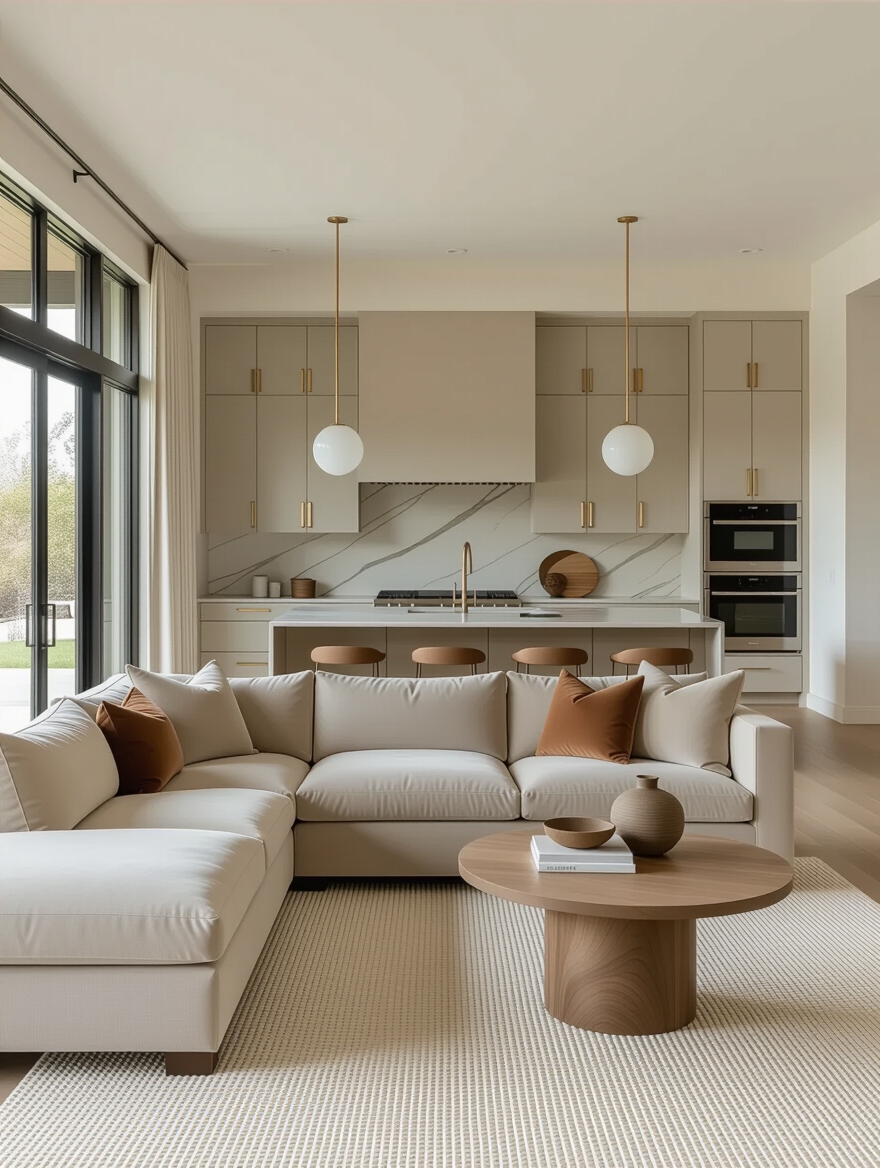
Whatever the style, color is the single most powerful tool for pairing a living room and kitchen, because a shared palette makes the eye take the two zones as one room.
Pull two or three core colors and one accent across both spaces, repeat the cabinet tone in a living-room cushion or wall, and echo a metal or wood finish in each area. The cabinets and the sofa do not need to match, just clearly belong to the same family. A quality area rug, often $200 to $800, can pull the whole palette together.
Use the accent color to connect, not to compete. One color that appears in both zones, a blue, a green, a warm rust, stitches the spaces together, while the bigger pieces stay neutral and calm. When the palette flows across the whole open space, even very different furniture in the two zones feels like a deliberate, harmonious pairing, the same logic behind the best open-plan kitchen and living room combos.
- Carry two or three core colors and one accent across both zones.
- Echo the cabinet tone in a living-room cushion, wall, or rug.
- Let one accent color appear in both spaces to tie them together.
Maximizing Light and Space
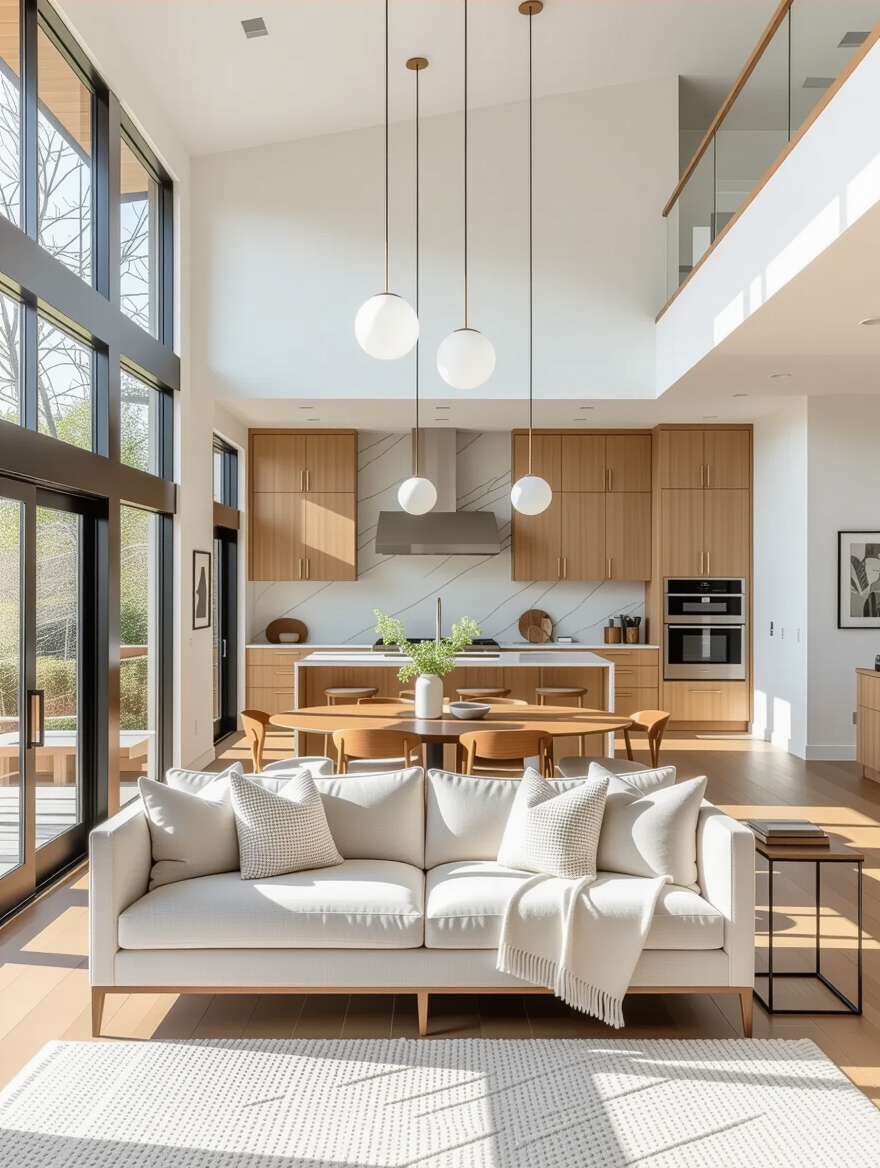
Good light is the quiet partner in every successful pairing, because it makes the whole open space feel like one bright, connected room. Keep the sightlines from the kitchen to the living-room windows clear, choose pale and reflective finishes that bounce daylight across both zones, and let one continuous floor run through the space to visually unite it. Light and a shared floor do as much for the pairing as any style choice.
Layer the lighting to connect the zones after dark too. Matching or coordinated fixtures, task light in the kitchen, a feature light over any dining spot, lamps in the living area, all on a warm, consistent bulb temperature, keep the two zones reading as one room at night. Mismatched lighting is a subtle way a pairing falls apart once the sun goes down.
When light flows freely and the palette and materials are paired across both zones, an open living room and kitchen stops feeling like two rooms sharing a floor and starts feeling like one considered space, which is the whole goal of pairing them well.
Styling Tips to Keep the Pairing Tight
A few habits keep a living room and kitchen pairing looking intentional day to day. Repeat at least one element, a color, a metal, a wood tone, a material, in both zones so the eye always finds the connection. Keep the larger, permanent pieces in a shared neutral palette, and let the easily-swapped accents, cushions, art, a rug, carry any bolder color or trend across both spaces at once.
Then style the two zones as a pair, not as separate rooms. When you add a piece to one zone, ask whether it talks to the other, and refresh both areas together so they stay in step. A ten-minute walk-through from the spot where you see both at once, usually the sofa or the doorway, tells you instantly whether the pairing is working or drifting apart.
Living Room and Kitchen Pairing Questions, Answered
?How do I make my open kitchen and living room match?
Aim for coordinated, not identical. Share a palette of two or three colors and one accent across both zones, repeat a wood tone or metal finish, and keep the level of formality consistent. The cabinets and the sofa do not have to match, but they should clearly belong to the same family. A shared floor and consistent lighting seal the pairing.
?Can the kitchen and living room be different styles?
They can lean different, but they need a common thread to avoid feeling like two separate rooms. Blending two related styles, say rustic and modern, works if they share a palette and a few materials. Wildly different styles in one open space usually clash, so pick one main direction and let the other play a supporting role.
?What is the most important thing in pairing an open kitchen and living room?
A shared color palette, by a wide margin. Because the eye sees both zones at once, a consistent two-or-three-color scheme carried across the space does more than any single piece of furniture to make the rooms feel paired. Add a repeated material and continuous flooring, and the pairing falls into place.
Pair the Two as One
An open living room and kitchen looks its best when you stop treating them as two separate rooms and start pairing them as one cohesive space. Pick a style and a palette, carry them across both zones, repeat a material or two, and keep the light flowing, and even very different furniture will feel like a deliberate, harmonious pairing. Modern, rustic, coastal, mid-century, or farmhouse, the recipe is always the same: one look, paired across both spaces.
If your open space feels like two rooms that do not quite get along, you do not need to start over. Find one color or material already in your kitchen and repeat it in the living area, then nudge the palettes closer from there. That single thread is often all it takes to turn a mismatched pair into one connected, considered room you love to be in.
More to Explore


