
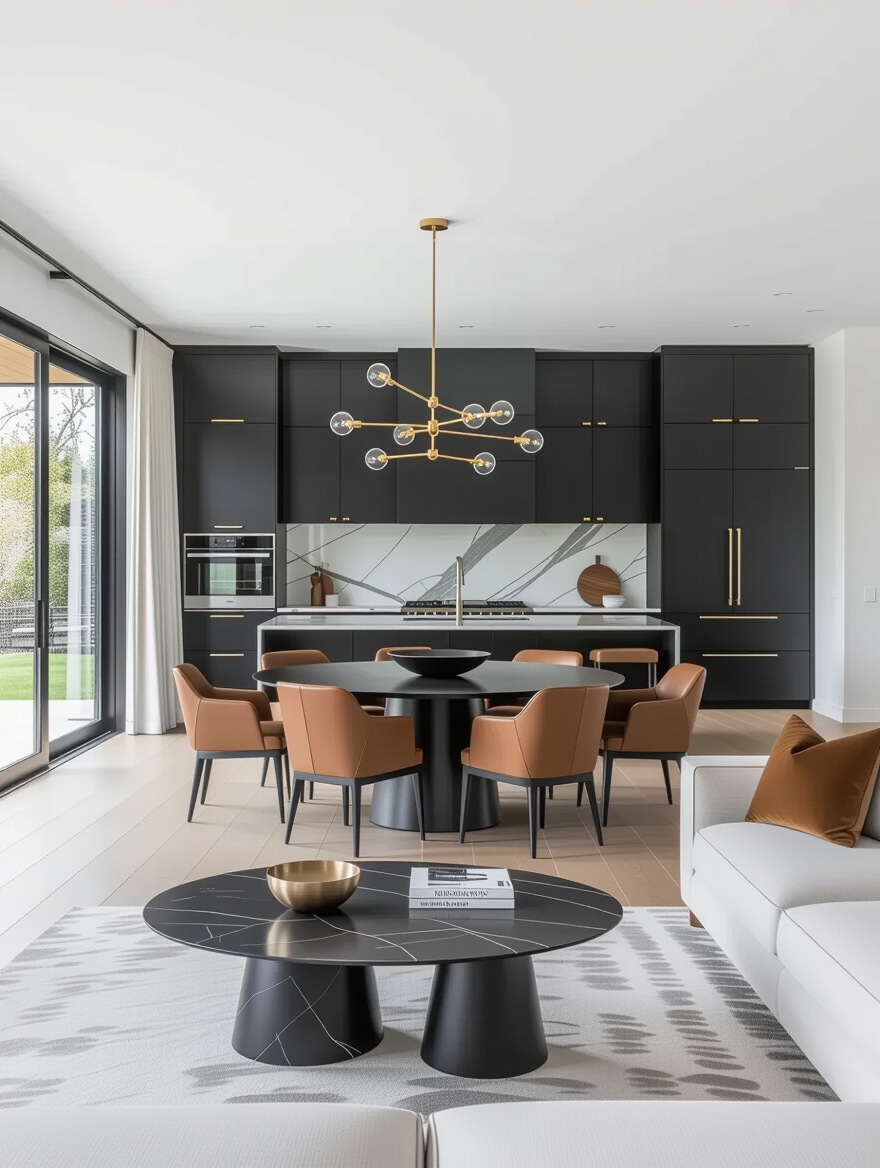
Flow is the thing people feel in an open plan but struggle to name. A room with good flow just works. You drift from the stove to the table to the sofa without thinking, and everyone finds a comfortable place. A room with bad flow nags at you: you squeeze past the island, trip over a rug edge, or end up shouting across furniture, even when every individual piece is nice.
Good flow in an open-plan kitchen, dining, and living space is not luck; it is the result of planning how people move before you decorate how it looks. Below are the open-plan layouts and setups that create real flow, the traffic paths, the zoning, the furniture and lighting that guide movement, with the honest mistakes that quietly wreck it.
The Short Version
- Flow is the choreography of an open plan: how easily people move between cooking, eating, and relaxing.
- Plan clear traffic paths first, around the seating and out of the cook’s work triangle, before placing a single piece.
- Use furniture, rugs, and lighting to guide movement and mark zones without ever blocking the path.
- The two flow killers are blocked walkways and a crowded, oversized island; everything else is fixable.
Why Flow Matters in Open Plan Spaces
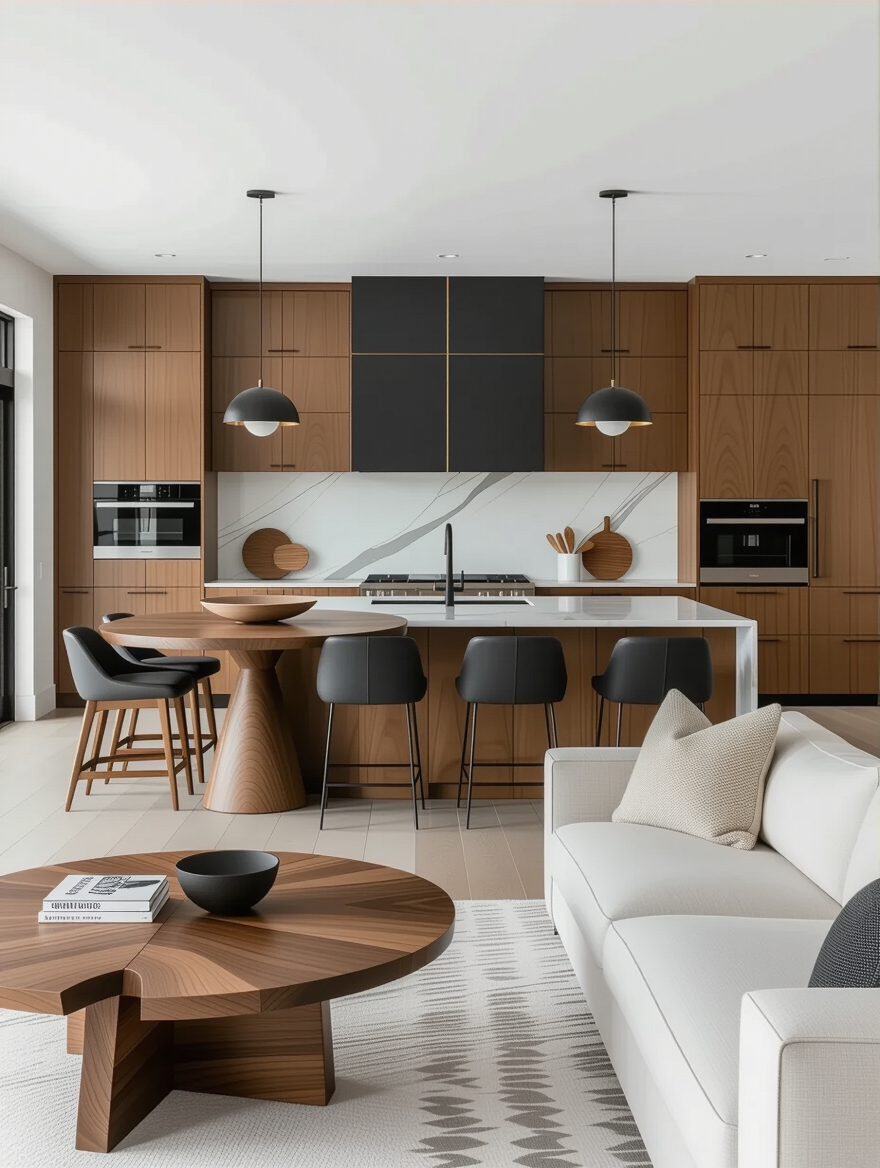
Flow is the choreography of an open plan, how smoothly people and the eye move between the cooking, dining, and living zones. When it is right, the cook reaches the table in a step, guests circulate without bottlenecks, and the three zones feel like one connected room. When it is wrong, the same square footage feels cramped and awkward no matter how nice the finishes.
Getting flow right is mostly structural, decided by where the zones sit and how the paths run between them. I tell clients to plan the movement before the finishes. The good news is that even in a finished room, most flow problems trace to two or three fixable things: a blocked walkway, a misplaced piece of furniture, an island in the wrong spot. Spot those and the whole space breathes.
Creating Distinct Zones for Better Flow
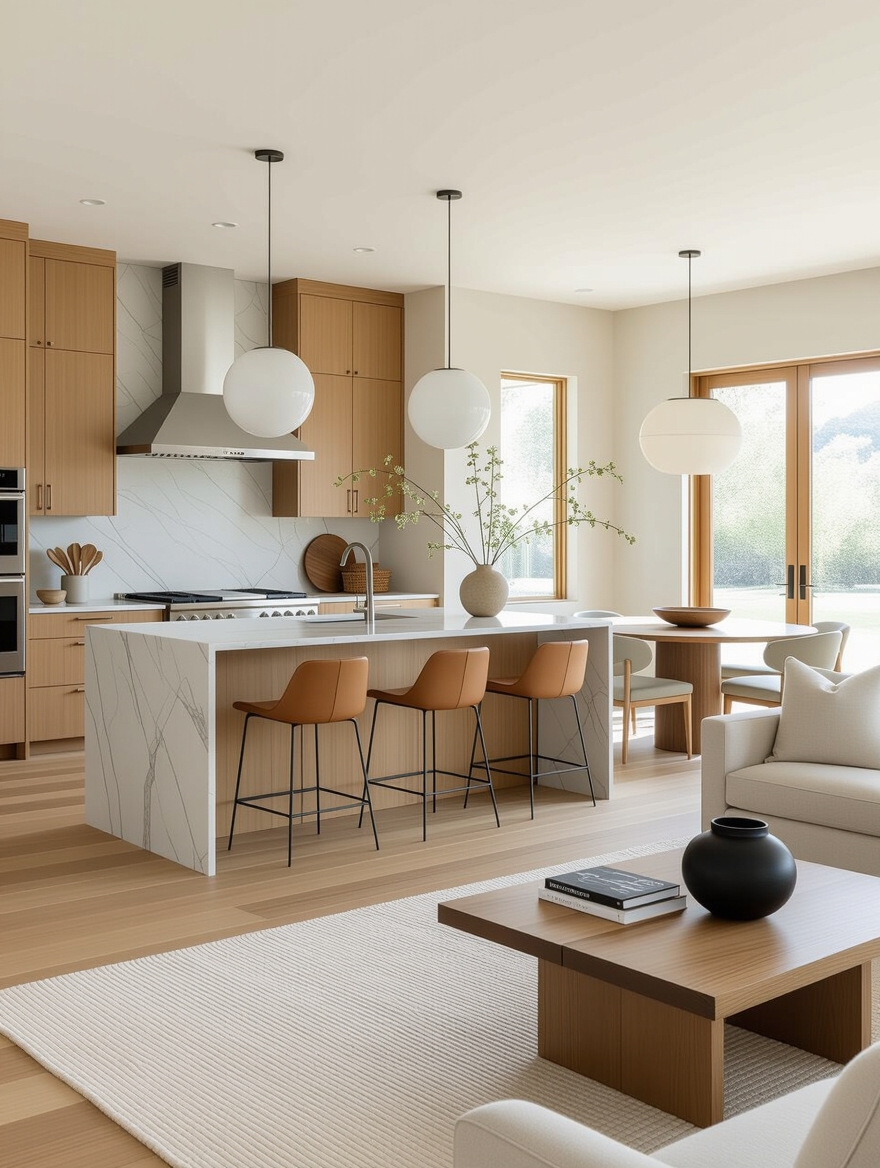
Flow needs zones, because a totally undefined open plan leaves people drifting with nowhere obvious to land. The trick is to mark the cooking, dining, and living areas clearly while keeping the paths between them wide open. An island edges the kitchen, a rug grounds the living area, and a dining light anchors the table, three soft cues that tell people where each activity happens without a single wall in the way.
Arrange the zones in a logical sequence, usually kitchen to dining to living, so daily life moves in one easy line rather than crisscrossing the room. When the zones are clear and the paths between them are open, movement feels natural, the same principle behind any well-merged open kitchen and living room.
- Mark each zone with one soft cue: an island, a rug, a light.
- Sequence the zones logically so daily movement runs in one line.
- Keep the paths between zones wide open at all times.
| Sign | Good flow | Bad flow |
|---|---|---|
| Moving around | One step between zones | Squeezing past furniture |
| Hosting | Guests circulate freely | Bottlenecks at the island |
| The eye | Travels the whole floor | Snags on clutter and walls |
Define the Spaces With Furniture
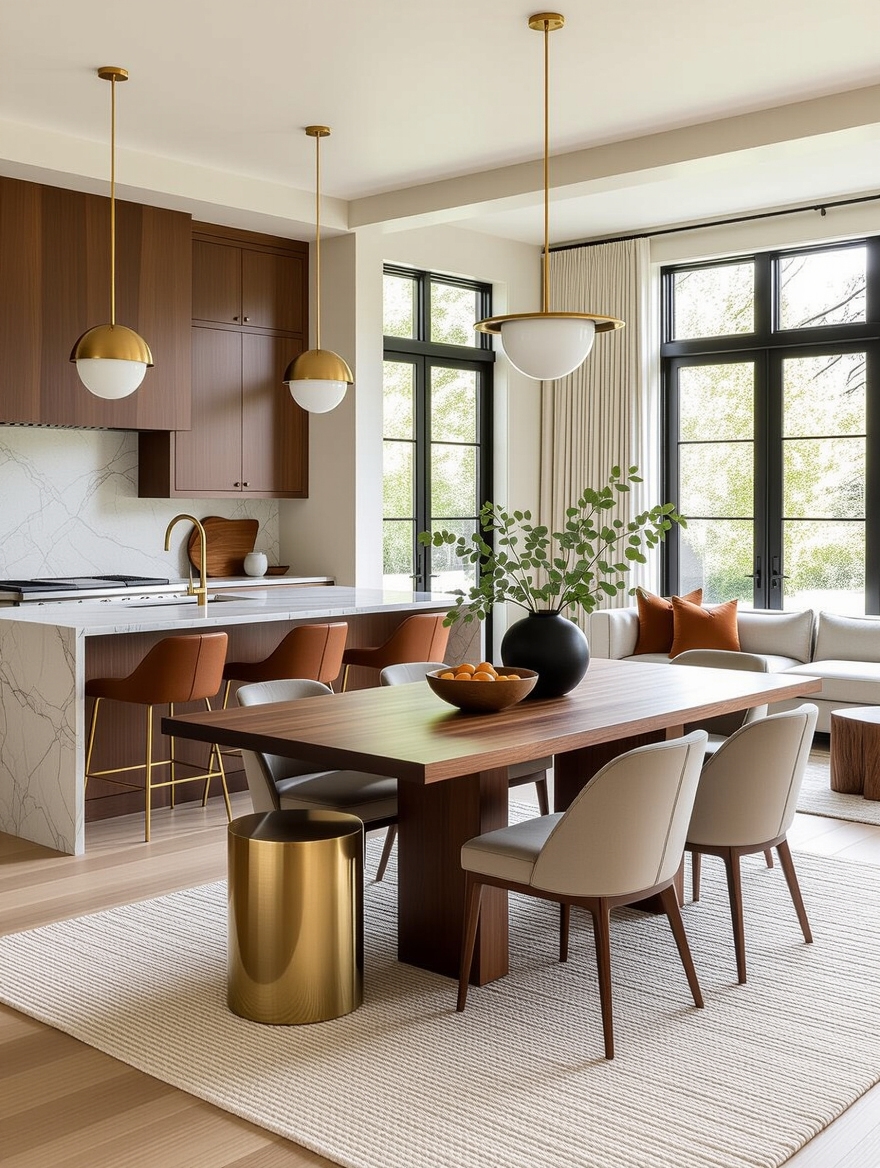
Furniture is your main tool for shaping flow, since where you place each piece decides where people can and cannot walk. The back of a sofa can steer traffic along a clear path and away from the cooking zone, while a console or a pair of chairs can gently close off a route you do not want used. Placed well, furniture choreographs movement without anyone noticing.
Keep the pieces near the boundaries low and leggy so sightlines and light travel over and under them, and float the seating, away from the walls, which actually opens up better paths. Scale matters too. I see oversized furniture wreck flow constantly, blocking the very routes that make an open plan work, so size pieces to leave generous walkways around them.
Rugs That Define Open Zones
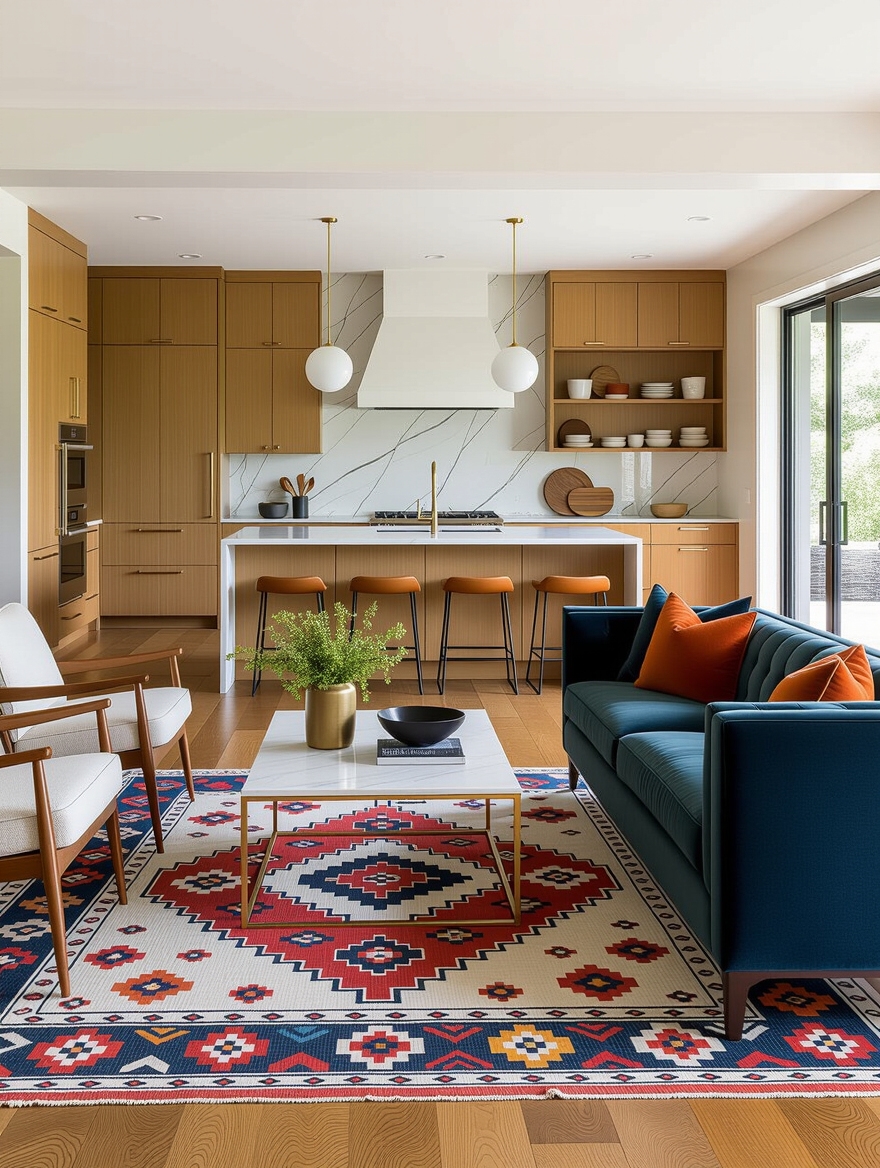
A rug is the simplest way to define a zone without interrupting flow, since it marks an area underfoot while leaving every path open. A large rug under the living-room seating instantly tells the eye and feet where the lounge zone is, warming the space and softening the acoustics that hard open rooms bounce around. It draws a boundary you can see but walk right across.
Size and place it for flow. The rug should be big enough to hold at least the front legs of the seating, usually $200 to $800 for that size, and it should sit clear of the main traffic path so no one catches an edge. In a space with a dining zone too, a second related rug under the table continues the idea, marking each area while the open floor between them keeps everyone moving freely.
- Use a large rug to mark the living zone while keeping every path open.
- Size it to hold at least the front legs of the seating.
- Keep rug edges clear of the main walkway so no one trips.
“Before buying a large sofa or sectional, map your walkways and ask whether the piece leaves at least 30 to 36 inches of clear path around it. The most common flow mistake is a beautiful, too-big piece that looked fine in the showroom and blocks the main route at home.”
Open Plan Lighting That Guides Flow
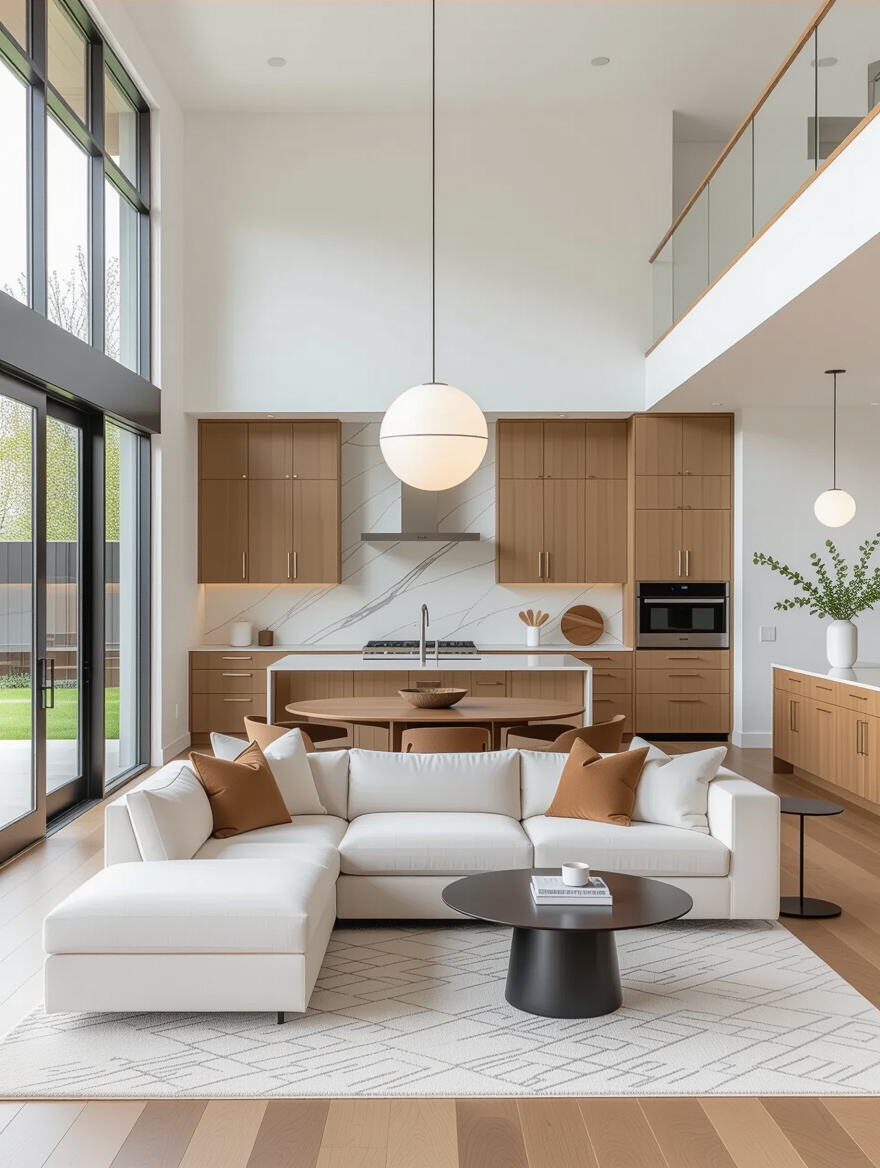
Lighting quietly guides flow by telling people where each zone is and where to move. A statement fixture over the dining table marks the eating zone, bright task light defines the working kitchen, and softer lamps signal the relaxed living area, so the lighting itself maps the room. Keep the fixture styles related and the bulb color consistent, a warm white around 2700K to 3000K, so the zones feel like one connected space.
Put everything on dimmers so the same open plan can shift from bright, busy cooking to a low, calm evening, which changes how people use and move through the space by the hour. When the light leads the eye from zone to zone, movement follows, the same layered approach behind well-judged interior touches that lift a kitchen.
- Mark each zone with its own light layer: task, feature, and ambient.
- Keep fixture styles and bulb color consistent so the zones connect.
- Put it all on dimmers so the space adapts through the day.
Cohesive Color and Texture
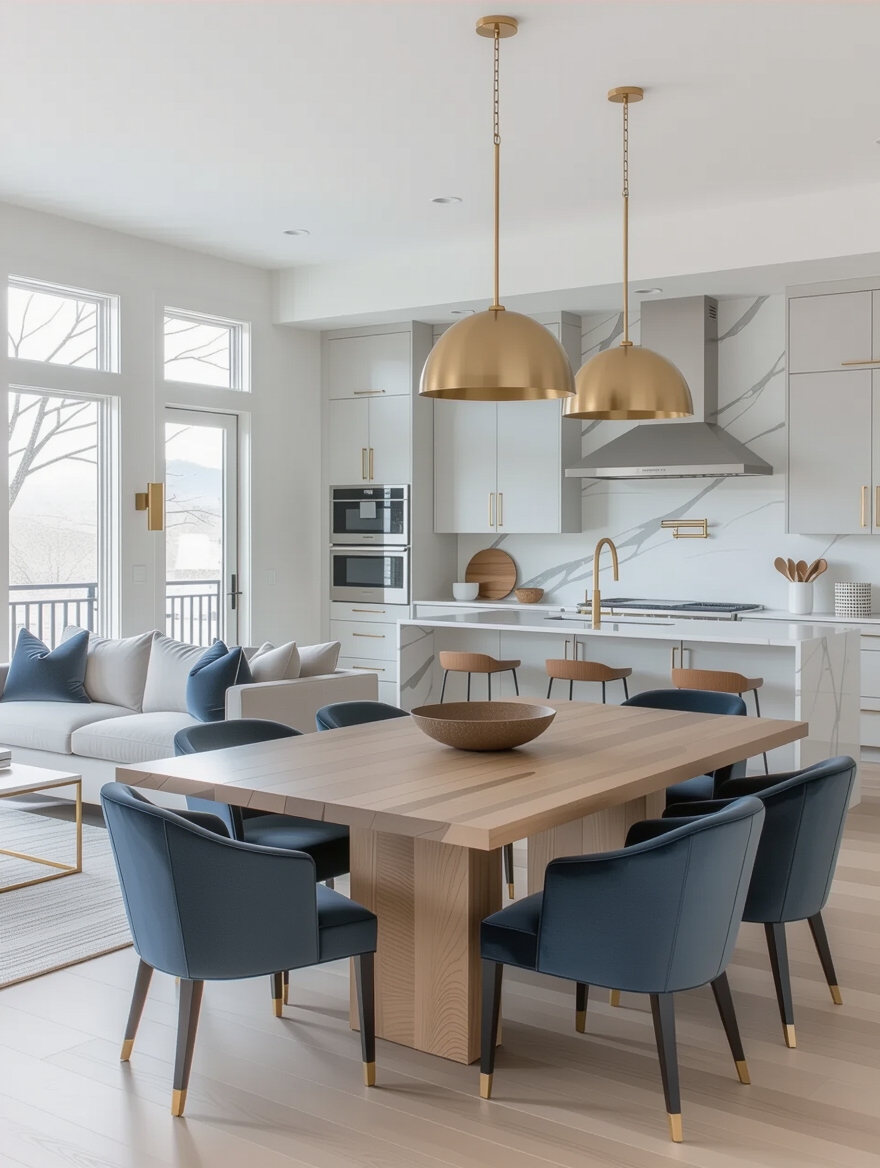
Color and texture create a visual kind of flow, letting the eye travel the whole open plan without snagging. When the kitchen, dining, and living zones share a palette, two or three core colors and a repeated wood or metal finish, the eye takes them as one continuous room.
Carry a wall color through all three zones, echo the cabinet tone in a living-room accent, and repeat a texture or material across the floor, and the rooms feel related even when the furniture differs. High contrast and clashing colors do the opposite, chopping the open plan into disconnected pieces that interrupt the visual flow. Keep the palette cohesive and let texture add the interest, and the eye moves as freely as your feet do.
- Share two or three core colors across all three zones.
- Repeat one wood or metal finish to link the spaces visually.
- Add interest with texture and keep the color calm.
🅰️One big central light
Simple and cheap, but it flattens the whole open plan into one undifferentiated box and does nothing to guide flow or mark zones.
🅱️Layered, zoned lighting
Task, feature, and ambient layers map the room and lead the eye from zone to zone. It costs more and needs planning, but it transforms how the space flows.
Clever Hidden Storage for Clear Flow
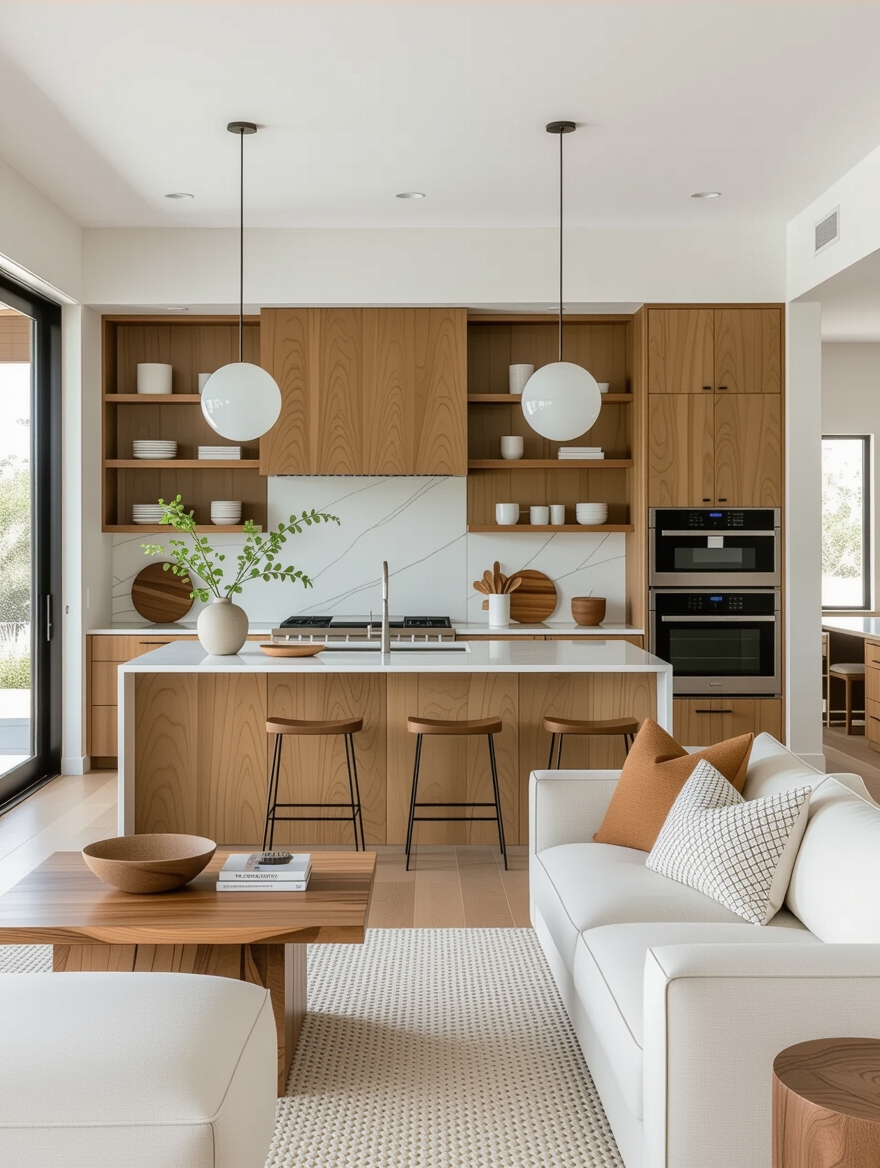
Storage might not sound like a flow issue, but clutter is one of the biggest things that clogs an open plan. Clutter clogs flow. When stuff piles up on counters, the table, and every surface, it crowds the paths and makes even a well-planned space feel congested. Generous hidden storage keeps the shared surfaces and floor clear, which keeps everything, and everyone, moving.
Build in closed storage everywhere you can: full-height cabinets, deep drawers, island storage, an appliance garage, and a landing spot by the entry for the daily pile. The clearer the surfaces and the floor, the better the space flows, the same discipline that keeps a kitchen clutter-free. A five-minute daily reset is the habit that protects the flow you planned.
- Build in closed storage so clutter never crowds the paths.
- Keep counters and the floor clear to protect the flow.
- Add a by-the-door drop zone so daily mess never spreads.
The Multipurpose Kitchen Island
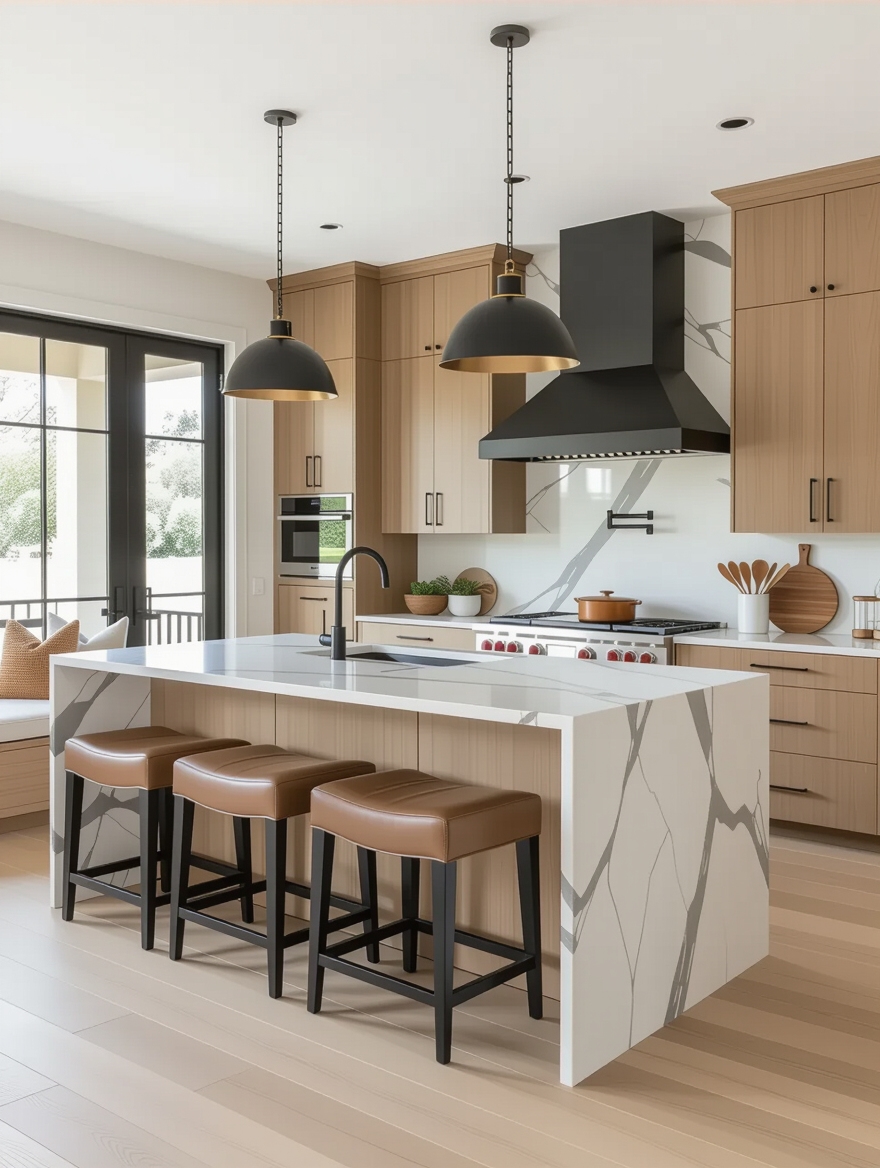
The island is the heart of an open plan’s flow, the hub everything moves around, so its size and placement make or break how the space works. Positioned well, it edges the kitchen, gives the living area a stopping point, and channels traffic around the work zone instead of through it. Positioned badly, it becomes the single biggest bottleneck in the room.
Size the island to support the flow, not block it
The number that matters is clearance. I recommend leaving 36 to 42 inches on every side, more where people cook or pass, so the island never clogs the very flow it should support. An oversized island crammed into a tight space is the most common flow mistake there is, the same trap clever island setups everyone copies avoid.
Load it with function so people naturally gather there, storage, seating, maybe a prep sink, and orient the seating toward the living room so the cook stays in the conversation. A well-placed island pulls the whole open plan together and keeps it moving.
Flow-Friendly Dining Table Choices
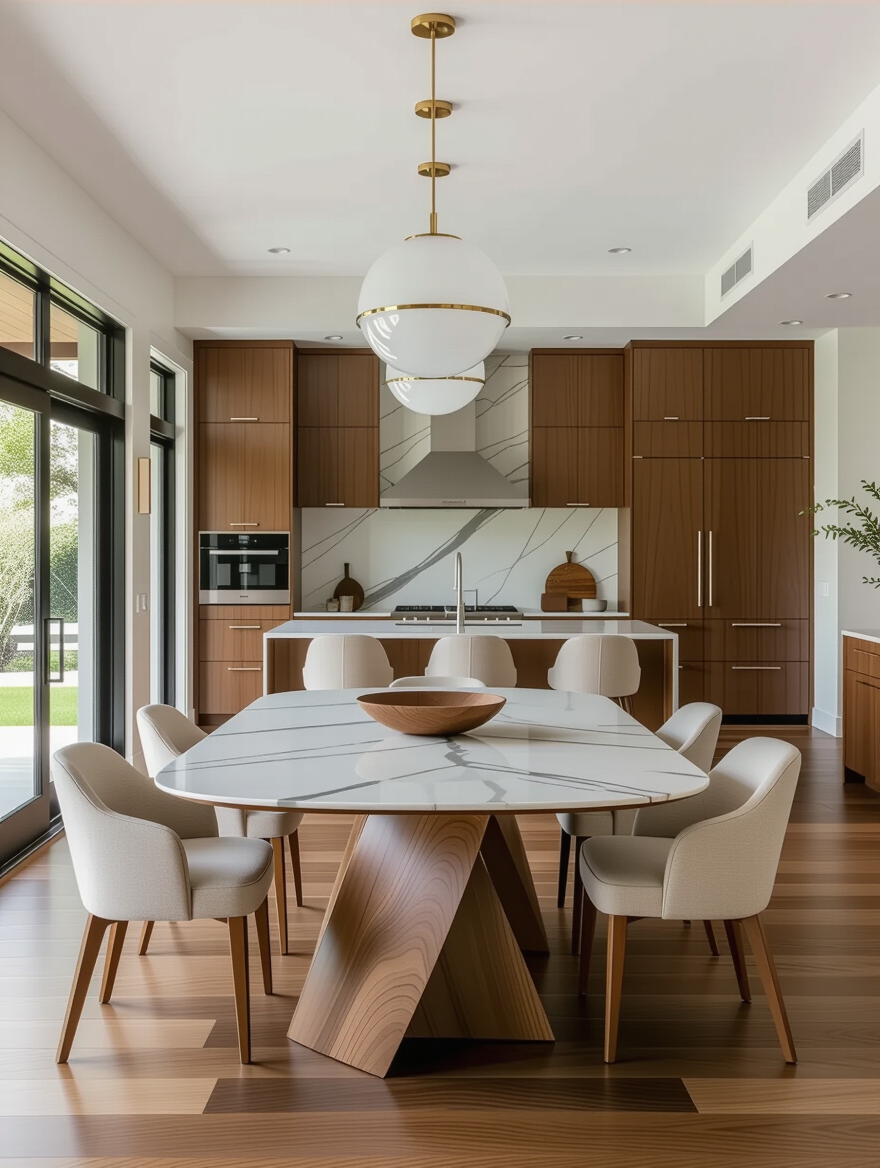
The dining table is a frequent flow offender, since a too-big or badly placed table chokes the paths between zones. Choose a shape and size that fits the space with room to move: a round or oval table tucks into a tight corner and lets people pass more easily than a big rectangle with sharp corners, while an extendable table stays small for daily life and grows only when you need it.
Leave at least 36 inches behind each chair so people can pull out and stand without hitting the wall or the path, and place the table just off the island so serving and clearing stay short. Get the table right and the dining zone connects the kitchen and living areas, a real link between the two.
- Choose a round or oval table to ease movement in a tight space.
- Use an extendable table that grows only when you host.
- Leave 36 inches behind each chair so people can pull out and pass.
Thoughtful Seating That Encourages Conversation
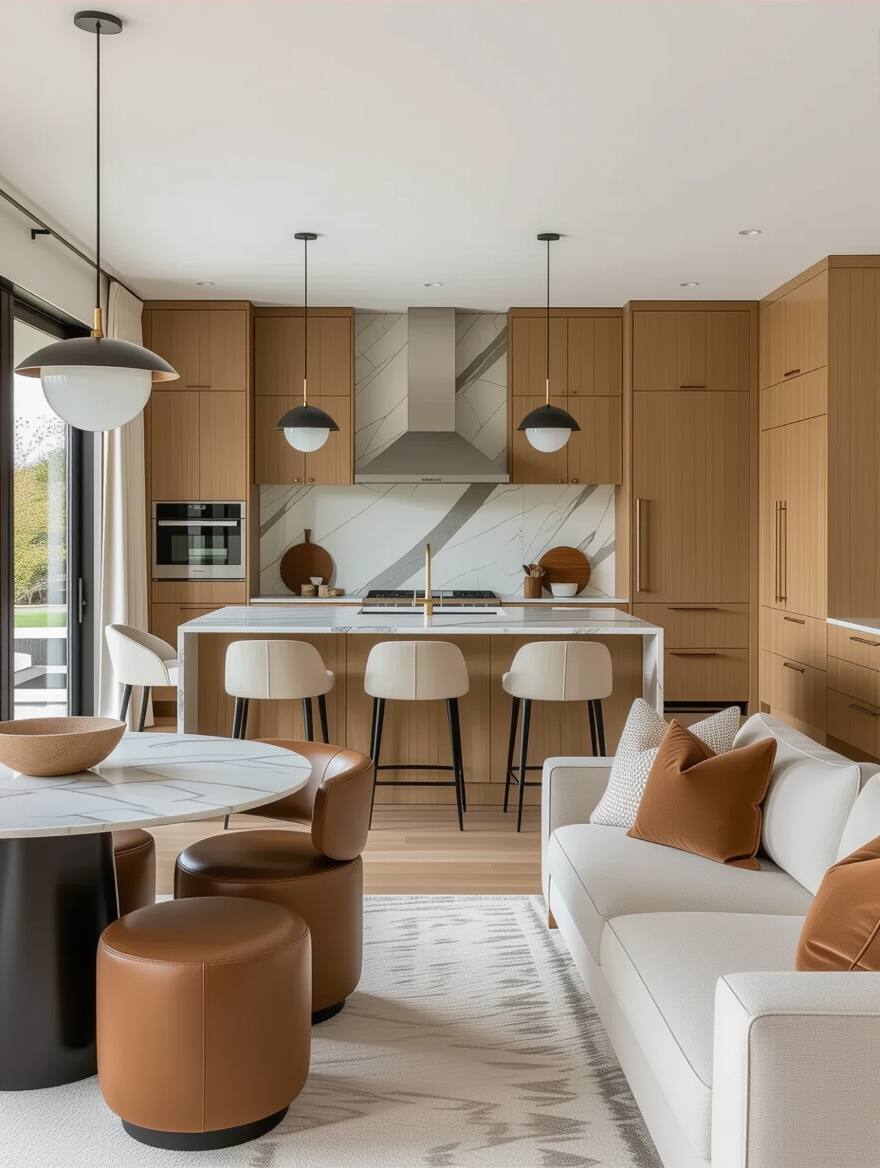
How you arrange the seating decides whether the living zone draws people in or pushes them to the edges. For both flow and conversation, pull the seating into a conversation group, sofa and chairs angled toward each other around a rug, rather than lining everything along the walls, which leaves a dead, empty middle and scatters people.
A conversation group creates a clear, inviting destination at the end of the open plan’s flow, the spot people move toward and settle into.
Keep a clear path into and around the grouping so no one has to climb over a coffee table, and angle at least some seating toward the kitchen so the cook stays part of the gathering. When the seating invites people in and the paths stay clear, the open plan flows toward connection, the whole point behind the best open-plan kitchen and living room combos.
- Pull seating into a conversation group around a rug in the middle.
- Keep a clear path into and around the seating area.
- Angle some seats toward the kitchen so the cook stays included.
Common Mistakes to Avoid
A few mistakes sabotage flow no matter how good the rest of the design is. The biggest is blocking the main walkways, a too-big sofa, an oversized island, a table with no room behind the chairs, so people constantly squeeze and detour. Close behind is pushing all the furniture against the walls, which leaves a dead, useless middle and no defined zones, making a large room feel both empty and awkward to move through.
The subtler mistakes are about paths and sightlines. Routing through-traffic straight across the seating or the cook’s work triangle turns the busiest paths into obstacle courses, and ignoring the cook’s sightline leaves whoever is cooking cut off from the room. Map how people actually move, from the door to the fridge to the sofa, before you place anything, keep those paths clear, and most flow problems never happen.
Open Plan Flow Questions, Answered
?How do I improve the flow in my open plan kitchen and living room?
Start by mapping your main walkways and clearing them. Keep paths at least 36 inches wide, route traffic around the seating and the cook’s work triangle, and make sure the island leaves 36 to 42 inches of clearance. Then use furniture, rugs, and lighting to mark zones without blocking any path. Most flow problems come down to one or two pieces in the wrong spot.
?What is the best layout for flow in an open plan?
One where the zones sit in a logical sequence, usually kitchen to dining to living, with clear, wide paths between them. The cook’s work triangle should stay compact and out of the main traffic route, the island should channel traffic around it, and the dining table should sit close to the kitchen. The exact shape matters less than keeping the paths open and the zones in a sensible order.
?How wide should walkways be in an open plan?
Keep main pathways at least 36 inches wide, and 42 to 48 inches in the kitchen where people cook or pass each other. Leave about 36 inches behind dining chairs so people can pull out and stand, and 36 to 42 inches of clearance around an island. These minimums keep everyone moving without bottlenecks or squeezing past furniture.
Plan the Movement First
Flow is what makes an open-plan kitchen, dining, and living space actually pleasant to live in, and it comes from planning movement before decoration. Mark the zones with soft cues, keep the paths between them wide and clear, use furniture, rugs, and lighting to guide movement, and size the island and table to support traffic. Get the choreography right and the whole floor feels easy to move through.
If your open plan feels awkward despite nice furniture, you might start by simply walking your usual paths, from the door to the kitchen, the kitchen to the table, the table to the sofa, and noticing where you have to squeeze or detour. Fix that one bottleneck first, often just by moving a piece a few feet, and you will be surprised how much better the whole space flows.
More Hair Inspiration


