

The myth about open concept is that knocking down the walls hands you one big, easy room. In practice you get three jobs sharing one floor, and if you treat them as a single blank space, it ends up echoey, hard to furnish, and oddly impersonal. The good open concept kitchen, dining, and living room trios do the opposite: they work as one connected space while still letting each zone do its own job.
That balance is the whole game. A trio has to cook, feed, and relax all in view of each other, which is a harder design problem than a closed floor plan. The thirteen looks below show how style plus a few practical moves, flooring, lighting, and furniture, pull the three zones together without flattening them into one.
How the Three Zones Work
| Zone | Its job | One move that helps |
|---|---|---|
| Kitchen | Work and storage | An island or peninsula to face the room |
| Dining | Gather and eat | A rug and a light fixture to anchor the table |
| Living | Relax and unwind | A sofa back used as a soft divider |
What Makes a Spacious, Connected Living Trio
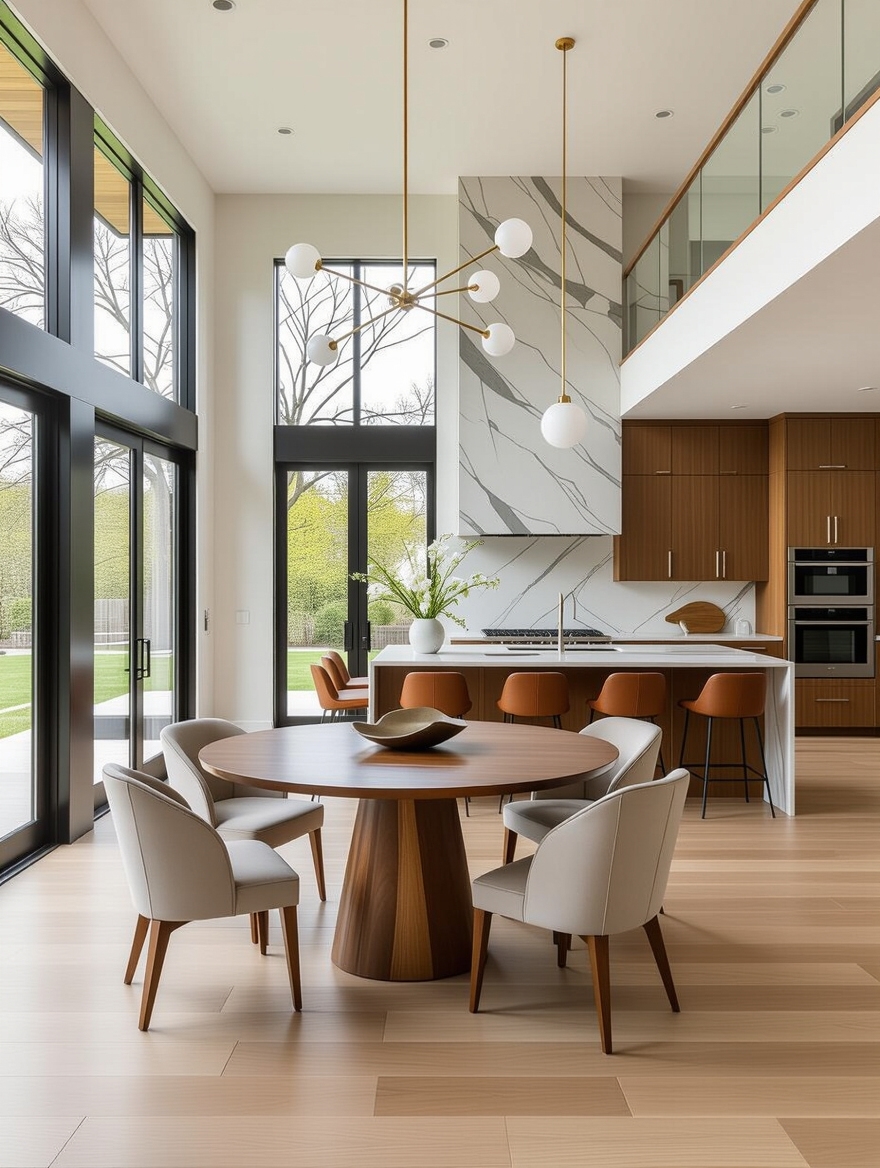
A kitchen-dining-living trio removes the walls between the three most-used rooms in the house, so cooking, eating, and lounging all happen in one sightline. Done well, it feels bright and connected, with light borrowed across the whole floor and family never quite separated. That togetherness is the real draw, and it is why these layouts keep winning even as some designers call them overdone.
The catch is that openness cuts both ways. Sound, smells, and mess travel, and an undefined space can feel like a furniture showroom nobody knows how to use. Openness has a cost. The answer is to define clear zones: every successful trio works as three purposeful areas that happen to share a footprint, an idea you can borrow even when you merge just the kitchen and living room.
- Pros: shared light, easy entertaining, sightlines to kids and guests.
- Cons: noise and cooking smells carry; clutter is always on display.
- The goal: one connected space that still feels like three defined zones.
Modern Minimalist: Sleek, Airy, and Calm
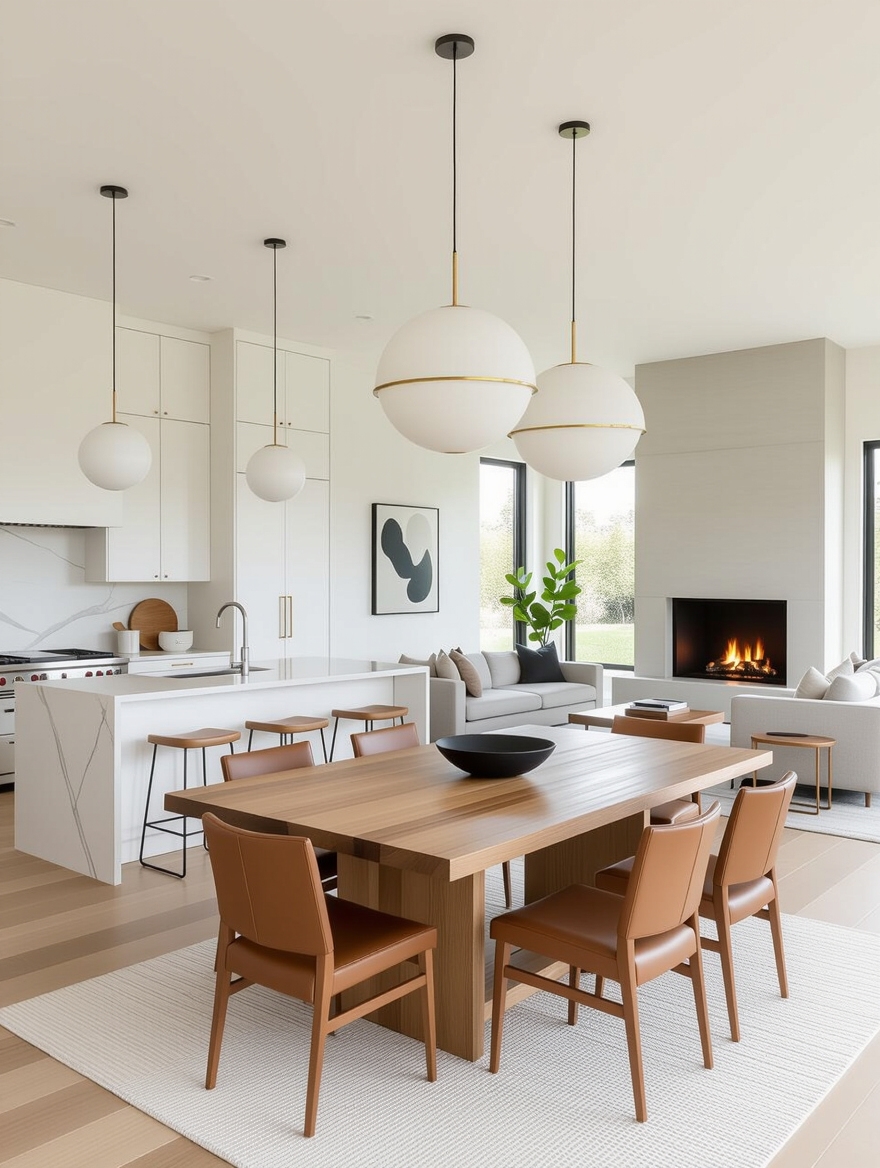
Minimalist trios lean on clean lines, a tight neutral palette, and as little visual noise as possible, which suits open concept because there is nowhere to hide clutter. Handleless cabinets, a quiet stone counter, and low-profile seating let the eye travel the whole space without snagging.
The trade-off is discipline: a minimalist trio only works if you have the storage and the habits to keep surfaces clear, so build in generous closed cabinets from the start.
- Stick to two or three colors across all three zones for a calm flow.
- Choose closed storage over open shelving to keep sightlines clean.
- Pick furniture with legs and low backs so light and views pass through.
An open plan does not erase the rooms. It just asks them to get along in plain sight.
Cozy Rustic Warmth in an Open Concept
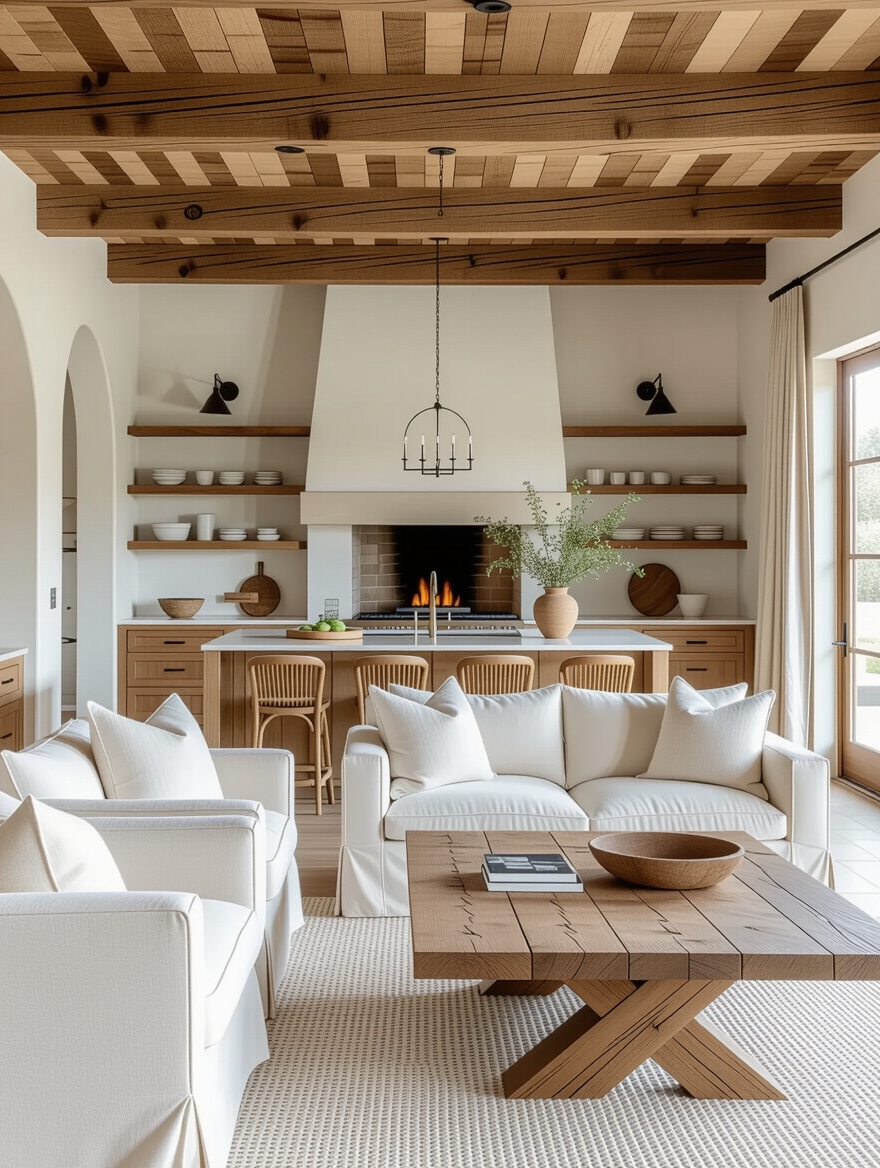
If minimalist feels cold to you, rustic warms the same open floor with wood, texture, and a little age. Reclaimed beams, a chunky timber dining table, and vintage pendants give a big space the intimacy it can otherwise lack. Scale is the enemy in a big room.
I lean on natural materials here because they break up that scale, since a long run of warm wood feels far friendlier than a long run of flat paint. Balance is key: too many heavy rustic pieces can crowd an open room, so let a few honest materials carry it.
- Anchor the dining zone with a solid wood table; it does the most work.
- Mix wood tones rather than matching everything for a collected look.
- Add one vintage light per zone to tie the trio together warmly.
Sleek Industrial Edge for the Open Concept
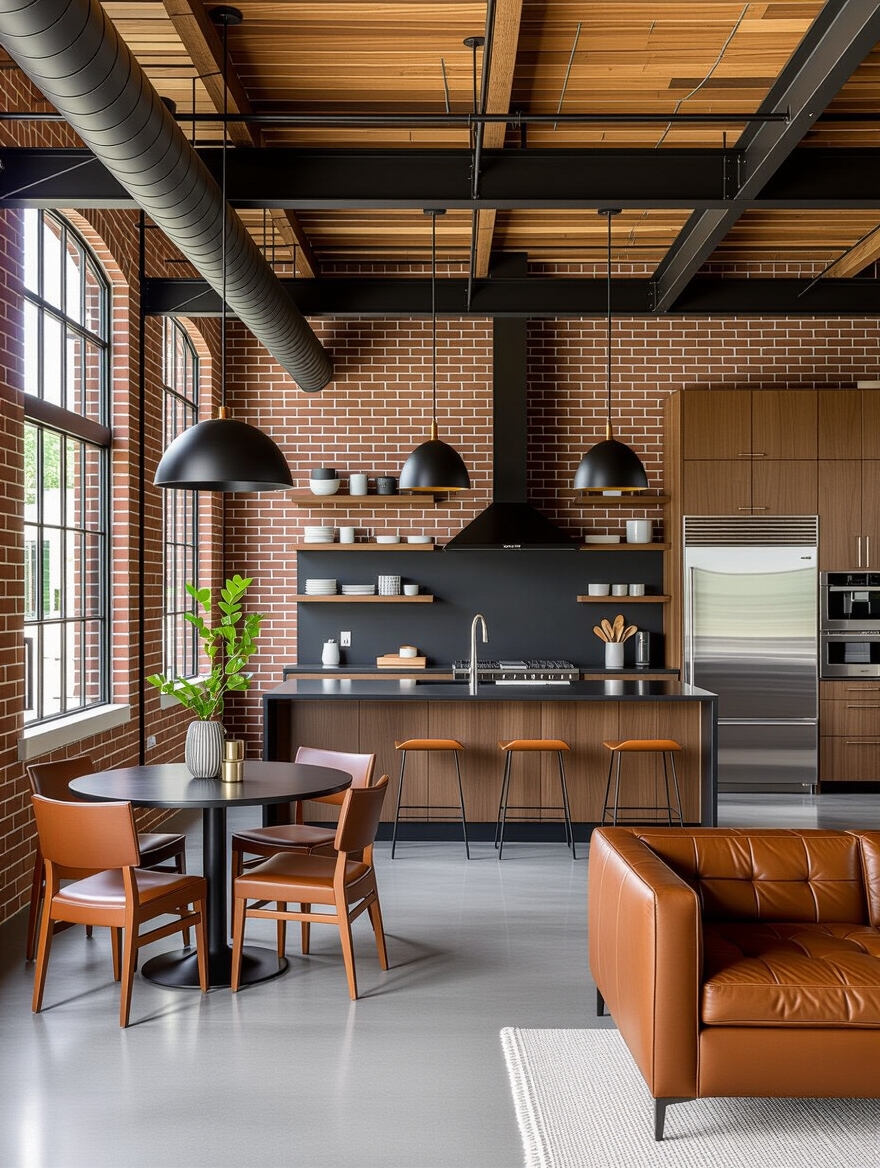
Industrial style suits open concept because its raw materials, exposed brick, blackened metal, concrete, actually like a big, airy volume. The textures give a wide-open trio something to grab onto, and the look stays warm when you pair the hard surfaces with wood and leather.
Lighting carries a lot here. Black-framed pendants and cage or track fixtures define each zone while fitting the aesthetic. One honest caution: concrete floors and metal stools are loud underfoot in an already echoey space, so soften with rugs and upholstered seating, or the trio will ring like a warehouse at dinner.
Not sure which rustic touch fits your trio? Match the one you have room for.
🎯You have ceiling height
Add reclaimed beams or a wood-clad ceiling to warm the whole volume.
🎯You have a blank dining wall
Hang a vintage piece or open wood shelving to anchor the eating zone.
🎯You only want one move
Swap in a chunky solid-wood dining table; it carries the rustic feel alone.
Maximizing Light, the Scandinavian Way
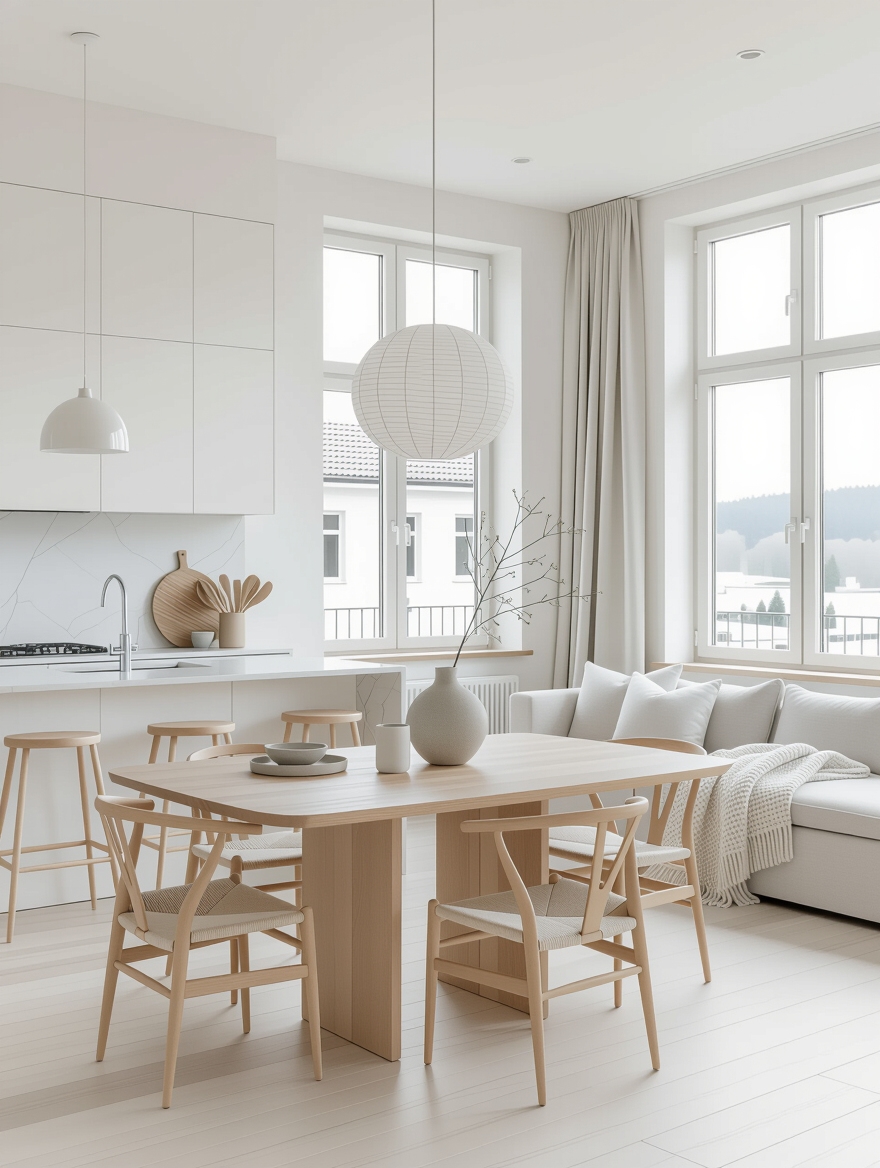
Scandinavian design treats daylight as the main material, which makes it a natural fit for open concept, where light can travel the whole floor. White or pale walls, light wood floors, and airy, leggy furniture bounce sunlight from the kitchen window all the way to the living-room corner.
Keep window treatments sheer or skip them where privacy allows, and add a few large mirrors to push light deeper. In a north-facing or interior trio, this palette is the difference between bright and gloomy.
- Use one pale floor throughout to bounce daylight around the room.
- Hang a mirror opposite the biggest window to double the light.
- Keep upper cabinets and tall furniture pale so they recede.
Elegant Transitional Trios in Neutral Harmony
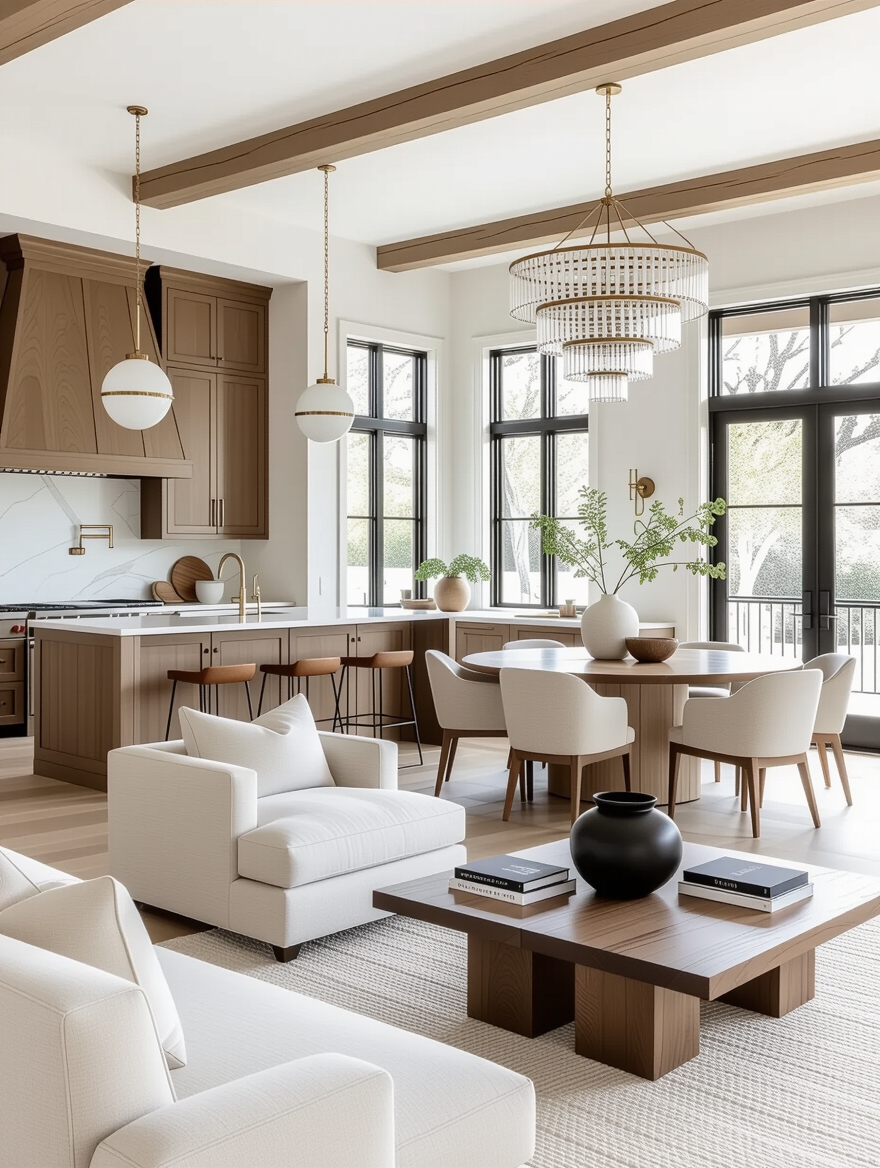
Transitional style splits the difference between traditional and modern, and it is the safest choice for a trio you want to live with for years. A neutral palette, mixed textures, and a blend of classic and current pieces keep the big space calm and cohesive without feeling stark or themed. It is the look I recommend to homeowners who want safe but not boring.
The skill is in the mix: pair a shaker kitchen with a more modern dining table, or a classic sofa with sleeker lighting, so the trio feels collected over time. Stick to one or two warm neutrals across all three zones and let texture, linen, wood, a little brass, do the work that bold color would in a smaller room.
A quick order for getting the most daylight across all three zones.
1Map your light
Note which window is brightest and at what time of day.
2Clear its path
Keep tall furniture and uppers out of that window’s sightline.
3Reflect it
Place a mirror or pale surface across from the window to bounce it.
4Layer the rest
Add warm lamps for evening so the space is not flat after dark.
Colorful Eclectic Mixes That Spark Creativity
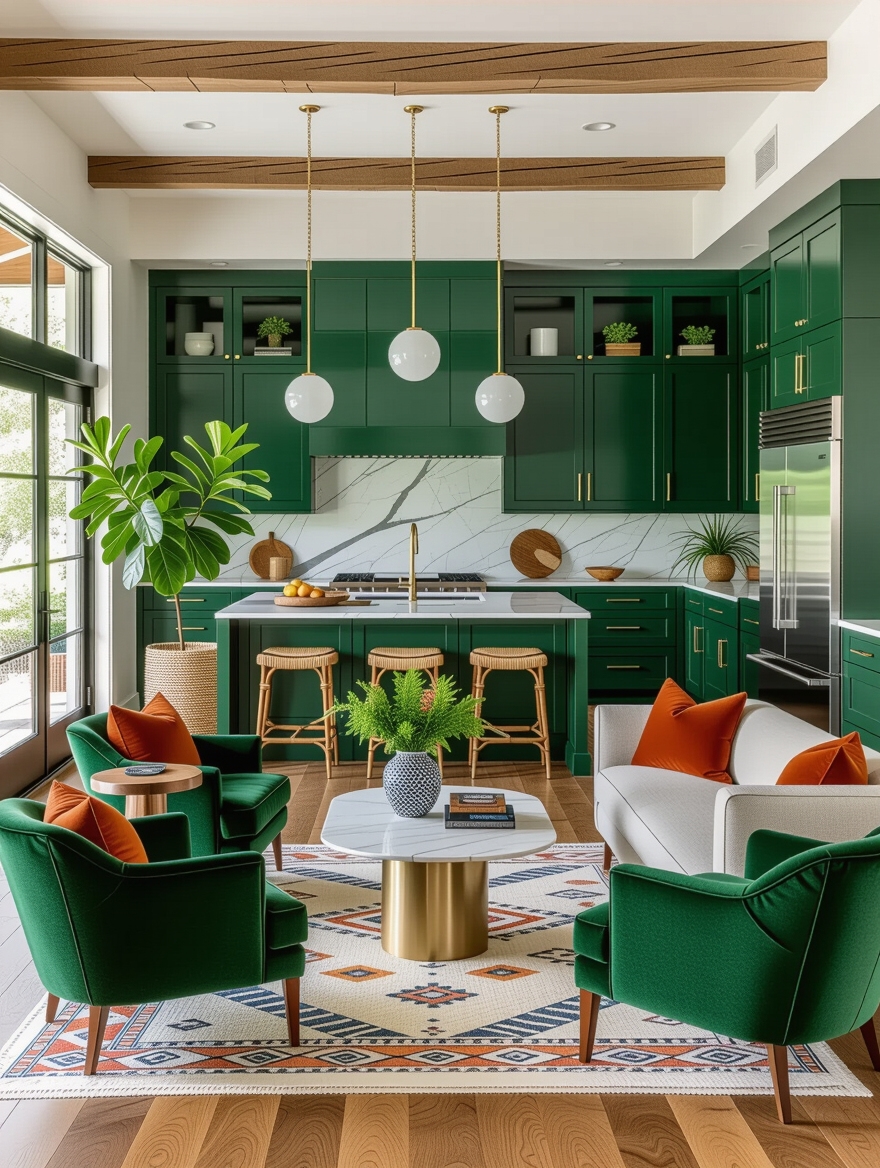
Eclectic is the antidote to the matchy open plan, and it is more disciplined than it looks. Layering bold rugs, mixed patterns, and collected art across the three zones makes a big space feel alive and personal. The trick is a common thread, a repeated color or material, so the mix looks intentional.
Open concept actually helps an eclectic scheme, because the zones give your eye places to rest between bold moments. Let one zone be the loudest, usually the living area with its rug and art, and keep the kitchen calmer so the whole trio does not compete with itself.
- Repeat one accent color across all three zones to tie the mix together.
- Let the living zone carry the boldest pieces; keep the kitchen quieter.
- Mix old and new so the room feels gathered over time.
Clever Space-Saving Layouts for Small Trios
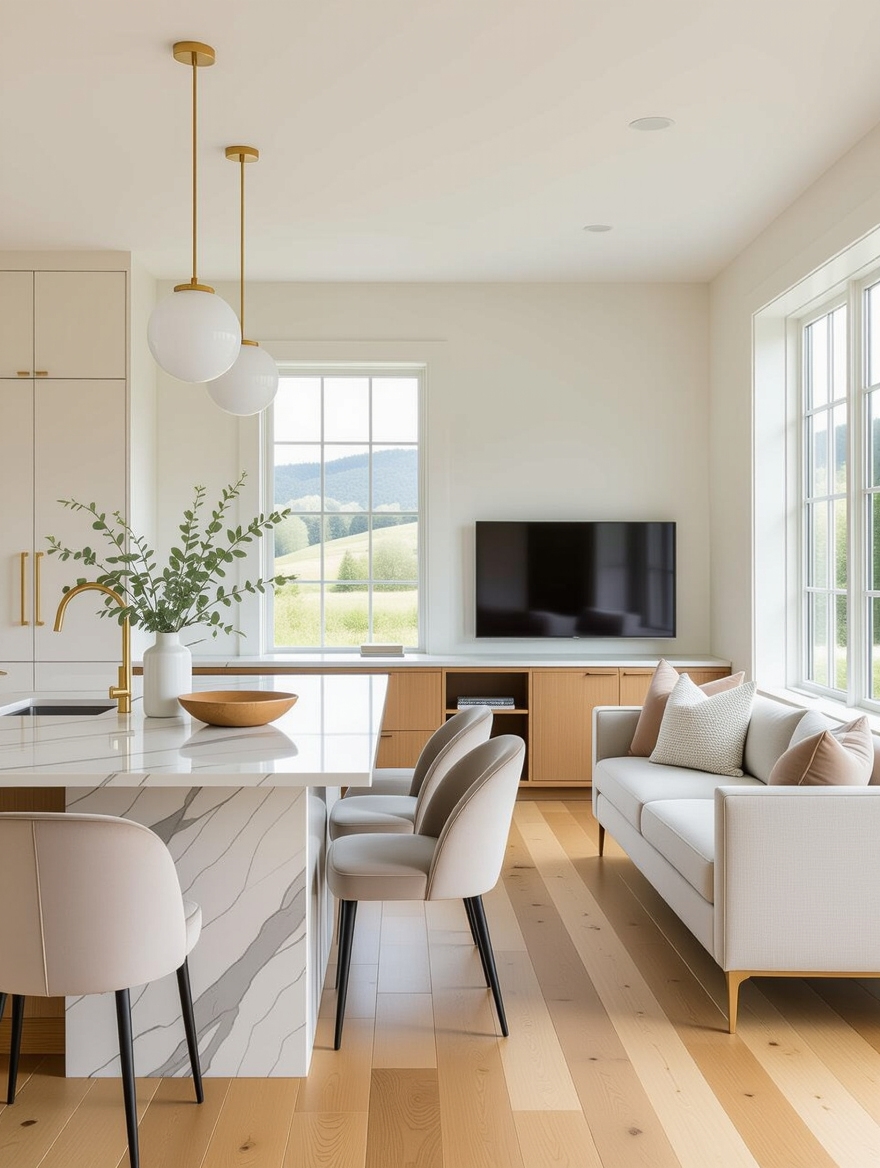
Not every trio is huge, and a small open plan needs every inch to work three ways. Multi-use furniture earns its place: a drop-leaf or extending dining table, a storage ottoman that doubles as seating, a slim island on casters. Keep main pathways at least 36 inches wide so the space flows, and use vertical storage to free the floor.
In a tight trio I push clients toward fewer, larger pieces, since a cluttered open plan feels smaller than an open one ever could, the same logic behind the best small kitchen and dining room ideas.
- Choose an extending table that seats two daily and six for company.
- Keep walkways around 36 inches so the open feel survives the furniture.
- Go vertical with storage to keep the floor and the sightlines clear.
Defining Distinct Zones With Furniture
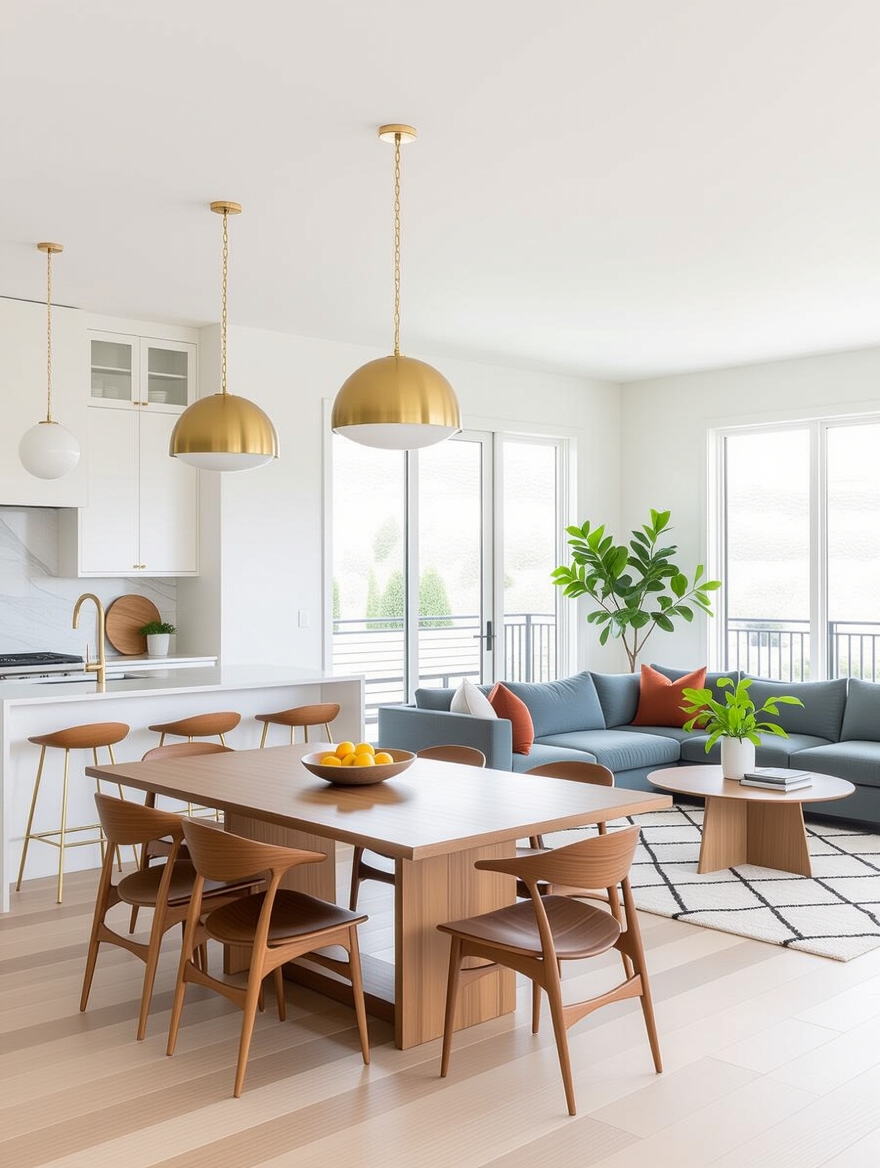
Furniture is how you draw rooms without building walls, and it is the single most important skill in an open plan. A large area rug under the living seating, the back of a sofa facing the kitchen, and a dining table centered under its own light each quietly mark a zone.
Size to the zone, not the wall
The most useful piece is often the island or peninsula, which gives the kitchen a clear edge and a place for the living area to stop. A console behind the sofa or a pair of low bookcases can do the same job softly, the gentler cousin of partition ideas that skip the walls.
Scale matters more than you would think. Undersized furniture floating in an open trio is the most common mistake I see, so size rugs and sofas to the zone they sit in and give each piece a little breathing room.
Statement Lighting That Transforms the Space
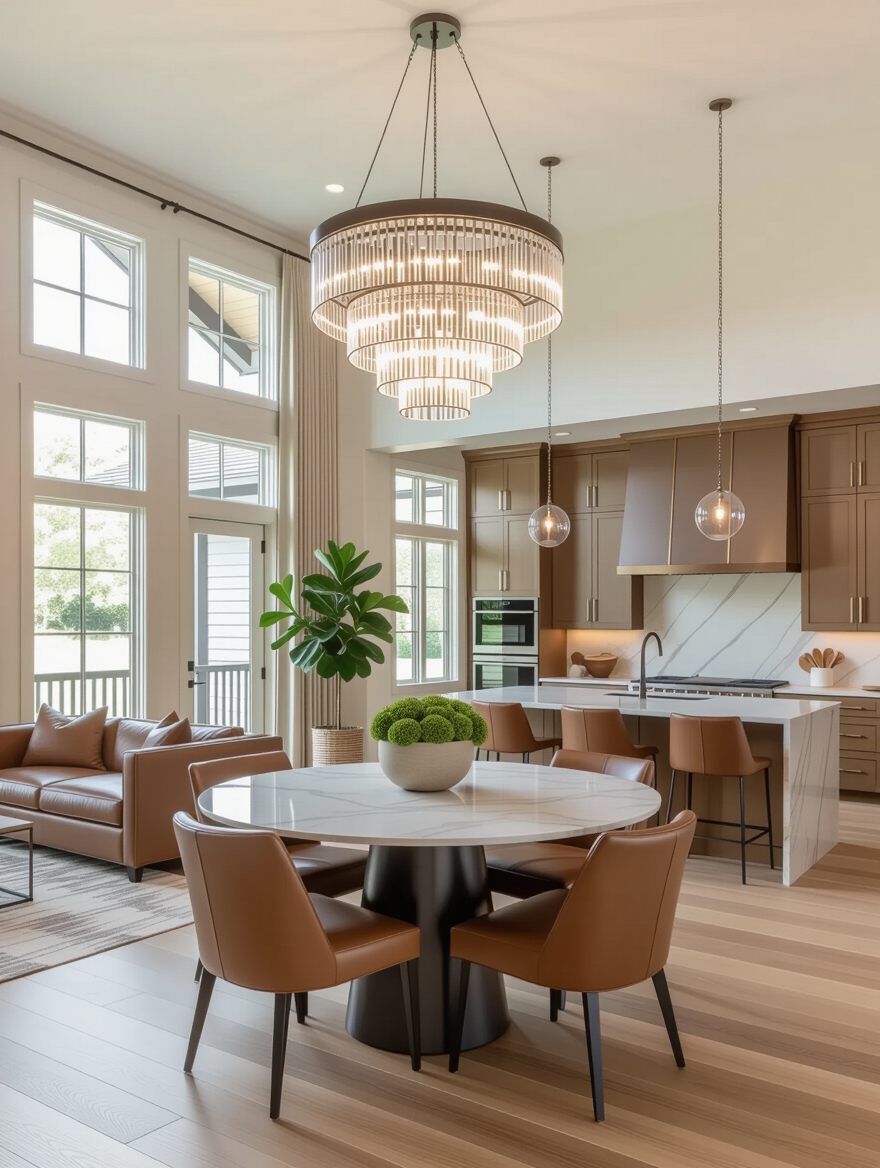
Lighting is where an open concept trio comes together, because a single overhead rarely serves three different jobs. Light does a lot of the zoning. Hang a real statement fixture over the dining table to anchor it, run warm task lighting in the kitchen, and add lamps in the living zone for evening softness.
Matching the style of the fixtures across zones unifies the space, while their different heights and jobs keep each area distinct. Expect to spend $150 to $400 on a dining pendant or small chandelier that earns its spot, much like the layouts modern open kitchens rely on.
- Give the dining table its own fixture; it defines the zone instantly.
- Layer kitchen task light, dining statement light, and living-room lamps.
- Keep the fixture family consistent so three lights still feel like one home.
Maintenance and Care for an Open Trio
An open trio asks for slightly different upkeep than a closed kitchen, mostly because everything is on display at once. Cooking smells and grease travel to the sofa and curtains, so a strong, quiet range hood matters here, and washable fabrics earn their keep in the living zone. A single flooring material throughout looks best but means one cleaning routine for the whole space, so choose something forgiving like luxury vinyl or sealed hardwood.
Clutter is the real maintenance challenge. With three zones visible together, one messy counter shows across the entire room, so closed storage and a daily five-minute reset matter more than in a walled kitchen. Plan for a landing spot, a drawer or basket per zone, to catch the daily pile before it spreads.
Open Concept Trio Questions, Answered
?How do you divide a kitchen, dining, and living room without walls?
Use furniture and finishes to do the dividing. An island or peninsula edges the kitchen, a rug and a dedicated light fixture anchor the dining table, and the back of a sofa marks where the living zone begins. Repeating one or two materials across the three zones keeps them connected while they still feel like separate areas.
?Are open concept trios going out of style?
Not really, though the trend has matured. Designers have moved toward open plans with clearly zoned areas and even partial dividers. The connected kitchen-dining-living layout stays popular for families and entertaining; the difference now is more definition across those open plans.
?What flooring is best for an open concept kitchen-dining-living room?
One continuous material throughout almost always looks best, since it visually enlarges the space and avoids choppy transitions. Luxury vinyl plank and sealed hardwood are popular because they handle kitchen spills and living-room traffic alike. Whatever you choose, run it in one direction across all three zones for the smoothest flow.
?How do I keep an open concept trio from feeling noisy and cluttered?
Start with a strong range hood to control cooking smells and sound, then add soft surfaces, rugs, upholstery, and curtains, to absorb the noise that hard open spaces amplify. For clutter, lean on closed storage and give each zone a landing spot for daily items. A quick nightly reset keeps one messy counter from taking over the whole room.
Build the Trio You Actually Live In
Open concept is not going anywhere, but the smartest versions have moved past the empty, echoey great room toward trios that feel intentional, one connected space made of three rooms that still know their jobs. Whatever style pulls at you, the bones are the same: define the zones, unify the floor and lighting, and let furniture draw the lines walls used to.
Start with the one zone that frustrates you most, the dining table with nowhere to land, or the living area that bleeds into the kitchen, and fix that first. You do not need to solve the whole floor at once. Get one zone reading clearly and the rest of the trio tends to fall into place.
More Hair Inspiration


