
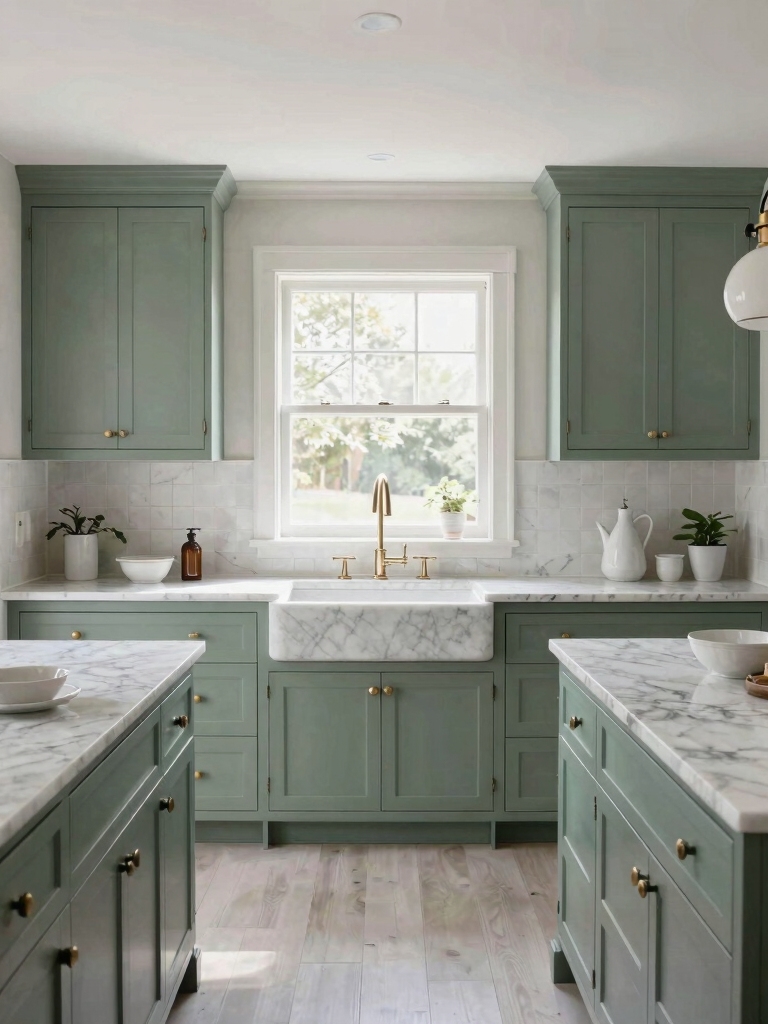
I have walked into kitchens painted sage twenty years ago that still look calm and current, and I have seen bright trend colors from three years back already begging to be redone. The difference is not luck. Sage green behaves like a warm neutral, and neutrals are what survive the trend cycle while statement colors burn out.
If you are putting sage on cabinets you plan to keep, the smart questions are not really about the green. They are about door style, undertone, hardware, and counters, the choices that decide whether your kitchen looks timeless or dated in a decade. Here are fifteen ways to get sage cabinets right, with honest notes on cost, upkeep, and what holds its value.
What Keeps Sage Cabinets Timeless
- Sage endures because it acts like a warm neutral, so it rides out trend cycles the way white and beige do.
- Door style sets the era: Shaker looks traditional, flat-panel feels modern, both in the same green.
- Match the undertone to your light, with cooler gray sages for cool rooms and warmer sages for warm ones.
- Spend on the counters, hardware, and finish; those details decide whether sage looks custom or builder-grade.
Why Sage Cabinets Stay Timeless in Any Kitchen
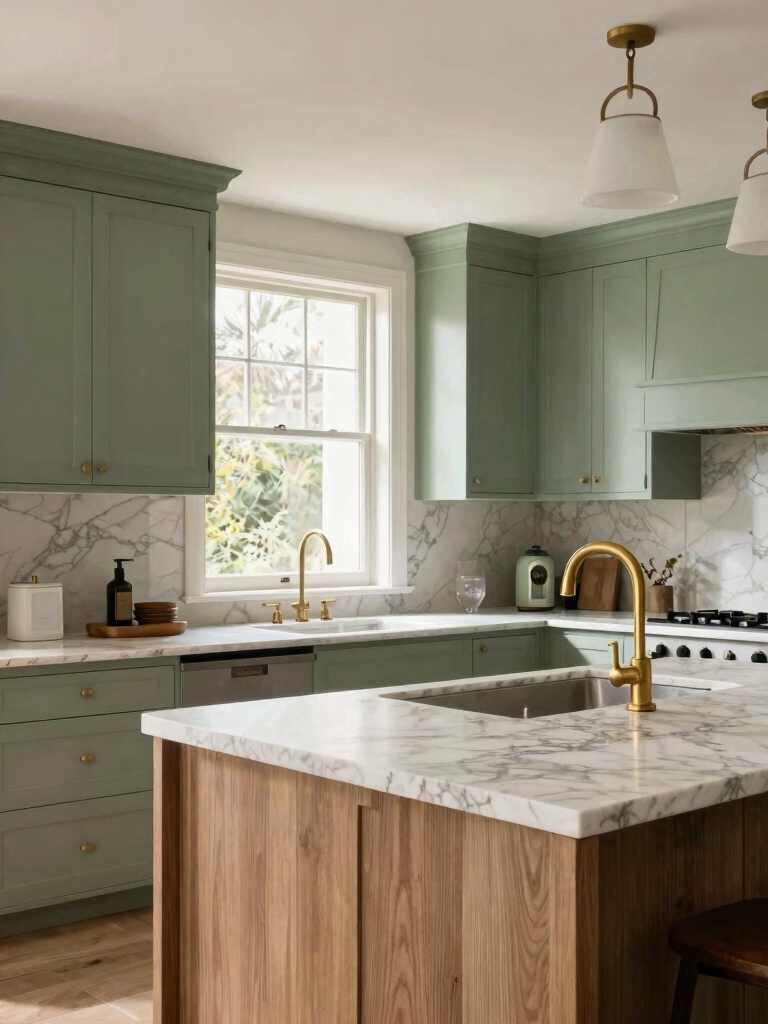
The reason sage outlasts other colors is simple. It has enough gray in it to behave like a soft neutral. Your eye treats it the way it treats greige or warm white, which is why a sage kitchen rarely shouts the year it was installed, and why it slides into a traditional house and a modern one with equal ease.
Neutral behavior, long memory
It also sits in good company historically. Muted greens have shown up in kitchens for a century, from old farmhouse cupboards to mid-century cabinetry, so the color carries a sense of having always been there.
That staying power is exactly why sage is worth doing well. A color this durable rewards good cabinets, good hardware, and a finish that lasts, because you will be living with it for a long time. If you are going to paint anyway, the case for painted cabinets over a costly rip-out only gets stronger with a color that ages this gracefully.
Shaker Sage Cabinets for Traditional Kitchens

Shaker doors are the safest bet for longevity, since the clean recessed panel has stayed in style for generations. Painted sage, they read warm and classic and suit almost any house, which is why I steer most clients here when resale matters.
- Pick a true Shaker with a flat recessed panel, not an ornate raised one that dates faster.
- Keep the rail width moderate so the door stays current and light on the eye.
- Expect to dust the recessed edge now and then; it is the one upkeep quirk of the style.
👍Shaker sage: the upside
- +Timeless profile that suits nearly any house and helps at resale.
- +Hides daily wear better than white, especially on the lowers.
- +Works in both traditional and transitional kitchens without looking dated.
👎What to weigh
- –The recessed panel catches dust and needs an occasional wipe.
- –More surface to paint than a flat slab, so DIY takes longer.
- –A cheap raised-panel version dates faster than a true flat Shaker.
Flat-Panel Sage Cabinets for Modern Rooms

If your house leans modern, a flat-panel slab door in sage gives you the same color with a cleaner, more contemporary line. The unbroken front keeps the look quiet and lets the green do the talking.
Slab doors are also the easiest to wipe down, since there is no recess to catch grease or dust. That makes them a practical pick for a busy kitchen as well as a stylish one.
The trade-off is that a cheap slab can look flat and plasticky, so the material matters. A quality matte finish or a fine wood veneer keeps a flat-panel sage cabinet from looking builder-grade. If you want the upscale version of the effect, a few expensive-looking green cabinets pull it off with finish alone.
Sage and White in Small Kitchens
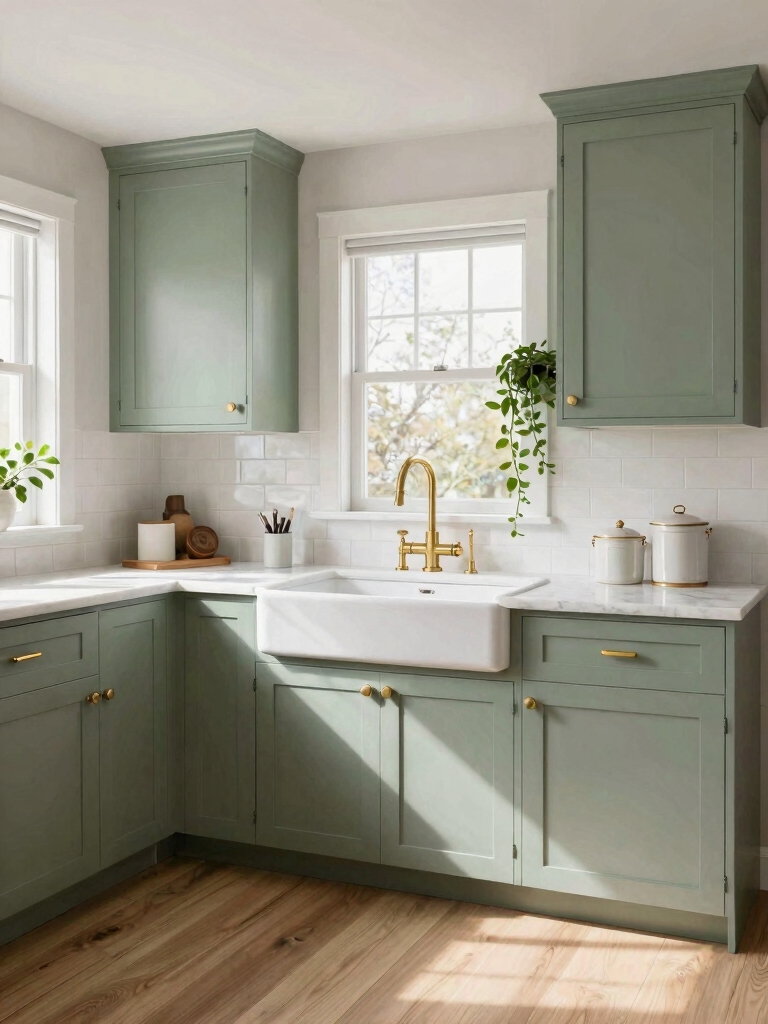
In a small kitchen, pairing sage with plenty of white keeps the room from closing in. The white reflects light and lifts the upper half of the space, while sage grounds the lowers and keeps the room feeling settled.
This combination also photographs and resells well, because it looks fresh and broadly appealing. It is the version I recommend when someone loves sage but worries about a small room feeling dark, and it pairs naturally with the tricks behind most small kitchen makeovers.
- Put sage on the lowers, white on the uppers to keep sightlines high and bright.
- Carry the white onto the backsplash so the wall recedes.
- Add one warm metal, like brass, so the white-and-green scheme does not feel cold.
In a small kitchen, sage and white is the pairing I trust most: the green gives the room character, and the white keeps it from ever feeling closed in.
Two-Tone Sage With Warm Wood Accents

Adding wood to sage is what tips a kitchen from nice to inviting. A wood island top, open shelves, or a range hood surround brings warmth that keeps the green from feeling flat.
Match the wood to the green
Match the wood temperature to your sage. A warm, olive-leaning sage loves oak and walnut, while a cooler gray sage looks better with white oak or ash. Get that pairing right and the room feels collected and calm.
Wood also ages gracefully alongside sage, so the combination stays handsome for years. For a deeper look at getting the tones to agree, see how a sage and wood kitchen balances the two.
Darker Sage for a Moody, Sophisticated Kitchen

When you want real depth, a darker, more saturated sage delivers a moody, grown-up kitchen that still feels calm. It suits a room with good light and a little drama in mind.
- Reserve deep sage for rooms with strong natural light, since it absorbs more than it reflects.
- Balance it with pale counters and warm metals so the depth feels rich and considered.
- Keep the walls light to give the dark cabinets room to breathe.
💡Lighting Tip
Dark sage drinks light, so before you commit, hold the swatch on the cabinet wall at night under your real bulbs. If it goes flat and lifeless, add warm under-cabinet lighting or step the color down a shade. A deep sage only stays sophisticated when the room can carry it.
Distressed Green Finishes for Farmhouse Authenticity
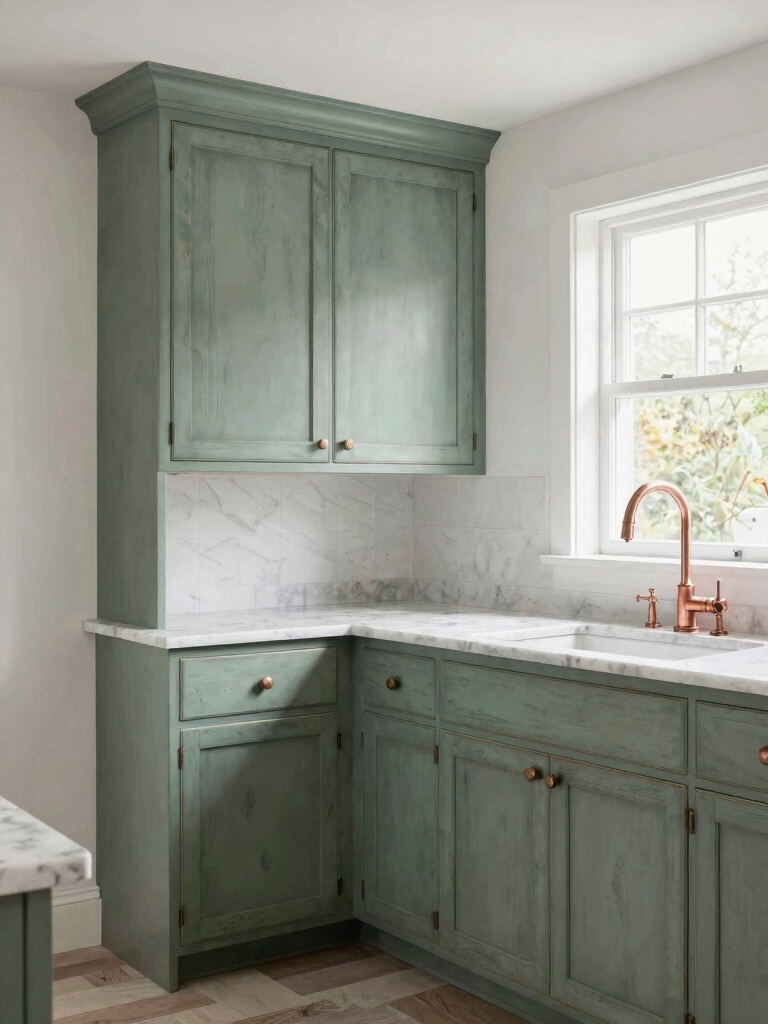
A gently distressed sage finish suits an older or farmhouse-style home, where a too-perfect paint job can look out of place. Softly worn edges give the cabinets the sense of having lived through a few decades.
A light hand looks real
The key is restraint. A light hand at the corners and around the pulls looks earned, while heavy sanding all over tips into costume territory. Less is almost always more here.
This finish also forgives the wear that real kitchens collect. A new scuff just blends into the look, which makes it a practical pick for a busy, well-used family kitchen.
Inset Sage Cabinets: Worth the Investment?

Inset cabinets, where the door sits flush inside the frame, are the furniture-grade option, and in sage they look truly heirloom. They are also the most expensive choice on this list, often running 15 to 30 percent more than standard overlay cabinets because of the precise fitting.
Are they worth it? For a forever home where you want a kitchen that looks custom, yes. For a starter house or a rental, the money is better spent on a quality painted overlay and great hardware, which gets most of the look for a fraction of the cost. I have talked more than one client out of inset cabinets they did not need.
Sage Cabinets With Open Shelving for Airy Storage

Swapping a run of upper cabinets for open shelves lightens a sage kitchen and gives the green somewhere to breathe. The wall of color breaks up, and the room feels less boxed in.
Keep it to one wall and stock the shelves with things you use daily, so they stay practical instead of becoming dust collectors. The contrast of open wood against sage is what makes this feel intentional.
- Limit open shelving to one short run so the kitchen keeps enough closed storage.
- Use wood shelves that echo the island or floor for a collected look.
- Style with everyday dishes, since constant use keeps the shelves clean on their own.
Glass-Front Sage Cabinets to Protect Your Dishes

Glass-front cabinets give you the open, display feel without the dust, which makes them a smart middle ground in a sage kitchen. The green frame around clear glass looks classic, and you get to show off a few nice pieces while keeping them clean behind the door. I love these for anyone who likes open shelving in theory but hates the upkeep in practice.
- Use glass fronts on one or two upper cabinets, not the whole run, so it stays special.
- Choose seeded or fluted glass if you want the look without a tidy-dishes obligation.
- Light the interior with a small LED puck so the display looks intentional at night.
What to Expect: Cost, Upkeep, and Resale
Budget depends entirely on the route. Repainting existing cabinets sage runs roughly $150 to $300 in DIY materials; professional refacing with new sage doors lands around $4,000 to $9,000; and full custom inset cabinetry climbs well past that.
Hardware is the cheap lever, at $3 to $8 a pull, and it changes the whole feel for under sixty dollars. Spend your money on the counters and hardware first, because those read as quality long after the paint color stops being a talking point.
On upkeep, a quality satin or matte finish wipes clean in under a minute with mild soap and holds up for years; just keep a labeled touch-up jar for the inevitable chip, and plan to recoat a heavy-use cabinet run maybe once a decade.
As for resale, sage is one of the safer bold-ish choices precisely because it behaves like a neutral. Pair it with timeless counters and classic hardware and most buyers see it as tasteful, the kind of choice that signals care and good judgment, which is the whole point of a color that never goes out of style.
Sage Cabinet Questions, Answered
?Will sage green cabinets go out of style?
They are about as safe as a color gets, because sage behaves like a warm neutral, not a trend statement. Muted greens have appeared in kitchens for a century, so a well-chosen sage looks classic well after install.
?Do sage cabinets help or hurt resale value?
Sage is one of the more resale-friendly bold colors, since most buyers see it as tasteful and neutral-adjacent. Keep the counters and hardware timeless, and the green tends to be a selling point in most listings.
?What countertops and hardware go best with sage?
Pale stone like white quartz or a soft marble look keeps sage fresh, while warm brass or matte black hardware adds the right contrast. Mixing brass and black is fine too, as long as one metal leads.
Choose Sage for the Long Haul
Sage green earns its timeless reputation because it works like a neutral and pairs with almost everything. Get the door style, undertone, and hardware right, and you end up with a kitchen that still looks considered a decade from now, long after this year’s trend colors have come and gone.
If you are planning a sage kitchen, start with the choices that last: a classic door, a quality finish, and counters and hardware worth keeping. Pick the version that fits your home and your budget, test the undertone in your own light, and build a kitchen you will not want to redo.
More Hair Ideas


